



Art Deco Centre Table
An art deco centre table anchors a room with strong geometric lines and rich timber grains.
Art Deco Centre Table
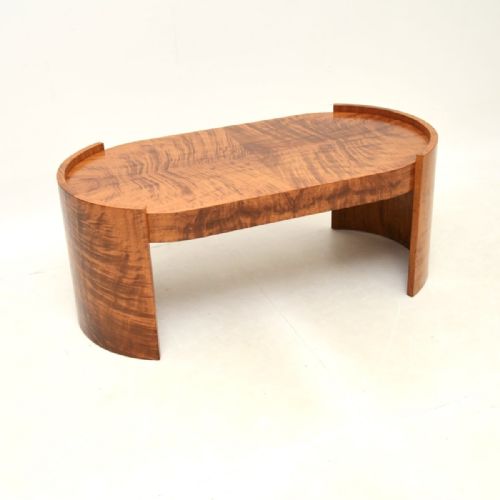
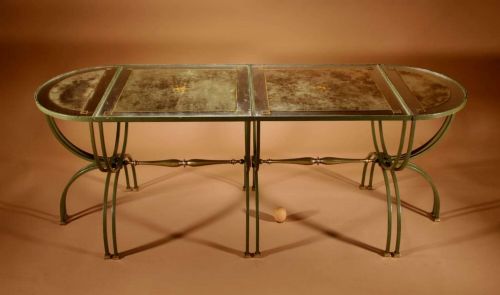
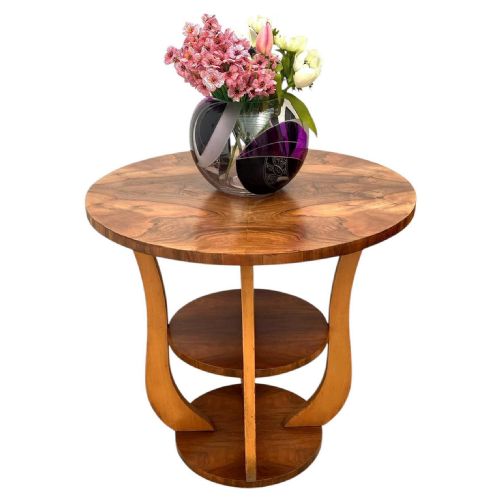
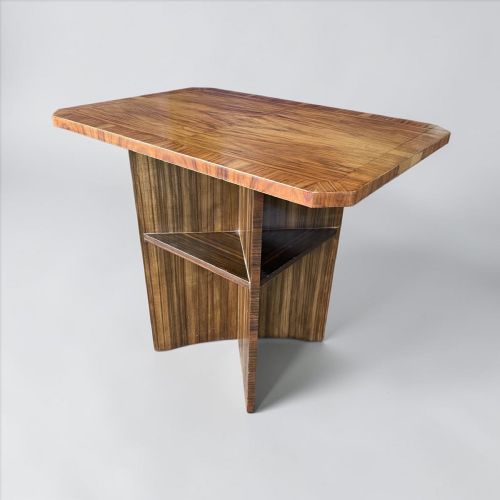
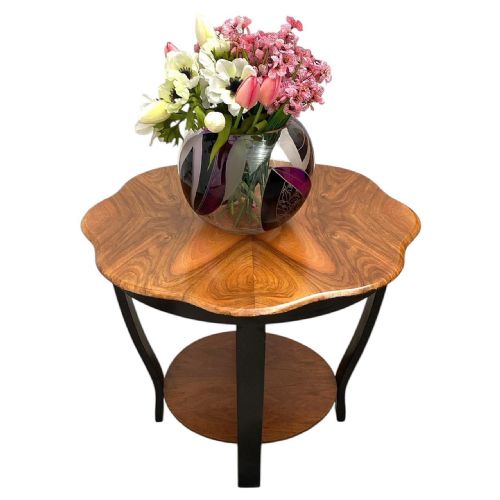
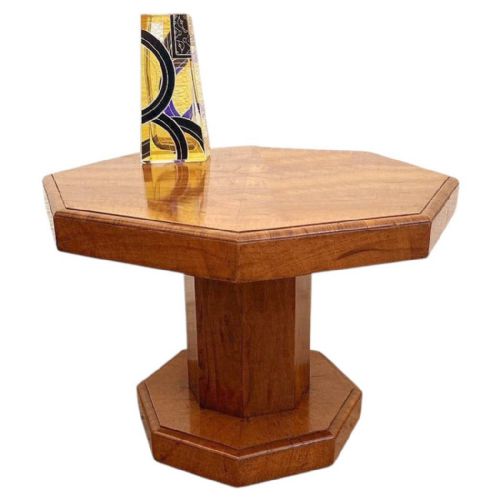
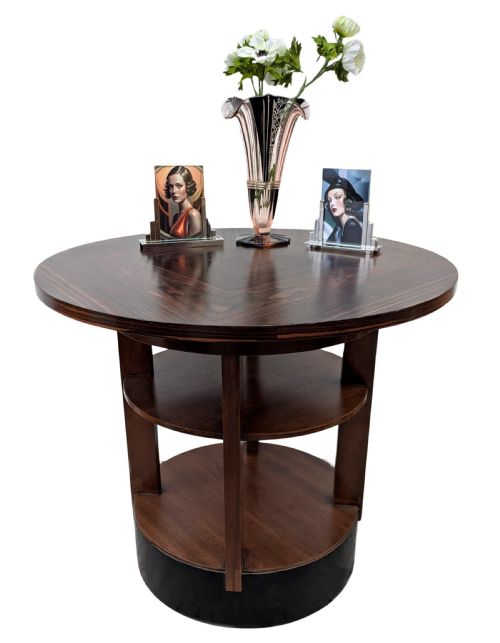
An art deco centre table is a prominent freestanding piece designed to sit in the middle of a room, serving functional or display purposes. The forms seen here include low coffee tables, multi-tiered occasional tables, and larger dining or display surfaces.
Most examples originate from the early decades of the twentieth century, carrying the characteristic symmetry and streamlined profiles of the period. English, French, and Scandinavian makers predominate, often utilising circular, square, or hexagonal formats.
How They Were Made
Makers relied heavily on native and exotic timbers, applying fine veneers over sturdy carcasing to achieve striking surface patterns. Walnut, burr walnut, birch, and macassar ebony provide the dominant grain figures across these tables.
Construction techniques frequently combine multi-tiered structures, geometric inlay, and occasional glass or silvered top inserts. French and English workshops balanced structural solidity with decorative surface geometry.
Art Deco Centre Table Retail Price Guide 2026
Typical asking prices for art deco centre table among the pieces listed under this phrase on Sellingantiques today, from the lower quarter to the upper quarter. They describe what is for sale here now, not the wider market.
Materials span walnut, burr walnut, birch veneer, ebony macassar, oak, and glass.
What Varies In Quality
The sophistication of the timber selection dictates much of the visual hierarchy, with book-matched burr veneers and contrasting stringing sitting above plain surfaces. Figured grain requires precise handling during the cutting and laying process.
Structural complexity, such as multi-tiered designs, circular marquetry, and integrated shelving, separates standard production from finer output. The integration of alternative materials like ebony, maple, or glass indicates higher workshop ambition.
The Art Deco Centre Table Glossary
- Macassar ebony
- A dense exotic hardwood featuring dark brown and black stripes with warm undertones. It provides sharp visual contrast in advanced designs.
- Birch veneer
- A pale timber finish often associated with Scandinavian workshops. It brings a bright and clean tone to geometric furniture.
- Occasional table
- A small movable table intended for specific, temporary uses around a room. These pieces support lamps, books, or decorative objects.
- Marquetry
- The art of applying pieces of veneer to a structure to form decorative patterns. Craftsmen cut contrasting timbers to fit precisely together.
Art Deco Centre Table: Frequently Asked Questions
Where should an art deco centre table go?
These tables sit independently in the middle of a reception room or large hallway where people can walk around them.
They function well as display surfaces for lamps or decorative objects rather than being pushed against a wall.
How do I identify a walnut art deco table?
Look for rich brown tones with swirling grain patterns, particularly figured or burr walnut variations.
English and French workshops frequently paired these warm walnut veneers with clean geometric silhouettes typical of the period.
How do Scandinavian designs differ?
Scandinavian examples frequently utilise lighter timbers such as birch and elm with restrained inlay work.
These pieces emphasise clean minimalist geometry compared to the heavier figured walnut common in French and English workshops.