
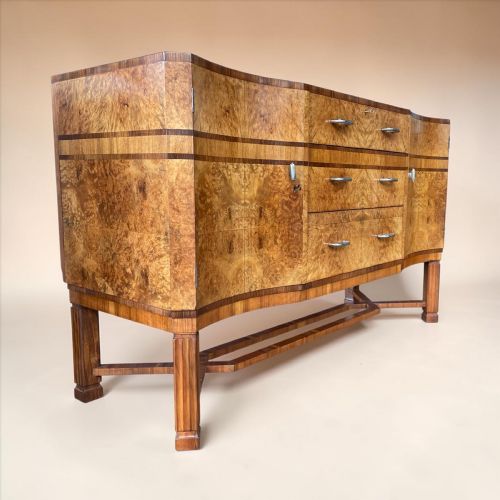
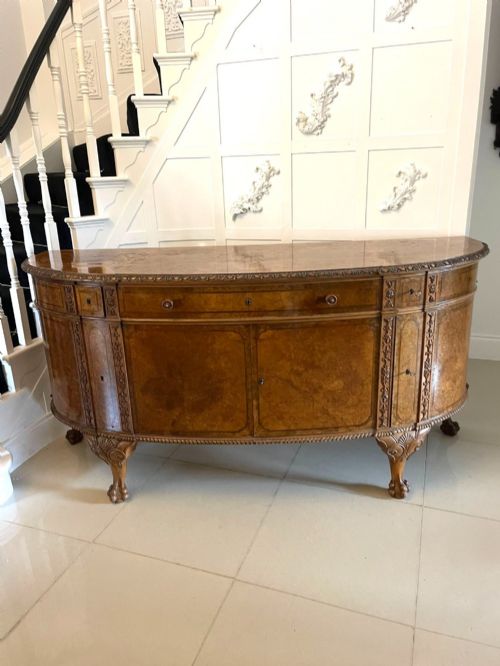
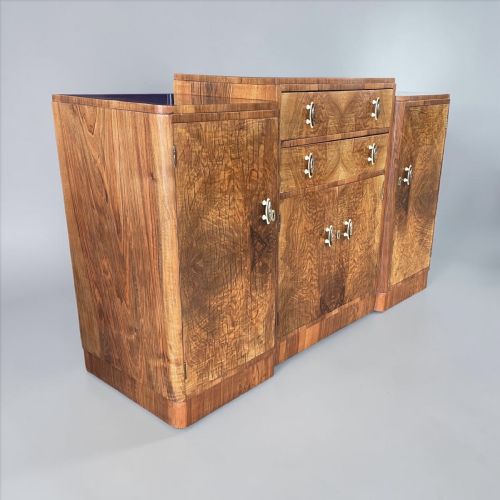


Figured Walnut Buffet
A figured walnut buffet brings rich, swirling grain and substantial storage into a room, offering both practical utility and striking presence.
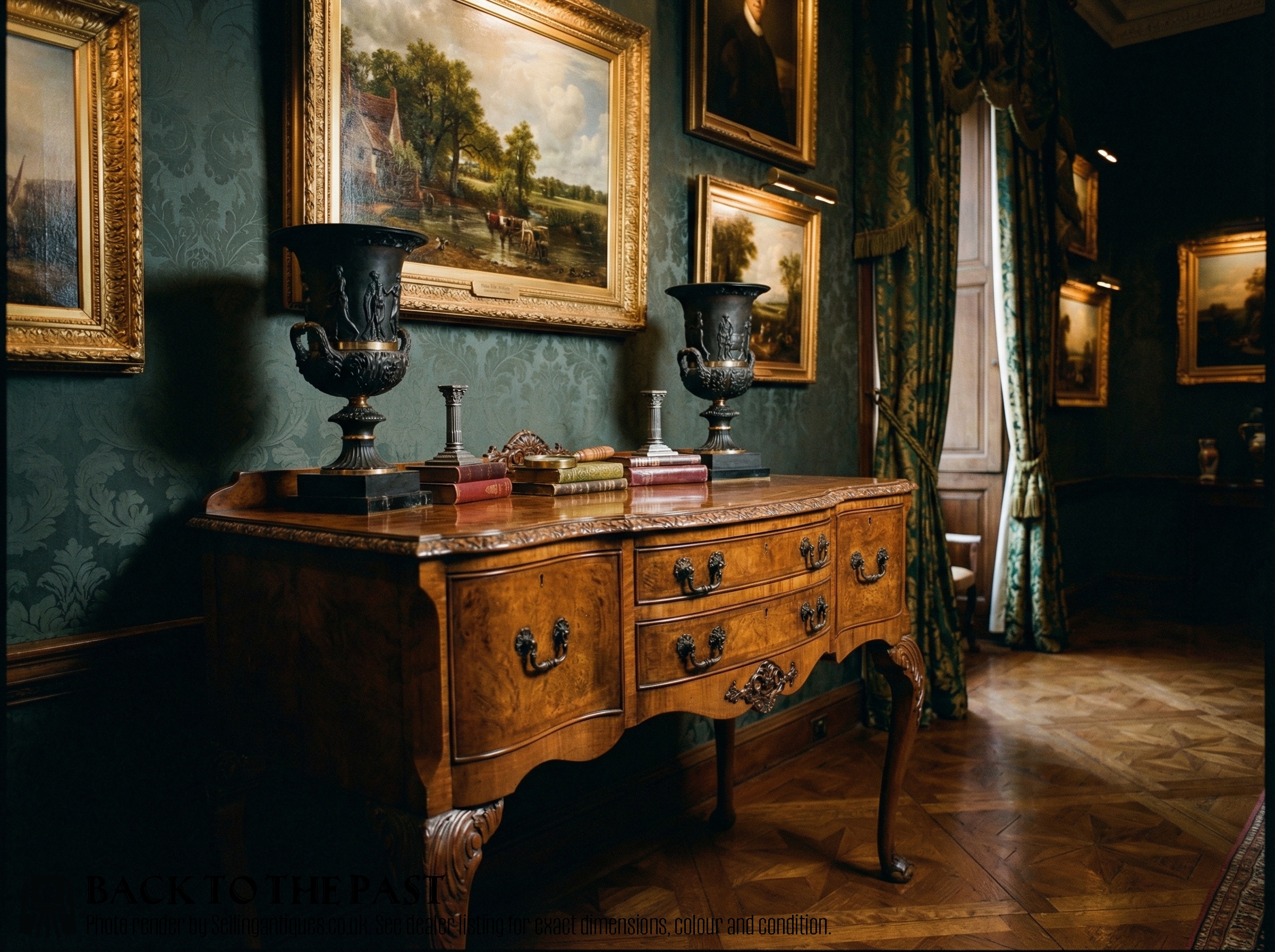
Figured Walnut Buffet
When you search for a figured walnut buffet, you are looking at large dining room storage pieces, sideboards, credenzas, and drinks cabinets. These pieces serve primarily as servers and storage units for dining rooms and principal entertaining spaces.
The versions you are most likely to meet on this page span from the Victorian period through the Edwardian era into the Art Deco years of the 1930s. They appear in forms ranging from bow-fronted servers to marble-topped mirror-back credenzas and streamlined twentieth-century cabinets.
Makers such as Hille of London, Harry and Lou Epstein, Hamptons of Pall Mall London, and the Bowman Brothers represent the twentieth-century production found here. Alongside these named workshops, nineteenth-century pieces show marquetry inlay and classical revival styles.
Materials and construction
The primary timber used across these pieces is walnut, frequently enhanced by burr walnut veneer and figured walnut to create dramatic grain patterns on the main surfaces. Crossbanding and marquetry inlay appear on selected surfaces to add decorative contrast.
Structural elements incorporate solid walnut alongside applied veneers. Metal fittings such as brass handles and hardware complement the timber, while glass and marble appear on specific nineteenth-century and Art Deco variants.
Figured Walnut Buffet Retail Price Guide 2026
Typical asking prices for figured walnut buffet among the pieces listed under this phrase on Sellingantiques today, from the lower quarter to the upper quarter. They describe what is for sale here now, not the wider market.
Materials recorded across the inventory include solid walnut, burr walnut veneer, figured walnut, brass hardware, marble, and Bakelite.
Quality variations
The quality of a figured walnut buffet depends on the selection and matching of the veneer. Superior pieces display book-matched grain patterns that flow symmetrically across doors and drawers, demonstrating careful timber preparation by the maker.
Construction detail and maker attribution also separate examples. Pieces bearing stamps or labels from notable firms like Hille or the Epstein brothers command attention for their robust internal framing and considered proportions.
Hille of London·Harry and Lou Epstein·Hamptons of Pall Mall London·The Bowman Brothers
The Figured Walnut Buffet Glossary
- Figured walnut
- Timber featuring irregular, attractive grain patterns caused by branch junctions or growth variations. This wood is sliced into veneers to cover larger cabinet surfaces.
- Burr walnut
- A specific type of figured walnut taken from a tree growth or burr, creating a dense cluster of swirling eyes and rings. It forms the primary decorative surface on high-end cabinets.
- Credenza
- A low dining room sideboard or cabinet, frequently featuring glass doors or decorative marquetry. Victorian examples often incorporate mirror-backs and marble tops.
- Crossbanding
- A narrow strip of veneer laid around the border of a drawer front or tabletop with the grain running perpendicular to the main panel. This technique frames the primary figured timber.
- Marquetry
- The art of applying pieces of veneer to a structure to form decorative patterns or pictures. Victorian pieces on this page utilise this technique on doors and friezes.
Figured Walnut Buffet: Frequently Asked Questions
What is a figured walnut buffet?
A figured walnut buffet is a large storage and serving piece for dining areas, built using timber with decorative, swirling grain patterns. These pieces function as sideboards, credenzas, or drinks cabinets.
They date from the nineteenth century through the Art Deco period of the nineteen-thirties, reflecting shifting tastes in interior design from ornate Victorian revivalism to streamlined modernism.
How do I date a walnut sideboard?
Dating relies on stylistic clues and construction methods visible across different eras. Nineteenth-century examples often feature marble tops, mirror-backs, and intricate marquetry inlay.
Twentieth-century pieces from the nineteen-twenties and thirties generally display cleaner geometric lines, waterfall edges, and bold burr walnut veneers characteristic of the Art Deco movement.
Where should I place a buffet in my home?
These cabinets work best in dining rooms, large hallways, or living spaces where they provide substantial surface area and enclosed storage. Their decorative timber fronts make them natural focal points.
Ensure the room has sufficient space to accommodate the substantial proportions of these pieces, particularly bow-fronted or mirror-backed variants which demand visual breathing room.
How do I care for figured walnut furniture?
Walnut surfaces require protection from direct sunlight and excessive heat to prevent the underlying veneers from drying out or fading. Regular dusting with a soft, dry cloth preserves the finish.
Apply a quality beeswax occasionally to nourish the timber and maintain the natural lustre of the burr and figured grain without building up heavy chemical residues.