

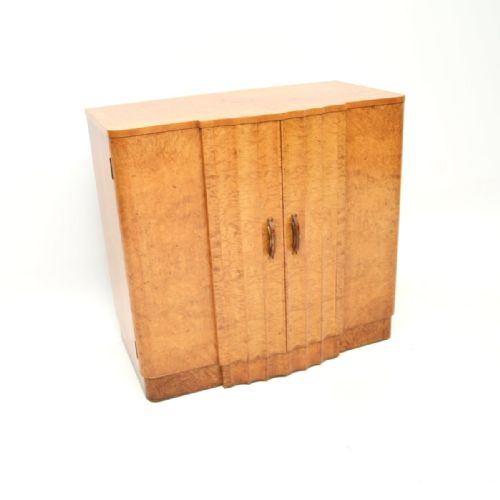
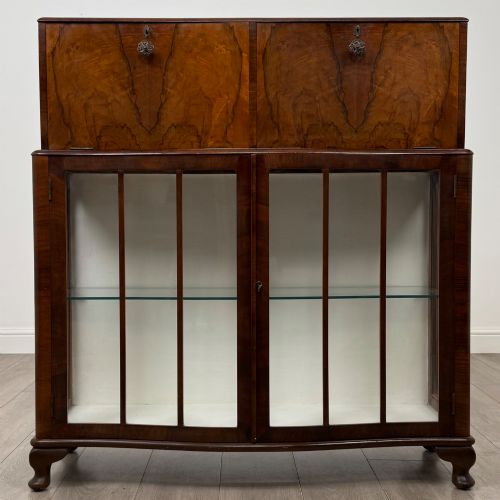
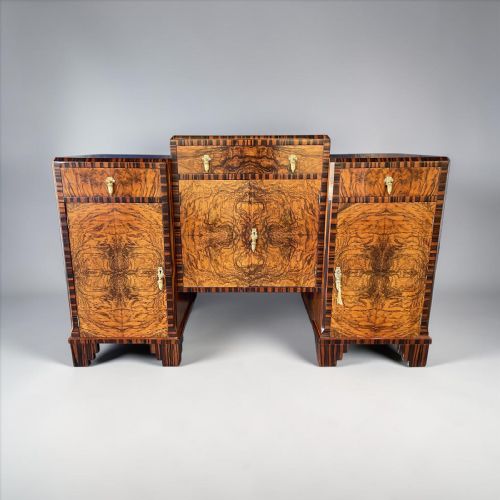
Vintage Walnut Sideboard
A vintage walnut sideboard brings rich grain and deep colour to a dining room, offering practical storage alongside striking period presence.
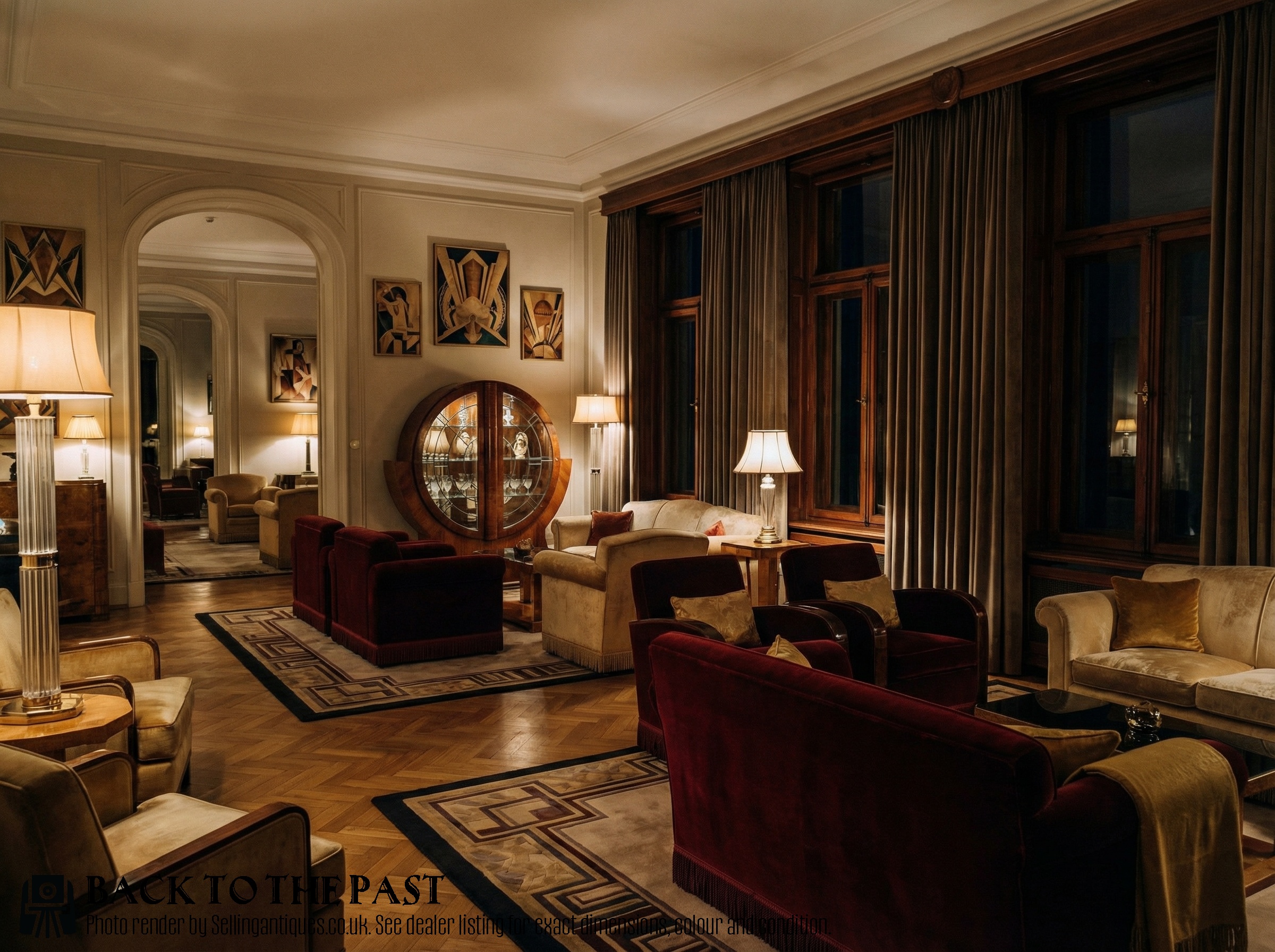
Identifying a vintage walnut sideboard
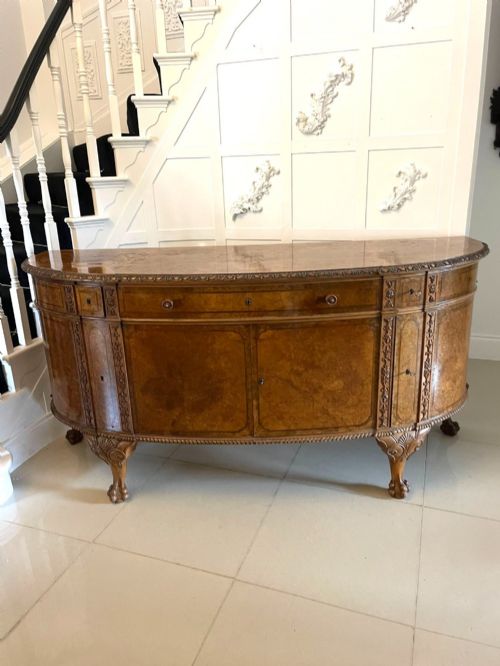
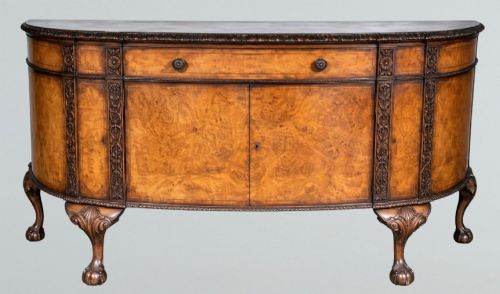
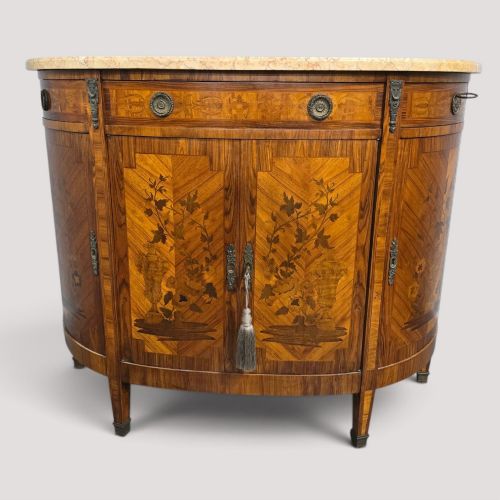
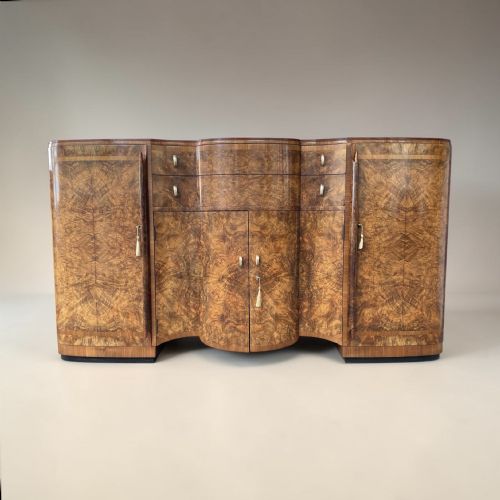
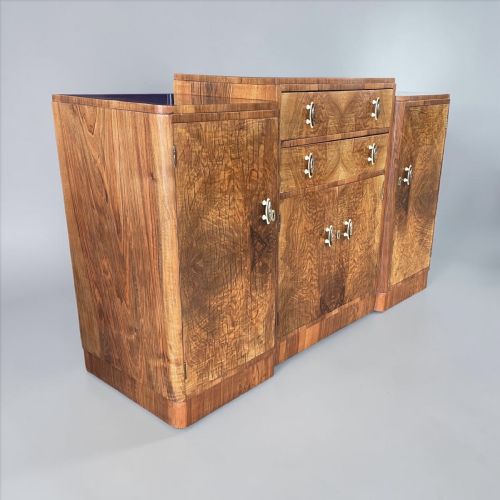
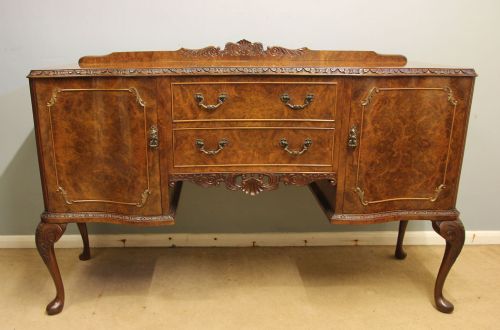
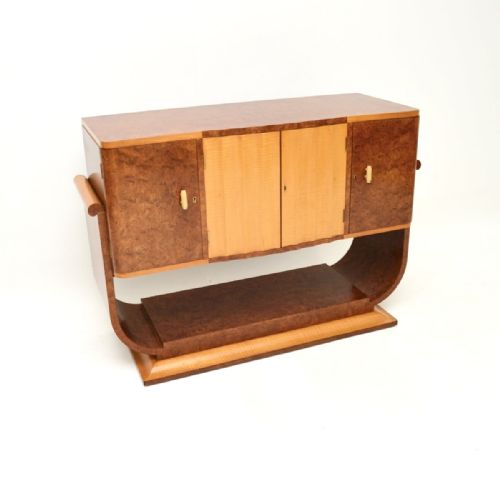
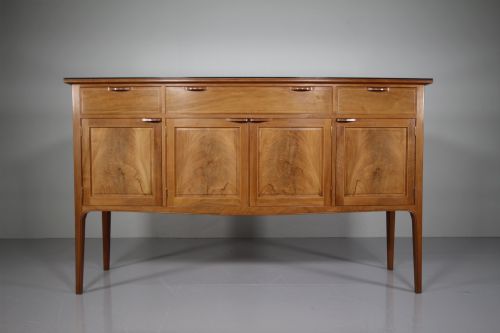
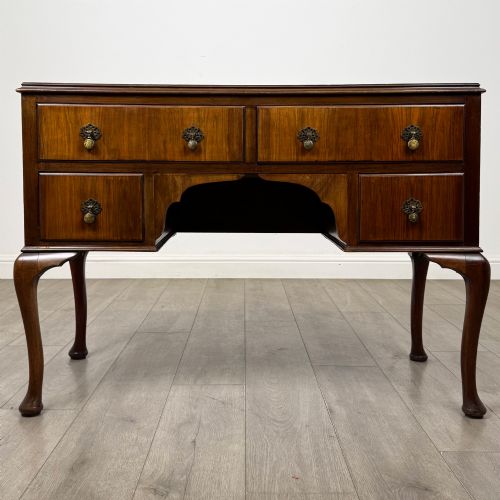
When buyers search for a vintage walnut sideboard, they encounter pieces spanning multiple eras, from early Georgian examples to twentieth-century revivals. The selection reflects diverse design movements, including Queen Anne revival styles and French provincial influences.
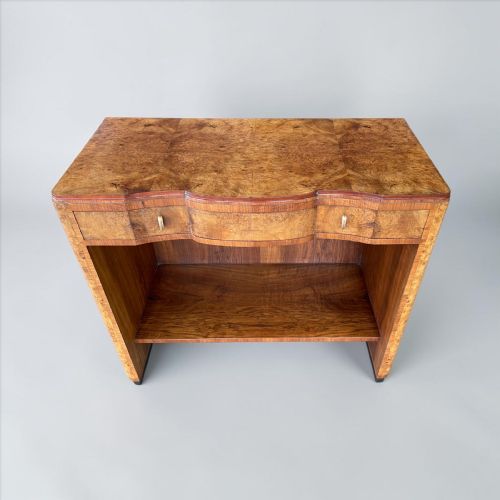
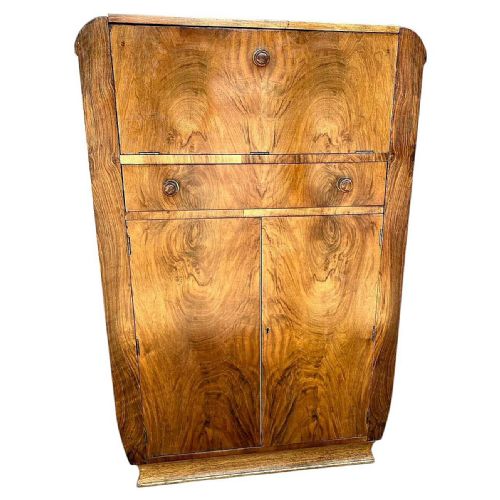
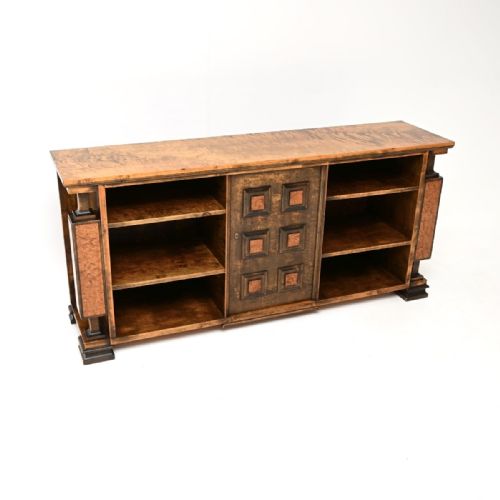
The objects on this page vary significantly in age and form, demonstrating how cabinet makers interpreted the form across decades. Alongside traditional sideboards, the inventory includes related walnut furniture such as display cabinets, console tables, and chests of drawers that share similar aesthetic qualities.
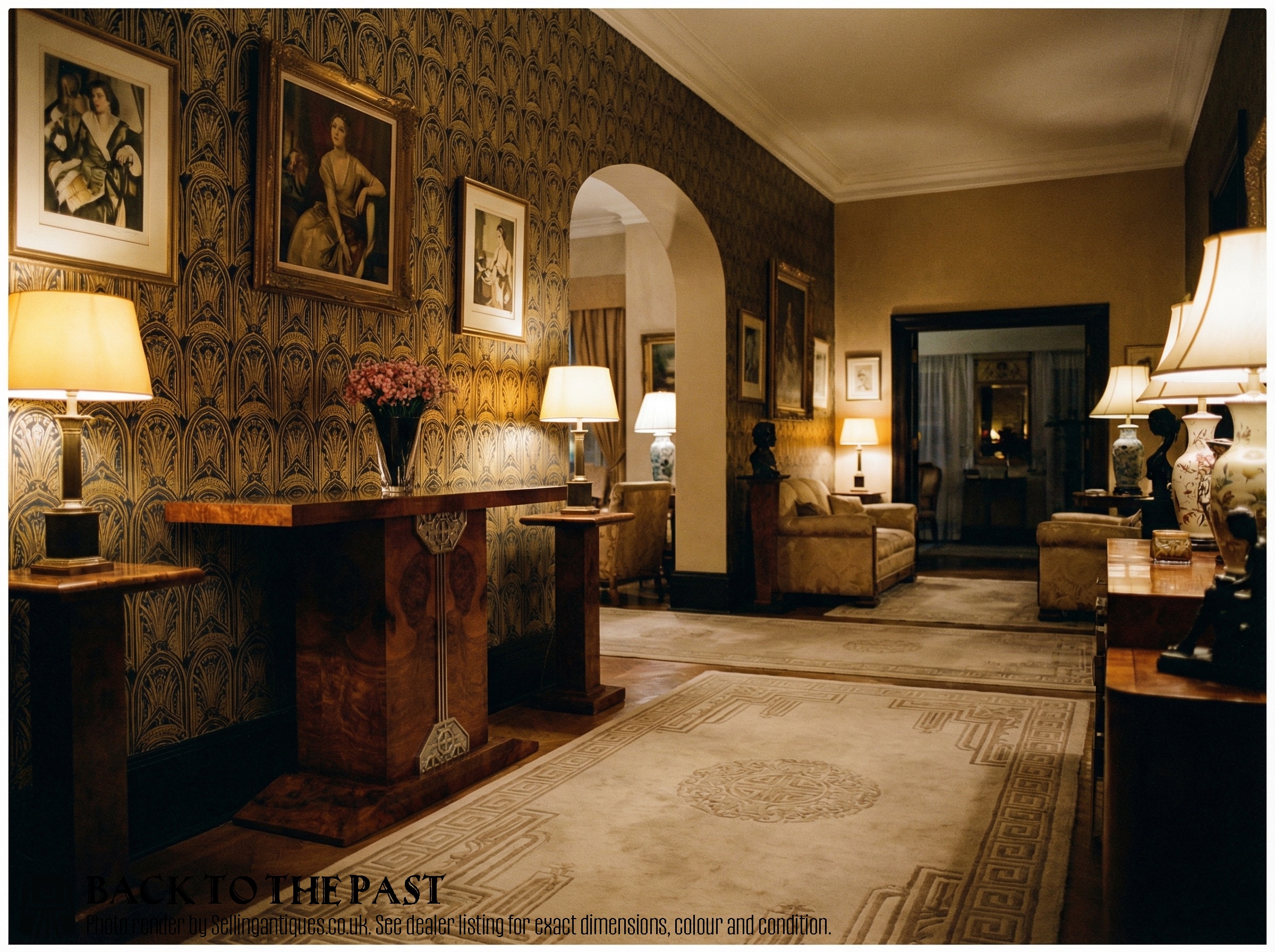
Materials and construction
Construction relies heavily on walnut timber, frequently utilised as burr walnut veneer to create intricate, swirling grain patterns across large surfaces. Solid walnut forms the structural frames, whilst secondary materials like brass, glass, metal, and lead appear in hardware, doors, and decorative glazing.
Joinery techniques reflect the period of manufacture, ranging from eighteenth-century cabinet making methods to twentieth-century production standards by notable firms like Hille of London. The application of burr walnut veneer requires exceptional skill to match patterns symmetrically across drawer fronts and cupboard doors.
Retail Price Guide 2026
Typical UK retail prices for vintage walnut sideboard, calculated from the Sellingantiques database of over a million retail prices indexed since 2003. This retail price guide relies exclusively on Sellingantiques data; no external sources or auction records are used, so the figures do not describe the wider market.
Listings feature walnut, burr walnut veneer, brass, glass, metal, and lead across eighteenth-century, Georgian, nineteen-twenty, and nineteen-thirty periods.
Assessing quality in walnut furniture
Quality separates standard production items from high-end pieces through the selection and matching of burr walnut veneer. Superior examples display continuous, book-matched grain patterns across the entire facade, whereas lesser pieces show random or mismatched grain alignment.
The integration of secondary materials such as cast brass handles, leaded glass panes, and heavy metal fittings indicates the tier of original manufacture. Finer pieces demonstrate meticulous attention to internal construction and drawer linings, maintaining structural integrity alongside decorative impact.
Hille of London
The Vintage Walnut Sideboard Glossary
- Burr walnut
- A specialised wood veneer taken from the growth excrescence on a walnut tree, prized for its swirling, decorative patterns. Cabinet makers select this material for the most prominent exterior surfaces.
- Queen Anne revival
- A design style popular in the early twentieth century that imitates the graceful curves and cabriole legs of early eighteenth-century English furniture. Pieces in this style often feature rich walnut veneers.
- Art Deco
- A twentieth-century design movement favouring sleek geometric forms, streamlined silhouettes, and luxurious materials. Sideboards and console tables from this era utilise walnut to create bold visual impact.
- Book-matched
- A technique where adjacent sheets of veneer are sliced from the same log and opened like a book to mirror each other. This creates symmetrical, repeating patterns across cabinet doors and drawer fronts.
Frequently Asked Questions
What periods do these sideboards come from?
The pieces span several centuries, including eighteenth-century Georgian origins and twentieth-century revivals from the nineteen-twenties and nineteen-thirties.
Design influences range from Queen Anne revival styles to French provincial and Art Deco aesthetics.
How were these cabinets used originally?
Sideboards served primarily in dining rooms to store tableware, linens, and serving dishes while providing a surface for food display.
Related console tables and display cabinets functioned as prominent reception room furniture for decorative objects and books.
What materials accompany the walnut timber?
Makers incorporated brass for handles and key escutcheons, alongside glass and lead in display cabinet doors.
Various metals also appear in structural reinforcement and decorative mounts, particularly on twentieth-century pieces.