


Queen Anne Style Sideboard
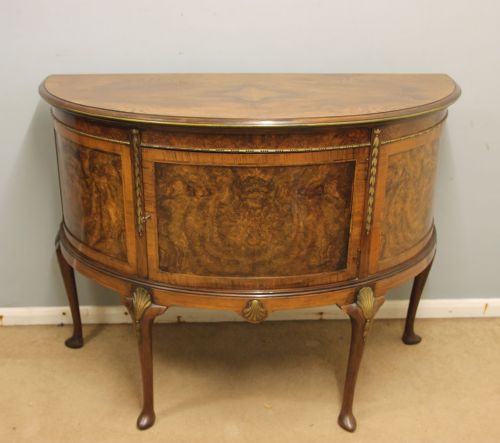
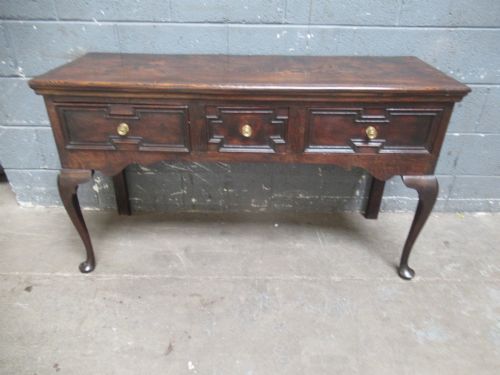
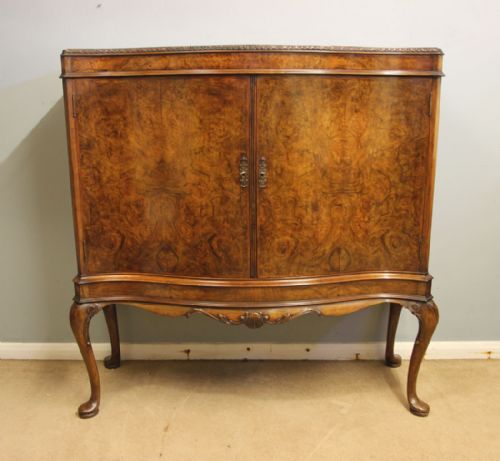
A queen anne style sideboard brings disciplined walnut grain and graceful cabriole proportions to a dining room or hall.
Defining the Queen Anne Style Sideboard
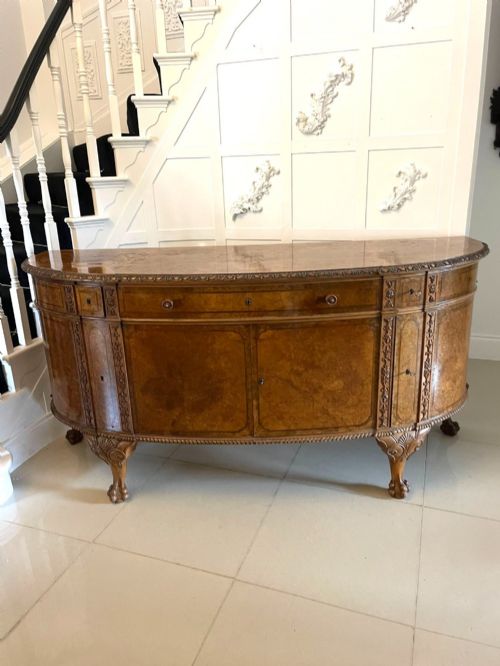
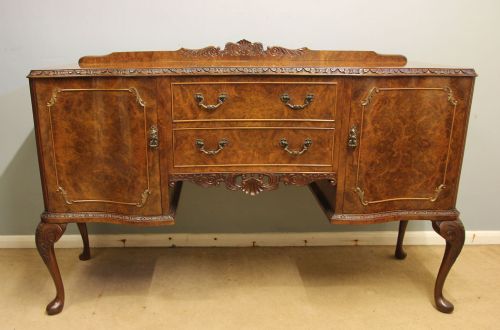
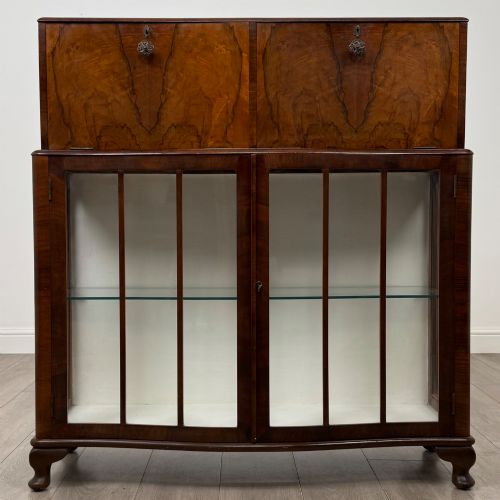
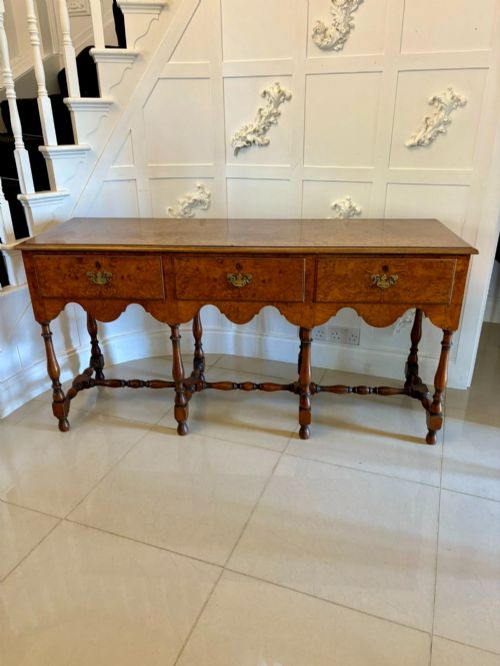
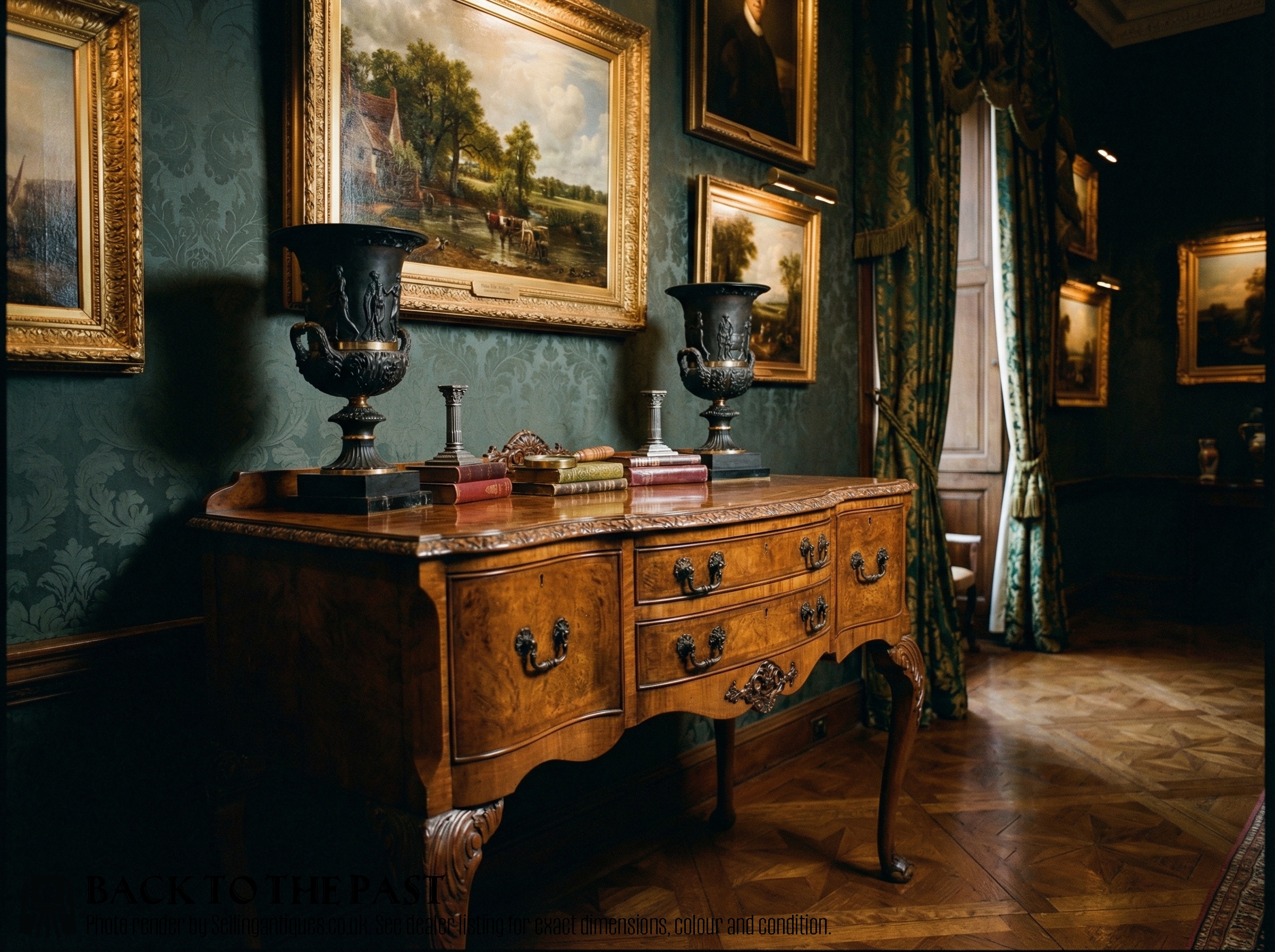
When you search for a queen anne style sideboard, you look at revival pieces that draw on early eighteenth-century vernacular furniture forms. These pieces appear most frequently in burr walnut and figured walnut, with serpentine or bow fronts and dedicated server configurations.
The listings span the Edwardian era through the nineteen-twenties and nineteen-thirties, reflecting a strong twentieth-century appetite for revival furniture. Workshops produced sideboards, side cabinets, and dresser bases that prioritized rich timber figure over heavy Victorian carving.
Materials and Construction
Cabinet makers utilised walnut and burr walnut veneer applied over secondary hardwood carcases to achieve striking decorative grain patterns across wide drawer fronts and doors. Brass handles and mounts provide functional contrast to the warm, figured timber surfaces.
Shaped bodies required skilled carpentry, particularly on serpentine and bow front examples where the timber had to follow curved structural rails. Sideboards and servers often incorporated multiple drawers alongside cupboard space beneath a polished top.
Retail Price Guide 2026
Typical UK retail prices for queen anne style sideboard, calculated from the Sellingantiques database of over a million retail prices indexed since 2003. This retail price guide relies exclusively on Sellingantiques data; no external sources or auction records are used, so the figures do not describe the wider market.
Walnut burrs form as tree tumours, meaning every single sideboard wears a unique wooden fingerprint.
Judging Quality
Quality rests in the selection of the burr walnut veneer, where symmetrical figuring and careful book-matching elevate the visual presence of the cabinet. Finer examples display clean lines on serpentine or shaped fronts rather than flat, plain expanses of timber.
Construction methods distinguish standard production from exceptional workshops, particularly in the thickness of the walnut and the precise fitting of drawers and doors. The presence of makers such as Epstein marks a distinct tier of twentieth-century craftsmanship.
Epstein
The Queen Anne Style Sideboard Glossary
- Burr Walnut
- A timber obtained from the wart-like growths on walnut trees, prized for its swirling, intricate grain patterns. Cabinet makers slice this wood into thin veneers for decorative furniture faces.
- Serpentine Front
- A furniture front curving outward at the centre and inward at the sides in a continuous wave. This shape requires advanced woodworking skill to execute properly.
- Dresser Base
- A low sideboard or cabinet featuring cupboards and drawers, traditionally used for serving food and storing tableware. These pieces often lack the upper plate rack of a full dresser.
- Server
- A specialised side table or small sideboard designed primarily for dishing up meals in a dining room. They tend to be more compact than full-scale sideboards.
- Cabriole Leg
- A furniture leg that curves outward at the knee and tapers inward toward the ankle, reminiscent of animal limbs. This form defines much of the revival aesthetic.
Frequently Asked Questions
What is a queen anne style sideboard?
A queen anne style sideboard is a revival serving cabinet produced mainly in the early twentieth century using walnut veneers and curved fronts.
These pieces borrow aesthetic cues from earlier periods while serving modern dining and storage needs.
How do I date a sideboard?
Dating relies on timber preparation, construction hardware, and stylistic indicators pointing to the Edwardian period or the nineteen-twenties and thirties.
Revival pieces often combine older design vocabulary with twentieth-century cabinet-making techniques.
Where should I place a server?
A server fits comfortably in a dining room or hallway where surface space and subtle storage are required.
Their shallow depth allows them to sit against walls in narrower rooms without blocking walkways.
Are these pieces solid walnut?
Most examples use burr walnut or figured walnut veneers laid over a sturdy hardwood carcase.
This technique protects stable construction while displaying decorative grain across the doors and drawers.