
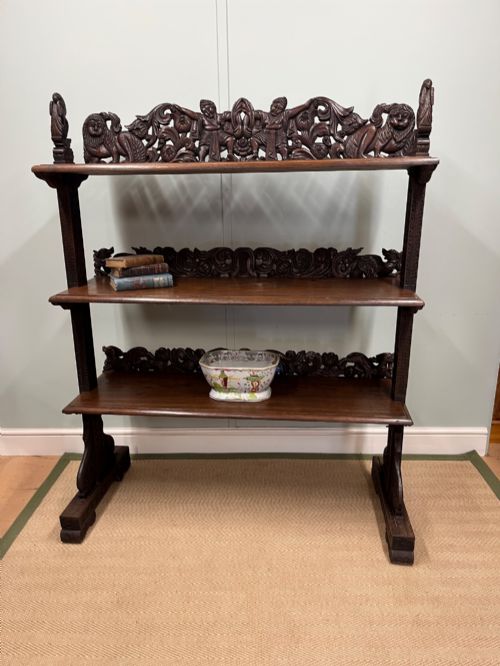


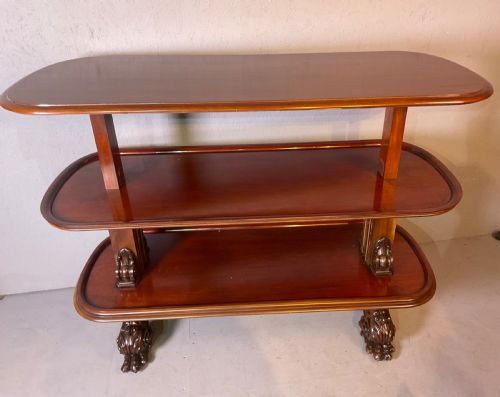
Victorian Three Tier Buffet
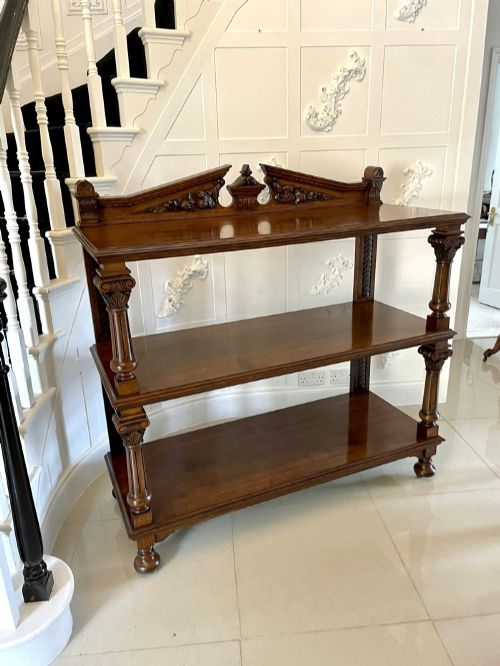
A victorian three tier buffet offers tiered timber shelving and serving space, prized for both practical display and period dining room character.
Victorian Three Tier Buffet
A victorian three tier buffet provides multiple graduated tiers supported by columns, turnings, or castors, designed for serving or displaying tableware in nineteenth-century homes. Buyers look for these items to introduce tiered vertical storage and traditional timber presence into a dining room or hallway.
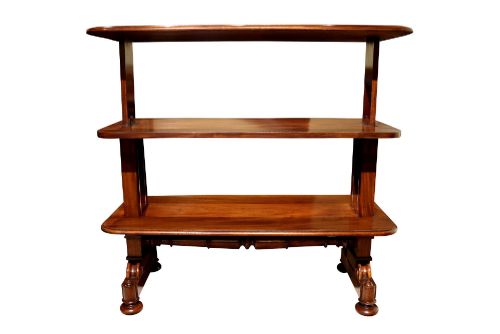
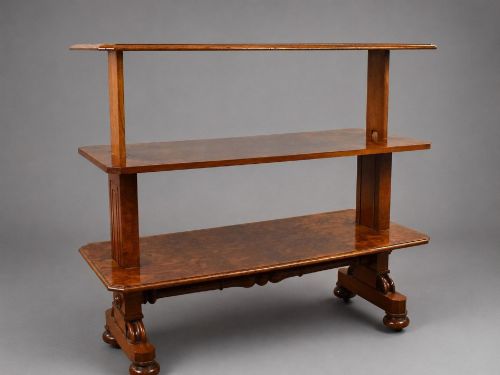
Mahogany forms the most common timber found on this page, alongside walnut, burr walnut, oak, and rosewood, reflecting the material preferences of the period. Pieces appear in various formats including static shelved units, drop-leaf variations, and rise-and-fall or metamorphic designs that alter their height.
How they were made
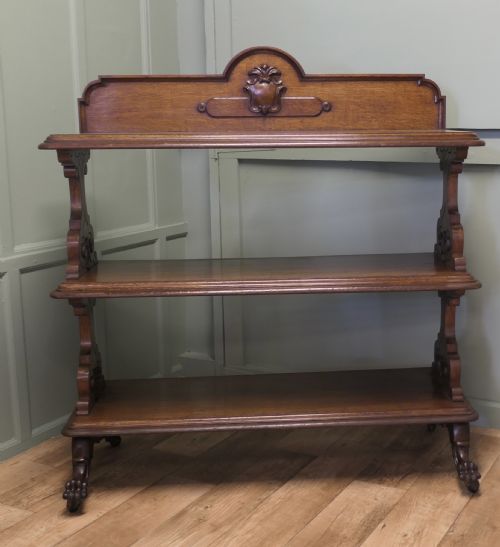
Cabinet makers constructed these pieces primarily from dense hardwoods like mahogany and walnut, frequently utilising burl veneers and padauk to add visual depth to the shelves. Turnings, barley twist columns, and carved oak details provide the structural support between the tiers.
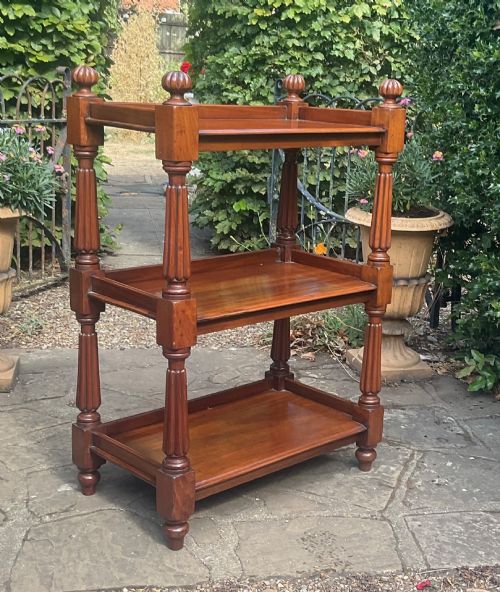
Mobility and adjustability involved brass castors, rise-and-fall mechanisms, and telescopic actions that allowed shelves to move. Joinery relied on traditional methods, while galleries and turned knob finials secured items placed upon the surfaces.
Listings feature woods including mahogany, walnut, burr walnut, oak, rosewood, teak, and padauk across the nineteenth-century periods.
What varies in quality
Quality rests in the choice of timber and the crispness of any carved ornamentation, from plain polished mahogany surfaces to heavily carved oak panels and burr walnut veneers. Finer examples display balanced proportions, substantial secondary timbers, and well-executed mechanical actions for adjustable tiers.
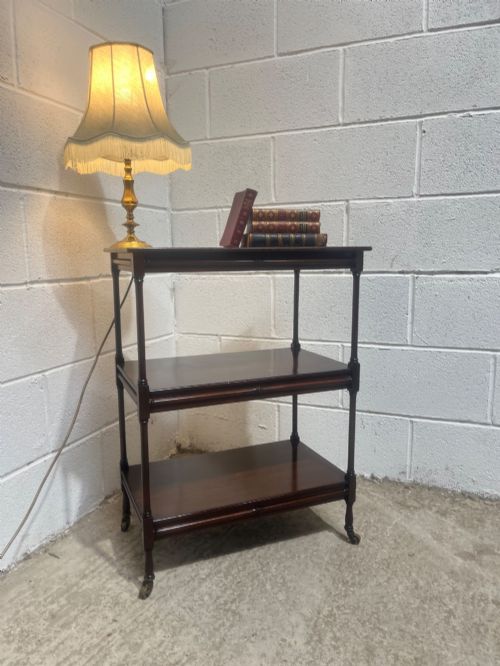
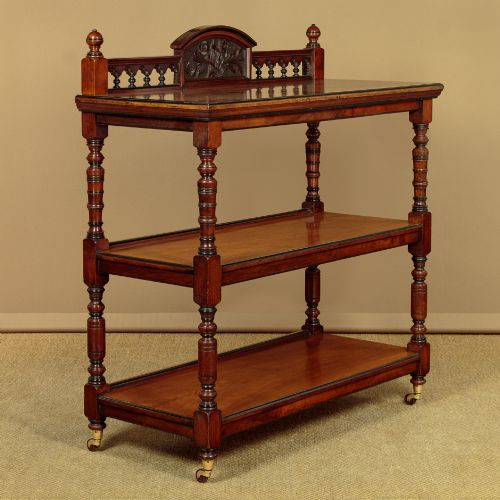
The sophistication of the supports, such as barley twist columns or reeded legs fitted with original brass castors, distinguishes standard workshop production from superior cabinet work. Details like gallery trays, matched grain panels, and integrated drawers elevate the standing of a piece.
Maple & Co·James Shoolbred & Co
The Victorian Three Tier Buffet Glossary
- Dumb Waiter
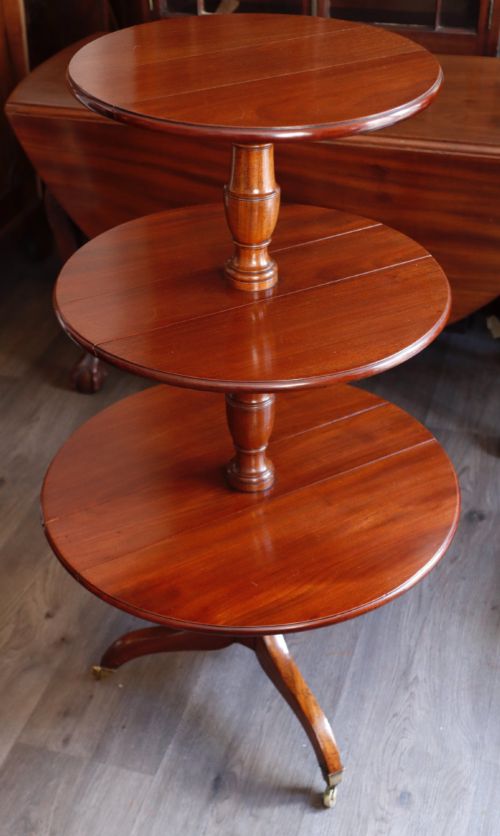
- A moveable tiered stand historically used in dining rooms to hold extra dishes without requiring servants. The term overlaps closely with three-tier buffets and etageres in nineteenth-century terminology.
- Etagere
- A piece of furniture consisting of a set of open shelves for displaying small objects or ornaments. These pieces share the tiered format of buffets but often possess a lighter decorative build.
- Metamorphic
- Describing furniture designed to change form, height, or function through mechanical devices. Rise-and-fall versions allow the shelves to adjust vertically.
- Barley Twist
- A spiral turning carved into wooden columns or legs. This decorative feature appears frequently on oak and walnut nineteenth-century supports.
- Castor
- A small wheel mounted on a swivel assembly attached to the base of furniture. Original brass castors help verify the period authenticity of the piece.
Victorian Three Tier Buffet: Frequently Asked Questions
How do I use a three tier buffet today?
These pieces function well as serving stations during meals or as display stands for books, plants, and ceramics in a living space. Their tiered layout maximises vertical display without taking up excessive floor area.
In a dining room, they provide convenient surfaces for bottles, glassware, and tableware close to the dining table.
What is the difference between a buffet and a dumb waiter?
Historically, dumb waiters often featured rotating tiers or smaller column-supported trays intended for passing food during private dining. Buffets generally offered larger rectangular shelves meant for permanent placement against a wall.
In nineteenth-century cataloguing, makers frequently used both terms interchangeably for multi-tiered wooden stands.
Are these pieces heavy to move?
Solid mahogany, oak, and walnut construction makes most examples relatively substantial in weight. Many units include their original brass castors to ease movement across floor surfaces.
Metamorphic and rise-and-fall versions contain internal mechanisms that add further weight to the central column.
How do I identify a Victorian example?
Victorian pieces typically display specific timber choices like burr walnut, rosewood, and dense mahogany, often combined with castors and turned supports. Stylistic markers such as Aesthetic Movement influences or heavy oak carving point toward the later nineteenth century.
Construction methods, including hand-cut joints and secondary softwood framing beneath the main veneers, help confirm the period.