




Aesthetic Movement Tier Shelf
These aesthetic movement tier shelf pieces bring distinct architectural forms and exotic detail to a room, offering both display space and period character.
Aesthetic Movement Tier Shelf
When you search for an aesthetic movement tier shelf, you encounter versatile multi-tiered items that served various display functions in Victorian homes. The examples on this page span the 1870s through to 1910, encompassing occasional tables, etageres, corner shelves, and side tables.
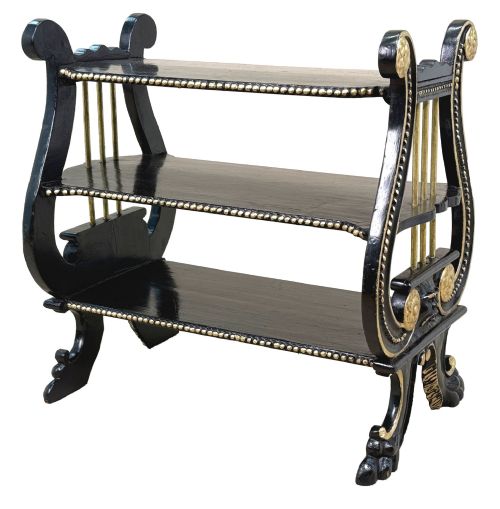
You are most likely to meet ebonised wood versions finished with parcel gilding, alongside bamboo and walnut constructions. These pieces often draw upon Anglo-Japanese design influences, reflecting the late nineteenth-century fascination with imported motifs and clean structural lines.
Materials and construction methods
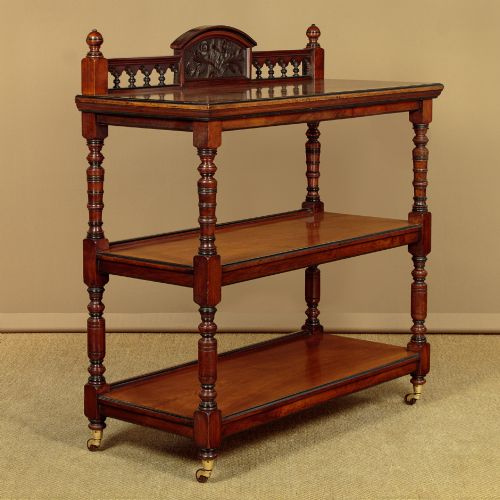
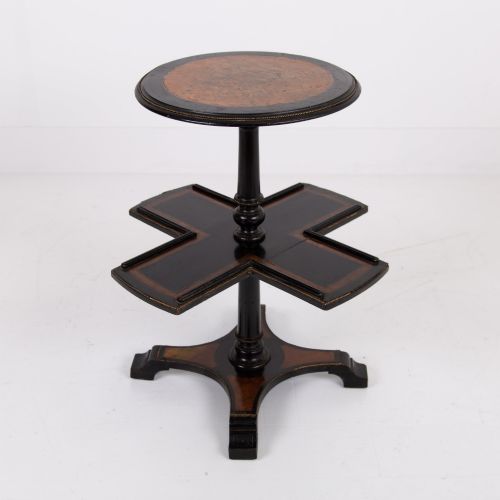
Makers utilised ebonised wood to mimic more expensive exotic hardwoods, frequently enhancing the dark surfaces with parcel gilt details to catch the light. Walnut and mahogany also appear in solid forms and decorative veneers, providing sturdy frames for multi-level shelving.
Bamboo and rattan form the structural basis for lighter, Japanois-inspired occasional tables and stands, sometimes paired with materials like leather. Brass hardware and fittings provide functional and decorative accents across the various tables, etageres, and overmantel mirrors.
Aesthetic Movement Tier Shelf Retail Price Guide 2026
Typical asking prices for aesthetic movement tier shelf among the pieces listed under this phrase on Sellingantiques today, from the lower quarter to the upper quarter. They describe what is for sale here now, not the wider market.
Makers sometimes turned humble bamboo and leather into exotic statements, proving that Victorian living rooms truly embraced botanical wanderlust.
Factors that distinguish quality
Quality rests in the precision of the joinery and the integrity of the materials, whether dealing with turned bamboo frames or heavy ebonised timber. Superior pieces display crisp parcel gilding and well-executed decorative details that remain intact across the tiers and joints.
The sophistication of the design distinguishes standard utility items from higher-tier examples, particularly those echoing the specific structural aesthetic associated with designers like E.W. Godwin. Better pieces integrate their multiple shelves and surfaces harmoniously without feeling cluttered.
Liberty and Co
The Aesthetic Movement Tier Shelf Glossary
- Étagère
- A piece of furniture consisting of a set of open shelves for displaying small objects. They became particularly popular during the Victorian period for showing off decorative porcelain and ornaments.
- Ebonised wood
- Timber treated with a dark stain or finish to imitate ebony. This technique was widely utilised during the nineteenth century to create high-contrast surfaces.
- Parcel gilt
- Partially gilded with gold leaf or gold paint to highlight specific carved details or edges. It creates a striking contrast against ebonised wooden surfaces.
- Anglo-Japanese style
- A design movement combining traditional Japanese artistic motifs with British furniture forms. It emerged strongly in the late nineteenth century through the influence of designers like E.W. Godwin.
- Occasional table
- A small, light table designed for a specific, transient use in a room. These versatile items appear frequently in bamboo and walnut across this period.
Aesthetic Movement Tier Shelf: Frequently Asked Questions
What is an aesthetic movement tier shelf?
An aesthetic movement tier shelf refers to multi-level display furniture produced during the late nineteenth century. These pieces emphasise decorative arrangement and structural clarity.
They encompass formats like etageres, side tables, and corner stands. Their design draws heavily on the period's interest in Asian art and simplified forms.
How were these pieces used originally?
Households used these multi-tiered items to display ceramics, small ornaments, and books in parlours and drawing rooms. They served as focal points for decorative collections.
Smaller bamboo stands and side tables functioned easily as mobile surfaces for tea or reading materials. Their stepped shelves maximised display space within compact footprints.
How do I identify a Victorian piece?
Victorian examples generally date from the 1870s and 1880s, often featuring ebonised wood, parcel gilding, and distinct Anglo-Japanese motifs. Construction methods align with late nineteenth-century cabinetmaking.
Later pieces extending into 1910 lean more toward natural bamboo and rattan materials. Examining the primary materials helps place the object within its correct decade.
How do I live with these tables?
These pieces integrate well into modern interiors by providing vertical display space without heavy floor footprints. Their dark ebonised surfaces or natural bamboo textures add immediate period contrast.
Position them as accent tables in living spaces or hallways where their tiered structure can hold plants or small decorative objects. Avoid placing them in overly damp environments to protect the wood and gilded finishes.