



Victorian Wooden Dinner Wagon
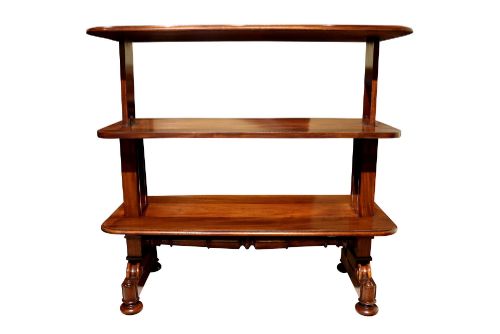
A victorian wooden dinner wagon is a robust, tiered serving piece designed for heavy dining rooms.
Victorian Wooden Dinner Wagon
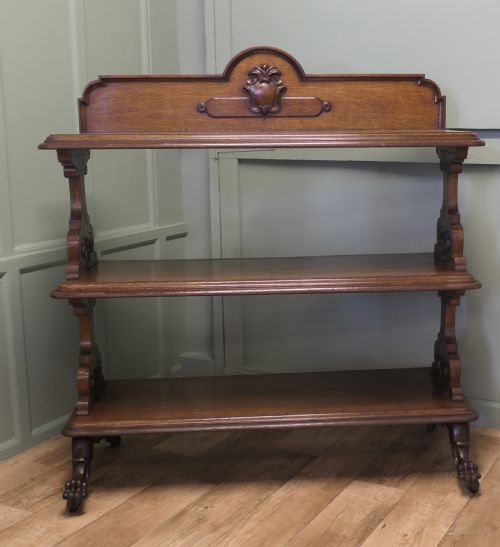
A victorian wooden dinner wagon comprises tiered sideboards, buffets, and dumb waiters built for formal service. Most examples seen here date from the nineteenth century, including Victorian, William IV, and Edwardian periods.
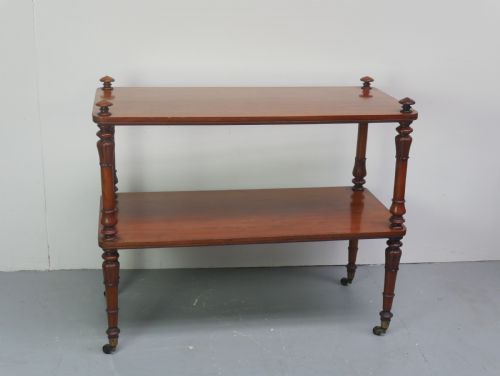
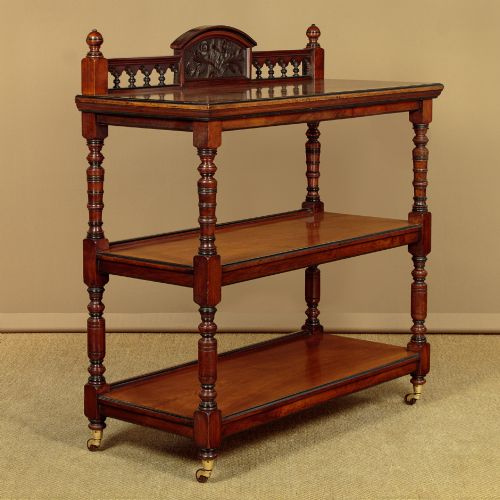
Forms range from three-tier stands and rise and fall servers to pieces featuring cabinets and original castors. These items served dining spaces by holding heavy dishes and silverware close to the table.
How they were made
Cabinetmakers constructed these servers using solid timbers and veneers including mahogany, oak, walnut, and pollard oak. Brass fittings and ceramic elements frequently appeared on castors and handles.
Carved decoration defined stylistic variations such as the Aesthetic Movement, while functional mechanics enabled rise and fall tiers on specific dining wagons.
Victorian Wooden Dinner Wagon Retail Price Guide 2026
Typical asking prices for victorian wooden dinner wagon among the pieces listed under this phrase on Sellingantiques today, from the lower quarter to the upper quarter. They describe what is for sale here now, not the wider market.
Listings feature mahogany, oak, walnut, and pollard oak pieces spanning the Victorian, Edwardian, and William IV periods.
What varies in quality
Distinctions in quality rest upon timber selection and the presence of original elements such as castors. Pieces built with pollard oak or detailed carving separate standard utility items from finer dining furniture.
Structural integrity across multiple tiers and smooth mechanical operation on rise and fall designs dictate the overall standard of a piece.
The Victorian Wooden Dinner Wagon Glossary
- Dumb waiter
- A multi-tiered piece of dining furniture used for holding food and dishes without servants present. These stands usually feature two or three shelves.
- Buffet
- A sideboard or serving table designed for displaying and serving food in a dining room. They frequently incorporate tiers or cabinets.
- Pollard oak
- Oak timber taken from trees that have been pollarded, producing a distinctive knotted grain pattern. Cabinetmakers used this wood for decorative veneer surfaces.
- Rise and fall
- A mechanical mechanism allowing specific tiers on a buffet to adjust in height. This feature suited changing dining requirements.
- Aesthetic Movement
- A late nineteenth-century design style focusing on visual beauty rather than narrative meaning. Furniture from this period often displayed simpler geometric lines.
Victorian Wooden Dinner Wagon: Frequently Asked Questions
What is a victorian wooden dinner wagon used for?
These pieces served nineteenth-century dining rooms by holding extra dishes, serving platters, and cutlery. They kept food accessible without cluttering the main dining table.
Today, they function as practical serving stations, drinks trolleys, or display surfaces in living spaces and kitchens.
What woods were used for these buffets?
Cabinetmakers primarily used mahogany, oak, walnut, and pollard oak. These hardwoods provided the structural strength needed to support heavy dining porcelain and silver.
Finer pieces utilised decorative veneers to highlight the natural grain patterns of walnut and pollard oak.
Are castors original on these pieces?
Original castors are frequently found on nineteenth-century servers, often made of brass or incorporating ceramic wheels. They allowed heavy wooden furniture to move smoothly across carpeted or wooden floors.
Checking the fixings helps determine whether the castors match the period of the main structure.