


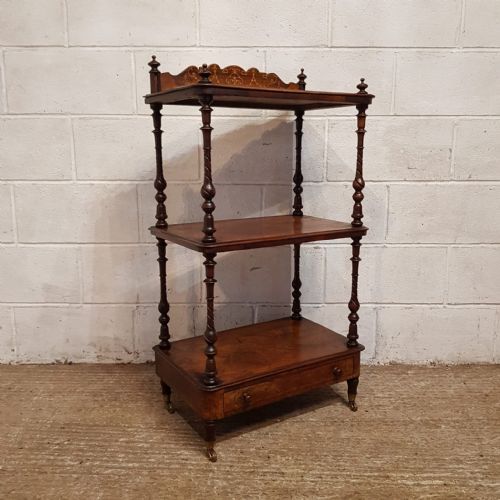

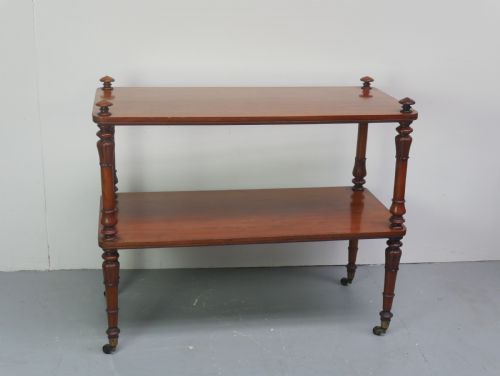


Antique Wooden Whatnot
An antique wooden whatnot brings tiered open shelving and display space into a room, serving collectors who value traditional multi-tier storage.
Antique Wooden Whatnot
An antique wooden whatnot is a multi-tiered open shelving unit designed for displaying decorative objects, books, and curiosities. The pieces listed on this page span the Georgian, Regency, and Victorian periods, alongside later revival examples.
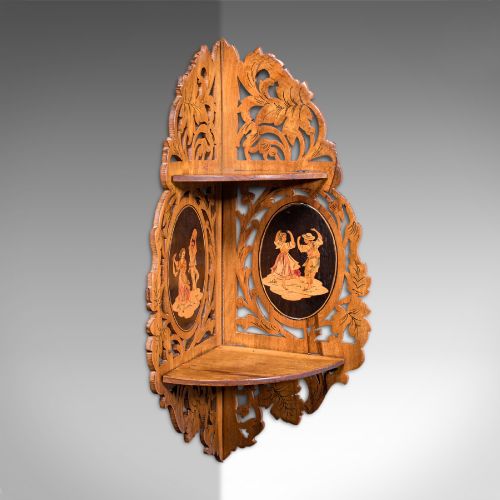
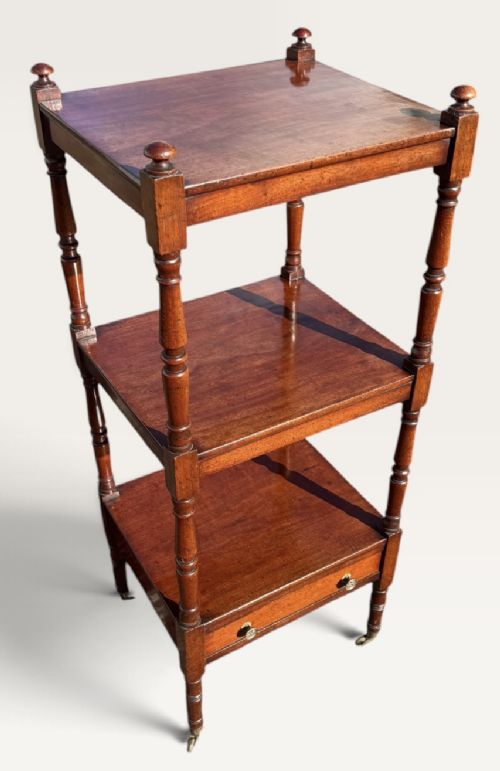
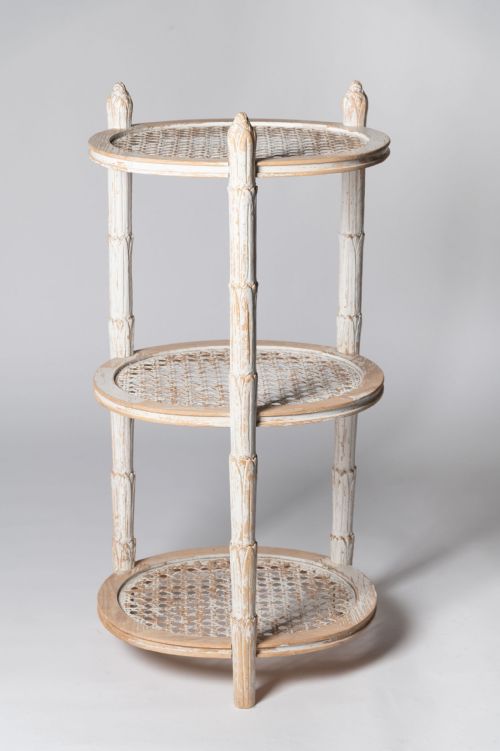
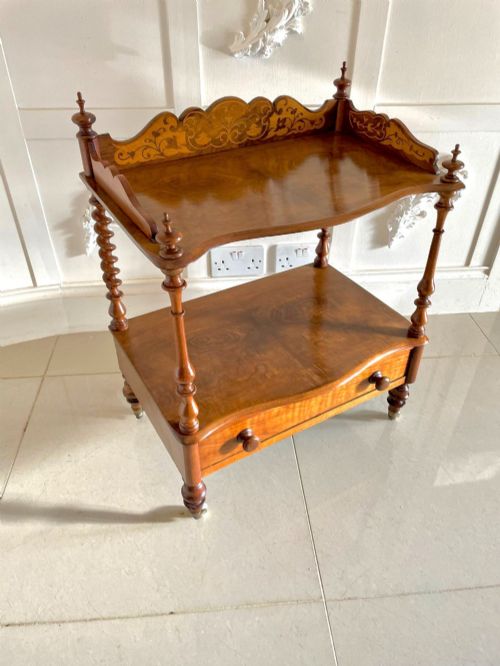
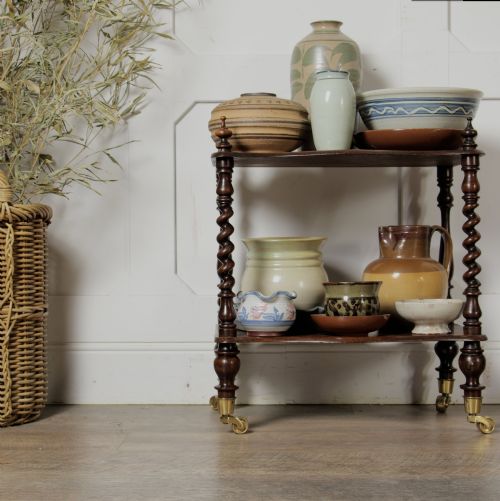
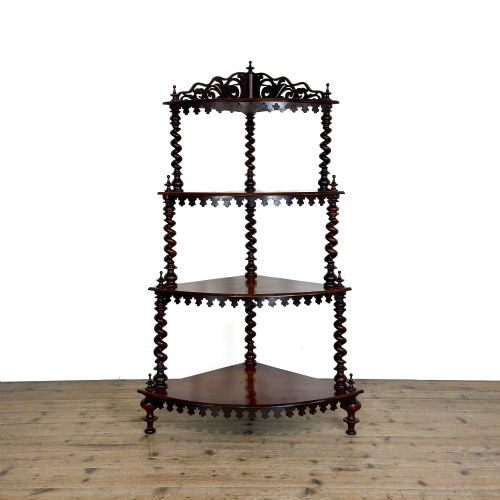
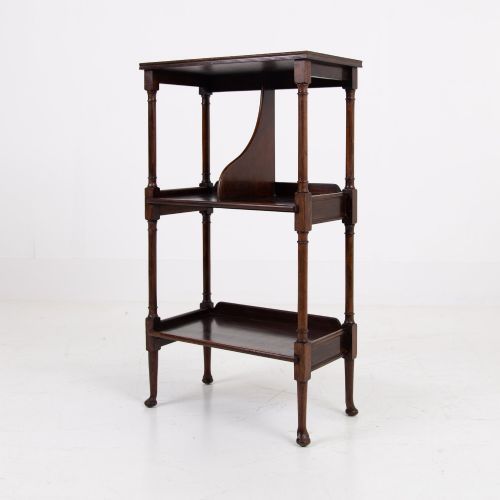
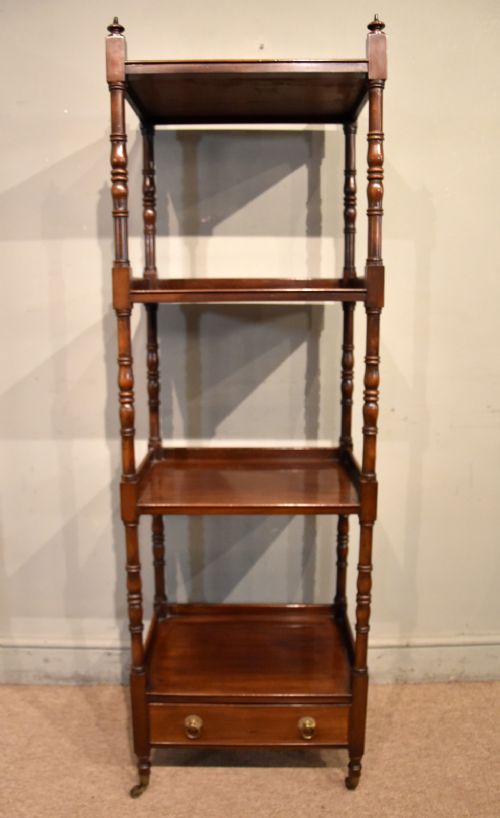
Most pieces met here are constructed as freestanding or corner display units featuring three or more shelves supported by turned columns, uprights, or barley twist supports. Some variations incorporate lower cupboards, drawers, or serving surfaces such as buffets and dumb waiters.
Origins range from English cabinet workshops to Anglo-Indian production, utilising domestic and imported timbers configured for specific domestic display needs. Buyers most frequently encounter mahogany and walnut iterations from the nineteenth century.
Materials and Construction
Cabinet makers constructed these tiered stands using dense hardwoods including mahogany, walnut, burr walnut, rosewood, and padauk, often enhanced with contrasting veneers or marquetry inlay. Timber selection dictated both the structural integrity of slender uprights and the visual richness of display shelves.
Joinery methods relied on precision-turned columns, sturdy corner posts, and fitted shelves secured by traditional pegging or screw fixings concealed within the uprights. Finer examples integrated decorative carvings, pierced galleries, mirrored backs, or incorporated drawers and cellarettes into the lower tiers.
Antique Wooden Whatnot Retail Price Guide 2026
Typical asking prices for wooden whatnot among the pieces listed under this phrase on Sellingantiques today, from the lower quarter to the upper quarter. They describe what is for sale here now, not the wider market.
Listings feature 19th Century, Victorian, Regency, and Georgian periods, utilising mahogany, walnut, burr walnut, rosewood, glass, padauk, and burr walnut veneer.
Distinctions in Execution
Quality separates through the selection of timber figures, such as highly figured burr walnut or dense grain mahogany, and the crispness of turned supports and applied carvings. Superior pieces demonstrate meticulous grain matching across tiers and refined joinery that maintains rigidity without heavy bracing.
Exhibition or fine workshop examples distinguish themselves through complex secondary functions, such as integrated writing surfaces, mirrors, musical stands, or intricate marquetry inlay, whereas simpler utility stands rely on straightforward tiered shelving with minimal ornamentation.
The Antique Wooden Whatnot Glossary
- Whatnot
- A piece of furniture consisting of a set of open shelves for displaying small objects or books. They became popular in the eighteenth century and remained essential domestic furnishings through the Victorian era.
- Etagere
- A piece of furniture with a set of open shelves for ornament, closely related to the whatnot. These often emphasise display and decorative detailing over heavy storage.
- Barley twist
- A type of turning shaped like a helix, resembling a twisted rope or barley sugar. This decorative motif appears frequently on the upright supports of nineteenth-century stands.
- Canterbury
- A low stand with partitioned sections for sheet music, books, or newspapers, frequently combined with whatnot shelving. They often incorporate a small drawer beneath the partitions.
- Padauk
- A heavy, durable tropical hardwood with a reddish hue, utilised in Anglo-Indian and colonial furniture production. Its dense nature allowed for robust open shelving and fine carved details.
Antique Wooden Whatnot: Frequently Asked Questions
What is an antique wooden whatnot used for?
These pieces served originally to display ornaments, china, and books in drawing rooms and parlours where accessible surface space was valued. Their tiered design allowed households to exhibit various decorative items without cluttering larger tables.
Today, collectors utilise them in living spaces and bedrooms for organising books, plants, and small collections. Their vertical footprint makes them practical for utilising corner spaces and narrow walls.
How do I identify a Georgian whatnot?
Georgian examples typically feature clean lines, simple mahogany framing, and restrained joinery compared to later Victorian iterations. They often take the form of three-tier stands or A-frame structures with minimal ornamentation.
Cabinet work from this period prioritizes structural timber quality and straightforward geometric proportions over applied decoration or complex veneers.
What is the difference between a whatnot and an etagere?
While both terms describe multi-tiered shelving units, an etagere historically places greater emphasis on decorative display and lighter framing. Whatnots frequently include functional additions like drawers, cupboards, or music stands alongside the shelves.
In practical terms, makers and dealers often used the two terms interchangeably for nineteenth-century open shelving units.
Where should I place a whatnot at home?
Corner whatnot designs fit neatly into unused angles of a room, maximising floor space while providing multiple display levels. Freestanding rectangular versions work well against living room walls or as room dividers when finished on all sides.
Position them away from direct sunlight and heat sources to protect polished wood surfaces and delicate veneers from drying out.