

Regency Tiered Display Stand
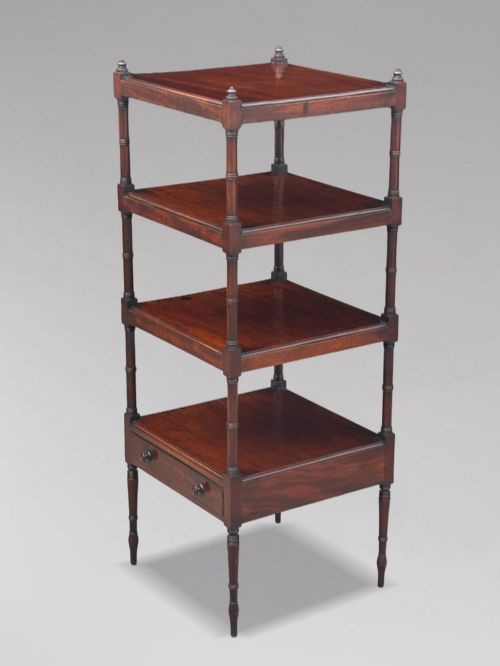
A regency tiered display stand brings vertical elegance to a room, offering multiple open tiers designed to hold books, music, and decorative objects.
Regency Tiered Display Stand
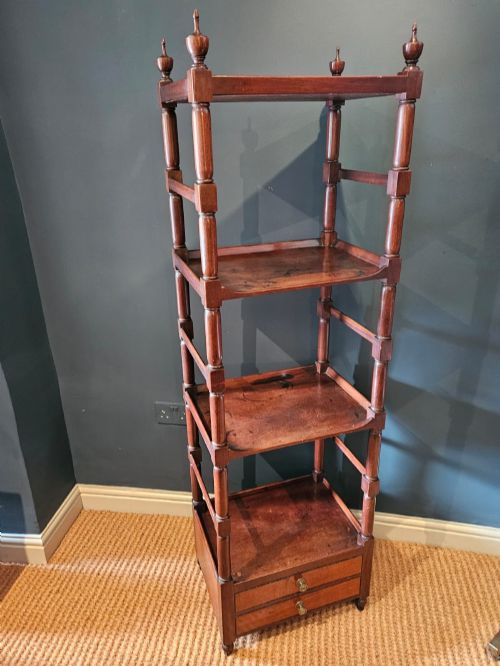
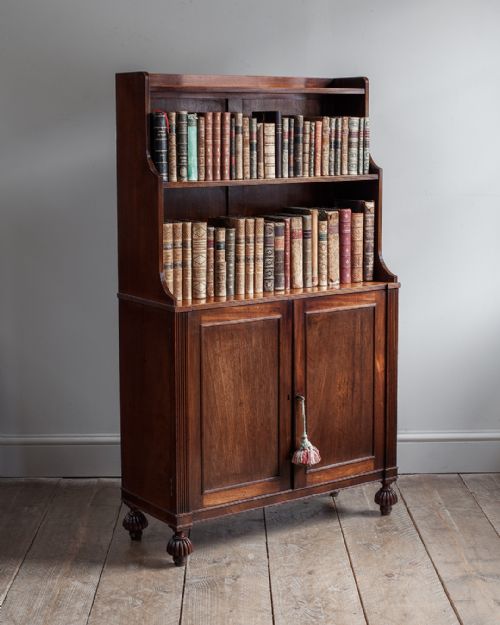
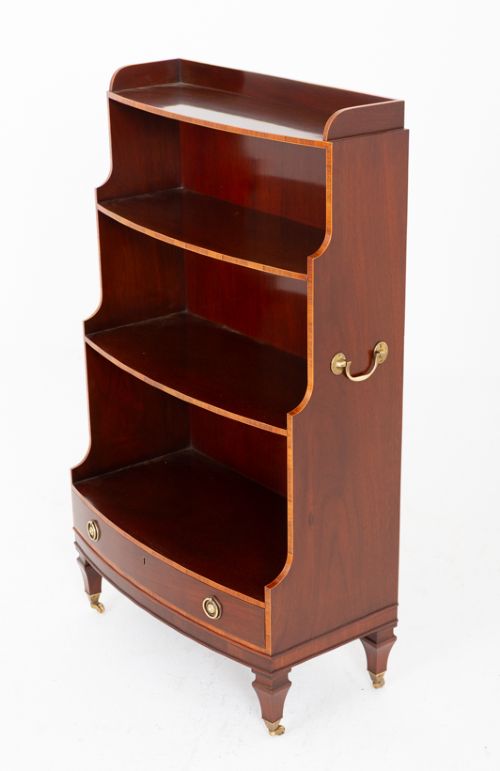
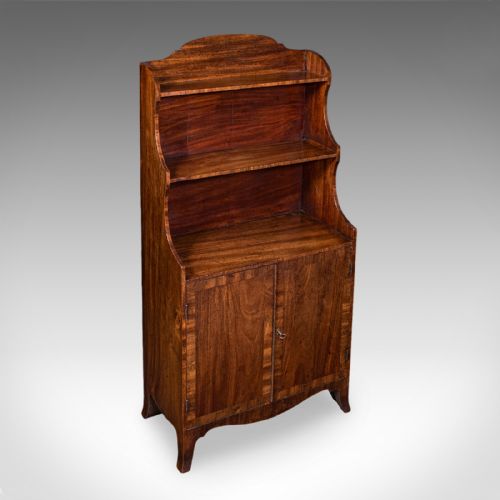
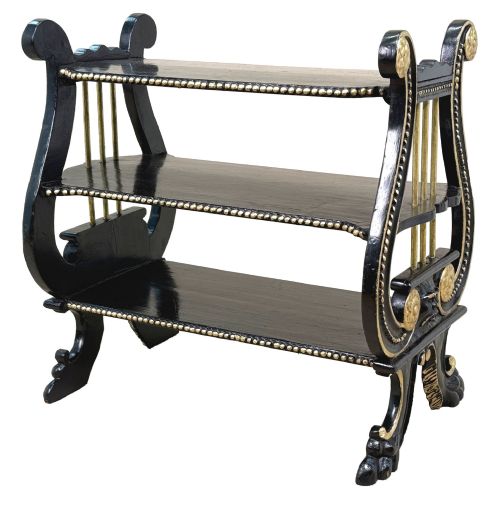
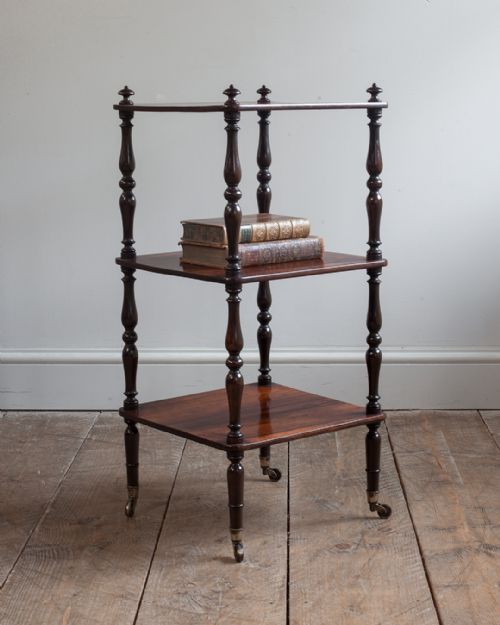
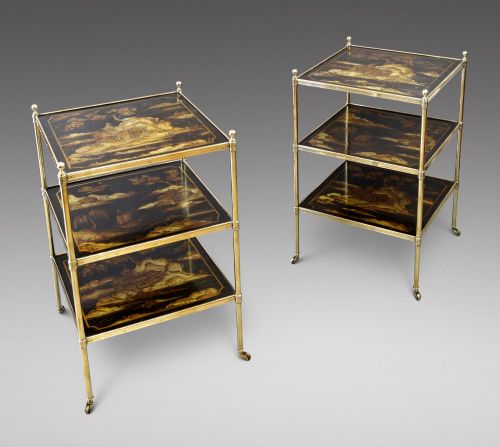
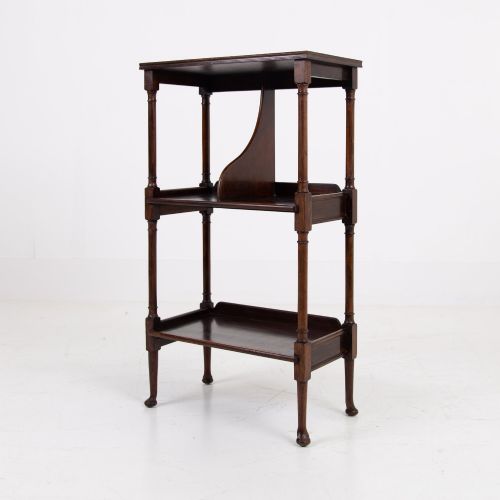
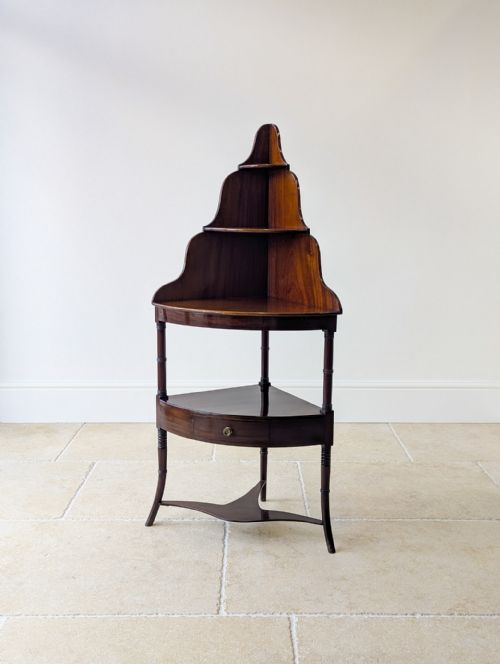
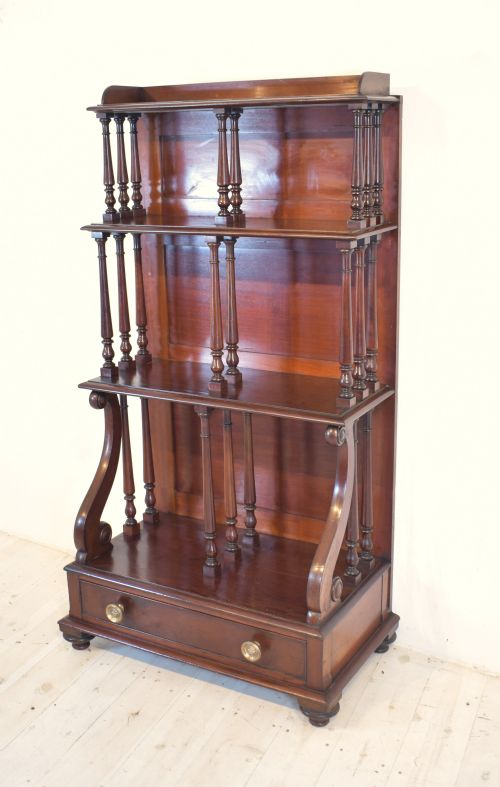
A regency tiered display stand encompasses pieces known variously as what-nots, etagères, waterfall bookcases, and music stands, mostly dating from the Regency period through to the nineteenth century, with later revivals also appearing.
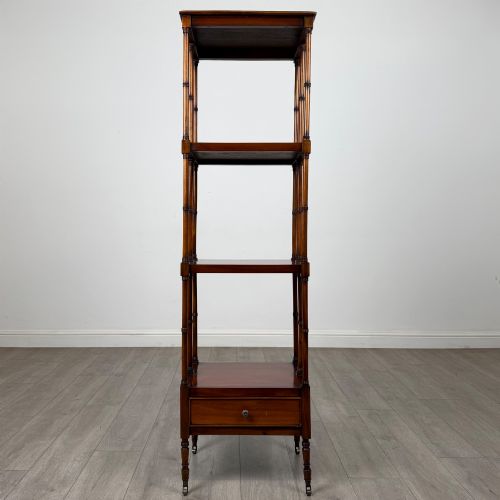
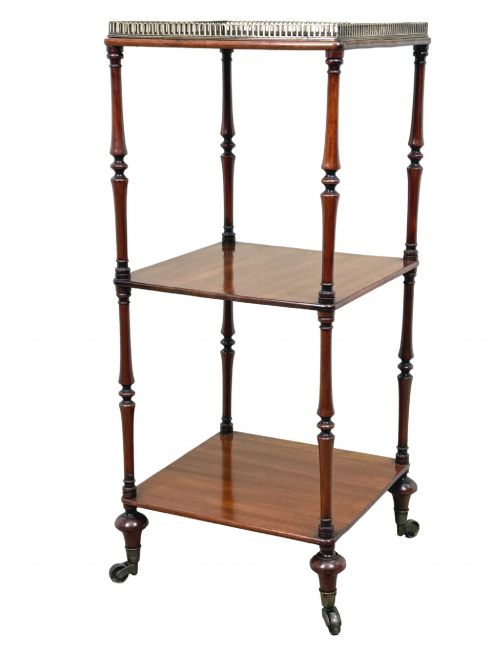
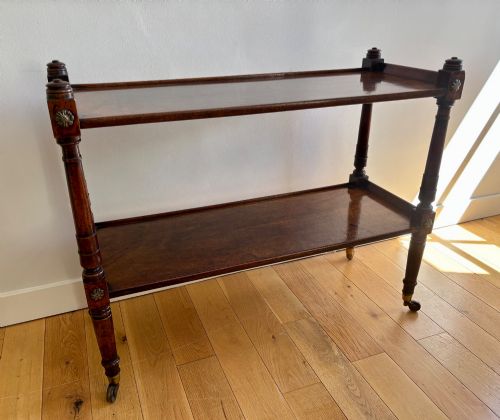
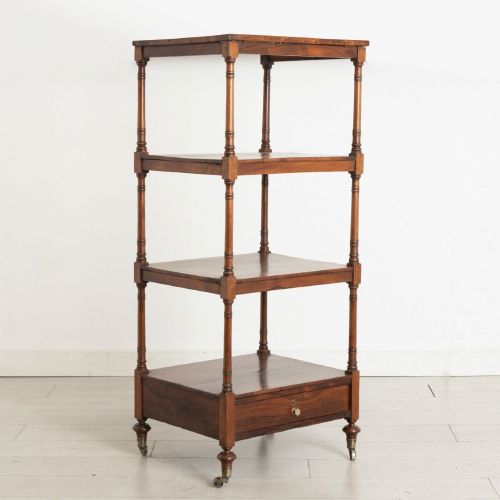
These pieces provide graduated open shelves supported by upright columns or turned supports, often terminating in small feet or castors for mobility around the drawing room or library.
The version most commonly met on this page is the freestanding mahogany or rosewood multi-tier stand, sometimes featuring a small lower cupboard, drawer, or cellarette alongside its open display levels.
Materials and construction
Cabinet makers utilised dense native and imported timbers, notably mahogany, flame mahogany, rosewood, and occasionally burr walnut or ebonised wood, to provide structural strength for stacked tiers without excessive bulk.
Fine turned wooden columns, brass fittings, and delicate spindle galleries secure the graduated shelves, while careful jointing allows tall tiered structures to remain stable under the weight of books and ornaments.
Listings feature pieces spanning the Georgian, Regency, William IV, Victorian, and Edwardian eras, executed in mahogany, rosewood, walnut, oak, and brass.
Distinctions in quality
Quality rests upon the selection of timber veneers, such as richly figured flame mahogany or dense grain rosewood, and the crispness of turning on the upright supports.
Superior examples display refined details like fine brass casters, pegged joints, integrated drawers with solid linings, and proportioned tiers that taper gracefully from bottom to top.
Gillows
The Regency Tiered Display Stand Glossary
- What-not
- A set of open shelves for displaying small objects, books, or ornaments, developed in the late eighteenth century and popular throughout the Regency era.
- Étagère
- A piece of furniture consisting of a number of open shelves for holding display items, closely related to the what-not.
- Waterfall bookcase
- A graduated set of open bookshelves where each tier steps back from the one below it, creating a cascading profile.
- Cellarette
- A lockable compartment or drawer incorporated into the lower section of a stand, originally intended for holding wine bottles.
- Parcel gilded
- Partially covered with gold leaf to highlight carved wooden details or mouldings against an ebonised or dark background.
Regency Tiered Display Stand: Frequently Asked Questions
What did people put on a regency tiered display stand?
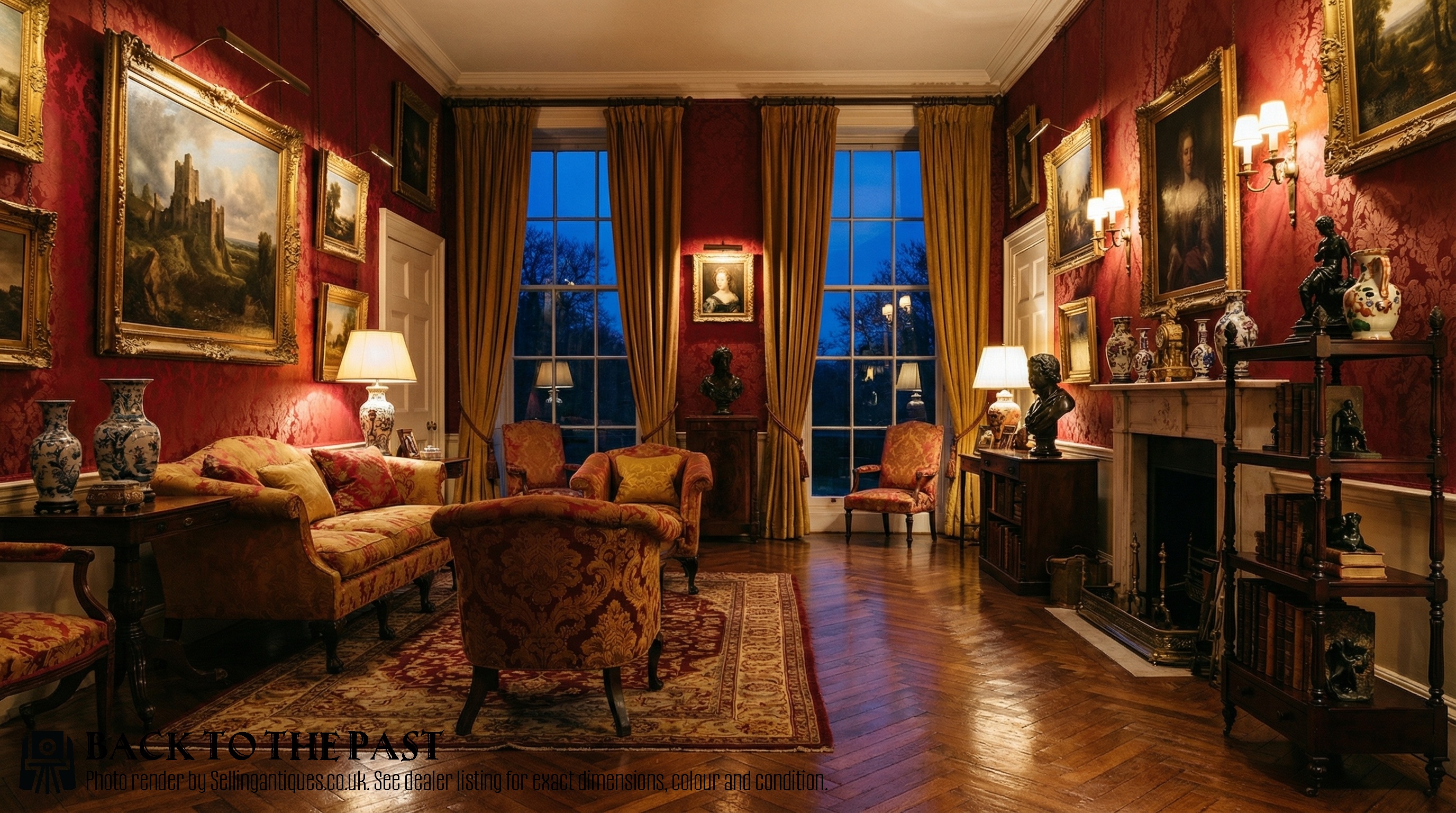
These stands served as versatile living room furniture for holding portable items like books, music scores, tea equipment, and decorative ceramics. Owners placed them beside seating areas or against walls to keep everyday reading and display items within reach.
Over time, their role shifted from utilitarian storage to prominent display pieces for fine ornaments. The open tiered design allowed owners to exhibit collections from multiple angles.
How do I tell a Regency stand from a Victorian one?
Regency stands typically feature crisper lines, lighter proportions, and architectural column supports reflecting classical taste. Timbers like straight-grained mahogany and rosewood predominate, often paired with subtle brass detailing.
Victorian and later revival pieces often introduce heavier mouldings, darker ebonised surfaces, or more ornate turned decoration. Examining the construction of the joints and timber depth helps clarify the period of manufacture.
Were these stands made for specific rooms?
Cabinet makers designed these tiered pieces primarily for drawing rooms, libraries, and music rooms where flexible surface space was valuable. Their compact footprints suited the perimeter of formal entertaining spaces.
Music stands and smaller etagères also functioned near piano stools or writing desks. Their portability meant servants could move them easily to suit the needs of the household.
Can I use a tiered stand for books today?
Most antique stands easily accommodate modern hardbacks and paperbacks on their lower, deeper shelves, while upper tiers suit lighter volumes or decorative items. Care should be taken not to overload fragile antique rosewood or mahogany shelves.
Placing the stand out of direct sunlight helps protect polished timber surfaces from fading. Ensuring the piece sits level on the floor keeps the stacked tiers stable.