
Georgian Mahogany Open Bookcase
A georgian mahogany open bookcase offers accessible shelving in dense timber, bringing period character and practical storage to a room.
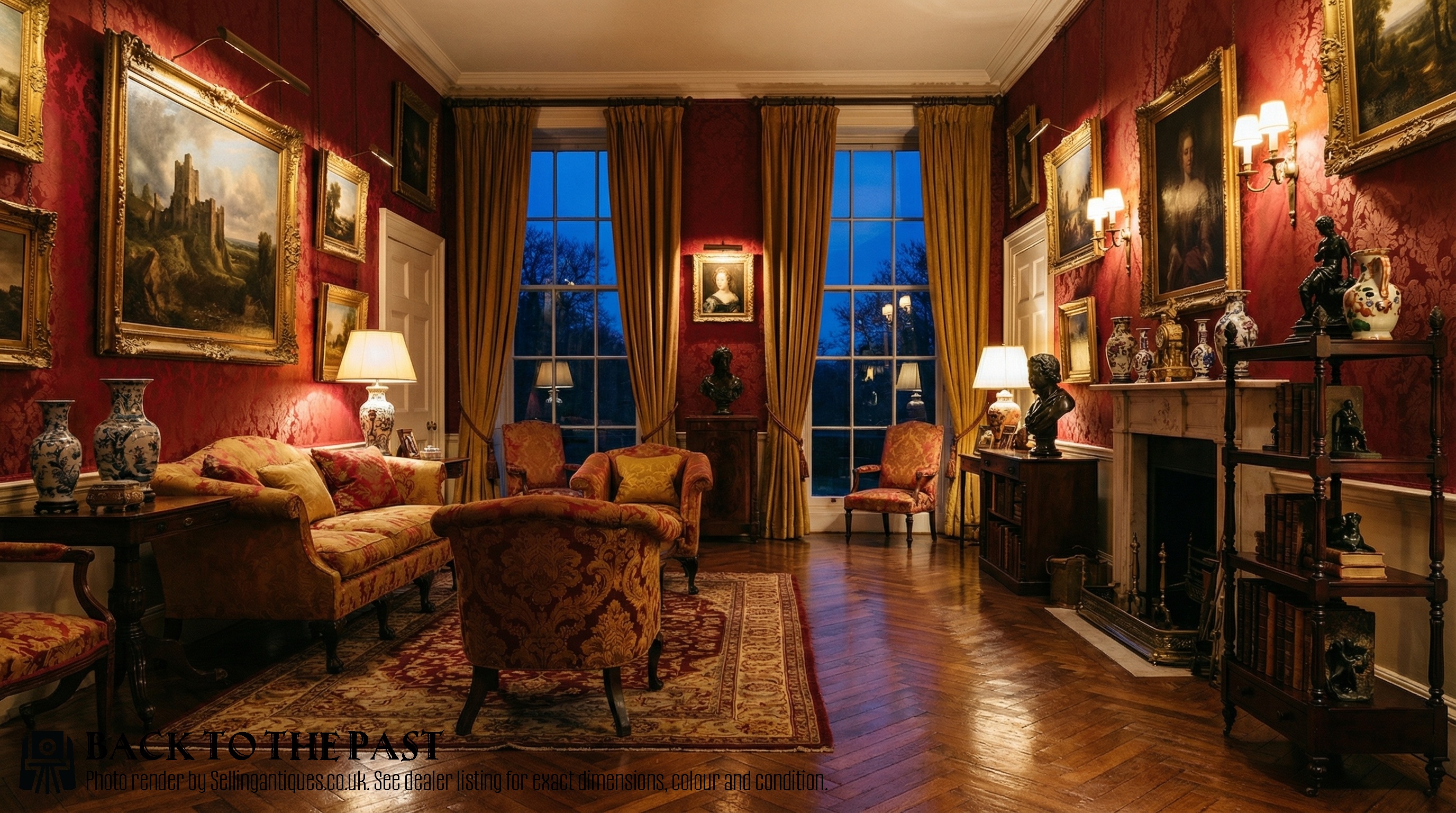
Georgian Mahogany Open Bookcase
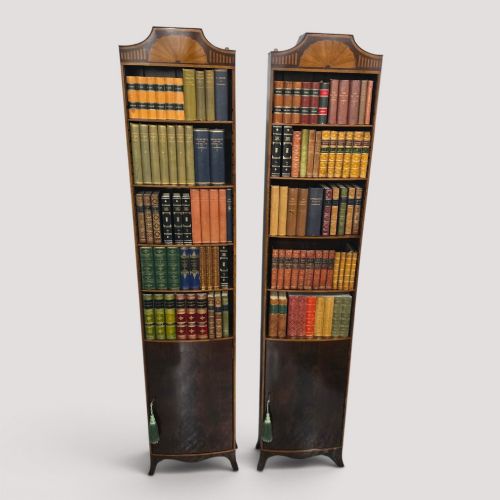
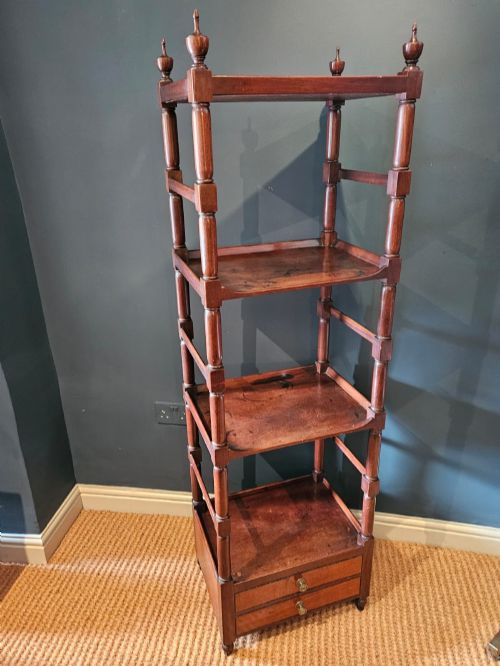
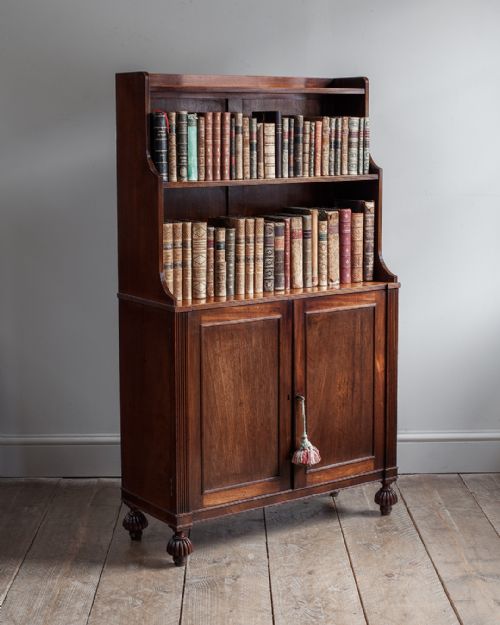
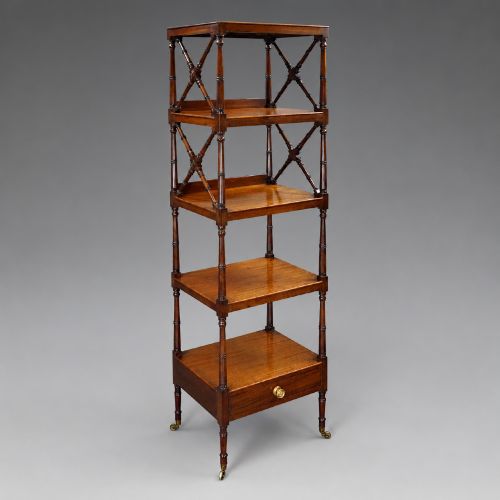
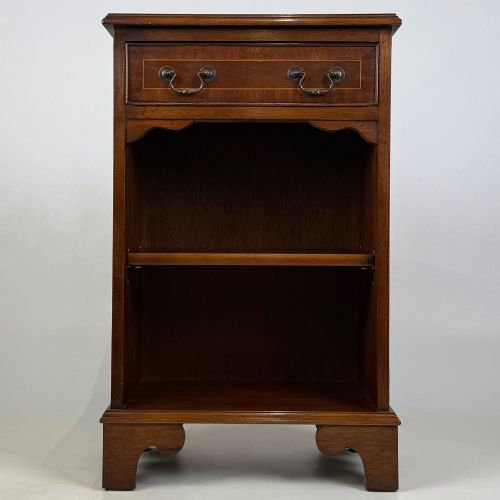
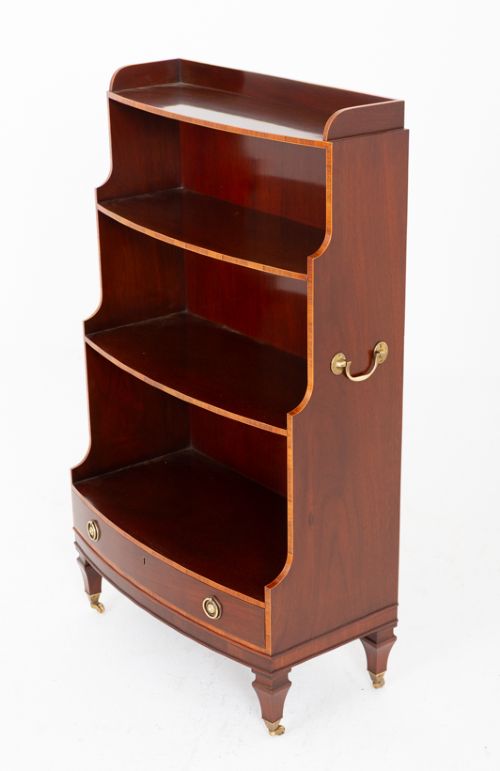
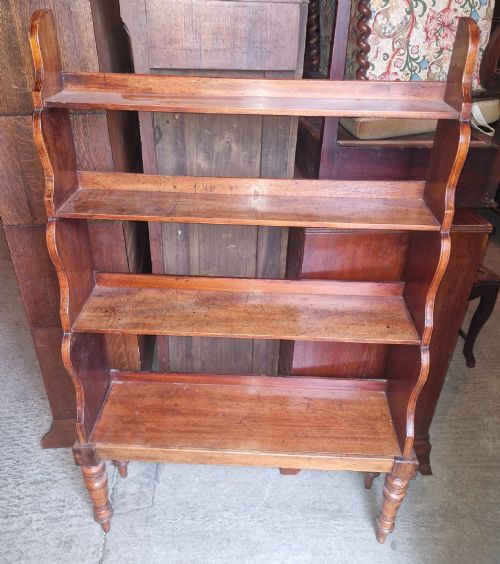
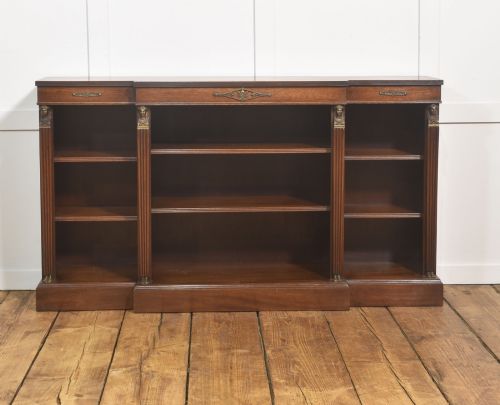
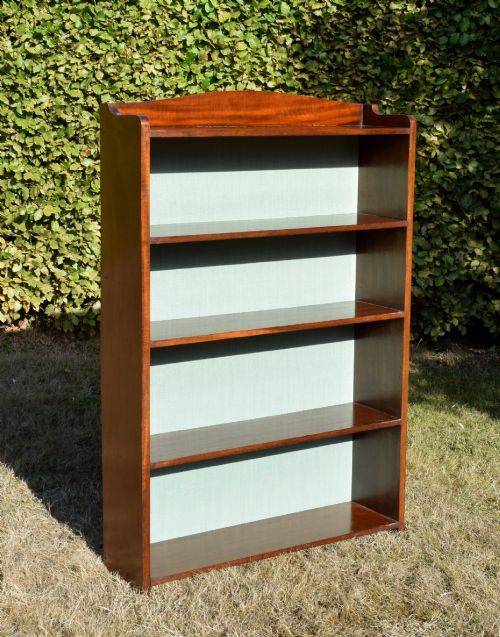
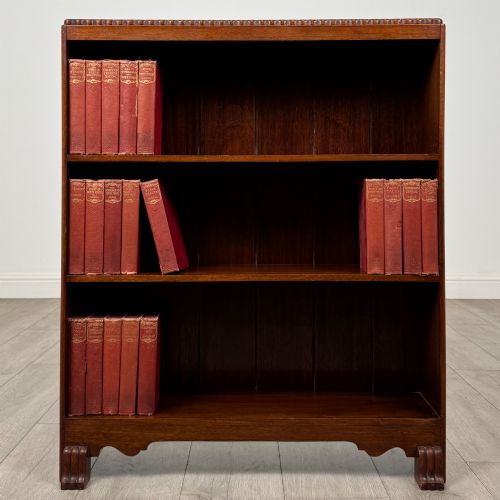
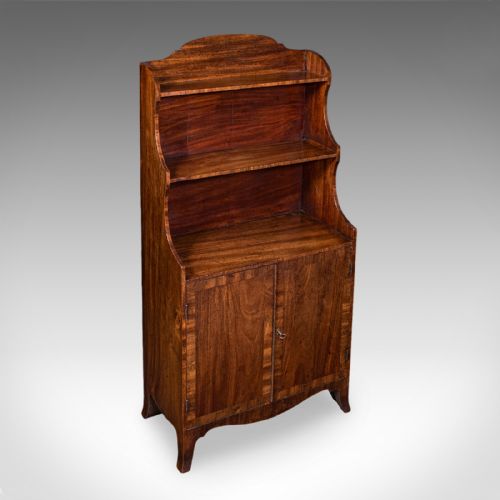
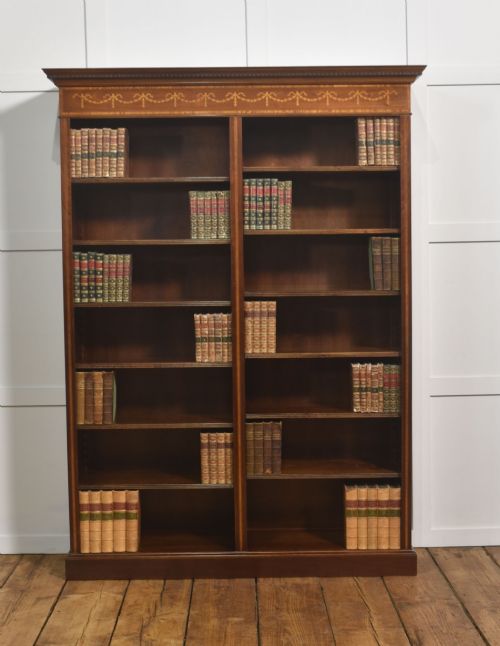
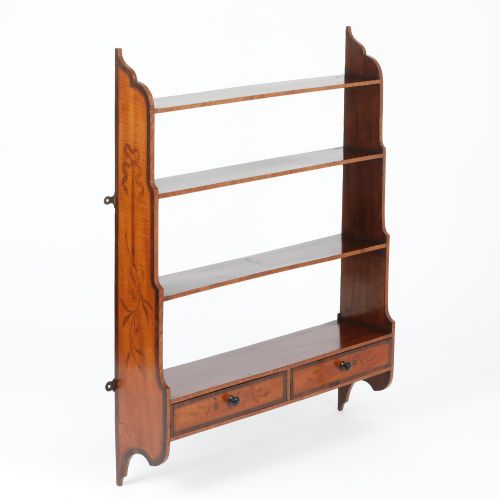
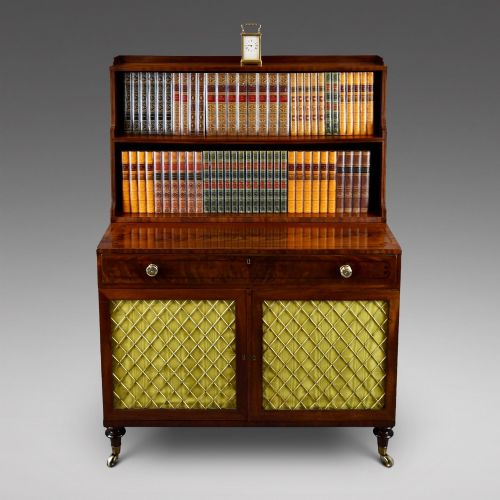
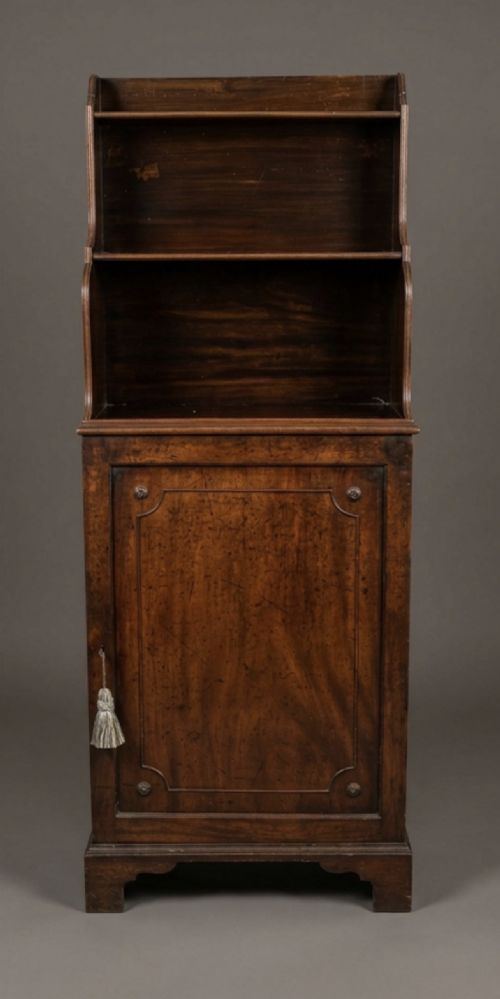
A georgian mahogany open bookcase brings accessible tiered shelving to a room, serving as a practical home for books and decorative objects. When you search for a georgian mahogany open bookcase, you encounter varying formats ranging from compact dwarf bookcases and four-tier what-nots to tall libraries and waterfall designs.
The pieces appearing on this page span several eras including Georgian, Regency, Victorian, and Edwardian periods, alongside later revivals. While true 18th-century pieces exist, many examples reflect later Georgian styles or Edwardian and 1910 reproductions built to the same architectural proportions.
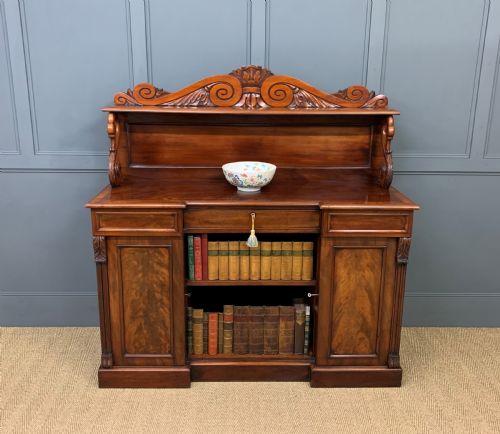
Most selections feature freestanding configurations, though wall-hanging bookshelves and breakfront library cabinets also appear. The timber grain ranges from plain wood to figured flame mahogany veneer, often accented with satinwood inlay or brass details.
How They Were Made
Cabinet makers utilised solid mahogany and pine for structural carcases, applying flame mahogany veneer to visible exterior surfaces for rich visual depth. Timber selection dictated how well a piece held fine mouldings and stepped cornices.
Makers incorporated satinwood inlay and brass mounts to decorative effect, contrasting light wood against dark polished mahogany. Shelves were frequently made adjustable using wooden ratchets or brass strip supports, allowing the interior space to adapt to volumes of different heights.
The archive records pieces ranging from dwarf bookcases and chiffoniers to tall breakfront libraries and tiered what-nots.
What Varies in Quality
The distinction between ordinary and exceptional pieces rests on the choice of timber and the crispness of the joinery. Selected flame veneers show lively figuring across the front, whereas lesser examples rely on plain, uniform wood boards.
Proportion and architectural detailing set finer bookcases apart from standard workshop output. Well-defined plinths, balanced tier heights, and precise stringing elevate a piece from a simple storage box to a measured item of furniture.
Waring and Gillows
The Georgian Mahogany Open Bookcase Glossary
- Breakfront
- A piece of furniture where the central section projects forward from the flanking wings. This configuration creates visual depth in larger library bookcases.
- Waterfall bookcase
- A set of open shelves that steps back progressively from bottom to top, creating a profile resembling descending water. These pieces often feature graduated tiers supported by curved side panels.
- What-not
- A multi-tiered open stand designed for displaying books, ornaments, or small objects. These pieces sit on slender upright supports and date frequently from the Regency period.
- Chiffonier
- A low cabinet with shelves or a superstructure on top, combining closed cupboard storage with open display space. They appear often in mahogany and flame mahogany veneers.
- Satinwood
- A pale, hard timber utilised for contrasting stringing and geometric inlays on mahogany carcases. It provides a bright golden accent against darker woods.
Georgian Mahogany Open Bookcase: Frequently Asked Questions
What is a dwarf bookcase?
A dwarf bookcase is a low open shelving unit designed to sit beneath window height. These pieces keep floor space clear while holding a functional collection of volumes.
They appear across Regency and Victorian periods, often featuring adjustable shelves and simple plinth bases.
How do I style an open bookcase?
An open bookcase accommodates books arranged vertically and horizontally alongside small decorative objects. Mixing heights creates visual balance across the tiers.
Leaving small gaps prevents the shelves from looking crowded and highlights the mahogany grain behind the books.
Are the shelves adjustable?
Many period and revival bookcases feature adjustable shelving supported by wooden bearer strips or brass notches. This mechanism allows you to change shelf heights for folio volumes.
Fixed shelves remain common in smaller waterfall designs and simpler wall-hanging versions.