



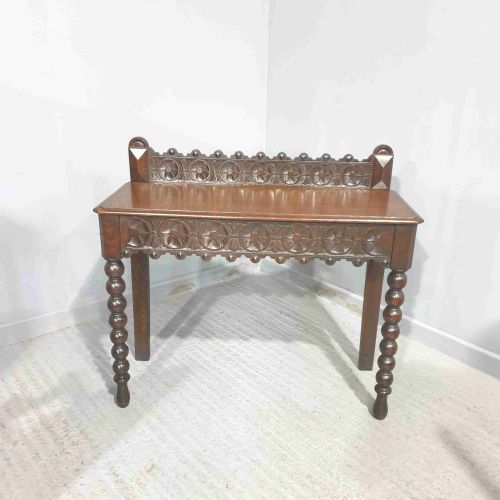
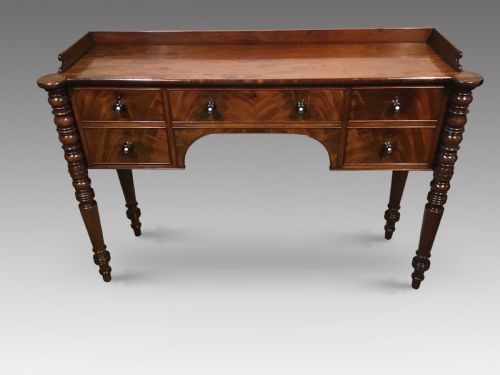
Victorian Gallery Back Table
A victorian gallery back table provides a practical raised rear ledge to protect walls, combining everyday utility with period character.
Victorian Gallery Back Table
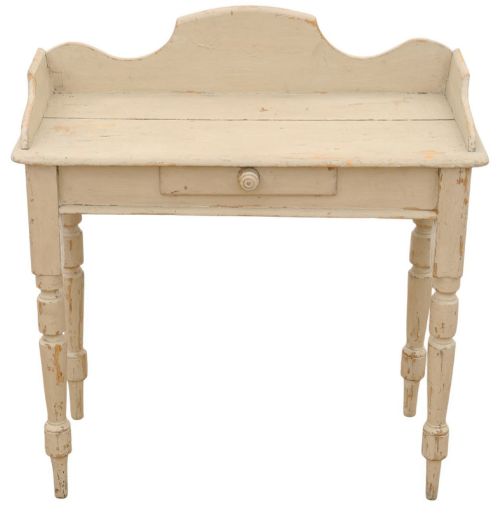
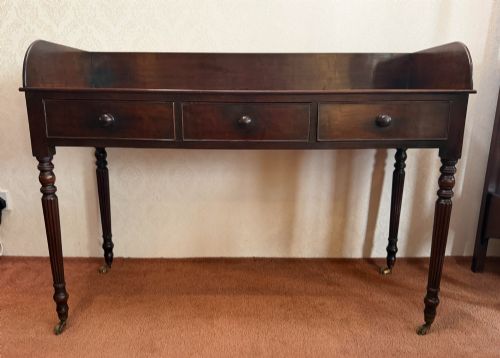
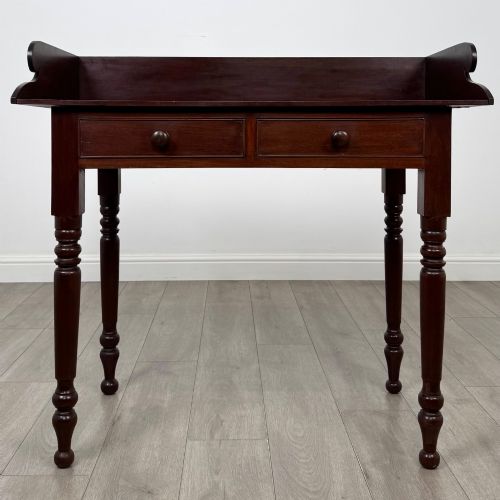
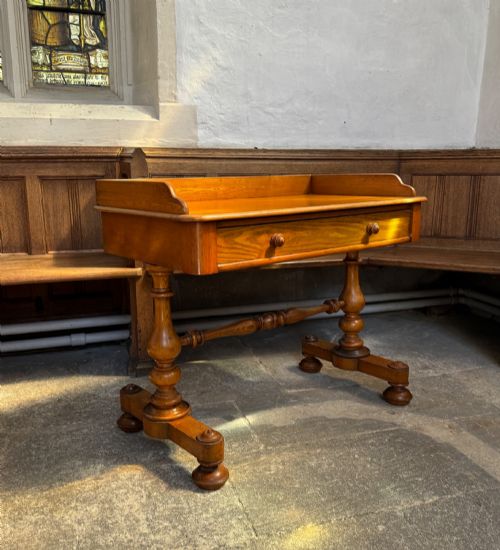
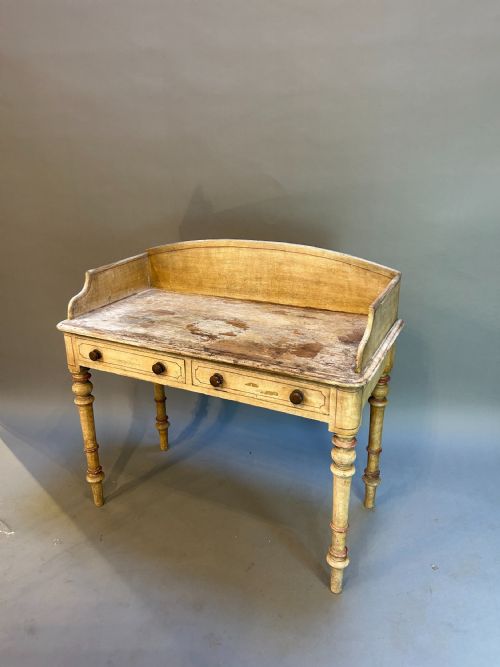
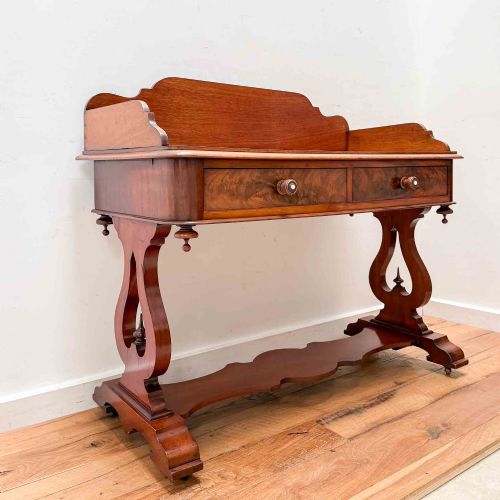
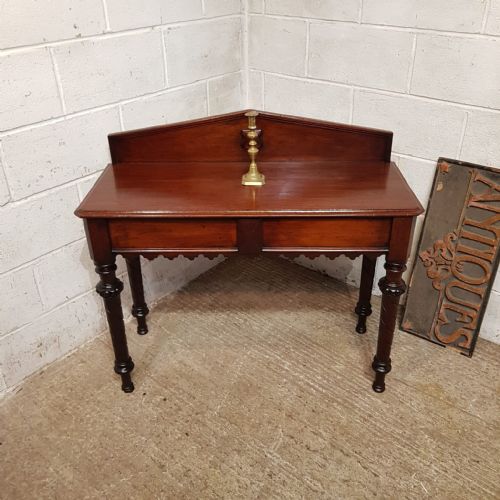
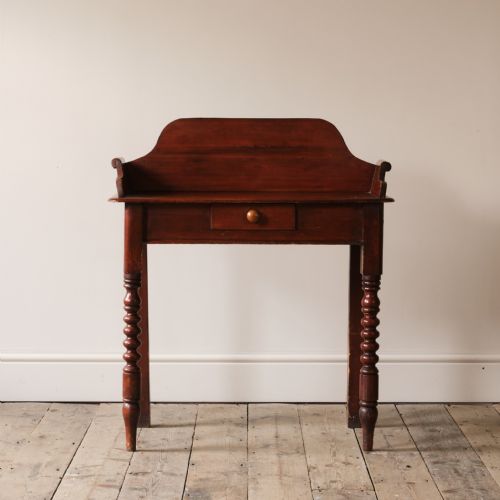
A victorian gallery back table primarily takes the form of side tables, writing tables, and washstands featuring a raised upstand at the rear. These pieces originate predominantly from the 19th Century, spanning periods like Regency and Victorian, often serving specific utilitarian roles in bedrooms, halls, and studies.
The format ranges from simple pine washstands with tile or painted gallery backs to formal mahogany writing desks and console tables. Buyers searching for a victorian gallery back table will encounter functional drawer configurations, ranging from single drawer layouts to two drawer friezes.
Makers and workshops utilised various regional designs, incorporating styles such as Gothic Revival, rustic farmhouse, and Jacobean revival alongside standard Victorian aesthetics. The presence of the gallery back defines these versatile items, preventing items from rolling off the surface while adding a distinct architectural feature.
Factors Determining Quality
The choice of primary timber significantly dictates the standard of a piece, with figured flame mahogany veneer or well-selected oak sitting above standard painted pine. Finer examples display meticulous attention to timber selection and harmonious grain matching across the top and drawer fronts.
Construction methods and decorative ambition separate standard utility items from finer parlour or hall pieces. Detailed carving on the gallery back, such as decorative stags heads or Gothic Revival motifs, indicates a higher grade of craftsmanship.
The integrity of the original finish, whether polished mahogany, painted faux marble, or intact tiles on a washstand, preserves the authentic character demanded by discerning collectors.
One remarkably enthusiastic Victorian beast left its permanent mark via a carved stag head watching over the back gallery.
Maples·Charles Bevan
The Victorian Gallery Back Table Glossary
- Frieze
- The central horizontal band of woodwork directly beneath the table top, frequently housing one or more drawers in these tables.
- Flame mahogany veneer
- A thin slice of mahogany timber cut from the fork of the tree where branches meet, creating a distinctive flickering flame-like grain pattern.
- Washstand
- A piece of bedroom furniture designed to hold a basin and jug, typically equipped with a protective tile or wood gallery back against splashes.
- Console table
- A table designed to stand against a wall, often supported by brackets or legs at the front, frequently used in entrance halls.
Victorian Gallery Back Table: Frequently Asked Questions
What is a gallery back table used for?
These tables function as versatile surfaces for writing, serving, or washing, depending on the specific room they inhabit. The raised rear ledge prevents items from slipping behind the furniture.
In hallways and living spaces, they serve as console or side tables for displaying decorative objects while protecting the adjacent wall.
How do I identify a Victorian gallery back table?
Look for 19th Century construction methods, traditional timber selections like mahogany, pine, and oak, and the characteristic raised rear upstand. Proportions and joinery typically reflect nineteenth-century cabinet making standards.
Stylistic cues such as Gothic Revival details or painted faux marble finishes help confirm the period origins.
Where should I place a gallery back table?
These pieces suit placement directly against a wall, where the gallery back can perform its protective function. They work particularly well in entrance halls, bedrooms, and studies.
Avoid placing them in freestanding positions where the unfinished or functional rear edge remains exposed to view.
Are washstands and writing tables the same?
Washstands and writing tables share similar framing and gallery backs but serve different domestic purposes. Washstands often feature painted or tiled surfaces to resist water.
Writing tables prioritize flat timber tops and drawer space for stationery, though both categories utilise the protective rear ledge.