

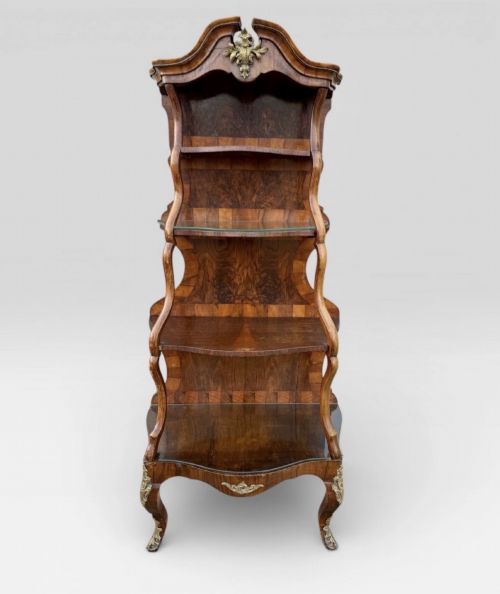


Walnut Whatnot Shelf
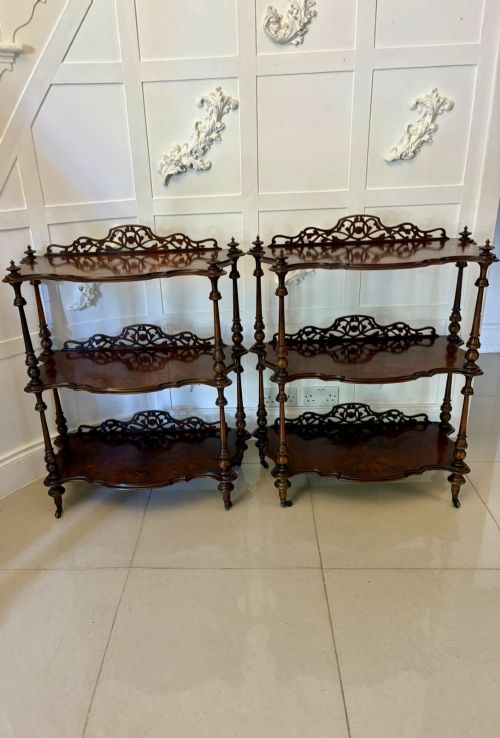
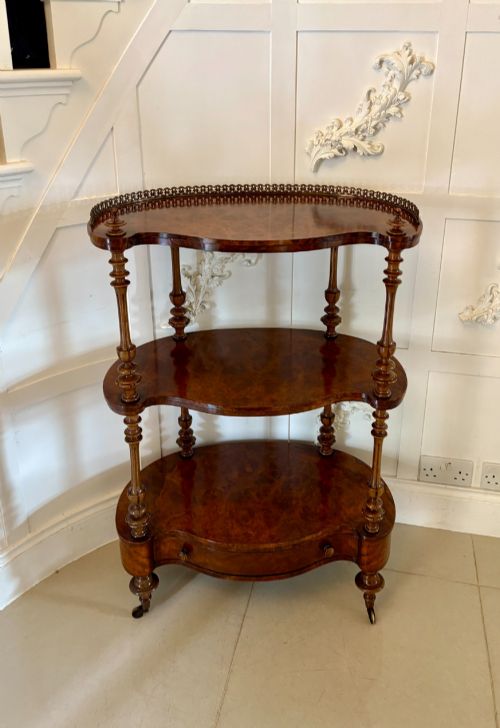
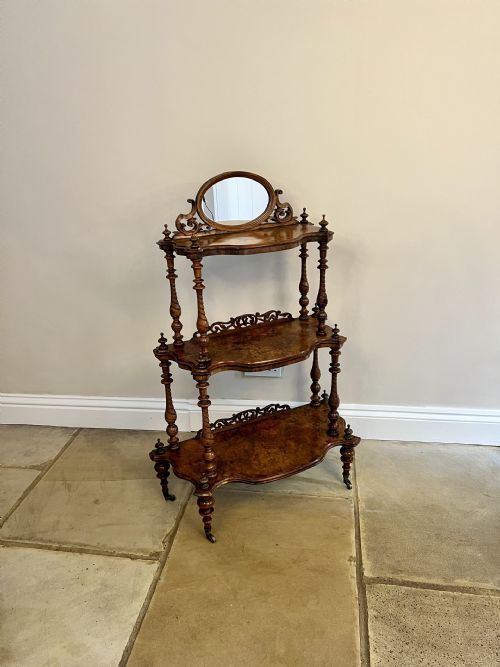
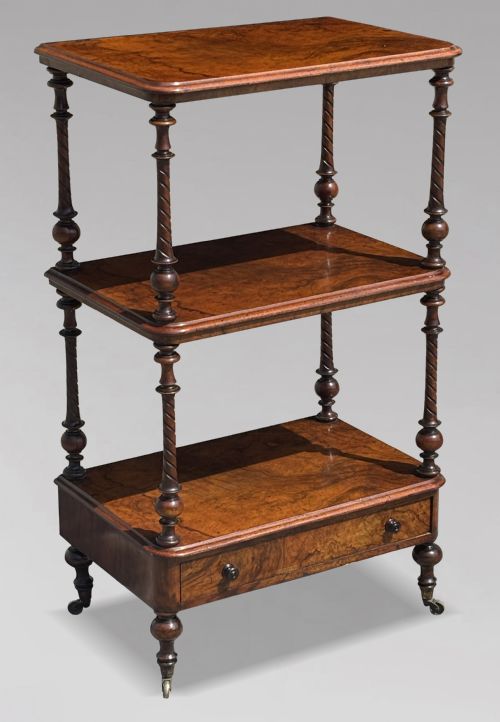
These walnut whatnot shelf pieces are multi-tiered display stands designed to hold books and ornaments, bringing practical surface space and figured wood into a room.
Walnut Whatnot Shelf
A walnut whatnot shelf is a multi-tiered open shelving unit or etagere designed for displaying ornaments, books, and collections. The form emerged strongly during the Victorian period, spanning the mid-to-late nineteenth century into the Edwardian era.
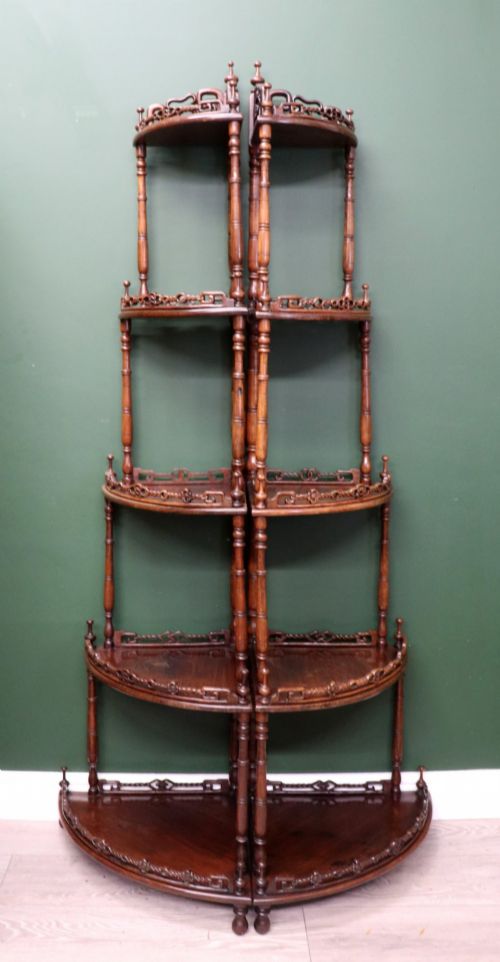
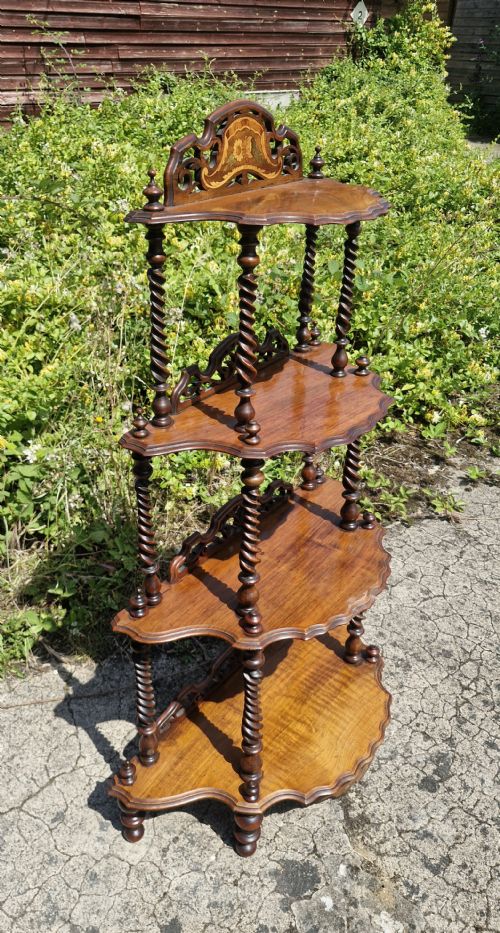
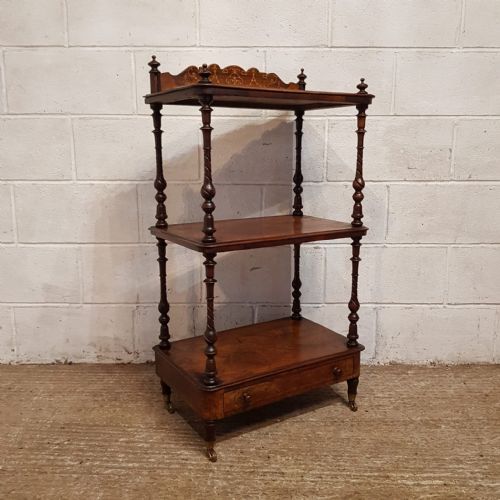
Most examples found here date from the Victorian period, built in forms ranging from three-tier freestanding stands to serpentine corner units and demilune console tables. Makers utilised figured woods to create striking surfaces suitable for principal reception rooms.
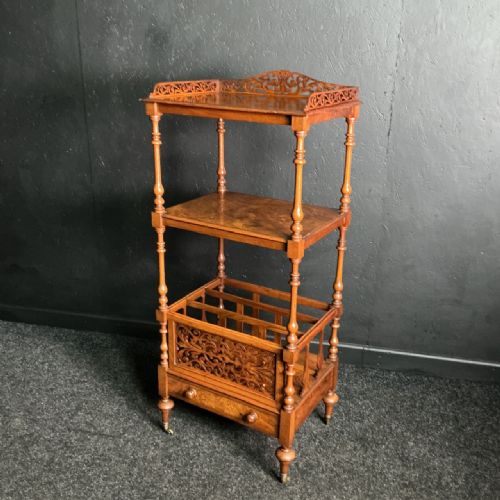
Beyond standard open shelving, variations incorporate specific functions such as Canterbury sections for sheet music, lower drawers, enclosed cabinets, or glazed display spaces. Corner designs maximise spatial efficiency while maintaining the characteristic tiered profile of the type.
How they were made
Cabinet makers constructed these pieces principally using solid walnut and burr walnut veneers, often enhanced with marquetry and boxwood inlay. Supporting elements frequently incorporate turned columns, barley twist uprights, or gilt metal mounts.
Surface ornamentation relies heavily on the natural grain of burr walnut combined with precise floral marquetry panels and brass hardware. Certain examples integrate ceramic components, glass doors, or mirrored backs to amplify light within the display tiers.
Some Victorian multi-tier stands incorporate hollow barley twists, offering a delightfully dizzying climb for your porcelain.
What varies in quality
Quality in a walnut whatnot shelf rests upon the selection of timber veneers and the crispness of turned or carved details. Pieces designated for exhibition or attributed to major workshops display highly figured burr walnut and refined inlay work.
Structural complexity also defines the upper tier of production, such as multi-tiered arrangements with hollow barley twist uprights, integrated drawers, or sophisticated serpentine profiles. Simpler corner stands rely on proportion and timber grain rather than elaborate carving.
Gillows
The Walnut Whatnot Shelf Glossary
- Whatnot
- An open multi-shelved piece of furniture used for displaying ornaments and small objects. It gained popularity in the nineteenth century as a central drawing-room fixture.
- Burr walnut
- Timber taken from a tree growth featuring intricate, swirling grain patterns. Cabinet makers prized this wood for veneering prominent surfaces.
- Etagere
- A piece of furniture consisting of a set of open shelves for displaying ornaments. The term is frequently used interchangeably with whatnot in period descriptions.
- Canterbury
- A low stand fitted with partitions for holding music sheets, books, or portfolios. When combined with a whatnot, it provides both storage and display tiers.
- Marquetry
- Decorative inlay work where pieces of wood veneer are fitted together to form pictorial or geometric patterns. It adorns the top surfaces and doors of finer pieces.
- Serpentine
- A furniture shape featuring a wavy outline with a convex centre flanked by concave curves. This contour adds movement to the front edge of shelves and console tables.
Walnut Whatnot Shelf: Frequently Asked Questions
What is a walnut whatnot shelf?
A walnut whatnot shelf is a tiered open stand made primarily during the nineteenth century to display ornaments, books, and small collections.
These pieces range from simple three-tier freestanding units to complex corner cabinets and etageres featuring marquetry inlay.
How were these stands used originally?
Victorian households utilised these shelves in drawing rooms and parlours to display ceramics, decorative objects, and bound volumes.
Some variants incorporated specific compartments, such as Canterbury bases for sheet music or enclosed cabinets for precious items.
How do I date a walnut whatnot?
Dating relies on stylistic markers and timber types, with the majority originating in the Victorian period between eighteen fifty and nineteen hundred.
Earlier mid-century examples often feature rich burr walnut veneers and serpentine shapes, while later Edwardian pieces show French-influenced marquetry.
Where should I place one at home?
These narrow stands fit well in reception rooms, hallways, or living spaces where vertical display is needed without taking up excessive floor area.
Corner models utilise unused angles efficiently, while freestanding console versions anchor larger wall spaces.