

Wooden Buffet Table
A wooden buffet table grounds a dining room with practical storage and honest craftsmanship spanning several centuries.
Wooden Buffet Table
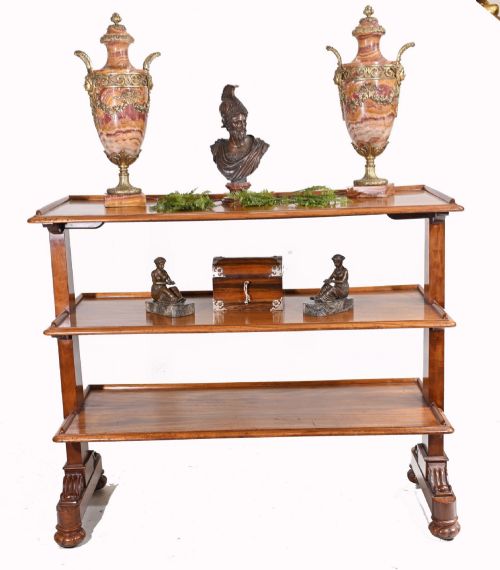
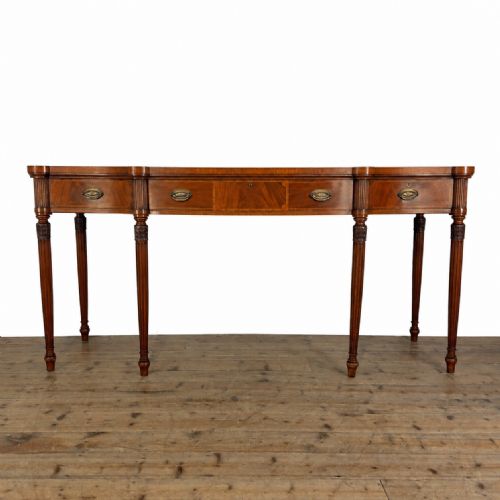
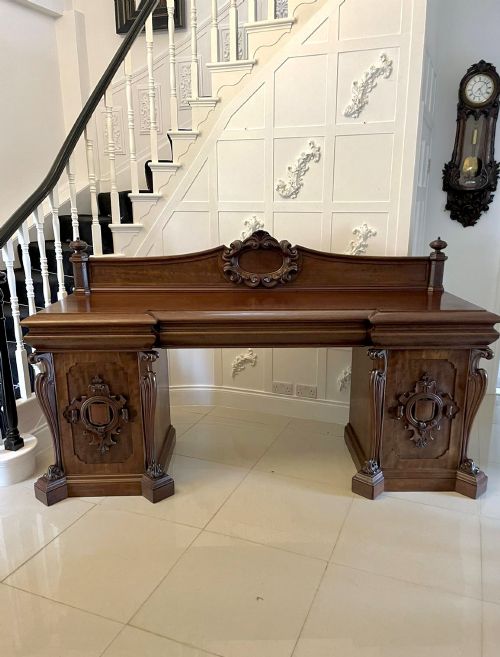
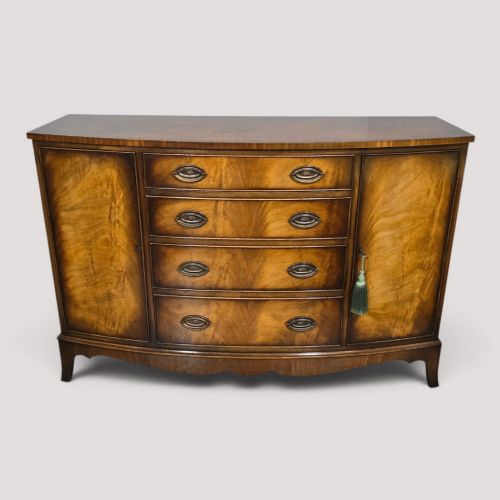
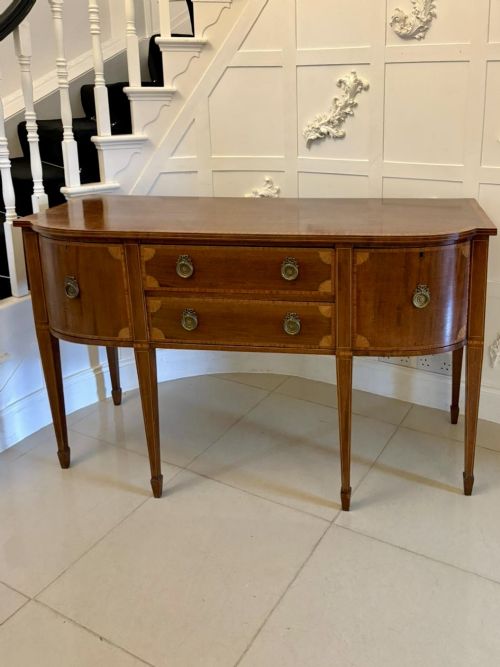
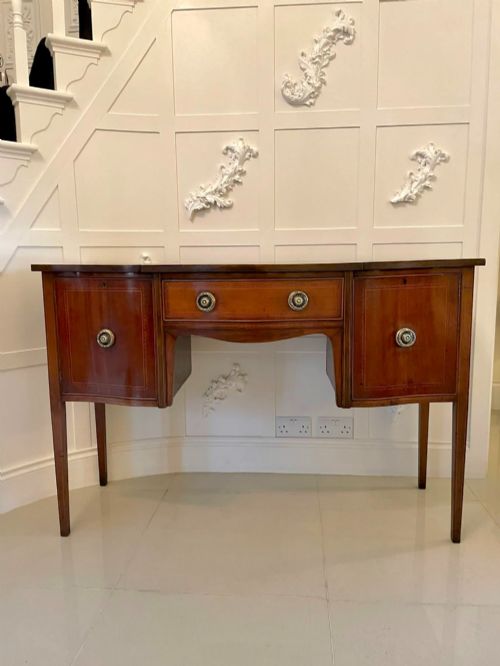
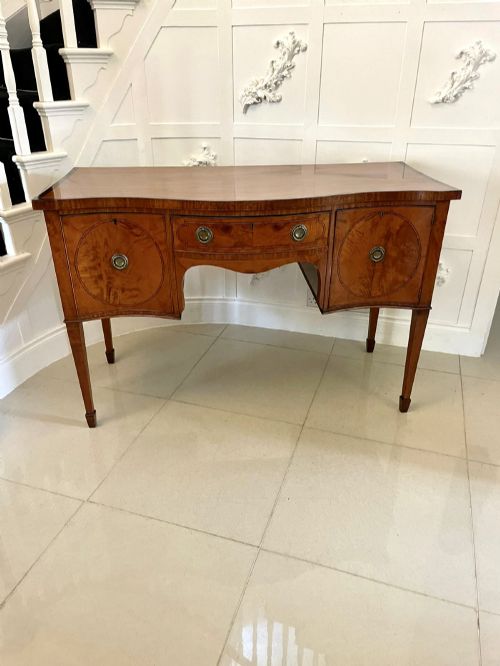
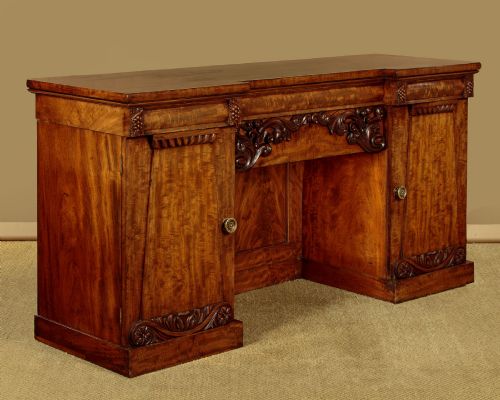
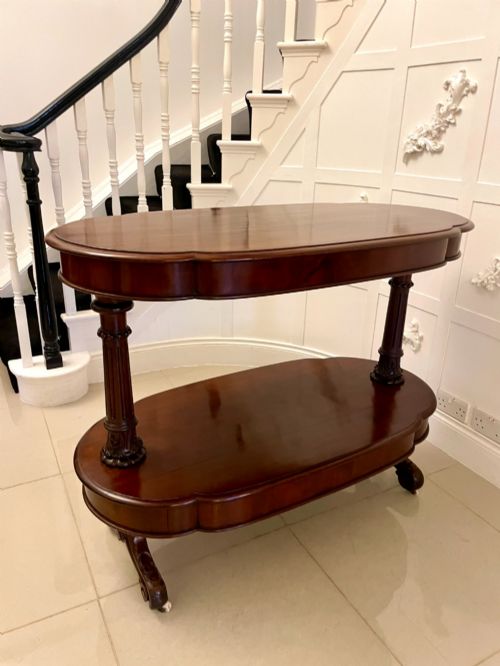
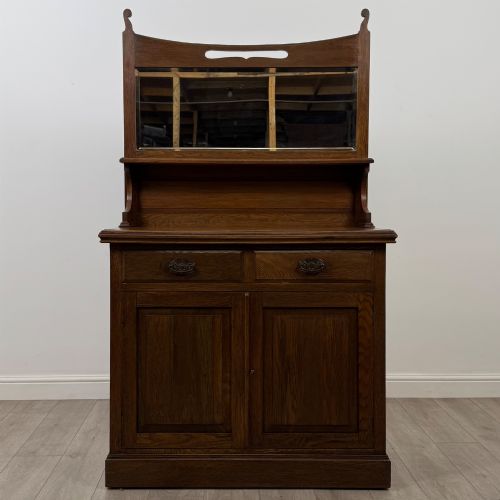
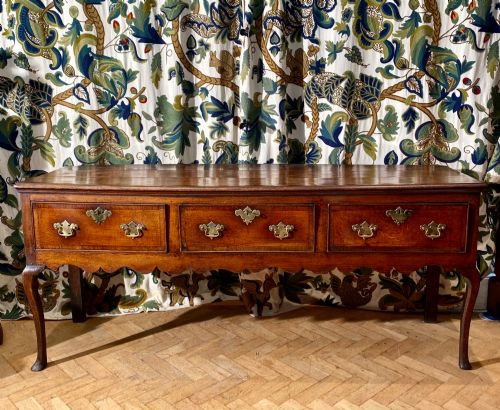
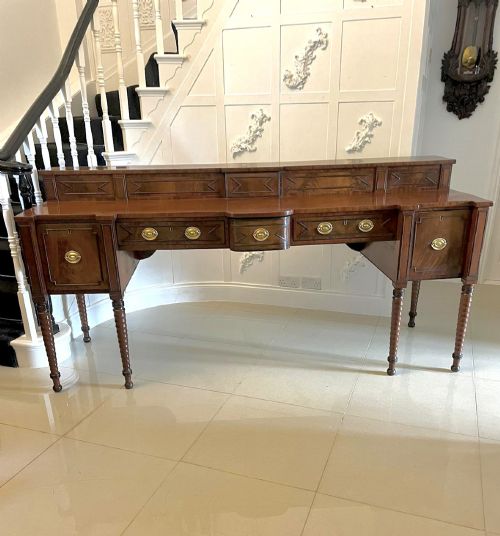
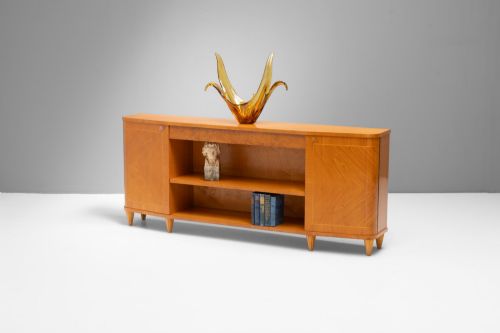
The material selection leans heavily towards figured mahogany, walnut, and regional oak, shaped into serpentine fronts, breakfronts, and freestanding consoles. Pieces frequently bridge the gap between dining storage and display, appearing as mirror-backed sideboards or tiered server units.
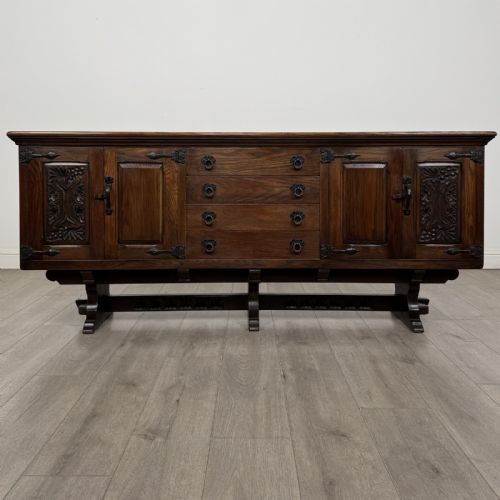
Origin points range across English workshops to continental examples, including French oak items and vernacular tramp art furniture. The nineteenth-century variants dominate the available selections, showing robust proportions and practical cupboard arrangements.
Materials and construction
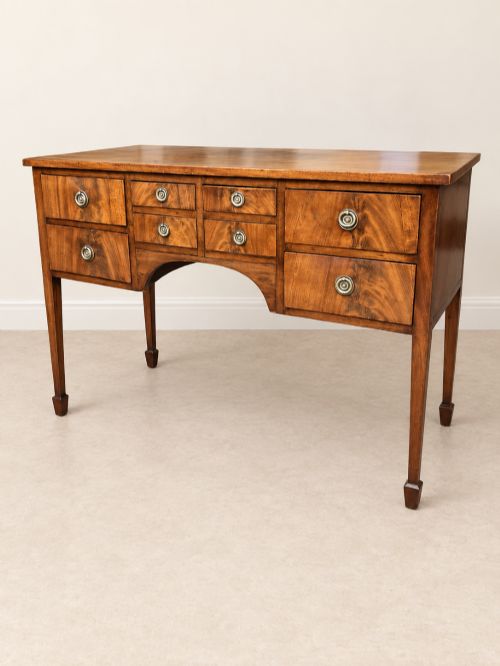
Cabinet makers relied on solid timbers like oak and mahogany, often applying flame mahogany veneer or satinwood crossbanding to key surfaces for visual contrast. Secondary woods such as pine appear in carcass internals and drawer linings.
Construction methods involve traditional dovetail joints for drawers and mortise and tenon frames for structural stability. Decorative flourishes include brass hardware handles, carved details, and inlaid stringing executed by hand.
Wooden Buffet Table Retail Price Guide 2026
Typical asking prices for wooden buffet table among the pieces listed under this phrase on Sellingantiques today, from the lower quarter to the upper quarter. They describe what is for sale here now, not the wider market.
Listings span the 18th, 19th, and early 20th centuries, utilising primary materials including mahogany, oak, walnut, satinwood, and brass.
Judging quality
Quality rests upon the selection of timber grain, such as heavily figured mahogany or quarter-sawn oak, matched symmetrically across drawer fronts and doors. Finer examples display meticulous hand-cut joinery and restrained inlay rather than heavy applied moulding.
Proportion and execution set superior items apart, seen in crisp serpentine shaping, original brass hardware, and balanced hardware placements that respect the historical period.
Edward Barnsley·M. D. Miller and Sons
The Wooden Buffet Table Glossary
- Serpentine front
- A furniture front shaped with a convex centre flanked by concave curves. This styling requires high skill from the cabinet maker to execute cleanly.
- Bow front
- A convex, outwardly curving front profile popular on Georgian and Regency sideboards. It softens the linear appearance of dining furniture.
- Dresser base
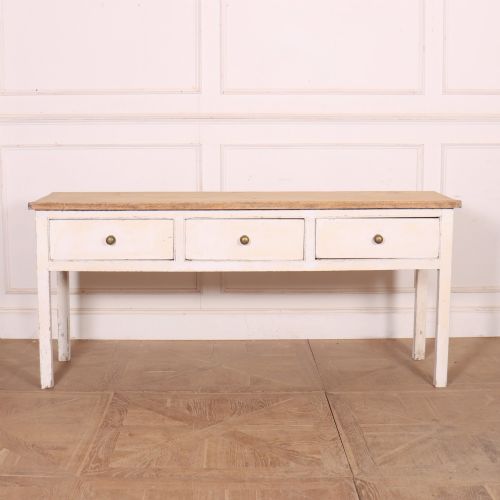
- A low wooden sideboard or table fitted with drawers and cupboards, originally used in kitchens for food preparation and storage.
- Crossbanding
- A strip of veneer applied perpendicularly to the grain of the main surface. It creates a contrasting border around drawer fronts and tabletops.
- Breakfront
- A large piece of furniture where the central section projects forward from the flanking sides. This adds architectural depth to large sideboards.
Wooden Buffet Table: Frequently Asked Questions
How do I style a wooden buffet table?
Pair the surface with tall ceramic lamps, stacked art books, or silver serving trays to balance the long horizontal proportions of the furniture. Keep functional items stored inside cupboards to maintain a clean display top.
Position the table against a principal dining room wall where it acts as a focal point. Ensure surrounding seating leaves enough clearance for doors and drawers to open fully.
Are these tables suitable for modern dining rooms?
These robust sideboards and servers offer deep internal storage for modern tableware, linens, and glassware while adding historic character to contemporary spaces. Their timber finishes blend naturally with varied interior colour palettes.
Measure your dining area carefully because older pieces often feature deep proportions and projecting serpentine fronts. Verify ceiling height if you choose a design with an attached mirror back.
What is the difference between a sideboard and a buffet?
Sideboards generally feature a combination of cupboards and drawers designed specifically for serving food and storing dining accessories. They often stand on taller legs compared to traditional low servers.
Buffets traditionally served a similar function in dining spaces but can include tiered shelving units or dedicated serving surfaces. The terms frequently overlap in historic listings.
How do I care for antique mahogany and oak?
Dust the timber regularly with a dry, soft cloth and avoid placing furniture in direct sunlight or near heat sources to prevent wood splitting. Apply natural beeswax periodically to nourish the grain.
Clean up liquid spills immediately using a damp cloth followed by thorough drying. Protect surfaces from hot serving dishes by using mats or runners.