



Revolving Serving Tray
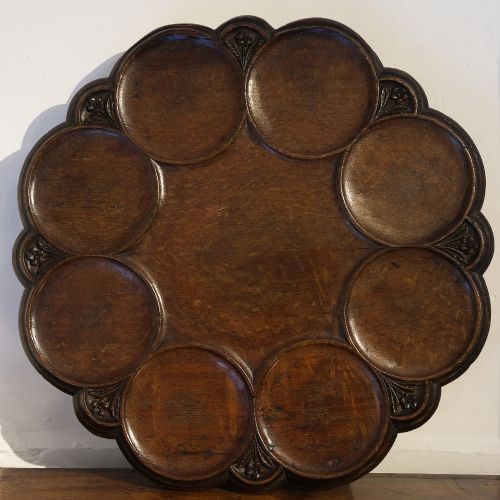
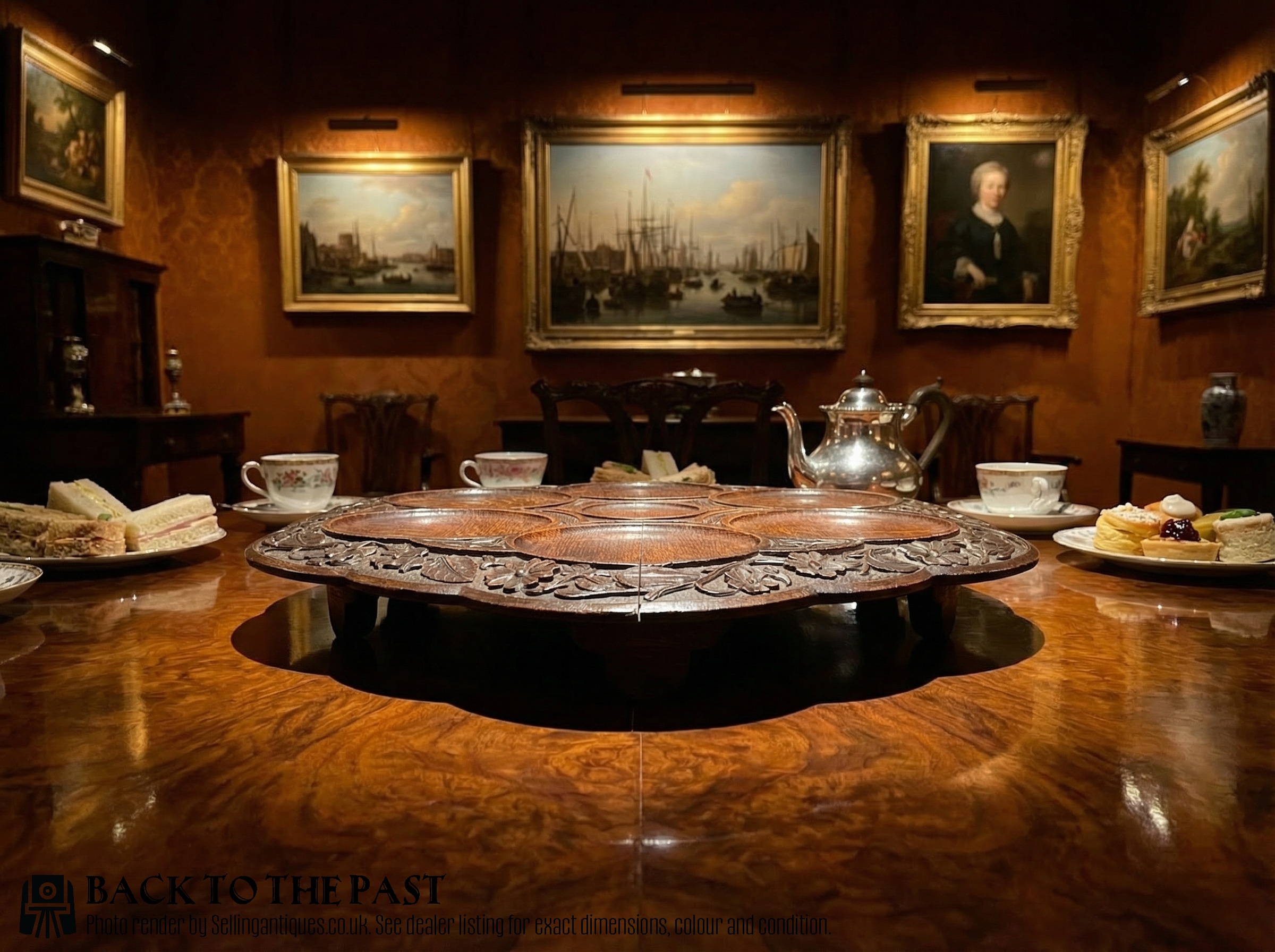
A revolving serving tray brings effortless motion to the table, offering a practical turning mechanism that keeps food within easy reach.
Revolving Serving Tray
When you search for a revolving serving tray, you are looking at rotating pieces designed to move dishes across a table without passing them manually. These items appear in various historical forms, from simple tabletop turners to multi-tiered stands.
The versions you are most likely to meet on this page span the eighteenth, nineteenth, and early twentieth centuries. They emerge in styles ranging from Georgian and Regency to Edwardian and Art Deco, reflecting shifting dining habits over the decades.
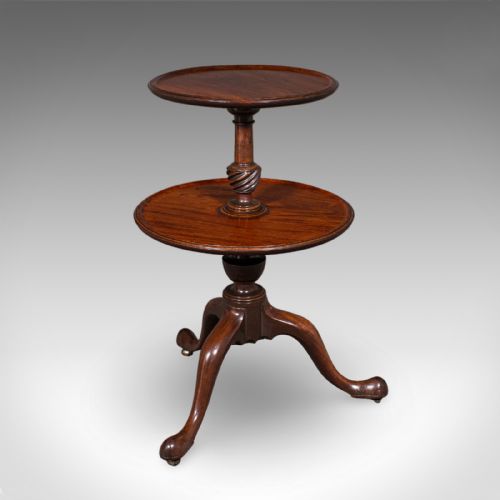
Common forms include the traditional lazy susan, multi-tiered dumb waiters, and porcelain supper sets equipped with central rotating mechanisms. Oak and mahogany dominate the timber choices, often paired with glass, brass, or porcelain elements.
How they were made
Cabinet makers built these rotating pieces primarily using solid timbers like mahogany and oak, turning and carving the wood by hand. Joinery techniques ensured the central rotating mechanism moved smoothly while supporting the weight of dishes.
Certain examples incorporate porcelain inserts, glass, or silver plate alongside brass hardware to create durable dining accessories. Carved detailing on the rims and pedestals demonstrates the traditional woodworking skills applied during the Georgian, Victorian, and Edwardian periods.
Listings feature revolving serving pieces spanning the eighteenth century through the Art Deco era of the 1930s.
What varies in quality
The distinction between standard examples and finer items rests on the precision of the turning mechanism and the quality of the timber selection. Solid mahogany and oak with smooth, balanced rotation represent a higher grade of craftsmanship.
Design complexity also defines the upper range, where multi-tiered structures, carved detailing, or integrated porcelain supper sets show greater ambition from the maker. Simpler tabletop turners sit at the accessible end of the spectrum.
The Revolving Serving Tray Glossary
- Lazy Susan
- A revolving tray placed on a table to assist with moving food dishes. This rotating accessory allows diners to share meals conveniently.
- Dumb Waiter
- A multi-tiered freestanding serving stand used to hold plates and food near a dining table. These pieces often feature rotating tiers in Georgian and Regency designs.
- Supper Set
- A collection of fitted dishes arranged around a central rotating tray. These porcelain and ceramic sets were popular during the early nineteenth century.
- Tazza
- A small shallow saucer or dish raised on a pedestal foot. In later pieces, this form is sometimes adapted into a rotating serving platform.
- Turnery
- The craft of shaping wood using a lathe. This technique forms the central pillars and rotating pivots found in these serving pieces.
Revolving Serving Tray: Frequently Asked Questions
What is a lazy susan?
A lazy susan is a rotating tray designed to sit on a table and pass dishes between diners. It uses a central pivot to spin smoothly in either direction.
Historically, these pieces appeared in wood or porcelain, serving as practical dining table accessories across the eighteenth and nineteenth centuries.
How were dumb waiters used?
Dumb waiters functioned as multi-tiered serving stands that held extra plates, cutlery, and dishes close to the dining table. They reduced the need for servants during meals.
Georgian and Regency examples often featured graduated tiers, and some designs incorporated rotating shelves for easier access.
What woods were used?
Mahogany and oak are the primary timbers found in these revolving serving trays and stands. Cabinet makers favored them for their strength and rich grain patterns.
Other materials like brass, glass, and porcelain appear in specific styles, particularly on nineteenth-century supper sets and Edwardian party turntables.
How do I date a piece?
Dating relies on identifying the prevailing style, construction methods, and materials used in the piece. Georgian and Regency examples show classical carved details and heavy timber framing.
Later Victorian, Edwardian, and Art Deco pieces introduce alternative aesthetics, simpler turnery, and different hardware combinations.
Can I use these daily?
These rotating trays and stands remain functional additions to modern dining rooms and kitchen tables. Their mechanical pivots continue to serve their original purpose.
Careful handling and appropriate maintenance of the wooden surfaces and moving parts help preserve their condition during regular use.