


Circular Serving Platter
A circular serving platter brings weight and balance to a table, offering a solid stage for drinks, canapés, or the centrepiece itself.
Circular Serving Platter
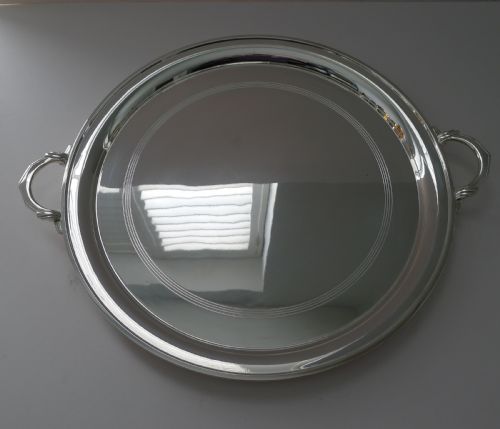
A circular serving platter encompasses a varied assortment of flat dining wares, taking the shape of salvers, trays, chargers, and revolving lazy susans. When you search for a circular serving platter, you encounter pieces spanning from the Georgian period through the Victorian and Edwardian eras into the Art Deco style of the twentieth century.
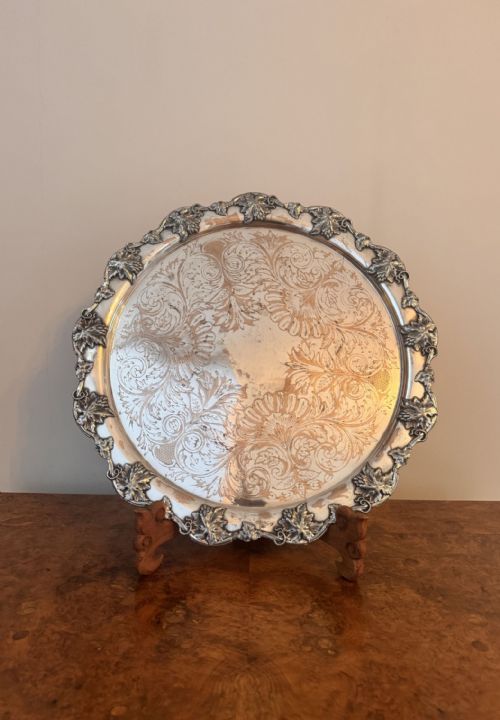
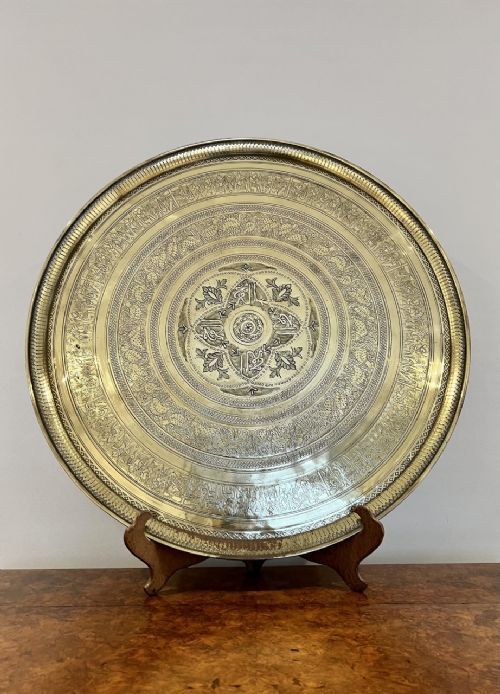
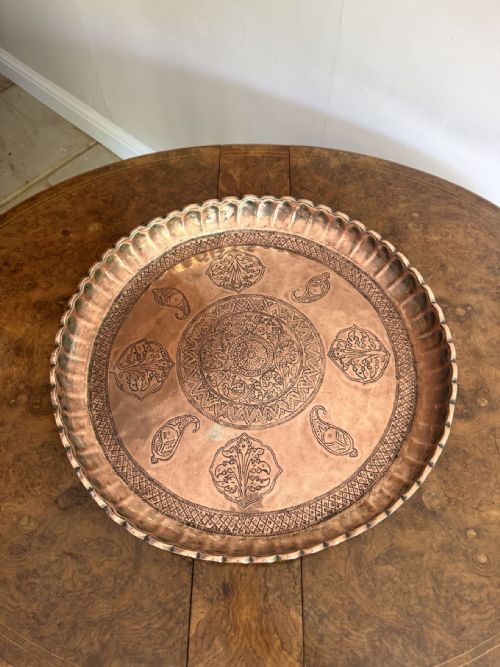
The materials span solid mahogany with inlaid decoration, sterling silver, Old Sheffield plate, silver plate, EPNS, brass, copper, pewter, and mixed metals. Pieces originate from English workshops as well as Anglo-Indian and Middle Eastern makers, showing forms from plain round trays to those with pie crust edges.
Materials and construction
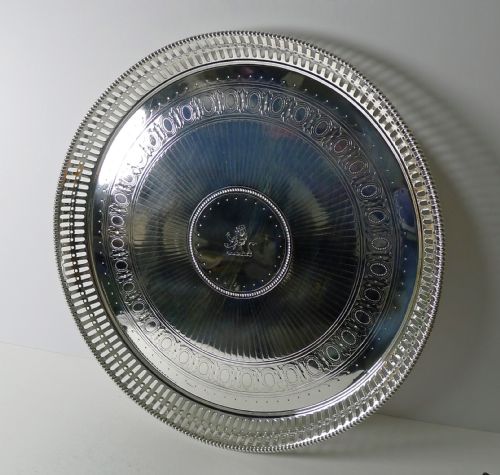
Metal platters rely on base metals like copper, brass, and pewter, often layered with silver plate through Old Sheffield plating or electroplating techniques as practised by firms such as Elkington. Engraving, engine turning, and mixed metal inlay give surfaces their decorative detail.
Wooden examples utilise timber like mahogany, shaped into circular wine trays and fitted with inlaid decoration. Raised rims, including pie crust edges, are formed by hand or shaped during manufacture to contain the items placed upon the surface.
Listings feature circular serving platters in silver plate, brass, copper, mixed metal, mahogany, sterling silver, and pewter across Victorian, Georgian, Edwardian, and Art Deco periods.
The markers of distinction
Quality rests in the crispness of the engraving and the integrity of the base materials, whether solid sterling silver or a heavy silver plate over copper. Finer examples display precise engine turning and deliberate weight in the hand.
Design execution distinguishes standard domestic items from pieces attributed to known designers or prominent makers. The depth of hand-chased ornamentation and the preservation of original silver plating determine the standing of a metal piece.
Keith Murray For Mappin & Webb·J Dixon & Sons·Elkington
The Circular Serving Platter Glossary
- Salver
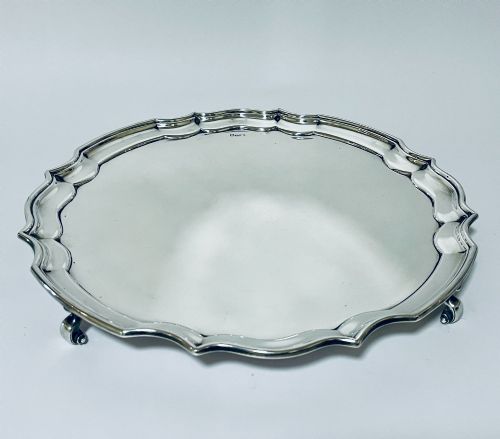
- A plate or tray, typically made of silver or other metal, used for serving food or drinks. They often stand on small feet or a raised foot rim.
- Old Sheffield Plate
- A composite material formed by fusing a sheet of silver to a thicker bar of copper, used before modern electroplating. This technique produces a rich surface where the underlying copper occasionally shows through with age.
- Lazy Susan
- A revolving tray placed on a table to assist in moving food easily. Edwardian examples often serve as party turntables for canapés.
- Engine turned
- A decorative technique involving a machine that cuts intricate geometric patterns into metal surfaces. This method creates precise, repeating textures across silver-plated trays.
- Pie crust edge
- A raised, scalloped rim shaped to resemble the crust of a traditional pie. It appears on copper and silver-plated trays to contain items securely.
Circular Serving Platter: Frequently Asked Questions
How do I clean an antique silver plated platter?
Silver plate requires gentle cleaning with a soft cloth and a specialised silver polish that avoids abrasive scrubbing. Excessive friction wears away the thin silver layer, particularly on older plated wares.
Keeping the metal dry after washing prevents tarnish and protects any engraved or engine turned details from accumulating residue.
Can I use these platters for daily dining?
Many metal and wooden platters remain sturdy enough for regular service, provided you handle them with care. Soft cloths underneath serving dishes prevent surface scratches on older silver and copper.
Wooden wine trays and mahogany pieces benefit from avoiding standing water and extreme heat to protect the inlaid decoration and timber.
What is the difference between a salver and a tray?
A salver generally refers to a formal flat serving vessel, often raised on small feet and traditionally used for presenting letters or glasses. Trays tend to be larger, flatter, and equipped with handles or raised rims for carrying multiple items.
Both forms overlap significantly in antique listings, where terms are often used interchangeably for circular serving pieces.
How do I date a mixed metal tray?
Dating relies on stylistic clues like the geometric motifs of Art Deco or the heavy ornamentation typical of Victorian Egyptian Revival. Maker marks, where present, provide direct links to specific manufacturing periods and firms.
Construction methods also guide dating, as electroplated items generally point to the Victorian era and later, while earlier techniques differ in weight and composition.