




Victorian Revolving Bookstand
These Victorian revolving bookstands give you instant access to a handy library right beside your favourite chair.
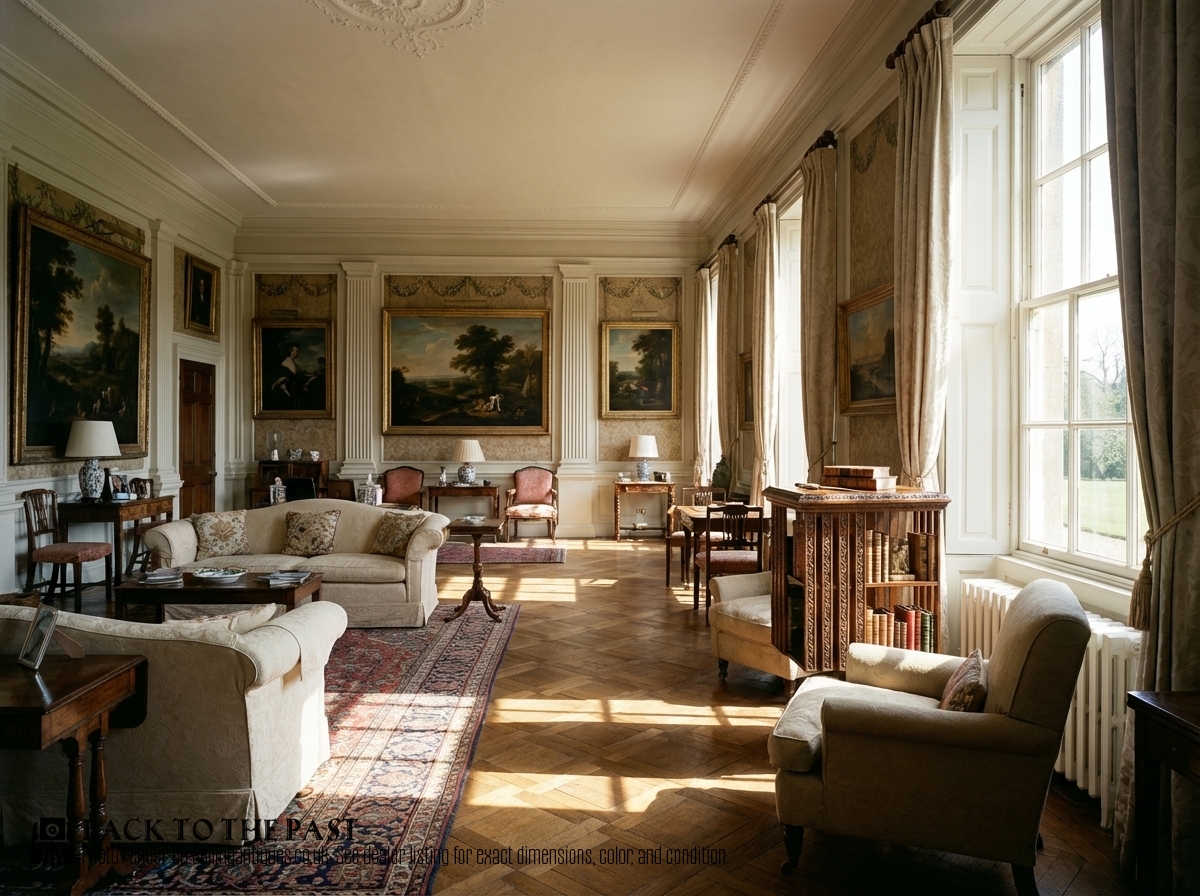
Victorian Revolving Bookstand
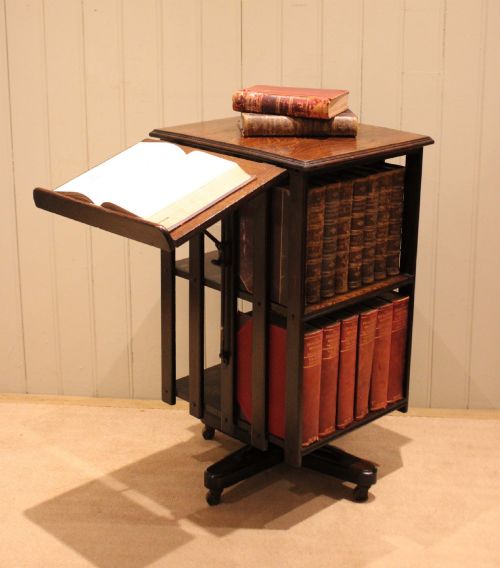
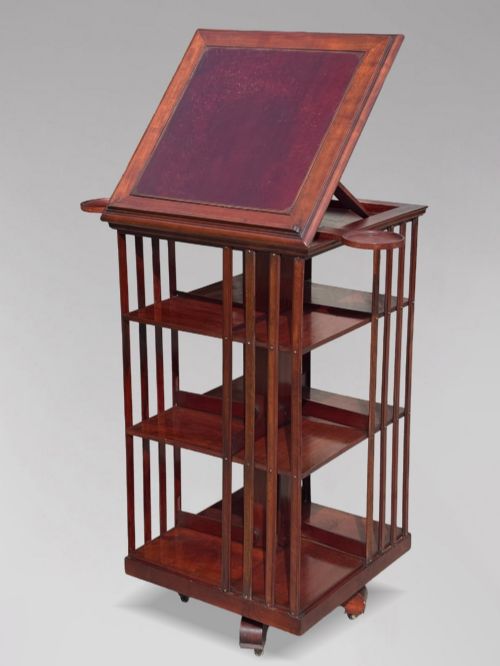
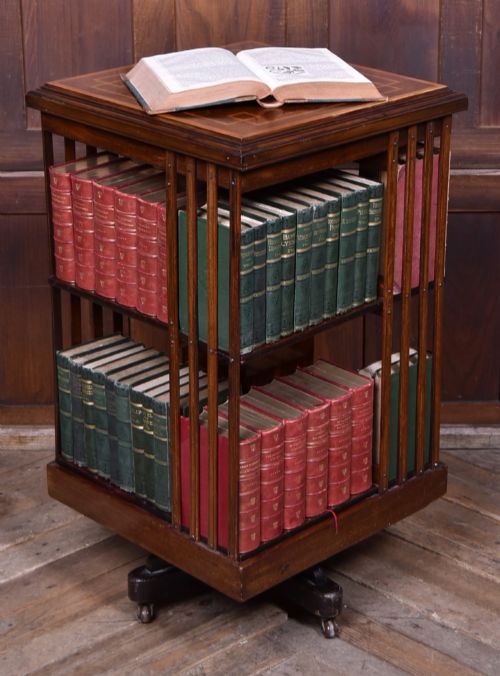
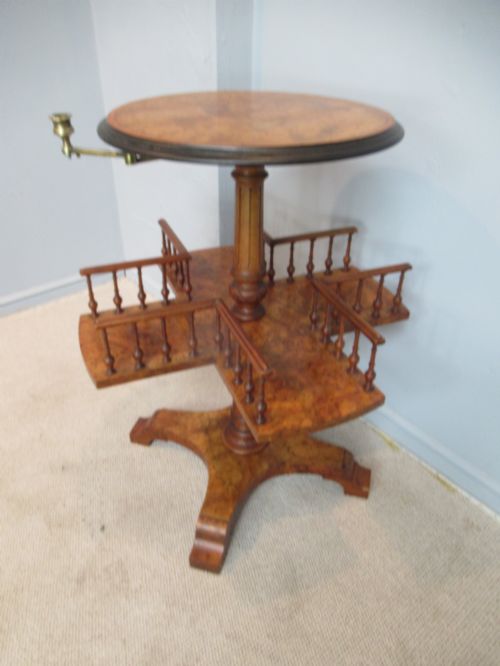
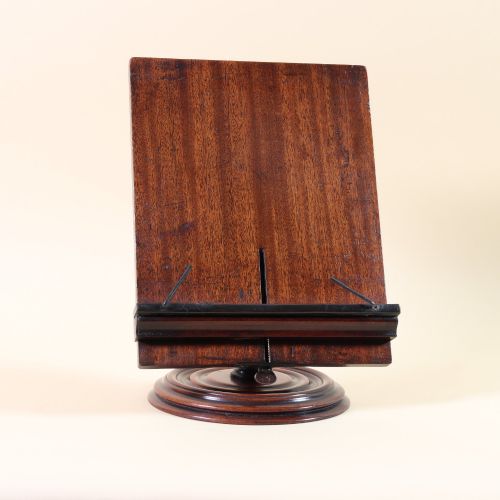
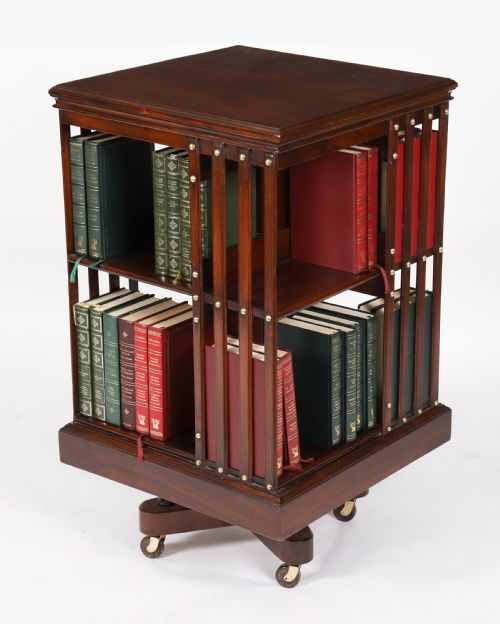
A Victorian revolving bookstand provides a clever way to keep a small collection of volumes close at hand while seated in a study or drawing room. You will find that these pieces take the form of floor-standing towers, low table-top models, and compact desk rests.
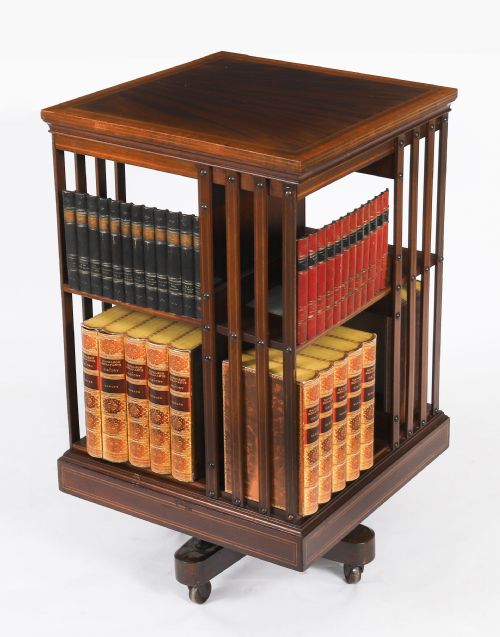
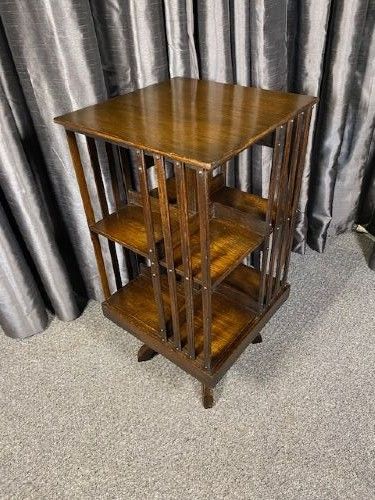
The version you are most likely to meet on this page is the floor-standing revolving bookcase in mahogany or oak, dating from the late nineteenth century or the Edwardian era. These rotating units let a reader select a volume from any side without needing to shift position.
Makers produced these stands in various heights, from low table models intended for parlour use to tall multi-tiered towers designed to hold heavy reference volumes. Styles range from plain utilitarian pieces to decorative examples featuring inlaid timbers and carved fretwork.
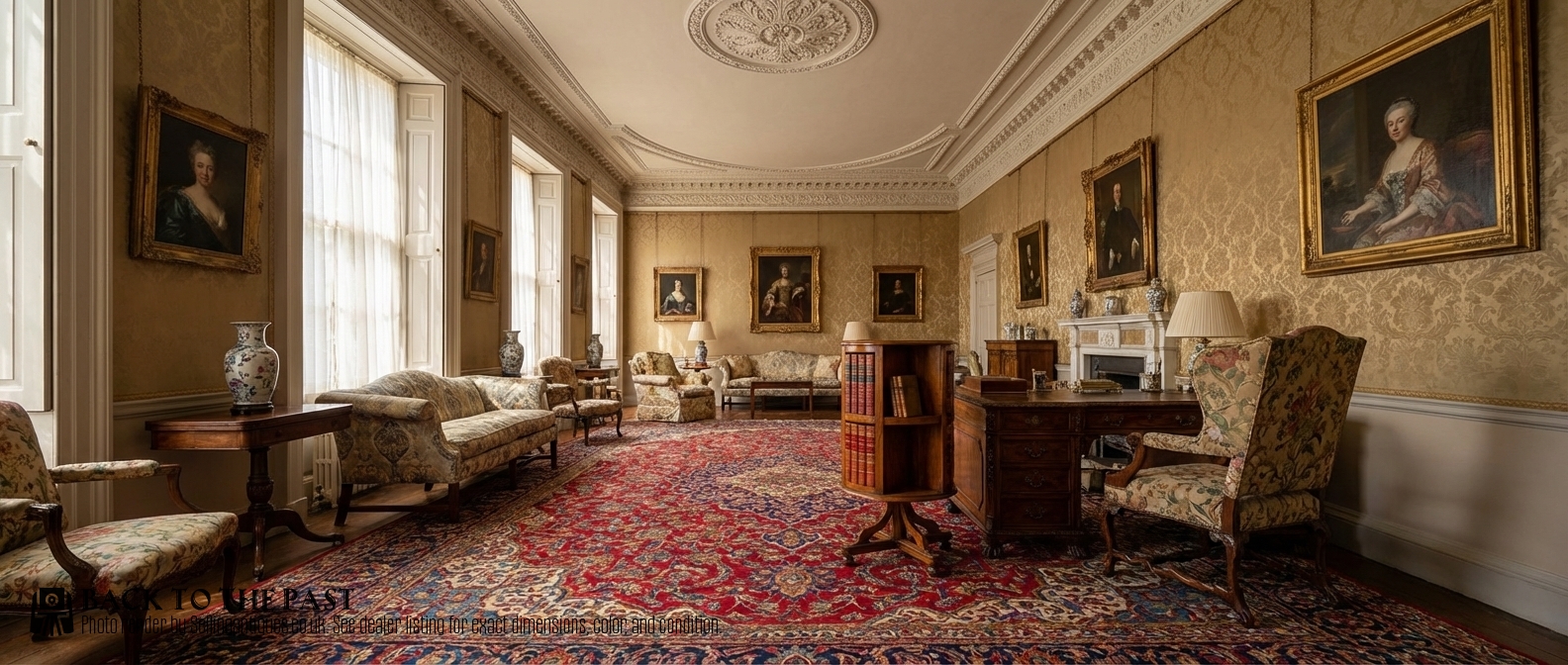
Materials and construction
Cabinet makers built these revolving bookstands primarily using solid and veneered timbers such as mahogany, oak, walnut, and rosewood. Sections of burr walnut, flame mahogany, and satinwood appear as decorative veneers on finer examples.
The internal turning mechanism relies upon cast iron and brass components to ensure a smooth rotation under the weight of heavy books. Cross-banded edges and inlaid stringing frequently finish the top surfaces and shelf margins.
Victorian Revolving Bookstand Retail Price Guide 2026
Typical asking prices for victorian revolving bookstand among the pieces listed under this phrase on Sellingantiques today, from the lower quarter to the upper quarter. They describe what is for sale here now, not the wider market.
Listings on this page span the nineteenth century, the Edwardian period, and the early twentieth century, utilising mahogany, oak, walnut, rosewood, and satinwood.
What separates the best from the rest
The quality of a revolving bookstand rests largely on the engineering of its internal pivot and bearing mechanism. A superior piece rotates smoothly and silently without catching or tilting, supported by a heavy concealed iron spider base.
Timber selection and surface figure distinguish the finer workshop output from everyday utility items. Pieces utilising matched flame mahogany, burr walnut, or detailed satinwood inlay demonstrate a higher level of cabinet-making skill than plain, utilitarian oak or standard mahogany versions.
Maple and Co
The Victorian Revolving Bookstand Glossary
- Flame mahogany
- A veneer showing a distinctive flickering flame-like grain pattern. Cabinet makers reserved this timber for the primary display surfaces of better furniture.
- Burr walnut
- A knotted and swirled wood growth sliced into decorative veneer. This material provides rich visual texture on Victorian table tops and bookstands.
- Inlaid stringing
- Thin lines of contrasting wood or light-coloured timber embedded flush into the surface. This technique adds geometric borders to shelves and tops.
- Cross-banding
- A border of veneer laid with the grain running perpendicular to the main surface. It frames the central panels of the bookcase top.
- Fretwork
- Openwork ornamentation cut through thin boards of timber. This style of pierced decoration often appears on the sides of shelf partitions.
Victorian Revolving Bookstand: Frequently Asked Questions
How do I care for the timber on my bookstand?
Dust the surfaces regularly with a soft, dry cloth to prevent grit from scratching the polished finish. Apply a quality beeswax occasionally to nourish the wood and maintain its natural lustre.
Keep the piece away from direct heat sources and strong sunlight, which can dry out the timber and fade delicate veneers over time.
Can these stands hold heavy hardback books?
Most floor-standing revolving bookcases feature sturdy construction designed to bear the weight of standard reference volumes and heavy novels. The internal wooden partitions and solid bases provide adequate support for ordinary home libraries.
Table-top and desk versions suit lighter volumes and pamphlets better than large folio editions. Distribute weight evenly across the tiers to keep the mechanism turning smoothly.
How do I know if the revolving mechanism works properly?
Turn the bookcase gently with your hand to test the action; it should spin freely and quietly on its internal pivot. Any grinding noise or uneven wobbling suggests the hidden bearing or iron spider needs inspection or adjustment.
Avoid forcing a stuck mechanism, as the internal metal and wooden components can crack under undue pressure.
Where should I place a revolving bookstand in a room?
These compact stands work well beside an armchair, reading desk, or sofa where you want quick access to current reading material. Because they rotate on a central axis, you can position them near a corner while still reaching every shelf.
Ensure there is enough clearance around the entire circumference for the books and shelves to turn without striking nearby walls or furniture.