





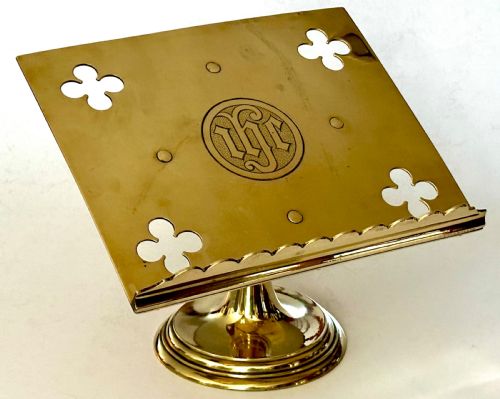
Gothic Revival Bookstand
A gothic revival bookstand brings architectural gravity to a desk, using pointed arches and tracery to hold heavy volumes.
Gothic Revival Bookstand
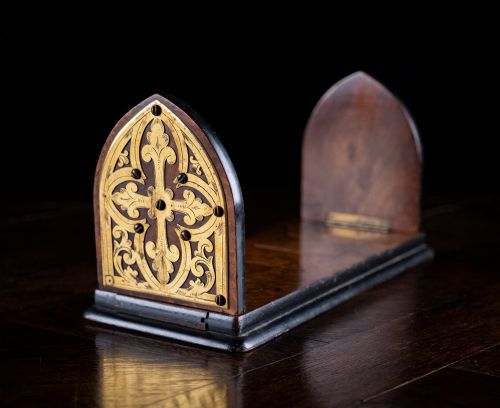
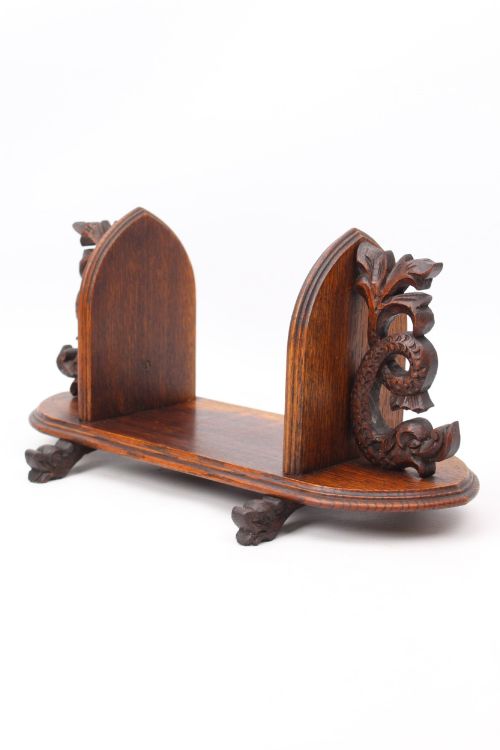
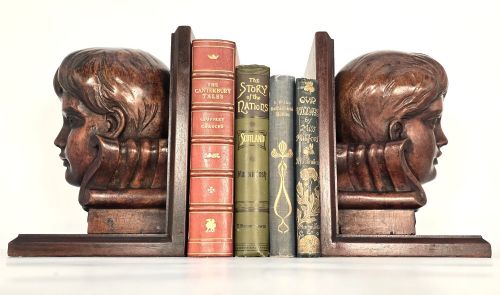
A gothic revival bookstand is a piece of desk furniture designed to support and display volumes using architectural motifs drawn from medieval buildings. The selection spans extending book slides, static lecterns, and table stands originating across the nineteenth and early twentieth centuries.
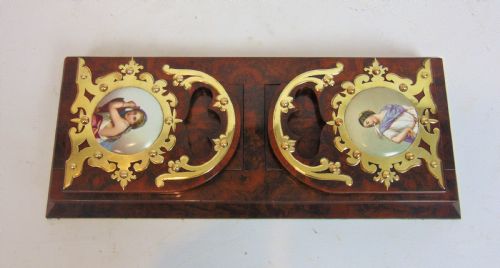
Most examples encountered here date from the Victorian and Edwardian eras, reflecting a domestic enthusiasm for monastic and ecclesiastical design. Forms range from portable book rests with brass mounts to substantial oak lecterns and maple book slides fitted with porcelain plaques.
How they were made
Cabinetmakers constructed these pieces primarily in timber, selecting oak, mahogany, walnut, maple, rosewood, and ebonised wood for their grain and weight. Many items incorporate turned or cast brass elements, such as hinges, mounts, and galleries, adding metallic contrast to the timber frames.
Carving serves as the principal decorative technique, featuring cusped tracery, pointed arches, and ecclesiastical motifs worked directly into the solid wood. Extending mechanisms on book slides rely on wooden slides and brass scissor actions to adjust the length smoothly.
Gothic Revival Bookstand Retail Price Guide 2026
Typical asking prices for gothic revival bookstand among the pieces listed under this phrase on Sellingantiques today, from the lower quarter to the upper quarter. They describe what is for sale here now, not the wider market.
Some nineteenth-century readers apparently needed porcelain plaques embedded in their book slides to cope with the sheer stress of alphabetical order.
What varies in quality
Quality rests upon the crispness of the architectural carving and the selection of timber veneers or solid boards. Pieces featuring deep, hand-carved tracery and well-figured oak or mahogany stand apart from plainer, mechanically produced alternatives.
The integration of secondary materials dictates overall refinement, such as the quality of cast brass mounts or inset porcelain plaques. Smooth operation of extending book slides and robust structural joinery also separate superior workshop production from standard domestic utility pieces.
The Gothic Revival Bookstand Glossary
- Book slide
- An extending desk accessory designed to hold a variable number of volumes upright between two ends. The base expands or contracts via a sliding mechanism.
- Lectern
- A slanted stand designed to support a large book at a readable angle. These often feature raised lips to prevent heavy volumes from slipping.
- Tracery
- Openwork ornamentation based on the stonework patterns found in Gothic windows. This motif defines the aesthetic of the revival style.
- Ebonised wood
- Timber treated with a chemical stain or finish to imitate ebony. This dark surface treatment provides high contrast against brass mounts.
Gothic Revival Bookstand: Frequently Asked Questions
What is a gothic revival bookstand used for?
These stands support heavy reference volumes, Bibles, or ledgers on desks, tables, and library surfaces. Their angled rests and extending slides keep books upright and accessible for reading.
They also served as decorative accessories in nineteenth-century studies and libraries, reflecting the owner's taste for medieval architectural design.
How do I date a gothic revival bookstand?
Dating relies on timber selection, construction methods, and stylistic markers recorded across the Victorian and Edwardian periods. Pieces from eighteen-sixty often display heavier architectural carving and solid mahogany or oak.
Later Edwardian examples tend to feature lighter proportions and simpler mechanical extending slides. Brass mounts and secondary materials like porcelain plaques also provide clues to the decade of manufacture.
Are extending book slides practical for modern books?
Extending book slides function well for holding modern hardbacks and reference volumes between supportive wooden ends. The adjustable mechanism allows the base to accommodate varying numbers of books.
Care should be taken when adjusting older brass and wood scissor mechanisms to ensure smooth movement without straining the antique joints.
What woods were commonly used?
Workshop production favoured dense, durable timbers such as oak, mahogany, walnut, maple, and rosewood. Oak and mahogany appear most frequently in pieces with heavy architectural carving.
More exotic materials like coromandel and ebonised wood surface on select items, paired with brass fittings and porcelain plaques.