




Walnut Book Slide
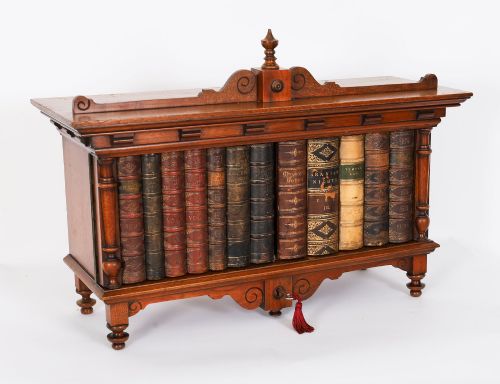
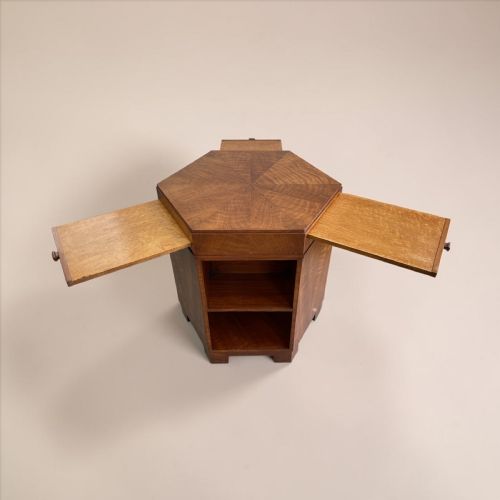
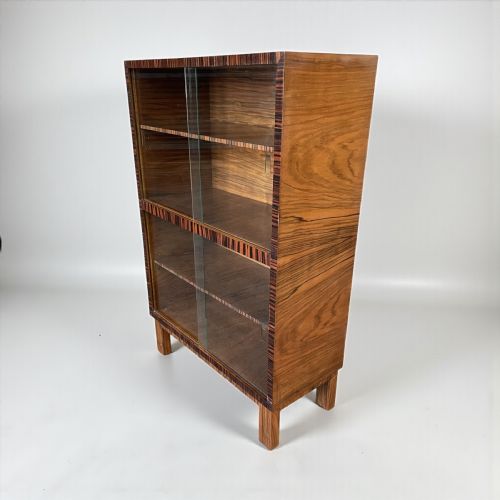
A walnut book slide keeps your volumes tidy on a desk while showing off the rich grain of the timber.
Walnut Book Slide
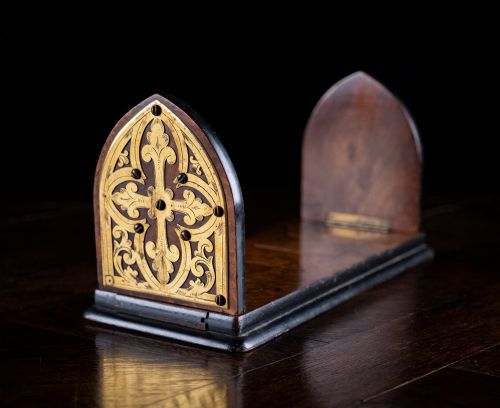
A walnut book slide is an extending desktop accessory designed to hold a row of volumes upright between two upright ends. The most common examples on this page date from the Victorian period through to the early twentieth century.
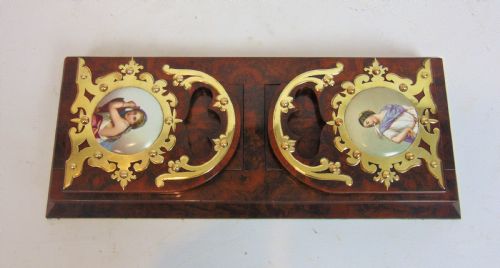
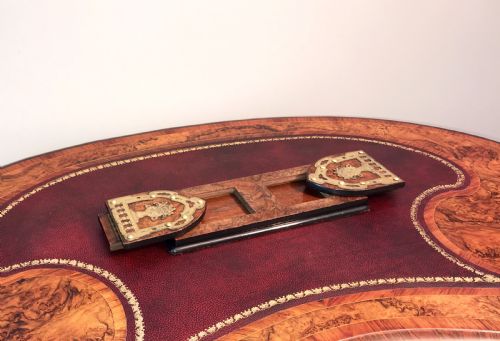
Makers utilised solid walnut, burr walnut, and walnut veneer to form the extending base and hinged or fixed ends. Many incorporate brass mounts, corner plates, and hinges that allow the ends to fold or expand smoothly.
Beyond standard wooden rests, variations appear with inlaid porcelain plaques, hand-painted miniatures, pietra dura floral panels, and bone mounts. Some pieces reflect specific design movements such as Gothic Revival or Art Nouveau.
How They Were Made
Cabinet makers constructed the extending mechanisms using a sliding wooden channel system often reinforced with brass tracks and hinge plates. Solid timber or applied veneer covers a secondary wood core, providing stability against warping.
Decorative elements involve brass casting for corner mounts and mounts, alongside ceramic work for inset porcelain plaques. Artisans also applied intricate hand-carving to the wooden ends, particularly on Gothic Revival and floral pieces.
Walnut Book Slide Retail Price Guide 2026
Typical asking prices for walnut book slide among the pieces listed under this phrase on Sellingantiques today, from the lower quarter to the upper quarter. They describe what is for sale here now, not the wider market.
Some Victorian slide designs doubled as novelties, giving desk workers an excuse to fidget with expanding brass tracks.
What Varies in Quality
Quality rests on the selection of the timber grain, with figured burr walnut commanding attention for its swirling patterns. Plain, flat-sawn timber sits at the simpler end of the spectrum.
The sophistication of the brass hardware and the artistry of inset plaques differentiate standard items from exceptional ones. Finely painted porcelain or pietra dura panels elevate an ordinary desk accessory into a decorative showcase.
Betjemanns
The Walnut Book Slide Glossary
- Burr walnut
- Timber taken from a tree growth or burl, yielding dense, highly figured grain patterns. It provides a decorative surface on Victorian desktop accessories.
- Pietra dura
- Inlay technique using cut and fitted polished coloured stones to form pictorial designs. Examples appear on floral panels set into book rests.
- Gothic Revival
- Architectural and decorative style drawing inspiration from medieval forms. Pieces often feature pointed arches and heavy carved tracery.
- Betjemann's
- Patent mechanism name associated with extending book slides. These incorporate specific patent action for smooth expansion.
Walnut Book Slide: Frequently Asked Questions
How do walnut book slides extend?
Most designs use an expanding base where two wooden sections slide past one another in a tracked channel. This allows the overall length to adjust according to the number of volumes held.
Brass hinges and stops often limit the travel and keep the upright ends square to the desk surface.
What periods do these pieces date from?
The examples listed primarily span the nineteenth and early twentieth centuries, with a strong representation from the Victorian era. Pieces range from mid-Victorian brass-mounted items down to later Art Deco iterations.
Construction details and decorative motifs usually indicate the specific decade of manufacture.
How should I clean a walnut surface?
Dust the timber regularly with a soft, dry cloth to prevent grit buildup on the polished grain. Avoid modern silicone sprays which can damage older finishes over time.
Apply a microcrystalline wax sparingly if the timber appears dry, buffing it gently to maintain the natural sheen.
Are porcelain plaques fragile?
Painted porcelain inserts set into the wooden ends require careful handling during movement. They are typically held in place by bezels or adhesive within the carved recess.
Keep the items away from desk edges where accidental knocks might crack the ceramic panels.