




Extending Book Rack
An extending book rack organises volumes on a desk with sliding ends that expand to hold more books as your collection grows.
Extending Book Rack
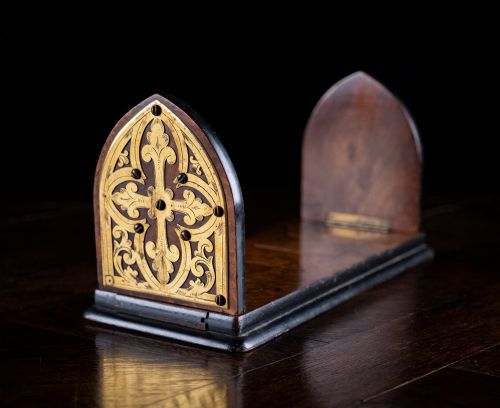
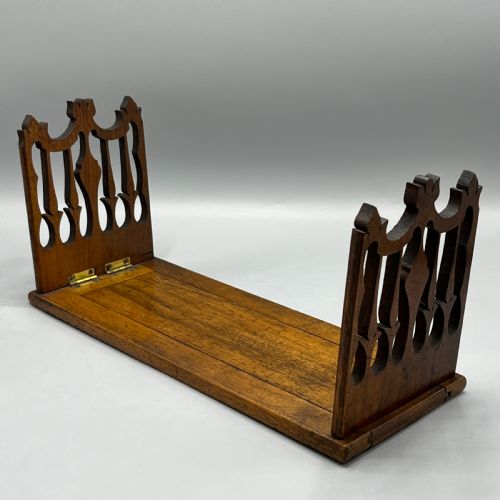
The extending book rack appears in various nineteenth century and early twentieth century incarnations across Victorian, Edwardian, and Gothic Revival styles. These pieces serve as functional desk accessories designed to hold volumes securely between two upright ends that pull apart on a sliding mechanism.
The version most commonly met on this page is the walnut, mahogany, or oak sliding bookend featuring brass mounts or hinges. Many examples demonstrate regional and decorative techniques including Tunbridge ware, Sorrento olive wood, Mauchline ware, and Black Forest carvings in linden wood and oak leaf motifs.
How they were made
Craftsmen built these desk accessories using solid hardwoods such as walnut, mahogany, oak, coromandel, and burr wood, alongside specialised decorative veneers. Wood surfaces frequently incorporate hand-carved details, inlaid geometric wooden tessellation, or applied transfer decoration.
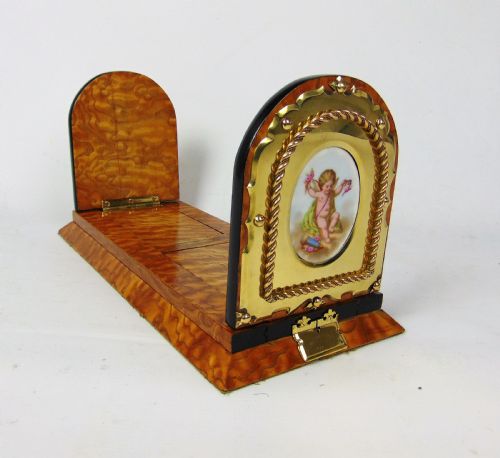
Makers integrated functional brass mounts, hinges, and sliding rails that allow the base to expand smoothly. Certain pieces incorporate contrasting materials like gilt brass, porcelain, and ebonised wood to highlight the upright bookends.
Extending Book Rack Retail Price Guide 2026
Typical asking prices for extending book rack among the pieces listed under this phrase on Sellingantiques today, from the lower quarter to the upper quarter. They describe what is for sale here now, not the wider market.
What varies in quality
The distinction between standard production items and finer examples lies in the complexity of the materials and the precision of the sliding mechanism. Elaborate decorative work such as intricate Tunbridge ware mosaics or detailed Black Forest leaf carvings elevates a piece well above simple timber book slides.
Material selection dictates the overall character, with dense hardwoods and finely chased brass mounts showing superior construction. Pieces by documented firms or those utilising exotic woods like coromandel and burr walnut represent the more ambitious end of the maker's art.
Tiffany and Co
The Extending Book Rack Glossary
- Extending book rack
- A desk accessory with a base that pulls apart to accommodate varying numbers of volumes. The sliding mechanism expands to secure the books upright.
- Gothic Revival
- An architectural and decorative style popular during the nineteenth century characterised by pointed arches and medieval motifs. Pieces in this style often feature heavy oak and structural brass mounts.
- Tunbridge Ware
- A type of nineteenth century woodworking characterised by intricate mosaic pictures formed from tiny blocks of naturally coloured woods. These geometric patterns adorn the wooden surfaces of desk items.
- Black Forest carving
- Elaborate wood carving originating from the German region, typically featuring naturalistic animal and botanical motifs. Oak leaf designs and linden wood are common elements in these carvings.
- Mauchline Ware
- Scottish souvenir woodware decorated with photographic transfers and tartan patterns. Items are finished with multiple layers of varnish.
Extending Book Rack: Frequently Asked Questions
How do extending book racks work?
An extending book rack uses a clever sliding mechanism built into the base. The two end pieces pull outward along a track to create more space for additional volumes.
As the base expands, the upright supports remain stable to keep the books neatly aligned. This adjustable design allows the rack to grow alongside a growing library collection.
Where were these book racks placed?
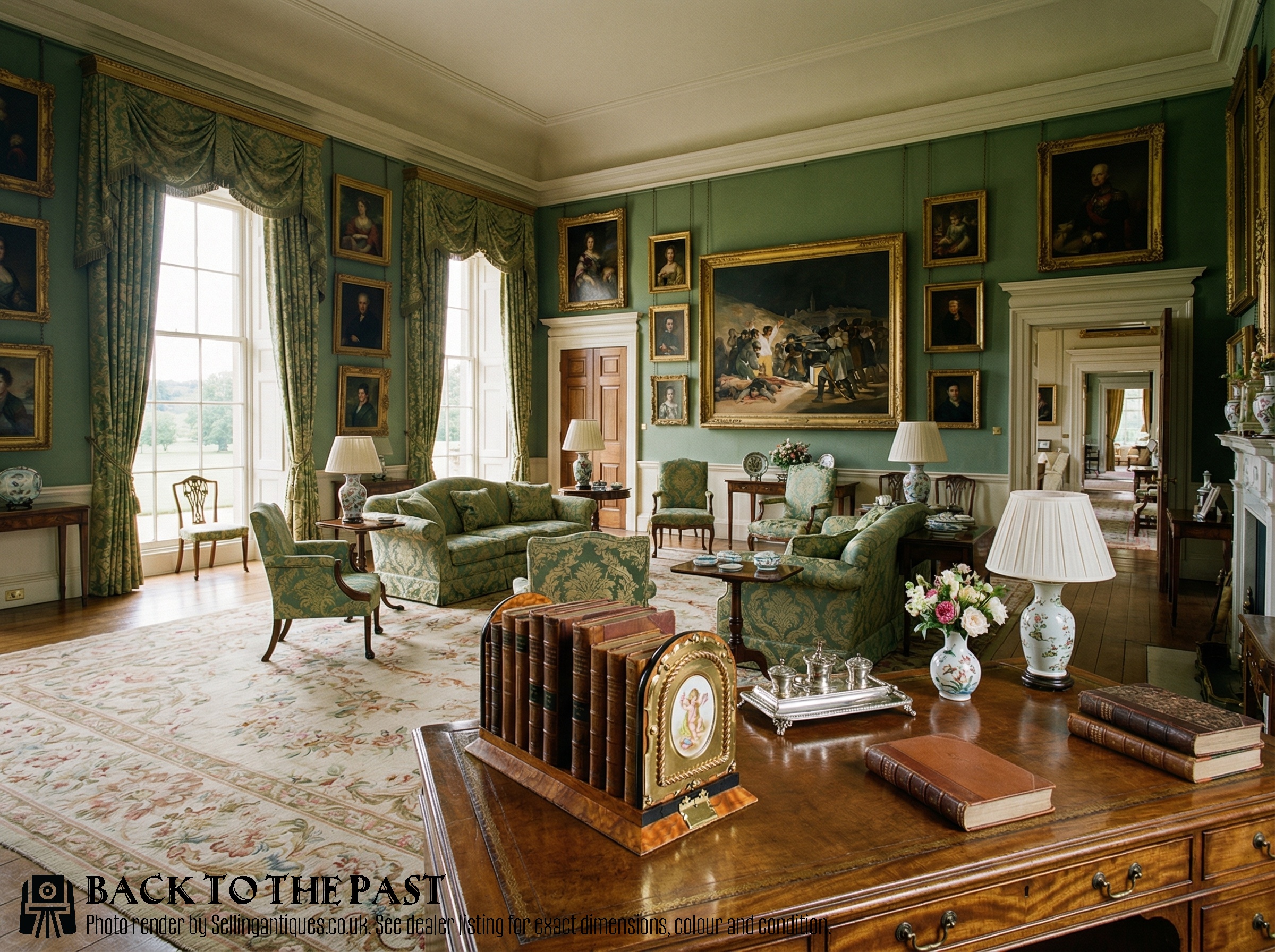
These pieces sat primarily on library desks, writing tables, and study ledges throughout the nineteenth and early twentieth centuries. They provided an accessible way to keep working reference volumes close at hand.
In domestic settings, they also appeared on parlour side tables and mantelpieces to display select poetry and novel collections.
What woods are most common?
Walnut, mahogany, and oak appear frequently across Victorian and Edwardian examples. These sturdy timbers provided the necessary strength for daily desk use.
More decorative items utilise exotic woods such as coromandel, burr wood, and olive wood, alongside specialised linden wood for carvings.
How do I care for wooden book racks?
Keep wooden book racks away from direct heat sources and strong sunlight to prevent the timber from drying out or warping. Dust the surfaces regularly with a soft, dry cloth to protect the polished finish.
Occasional application of appropriate wax polish helps maintain the lustre of older hardwoods and inlaid veneers.