


Wooden Book Holder
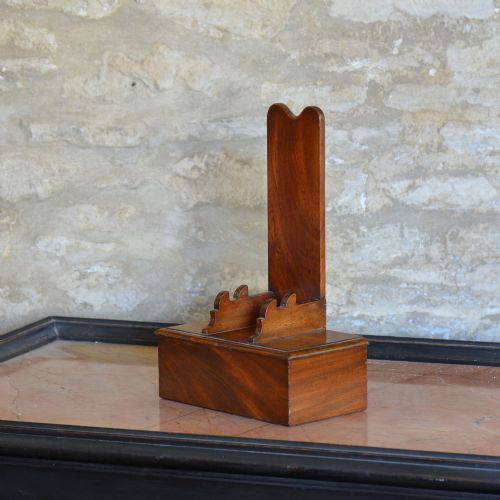
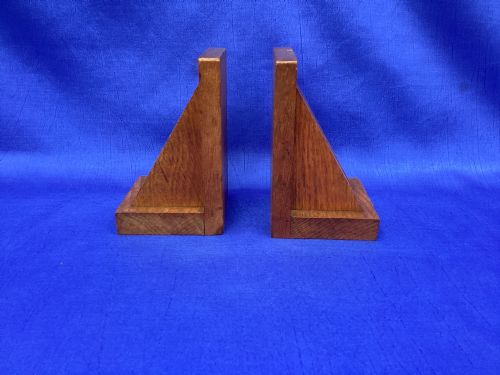
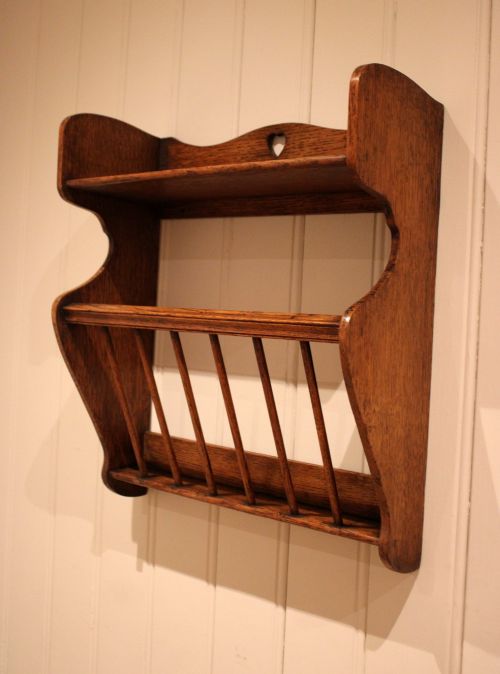
A wooden book holder organises volumes on a desk or table, and these pieces range from simple Victorian slides to elaborate Edwardian lecterns.
Wooden Book Holder
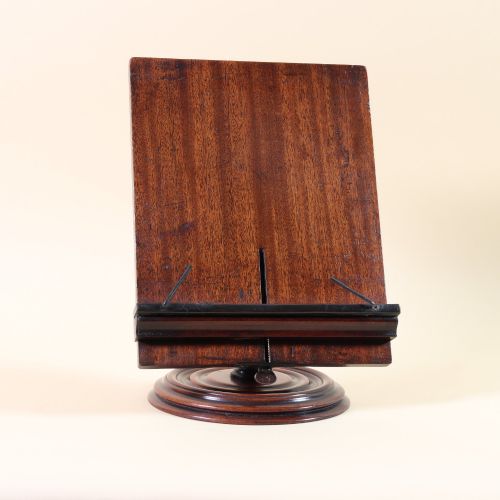
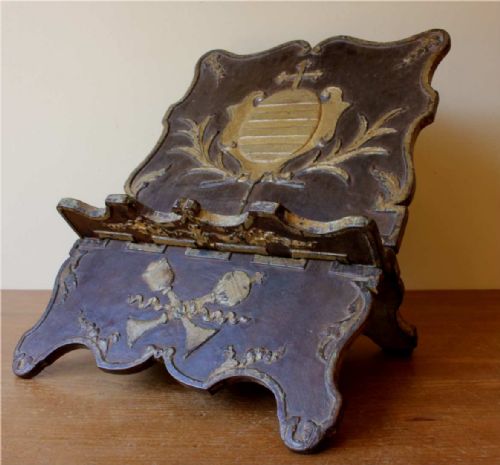
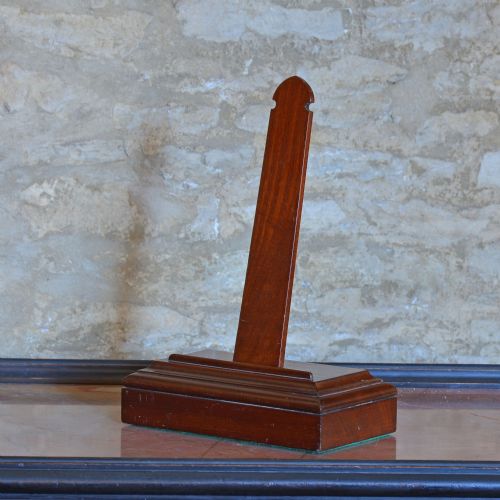
A wooden book holder encompasses various desk accessories, from extending slides to reading stands and music lecterns. The evidence shows these items serving both domestic libraries and institutional spaces across multiple centuries.
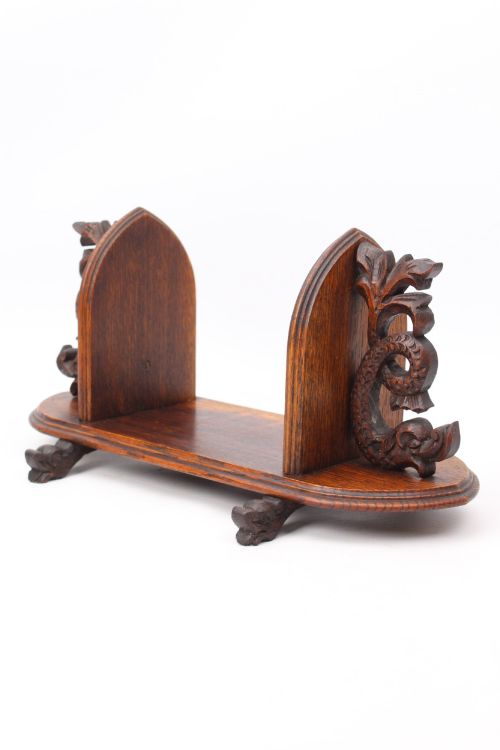
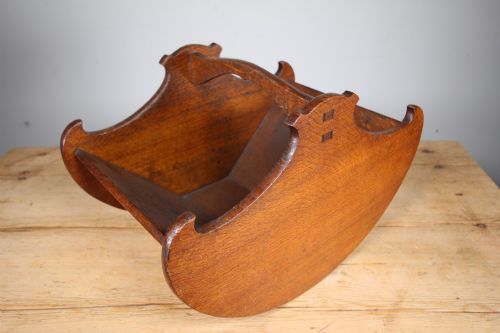
Extending book slides form a large part of the selection, often featuring hinged ends or expanding mechanisms to hold rows of volumes upright. Other common forms include desk-top book stands, wall shelves, and floor-standing lecterns.
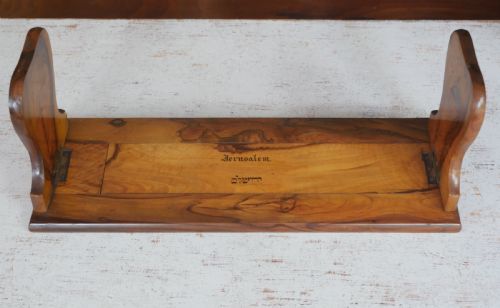
The pieces emerge from diverse eras, including the Regency, Victorian, and Edwardian periods, as well as the Arts and Crafts movement and Art Deco era. Regional variations appear too, such as olive wood slides from Jerusalem and carved teak items from Anglo-Indian makers.
Materials and Construction
Makers utilised a variety of hard and soft woods, predominantly oak and mahogany, alongside walnut, teak, olive wood, and ebonised timber. Cabinet makers selected these timbers for their durability and grain, sometimes combining oak with pine or incorporating metal supports.
Brass mountings and hinges frequently reinforce the expanding mechanisms on book slides and adjustable music stands. Ebonised finishes and inlaid mahogany demonstrate the decorative techniques applied to library furnishings across different styles.
Among the reading rests sits an unusual piece featuring carved horses alongside Art Deco oak shelving.
Assessing Quality
Quality rests in the precision of the extending mechanism and the stability of the timber joints. Smooth operation in folding book stands and adjustable lecterns distinguishes finer workshop production from standard utility items.
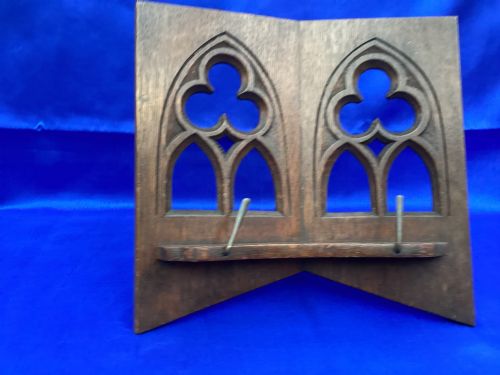
Artistic execution in carved details, such as those found on Gothic Revival pieces or carved eagle lecterns, elevates a piece. Decorative elements like painted plaques and brass mounts further separate standard production from exceptional examples.
Arthur Simpson·Gordon Russell·Tiffany & Co
The Wooden Book Holder Glossary
- Book slide
- A device designed to hold a varying number of volumes upright on a shelf or desk, often featuring extending sides. These items use friction or metal ratchets to expand.
- Lectern
- A reading desk with a sloping top, designed to support a book or musical score at an ergonomic angle. They appear as table-top stands or floor-standing pedestals.
- Ebonised wood
- Timber treated with a dark stain or finish to imitate ebony. This technique was popular in Victorian cabinet making for decorative contrast.
- Gothic Revival
- An architectural and decorative style drawing inspiration from medieval design. Pieces often feature pointed arches, heavy oak, and religious motifs.
Wooden Book Holder: Frequently Asked Questions
How do extending book slides work?
Extending book slides utilise sliding wooden sections or hinged folding ends that expand to accommodate more volumes. This simple mechanism keeps rows of books secure on a desktop without requiring fixed bookends.
Many Victorian and Edwardian examples incorporate brass tracks or scissor actions to ensure smooth movement. The design allows the holder to grow or shrink alongside a growing reading collection.
What is the difference between a lectern and a book stand?
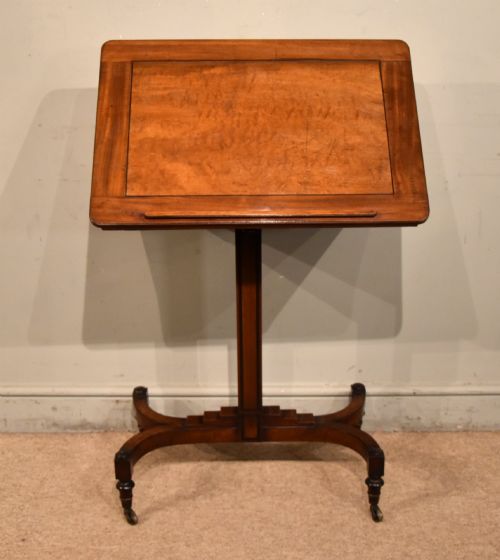
Lecterns feature a distinct sloping reading surface designed to hold heavy texts like missals, bibles, or music scores at an angle. They often stand on pedestals or heavy bases intended for floor or large table use.
Book stands and troughs are generally smaller desk accessories meant for everyday volumes and magazines. They focus on upright storage rather than active reading support.
Where were these pieces used historically?
These items populated private home libraries, studies, offices, and religious institutions such as churches and chapels. Floor-standing lecterns served in ecclesiastical settings, while desk-top rests supported scholars and readers.
Smaller book slides and troughs found homes on parlour tables and writing desks to organise working volumes. Mobility aids and bed tables also offered practical reading solutions in domestic chambers.
How do I identify a Victorian book holder?
Victorian pieces often employ heavy timbers like oak, walnut, and mahogany, frequently embellished with brass mounts and finely painted ceramic plaques. Their design styles span from plain utility to elaborate Gothic Revival and carved ornamentation.
Examining the construction methods, such as hand-cut joints and patination on the wood, helps confirm the nineteenth-century origin. Mechanics on extending rests from this era rely on solid brass and sturdy wooden channels.
Are these book holders suitable for modern books?
Most antique book slides and stands accommodate standard modern volumes just as well as historical texts. Extending slides adapt easily to varying shelf lengths and book thicknesses.
Care should be taken with very heavy modern editions on delicate folding mechanisms. Placing felt pads beneath wooden bases helps protect contemporary tabletops from friction.