


Vintage Desk Rack
A vintage desk rack organises correspondence and books upon a working surface, bringing order through timber, brass and clever mechanics.
Vintage Desk Rack
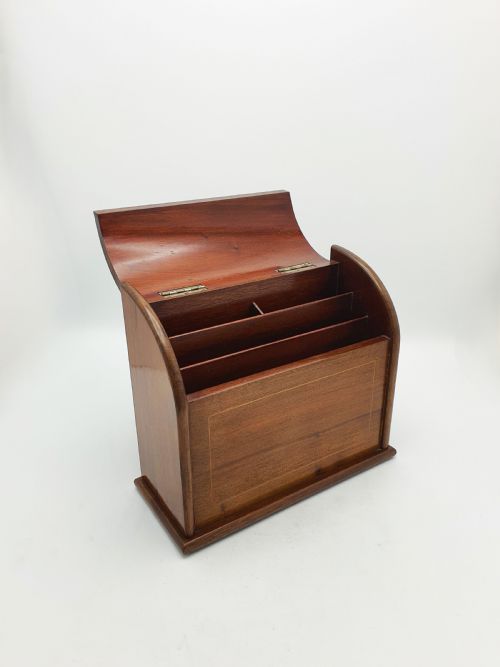
When a buyer searches for a vintage desk rack, they encounter a range of desktop pieces designed to hold letters, papers and volumes. The selection spans Victorian, Edwardian and later 19th-century periods, alongside styles such as Arts and Crafts, Chinoiserie and Anglo-Indian.
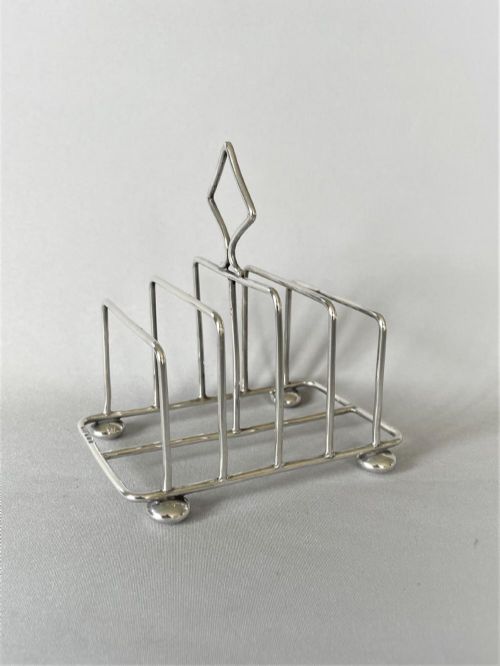
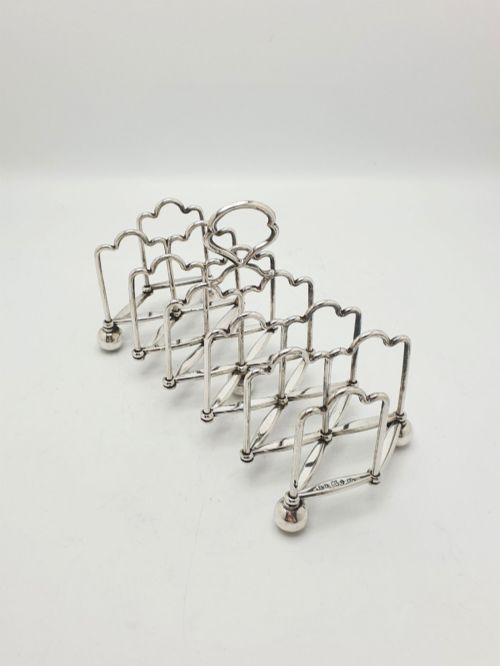
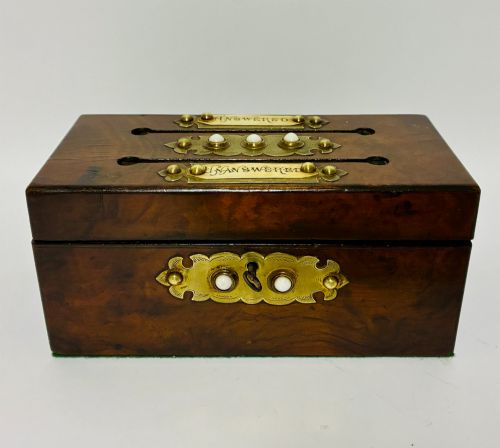
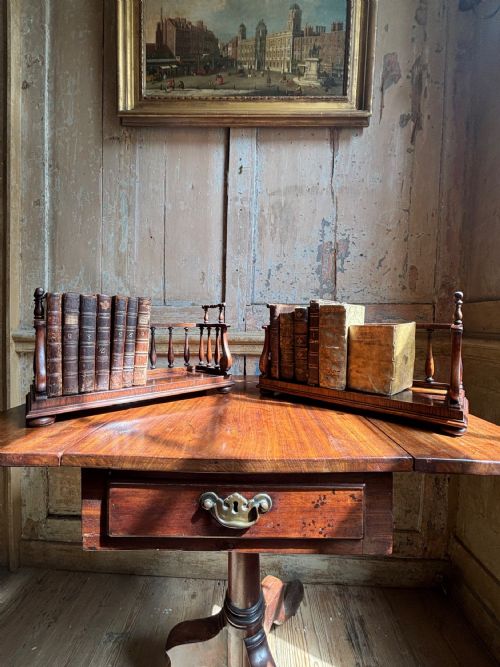
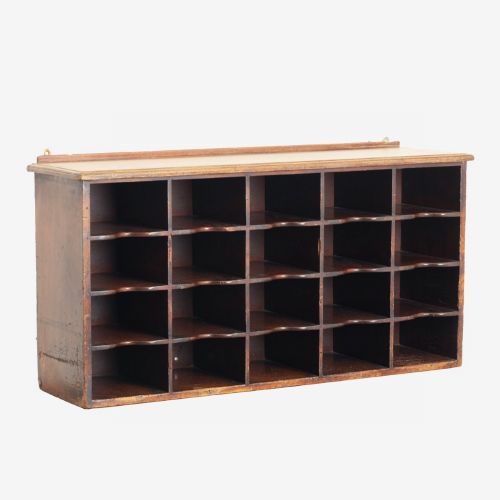
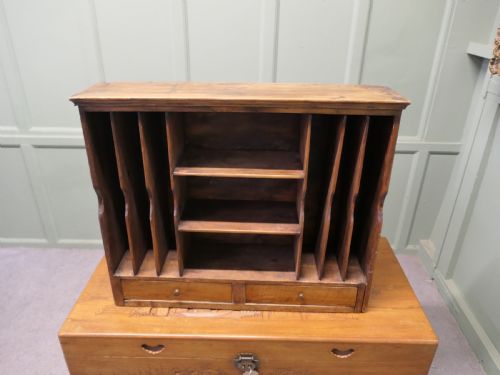
The most common forms on this page include extending book slides, letter racks, stationery boxes and desktop pigeon holes. Materials vary from heavy oak and mahogany to delicate lacquered finishes, brass and olive wood, reflecting the diverse utility required in historic studies and offices.
Materials and Technique
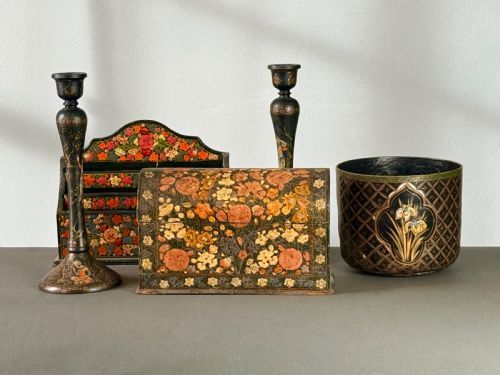
Surface ornamentation involved intricate inlay, carved teak, painted plaques and Chinoiserie lacquer work. These techniques combined functional utility with the ornate decorative standards demanded by period domestic and institutional interiors.
Listings feature oak, mahogany, walnut, brass and lacquer pieces spanning the Georgian era through to the 1930s.
Distinctions in Standard
Quality in these desktop accessories rests upon the selection of timber and the precision of mechanical elements such as expanding book slides or secret drawers. Finer examples display superior grain matching, meticulous inlay work and robust brass hardware that withstands repeated handling.
Simpler workshop pieces rely on straightforward construction without decorative enrichment, whereas master-finished items incorporate specialised regional techniques, from Kashmiri carving to Tunbridge ware, elevating the object from a mere utility to an ornament.
Elkington·Gillows
The Vintage Desk Rack Glossary
- Stationery box
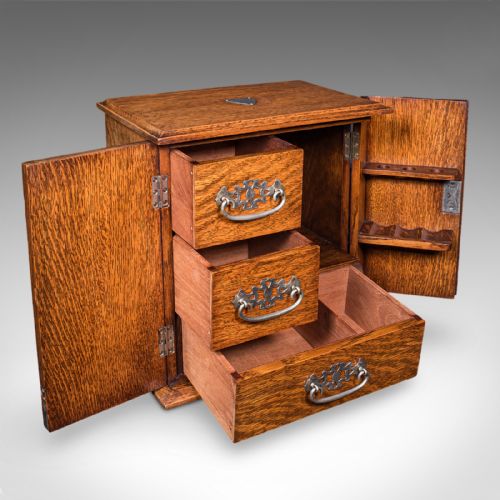
- A lidded desktop cabinet equipped with internal divisions, pigeon holes and compartments for paper and envelopes. Many examples incorporate sloping fall fronts or hinged tops.
- Letter rack
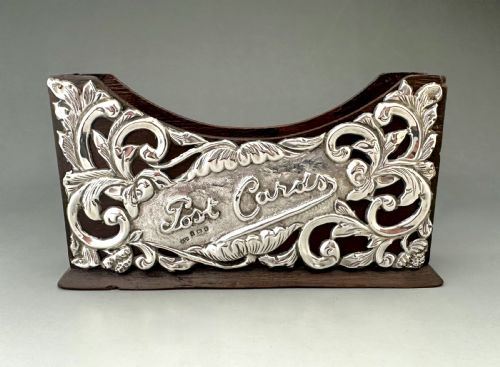
- A desktop accessory featuring upright dividers to sort incoming and outgoing post. These appear in varied materials including brass, copper and carved wood.
- Tunbridge ware
- A form of British woodwork characterised by intricate mosaic patterns made from tiny wood blocks of different natural colours. Items feature geometric or floral pictures assembled with great precision.
- Pigeon holes
- A set of open compartments built into a desktop tidy or shelf unit for sorting documents. They offer quick access to active correspondence in a working study.
Vintage Desk Rack: Frequently Asked Questions
How do extending book slides work?
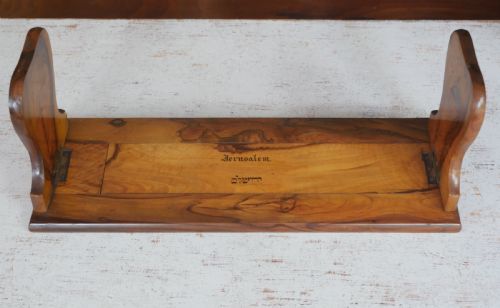
Extending book slides operate through a nested channel system that allows the wooden base to lengthen or shorten smoothly. This mechanism lets the user adjust the capacity to suit a growing or shrinking row of volumes.
Heavier brass mechanisms often indicate sturdier construction and smoother movement. The wooden ends remain upright as the base expands.
Where were these pieces used historically?
These desktop accessories found a home in Victorian and Edwardian libraries, studies, country houses and professional offices. They kept correspondence organised before the widespread adoption of modern filing systems.
Wealthy households utilised decorative models in walnut, brass and Tunbridge ware in public drawing rooms, whilst simpler oak versions served administrative desks.
How are different periods identified?
Periods are distinguished by timber choices, decorative styles and construction methods. Early pieces from the Georgian and early 19th-century eras rely on solid mahogany and rosewood with understated joinery.
Later Victorian and Edwardian examples introduce varied woods like burr walnut, elaborate brass mounts, Arts and Crafts copper work and Asian-influenced lacquer finishes.