



Sliding Book Rack
A sliding book rack adjusts to hold a row of volumes securely on a desk or table, combining practical utility with refined cabinetwork.
Sliding Book Rack
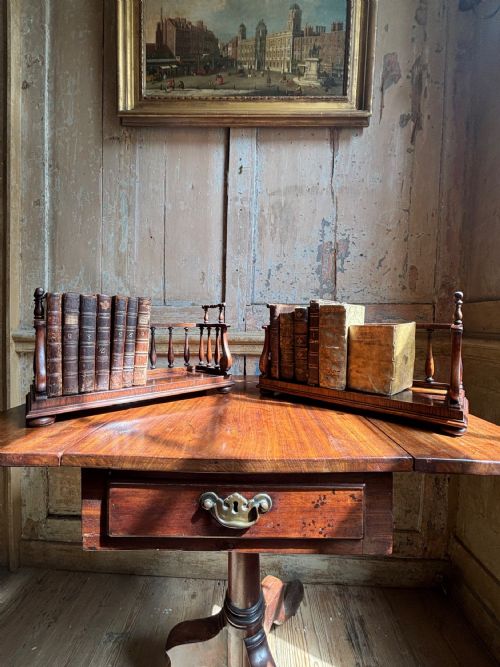
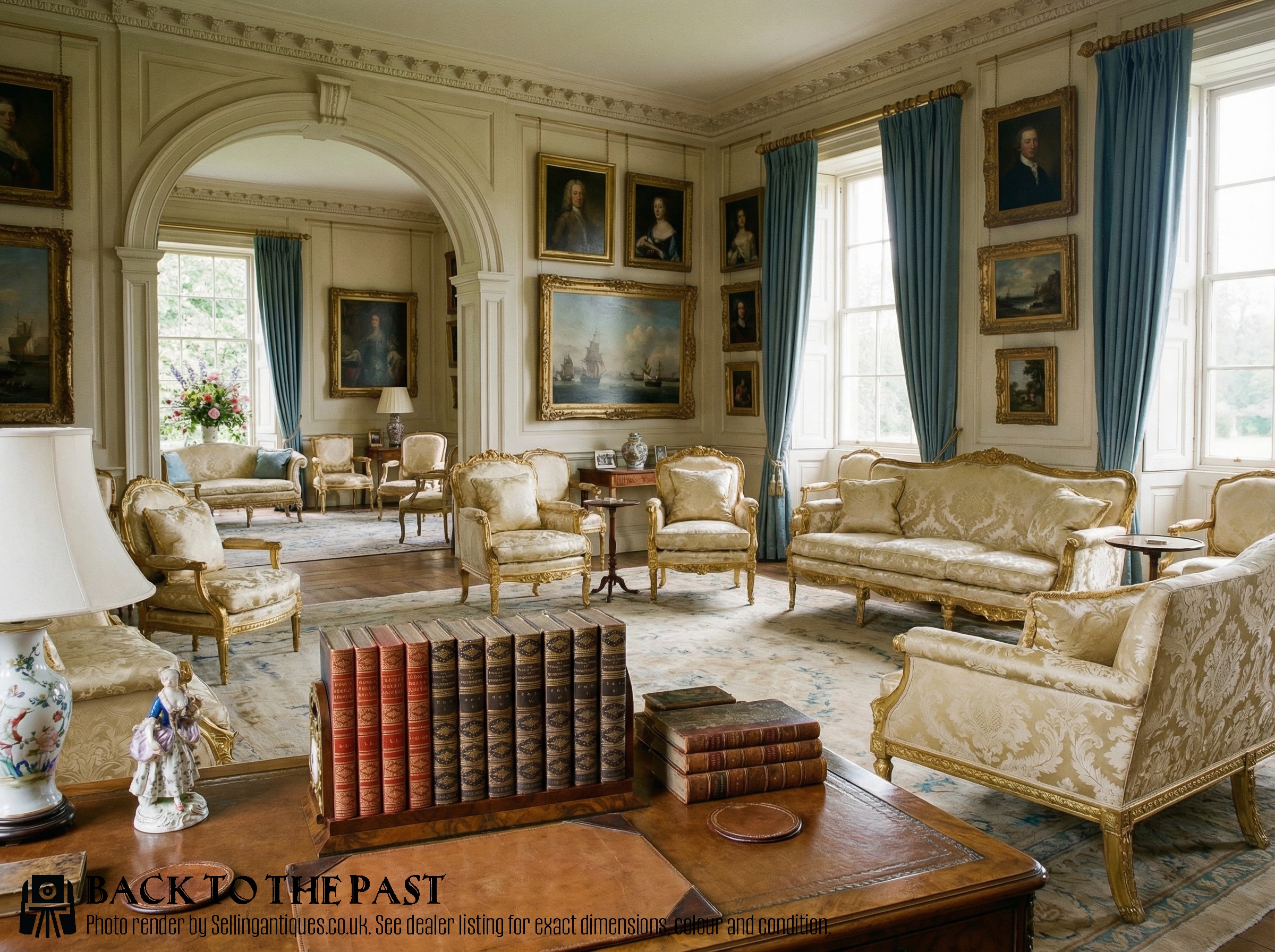
A sliding book rack is a desktop accessory designed to expand and contract smoothly as volumes are added or removed, keeping them upright without extra support. The evidence shows these pieces appear in forms such as extending book slides, stands, and rests, predominantly originating from the Victorian and Edwardian periods.
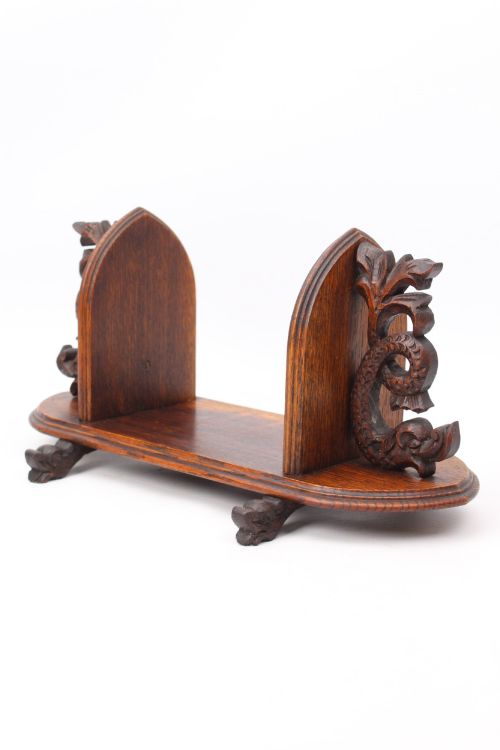
The most common examples encountered on this page date from the nineteenth century, utilising dense timbers fitted with extending mechanisms. Makers constructed them from woods like walnut, rosewood, oak, and coromandel, frequently incorporating hinged or overlapping ends that slide outward on hidden tracks.
Materials and construction
Cabinetmakers constructed sliding book racks using durable hardwoods such as walnut, oak, and mahogany, often pairing them with contrasting decorative elements. Brass hinges, mounts, and tracks provide the necessary mechanical action for the extending sides, ensuring smooth movement alongside structural stability.
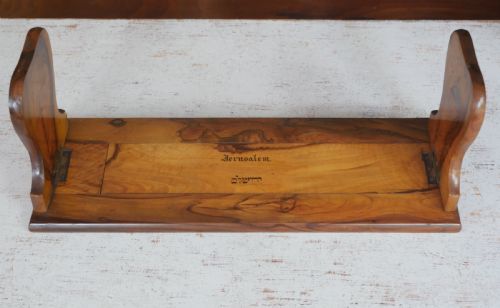
Surface decoration distinguishes many examples through specialised techniques, including Tunbridge Ware mosaic work, pietra dura plaques, and hand-painted porcelain inserts. Carved teak appears in Anglo-Indian pieces, while olive wood and coromandel showcase distinct natural grain patterns enhanced by French polishing.
Listings feature woods such as walnut, rosewood, oak, ebonised wood, boxwood, and olive wood, spanning the Victorian, Edwardian, and Regency periods.
Assessing craftsmanship and detail
Quality in a sliding book rack rests upon the precision of the extending mechanism and the selection of timber. Finer examples feature smoothly operating internal slides that remain flush and true, constructed from richly figured veneers or solid exotic woods rather than plain secondary stock.
Decorative embellishments further separate standard pieces from exceptional ones. The inclusion of hand-painted porcelain plaques, fine pietra dura inlay, or intricate Tunbridge Ware marquetry indicates higher workshop execution and greater artistic investment.
Betjemanns·Tiffany & Co
The Sliding Book Rack Glossary
- Tunbridge Ware
- A form of British woodwork characterised by mosaic tiles assembled from thousands of tiny tinted wood blocks to form geometric or pictorial scenes. This technique appears frequently on nineteenth-century desktop accessories.
- Pietra dura
- An artistic process using cut and fitted polished coloured stones to create decorative images. These inlaid panels often adorn the upright ends of Victorian book stands.
- Coromandel
- A dense, heavy timber featuring dark brown and black streaking, highly prized for luxury cabinetwork. Makers utilised this wood during the nineteenth century for high-end library accessories.
- Gothic Revival
- An architectural and decorative style drawing inspiration from medieval forms, featuring pointed arches and quatrefoil motifs. This aesthetic translates into walnut and oak book rests with ecclesiastical detailing.
- Anglo-Indian
- Describing furniture and decorative objects manufactured in India under British rule, typically featuring dense native hardwoods and intricate carved relief work. Carved teak book slides represent this tradition.
Sliding Book Rack: Frequently Asked Questions
How do sliding book racks work?
These accessories rely on a sliding mechanism where hinged or overlapping wooden ends pull outward from a central base. This expansion creates a wider or narrower trough to accommodate varying numbers of volumes.
Brass tracks and pins typically guide the movement, keeping the upright ends parallel as the user adjusts the span to hold the books firmly in place.
Were these used in public libraries?
Sliding book racks were primarily intended for private studies, home libraries, and executive desks rather than large public institutions. Their scale suited small collections of frequently consulted volumes kept close at hand.
Victorian and Edwardian writers and readers utilised them to keep reference books organised and upright on sloped writing slopes or flat tables.
How do I date a wooden book slide?
Dating relies upon timber selection, hardware design, and decorative styles characteristic of specific periods. Pieces utilising coromandel, Tunbridge Ware, or brass-mounted walnut typically point to mid-Victorian production around eighteen sixty to eighteen eighty.
Later Edwardian and early twentieth-century examples often display simpler oak construction with less ornate metalwork and more restrained decorative carving.
Are the brass mounts original?
Original brass mounts and hinges show consistent patination and fit neatly into recessed channels cut specifically for them. Screws and fixings should match the period of manufacture, showing age-appropriate wear corresponding to the wood surrounding them.
Replacements usually display brighter, unaged metal surfaces and screw heads that do not align with nineteenth-century manufacturing standards.