




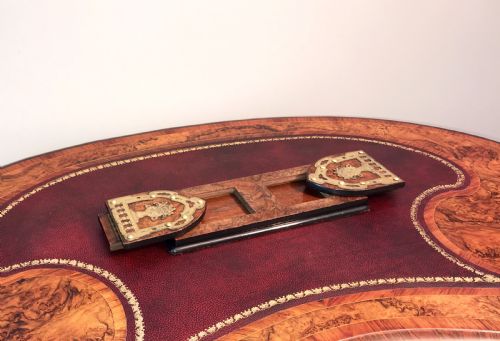
Expanding Book Stand
An expanding book stand keeps favourite volumes upright on a desk or shelf while adjusting in length to hold a growing row.
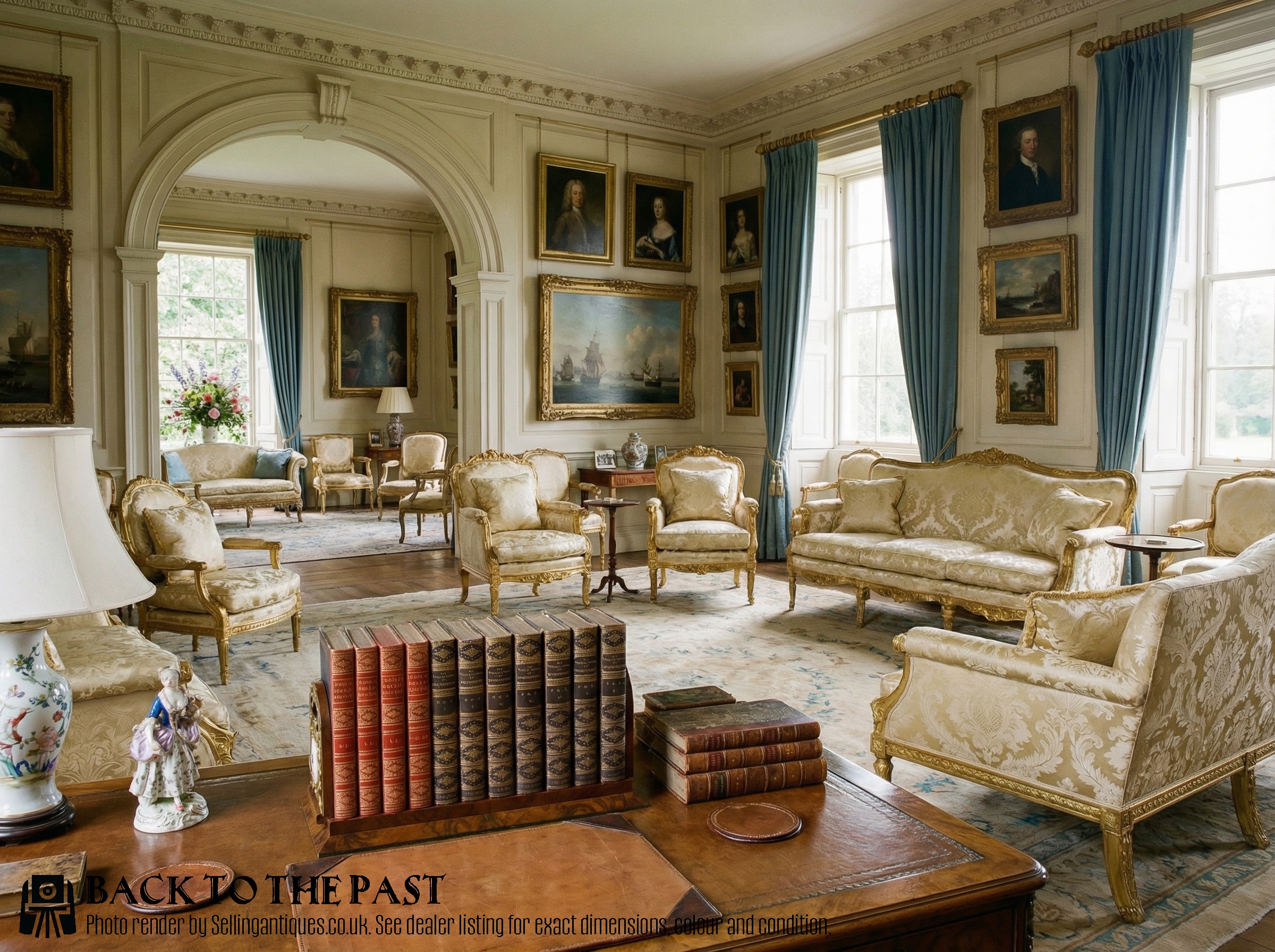
Expanding Book Stand
An expanding book stand is a practical library accessory designed to support rows of books on a desk or table without tumbling. The examples on this page are principally Victorian pieces, dating from the mid-nineteenth century up to the Edwardian period.
Most items seen here take the form of book slides or book rests with hinged or telescoping actions. These allow the wooden or metal base to stretch outwards as more volumes are added between the upright ends.
Makers fashioned these stands from rich timbers such as walnut, oak, and burr walnut, often mounting them with brass hinges and decorative plaques. Alongside standard domestic designs, collectors encounter variants featuring pietra dura inlays, carved teak from Anglo-Indian workshops, and Tunbridge ware.
How they were made
Cabinet makers utilised dense hardwoods like walnut, ebony, and olive wood to construct the rigid bases and upright ends of each book slide. These timbers provided the weight necessary to anchor the expanding mechanism and prevent the wood from warping under pressure.
Brass formed an essential component, appearing as strapwork mounts, hinges, and extending scissor actions that allowed the two ends to glide smoothly apart. Artisans frequently integrated decorative elements such as bone inlay, finely painted plaques, and pietra dura stone mosaics into the wooden panels.
Expanding Book Stand Retail Price Guide 2026
Typical asking prices for expanding book stand among the pieces listed under this phrase on Sellingantiques today, from the lower quarter to the upper quarter. They describe what is for sale here now, not the wider market.
Some nineteenth-century makers titled these functional desk pieces as novel rests.
What varies in quality
Quality rests upon the choice of timber and the precision of the extending mechanism. Solid burr walnut and exotic woods with rich grain patterns signal finer construction than plain domestic timbers.
The sophistication of the decorative work sets superior pieces apart from standard workshop production. Finely painted plaques, intricate brass mountings, and specialised patent actions indicate higher craftsmanship.
The Expanding Book Stand Glossary
- Book slide
- A desk accessory featuring an adjustable base that lengthens to accommodate varying numbers of volumes. The extending action usually relies on sliding wooden sections or hidden brass linkages.
- Pietra dura
- An Italian technique of inlaying cut and fitted polished coloured stones to form pictorial designs. Artisans embedded these mosaic plaques directly into the wooden panels of select Victorian book rests.
- Tunbridge ware
- A type of decorative woodworking involving small pieces of coloured wood assembled precisely to create mosaic patterns. These intricate geometric or floral designs often decorated the tops of nineteenth-century book racks.
- Ebonised wood
- Timber treated with a dark stain or finish to imitate ebony. This dark surface provided a contrasting backdrop for bright brass mounts and inlay work.
Expanding Book Stand: Frequently Asked Questions
How do expanding book stands work?
These pieces feature a sliding base mechanism that pulls apart to increase the span between the two upright ends. As books are added or removed, the platform adjusts smoothly to keep the volumes held firmly upright.
Most nineteenth-century versions utilise a simple telescoping wooden track or a hinged linkage hidden beneath the base. This allows the stand to expand securely without losing its grip on the books.
Where were these book stands used?
Owners placed them on library desks, study tables, and drawing-room sideboards to keep working volumes close at hand. They served domestic households and private libraries where books needed organisation outside of tall bookcases.
Because they adjusted in length, they sat neatly upon narrow ledges or corner tables where fixed bookends might prove too rigid. Their decorative finishes allowed them to double as ornamental desk accessories.
How can I date an antique book slide?
Dating relies heavily on the timber selection, the style of decoration, and the presence of any patent stamps or brass work. Mid-Victorian examples frequently display rich walnut with heavy brass mounts, while Edwardian pieces often appear in plainer oak.
Design motifs also offer clues, such as the Gothic revival influences seen in some 1860s pieces or the intricate Tunbridge wood mosaics popular during the 1870s. Patent mechanisms bearing maker names further help narrow down the decade of manufacture.
What woods were used for these stands?
Cabinet makers selected dense, durable hardwoods capable of withstanding the daily pressure exerted by heavy book collections. Walnut and burr walnut appear frequently across Victorian examples, offering rich grain patterns and deep colour.
Other materials recorded include oak, olive wood, coromandel, and ebonised wood. Artisans also incorporated exotic timbers such as teak on pieces originating from Anglo-Indian workshops.