





Gothic Revival Book Slide
These gothic revival book slide pieces bring architectural weight to a desk, offering sturdy extension to hold a row of volumes.
Gothic Revival Book Slide
When you search for gothic revival book slide items, you encounter functional desk accessories designed to expand and contract according to the number of volumes placed between their ends. Most examples on this page date from the Victorian and Edwardian periods, reflecting a nineteenth century enthusiasm for heavy architectural forms and domestic library organisation.
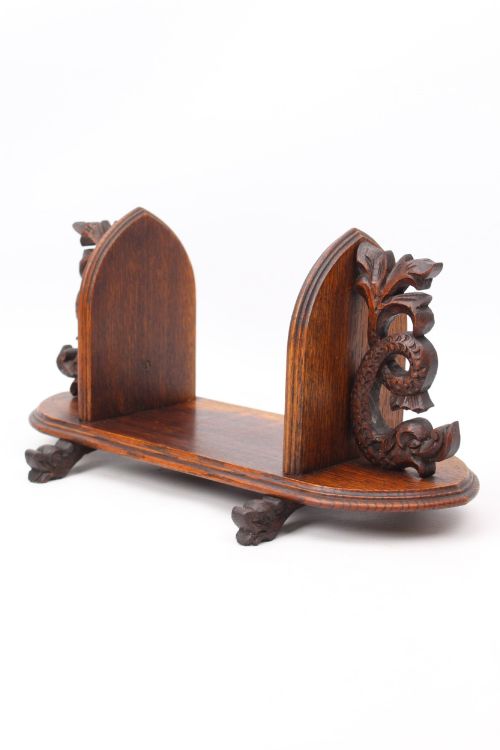
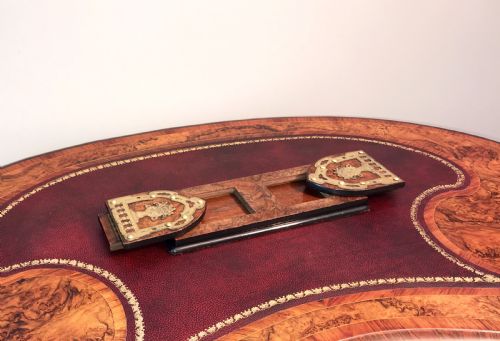
The objects typically consist of a wooden base fitted with folding or fixed upright ends, often engineered with a sliding mechanism. Formats range from simple wooden book stands to elaborate extending book rests and complete desk sets incorporating matching components.
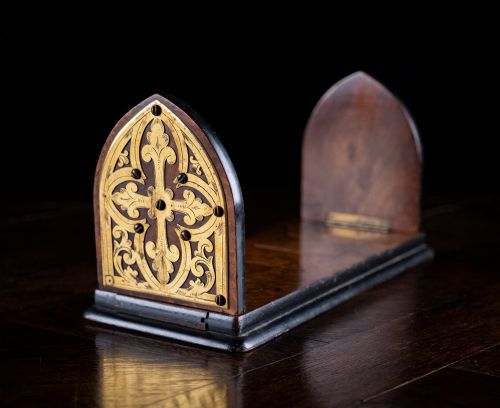
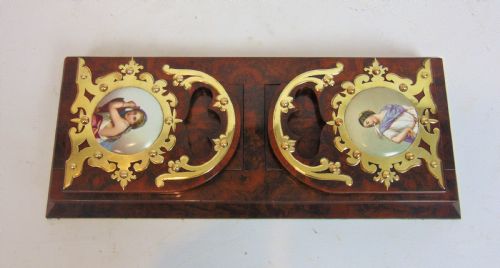
Makers and manufacturers of the period utilised robust timbers such as walnut, oak, mahogany, coromandel, maple, and ebonised wood. These materials were frequently combined with brass mounts, metal hinges, porcelain plaques, or inset agate stones to achieve a substantial appearance.
How they were made
Cabinet makers constructed the extending bases using dense hardwoods like walnut, oak, and coromandel, ensuring the mechanism could withstand the lateral pressure of heavy books. The sliding actions relied on precision channels or scissor mechanisms concealed within the wooden base.
Decoration involved applied brass mounts, ormolu detailing, and structural carving that echoed medieval architectural motifs typical of the gothic revival style. Ebonising and maple finishes provided alternative surface treatments, sometimes accented with inset porcelain plaques.
Gothic Revival Book Slide Retail Price Guide 2026
Typical asking prices for gothic revival book slide among the pieces listed under this phrase on Sellingantiques today, from the lower quarter to the upper quarter. They describe what is for sale here now, not the wider market.
What varies in quality
The standard of timber selection and the complexity of the brass mounting distinguish finer examples from standard production pieces. Dense, highly figured woods like coromandel and well-cast brass mounts indicate superior workshops.
Mechanical smoothness in the extending action and the crispness of any carved architectural detailing determine the overall grade of the item. Integrated patent mechanisms, such as those by Betjemanns, represent a higher tier of desk accessory engineering.
Betjemanns
The Gothic Revival Book Slide Glossary
- Book slide
- A desk accessory with an extending base designed to hold a variable number of upright volumes between two ends. It allows the user to adjust the length as the collection changes.
- Coromandel
- A dense, heavily figured exotic timber imported from Asia, frequently utilised for high-end Victorian desk accessories and boxes. Its dark grain provides a rich contrast to metal mounts.
- Ebonised
- Wood treated with a dark stain or finish to imitate ebony. This technique was popular in nineteenth-century cabinet making to create a formal, uniform appearance.
- Ormolu
- Gilded bronze or brass applied as decorative mounts to furniture and desk pieces. It provides metallic contrast against the polished wooden surfaces.
Gothic Revival Book Slide: Frequently Asked Questions
What is a gothic revival book slide?
A gothic revival book slide is an extending desk accessory featuring architectural motifs from the nineteenth century. It expands to support rows of books on a library table.
These items combine practical book storage with decorative elements such as pointed arches, carved tracery, and metal mounts.
How do extending book slides work?
Extending book slides operate via a sliding mechanism concealed within the wooden base. The two end pieces pull apart or push together to accommodate varying numbers of volumes.
Some examples utilise patent sliding actions that ensure smooth movement without jamming.
What woods were used for these?
Maker workshops utilised a range of dense hardwoods including walnut, oak, mahogany, coromandel, and maple. Ebonised wood was also common for a dark, formal finish.
These timbers provided the structural strength required to resist the pressure of heavy book collections.
Are desk sets part of this range?
Desk sets sometimes appear alongside standalone slides, incorporating matching materials like coromandel and ormolu. These collections offered coordinated accessories for nineteenth-century writing desks.
Such sets share the architectural detailing and brass mounting seen on individual book rests.