



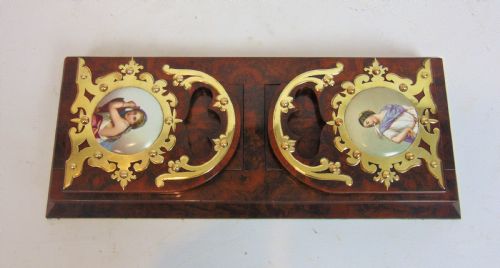


Victorian Book Slide
A victorian book slide holds volumes upright on a desk or table while expanding to fit a growing collection.
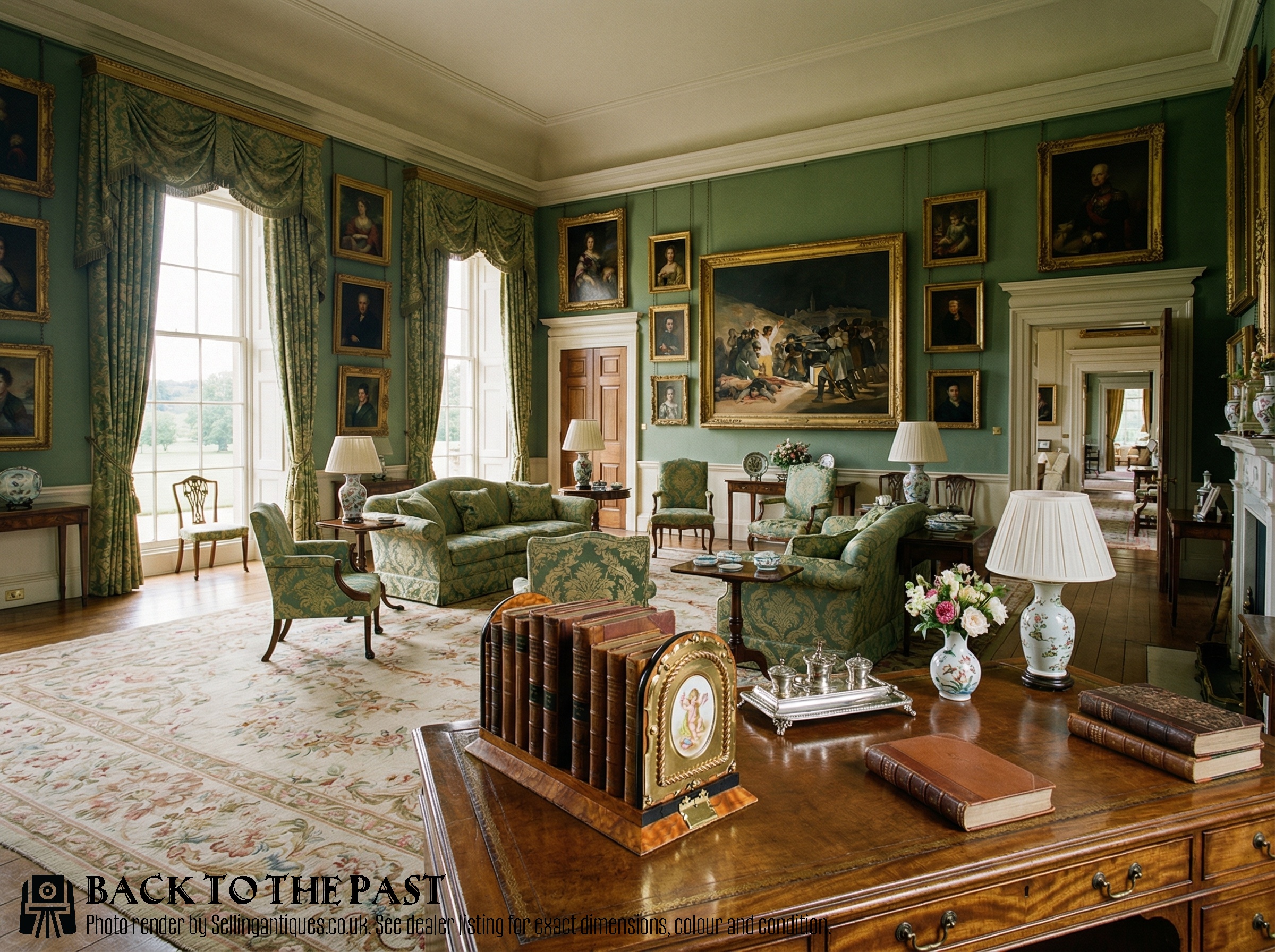
Victorian Book Slide
A victorian book slide is a desk accessory designed to keep volumes orderly on a tabletop through a folding or extending mechanism. The examples met most often on this page date from the nineteenth century and employ dense timbers fitted with metal mounts.
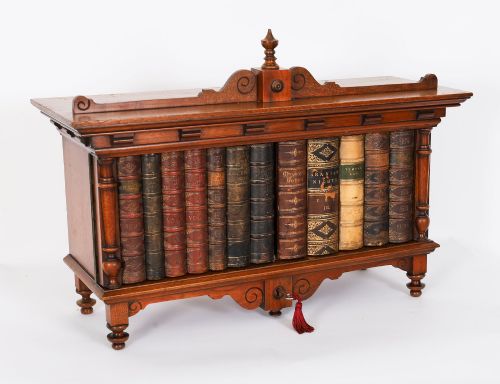
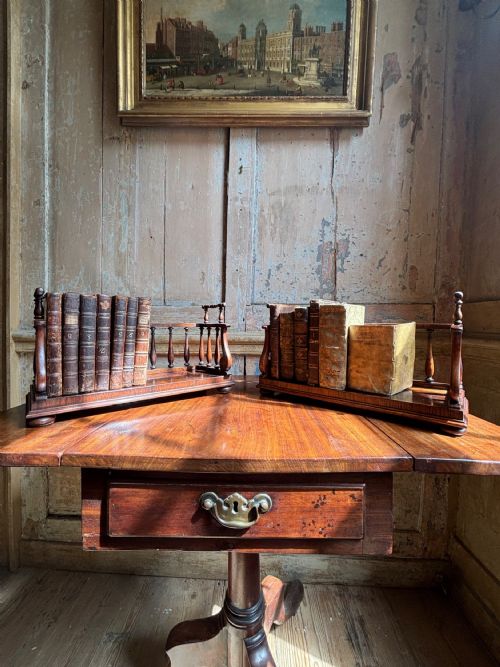
Makers produced these stands in various forms including simple wooden racks, folding novel rests, and heavy library holders. Walnut, coromandel, and mahogany dominate the core structure, often paired with extending actions that let the sides pull outward to lengthen the rack.
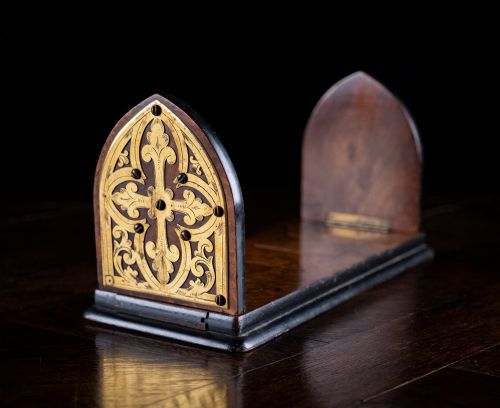
Beyond standard domestic items, the selection includes pieces influenced by Gothic Revival styles, alongside inlaid Tunbridge ware and imported woods such as olive wood and carved teak. These objects served as functional library equipment that also displayed decorative craft on a desk.
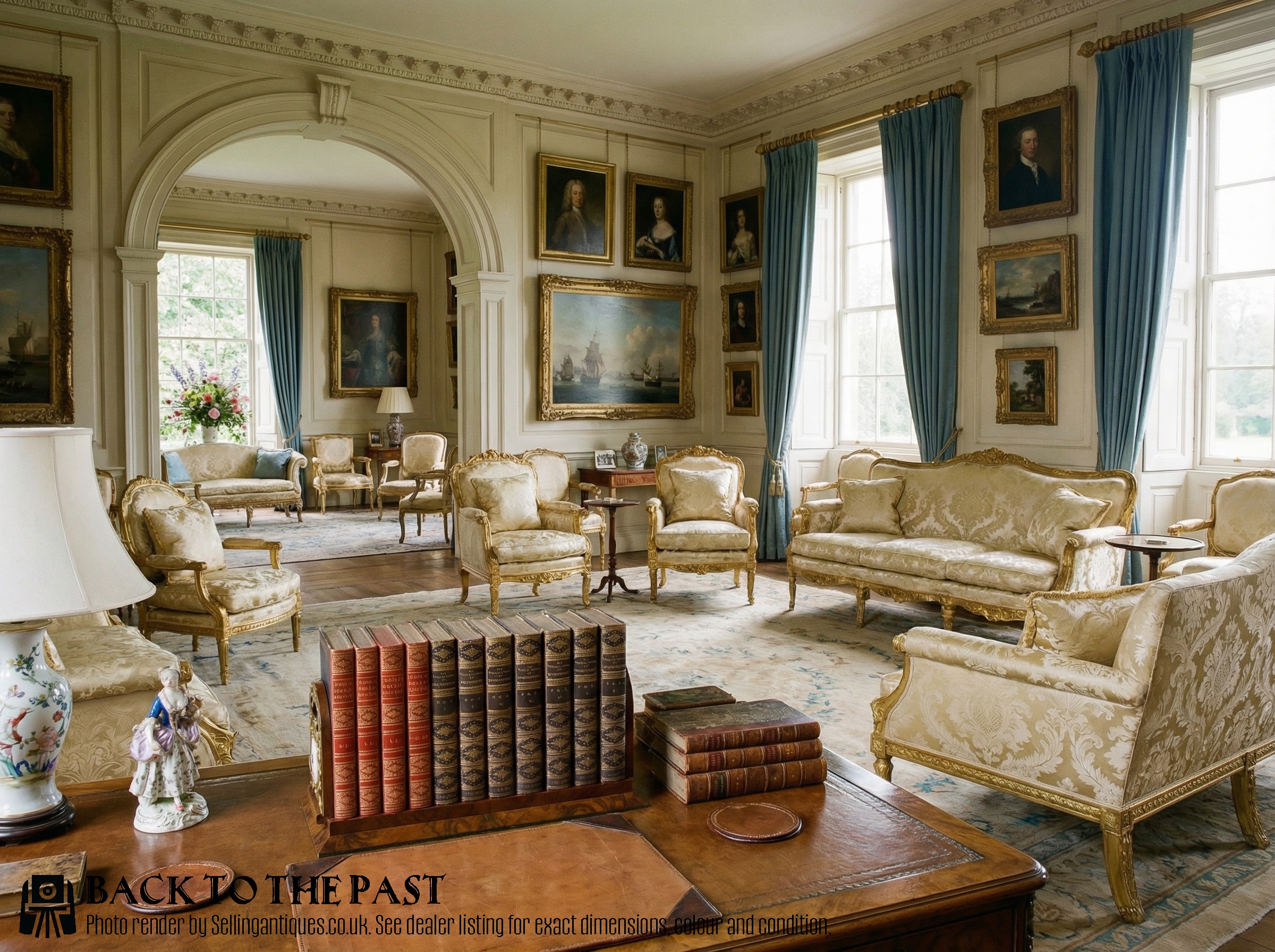
Materials and construction
Cabinet makers built victorian book slide mechanisms using hardwoods like walnut, rosewood, and coromandel, frequently incorporating brass hinges, mounts, and protective end caps. Many designs relied on expanding scissor actions or sliding wooden tracks that allowed the base to adjust smoothly.
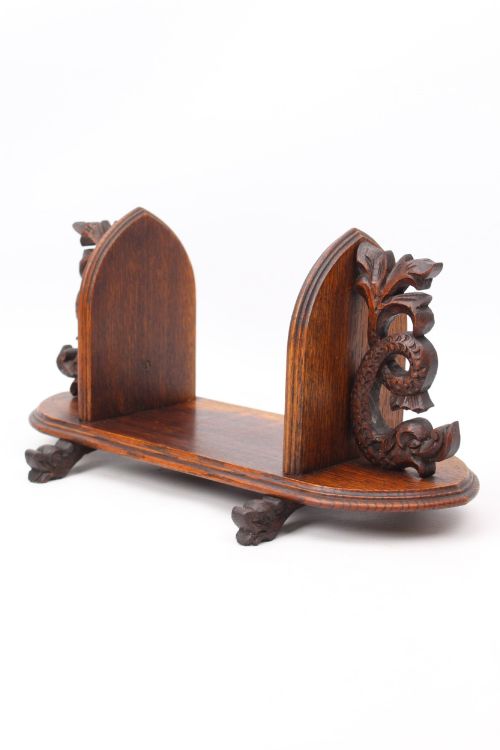
Decoration often involved applied porcelain plaques, pietra dura inlay, bone details, and intricate Tunbridge mosaic work set into the wooden surfaces. Oak and mahogany versions also appear, sometimes carved with Gothic Revival motifs or Celtic decoration.
Victorian Book Slide Retail Price Guide 2026
Typical asking prices for victorian book slide among the pieces listed under this phrase on Sellingantiques today, from the lower quarter to the upper quarter. They describe what is for sale here now, not the wider market.
Periods represented span from the Regency era through the Victorian decades and into the Edwardian period.
Quality variations
The distinction between standard and superior pieces rests on the choice of cabinet timber and the complexity of the decorative embellishments. Dense exotic woods like coromandel command attention, especially when combined with precision engineering in patented extending actions.
Hand-painted porcelain plaques, inlaid pietra dura stonework, and fine brass mountings elevate certain stands above basic utilitarian racks. The smoothness of the sliding mechanism and the integrity of the fitted joints further distinguish high-grade examples.
Betjemanns·Gillows·Tiffany and Co
The Victorian Book Slide Glossary
- Tunbridge ware
- A type of woodworking featuring mosaic patterns created from tiny blocks of natural coloured timbers. It often covers the surfaces of small desk accessories.
- Pietra dura
- An inlaid technique using cut and fitted polished coloured stones to form pictorial designs. These decorative plaques frequently adorn the ends of library stands.
- Coromandel
- A heavy, dark exotic timber with contrasting streaks, prized for nineteenth-century luxury cabinet work. It provides a dense foundation for high-end desk items.
- Gothic Revival
- An architectural and decorative style drawing on medieval forms, featuring pointed arches and heavy carved details. This aesthetic appears frequently on oak library pieces.
- Betjemann's patent
- A mechanical action invented for expanding book holders, allowing the ends to move synchronously. Marked pieces indicate a specific standard of nineteenth-century engineering.
Victorian Book Slide: Frequently Asked Questions
How do expanding book slides work?
These desk accessories feature a central base with sliding sections that pull outward to accommodate more volumes. The mechanical action often uses hidden wooden tracks or patented metal linkages.
When pushed together, the stand takes up minimal space on a tabletop. Pulling the ends apart extends the platform while keeping the retaining ends upright.
Where were book slides used?
Owners placed these stands on executive desks, library tables, and parlour surfaces to keep current reading matter close at hand. They held smaller collections of poetry, reference books, or novels.
In a domestic setting, they served both a practical organising purpose and a decorative function. The materials matched other study furnishings of the period.
What woods are most common?
Walnut is the timber most frequently encountered in these nineteenth-century library accessories. Mahogany, oak, and rosewood also appear across many examples.
More luxurious versions utilise coromandel, olive wood, or ebonised wood. These dense timbers provided a sturdy foundation for metal mounts and inlaid decoration.
How do you date a book slide?
Dating relies on timber choices, decorative styles such as Gothic Revival or Tunbridge mosaic, and mechanical patents. Mid-nineteenth-century examples often display rich coromandel and brass mounts.
Later Victorian and Edwardian pieces shift slightly in timber preference and carving style. Patent stamps from makers also help narrow down the period of manufacture.