






Antique Desktop Bookstand
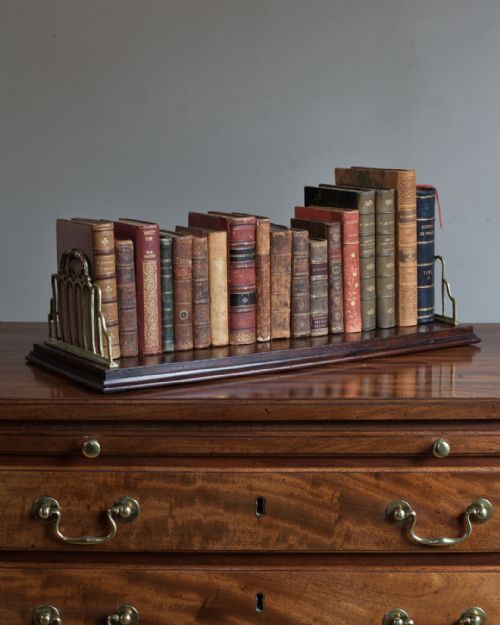
An antique desktop bookstand keeps your volumes upright and within reach, turning a working surface into a study in polished timber and brass.
Antique Desktop Bookstand
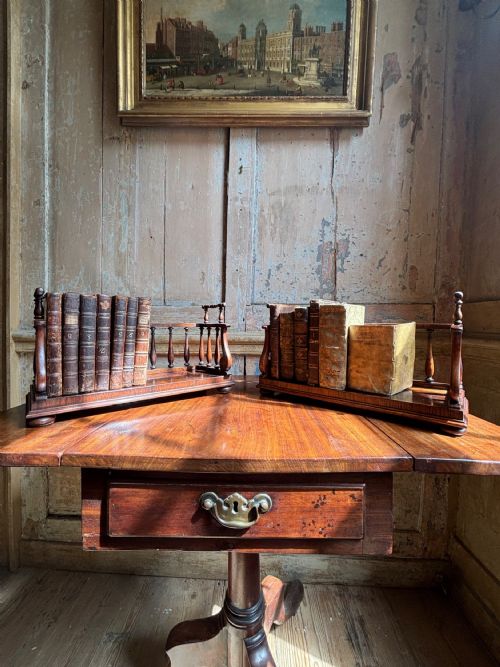
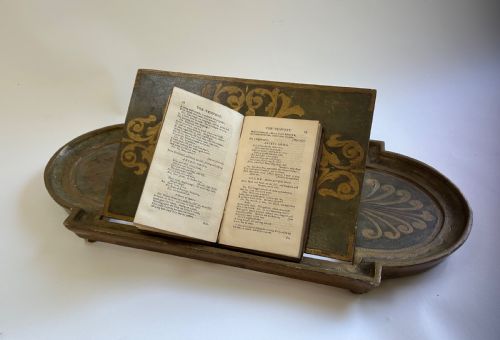
An antique desktop bookstand encompasses extendable slides, fixed racks, and revolving cases designed to sit upon a table or desk. The pieces meeting this search phrase span the nineteenth century, the Edwardian era, and the nineteen-twenties, offering practical ways to display working libraries.
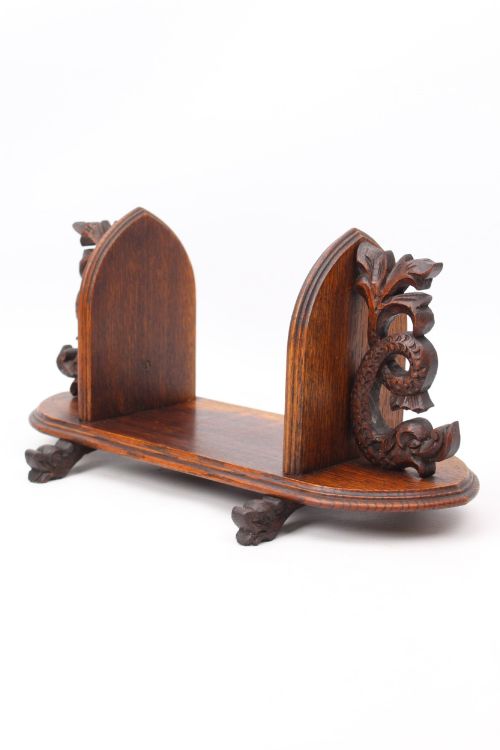
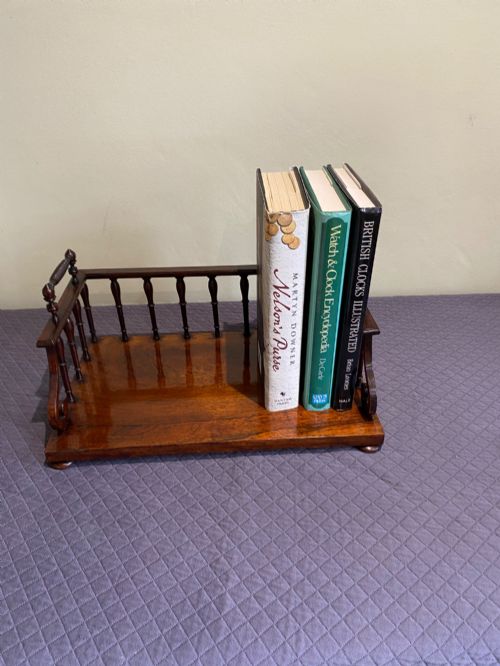
Extending book slides dominate the selection, featuring wooden ends connected by a mechanism that lengthens as more volumes are added. Fixed book stands and revolving table-top bookcases appear alongside these slides, providing alternative ways to organise smaller collections of books.
Origins stretch across English workshops, alongside continental Florentine examples, Anglo-Indian items, and Kashmiri pieces. Woods such as walnut, rosewood, oak, and mahogany form the primary bodies, often accented with brass mountings and inlay.
Materials and construction methods
Cabinetmakers used dense timbers like rosewood, walnut, oak, and mahogany to build the frames, ensuring stability for heavy volumes. Coromandel and satinwood appear on select pieces, bringing lighter tones and striking grain patterns to the desk.
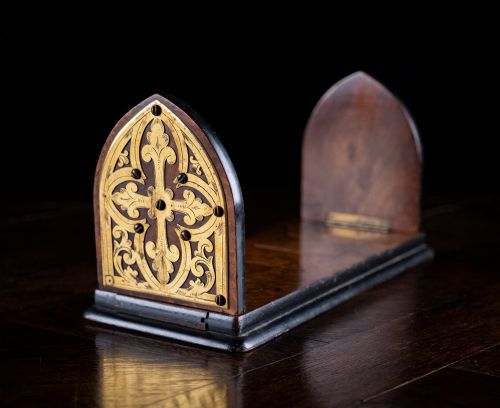
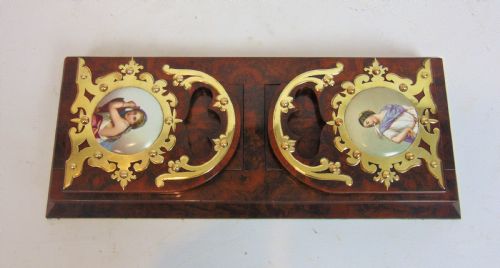
Brass fittings provide structural reinforcement and decorative contrast, particularly on sliding mechanisms and hinged bookends. Tunbridge ware inlay, bone details, painted porcelain plaques, and fine carving decorate the wooden surfaces of specific examples.
Antique Desktop Bookstand Retail Price Guide 2026
Typical asking prices for desktop bookstand among the pieces listed under this phrase on Sellingantiques today, from the lower quarter to the upper quarter. They describe what is for sale here now, not the wider market.
Listings for this phrase include pieces from the nineteenth century, the Edwardian period, and the nineteen-twenties, rendered in woods like oak, walnut, and rosewood.
Markers of distinction and build
Quality rests in the precision of the extending mechanism and the smoothness of its action. Superior pieces move evenly along their tracks without binding, while lesser examples show stiffness or looseness in the joints.
The choice of timber and the fineness of surface decoration separate standard items from exceptional ones. Finely painted porcelain plaques, intricate Tunbridge ware mosaics, and substantial brass mounts elevate a simple desk accessory into a piece of fine cabinet work.
The Antique Desktop Bookstand Glossary
- Book slide
- An extending rack designed to hold a variable number of upright books between two decorative ends. The base usually expands smoothly to accommodate growing collections.
- Tunbridge ware
- Small wooden objects decorated with mosaic patterns made from tiny pieces of naturally coloured timbers. These minute tiles create detailed pictorial or geometric designs.
- Revolving bookcase
- A compact bookcase mounted on a hidden turntable so books can be accessed from all sides. Table-top versions bring this rotating function directly to the desk.
- Gothic Revival
- A nineteenth-century style drawing inspiration from medieval architecture. Pieces show pointed arches, trefoils, and heavy, sturdy timber construction.
- Cheveret
- A small writing table fitted with a small book stand or shelf tier on top. It combines a writing surface with compartments for stationery and current reading.
Antique Desktop Bookstand: Frequently Asked Questions
How do extending book slides work?
Extending book slides use a pair of matching ends connected by a wooden or metal base that lengthens as you pull them apart. This allows the rack to expand or contract to fit the exact number of books placed between the ends.
Heavier brass mechanisms often support the sliding action on nineteenth-century examples, keeping the upright ends parallel as the span adjusts.
Where should I place a revolving book stand?
A table-top revolving book stand sits best on a large desk, library table, or sideboard where it can turn freely. Placing it centrally gives you easy access to its contents from multiple seating positions.
Ensure the surface is level so the rotating mechanism turns smoothly without catching on the wood beneath.
How do I care for polished wood desk accessories?
Keep wooden bookstands and slides away from direct heat sources and strong sunlight to prevent the timber from drying out or warping. Dust them regularly with a dry, soft cloth to protect the polished finish.
Occasional application of appropriate wax maintains the lustre of walnut, rosewood, and mahogany without building up heavy residues.