

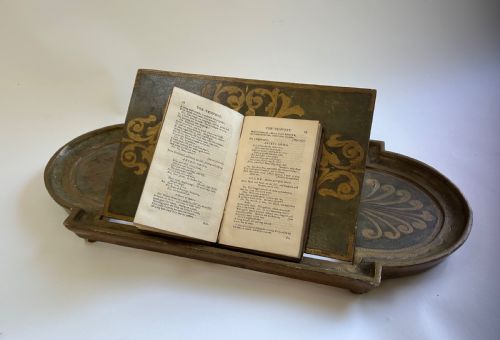


Carved Wood Bookstand
A carved wood bookstand organises your volumes with architectural presence, drawing the eye through rich timber grain and deep relief.
Carved Wood Bookstand
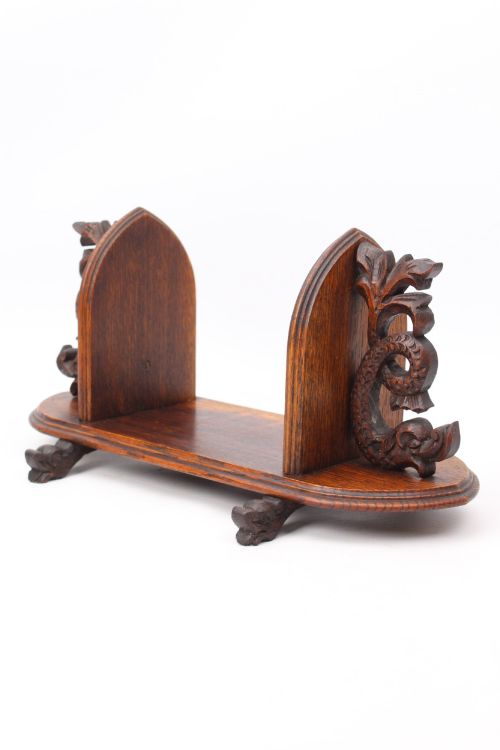
A carved wood bookstand brings functional elegance to reading spaces, appearing in forms from extending slides and lecterns to revolving cases. These pieces serve to display and support heavy volumes upon desks, tables, and floors alike.
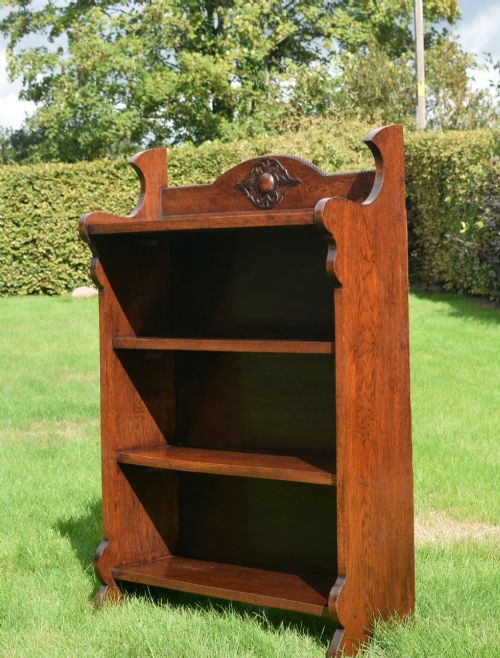
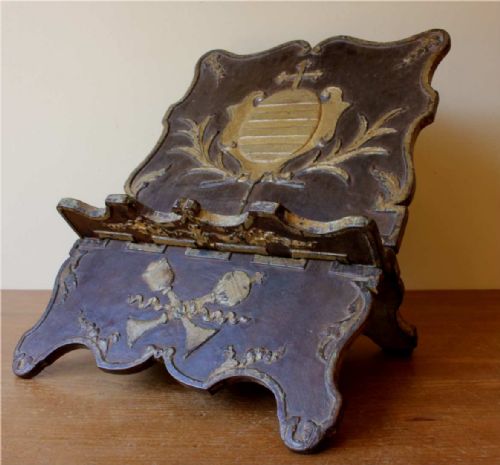
The selections available here range from compact Edwardian Gothic Revival oak stands to eighteenth-century Italian lecterns depicting eagles with outstretched wings. Buyers encounter diverse regional expressions, including Anglo-Indian and Florentine works.
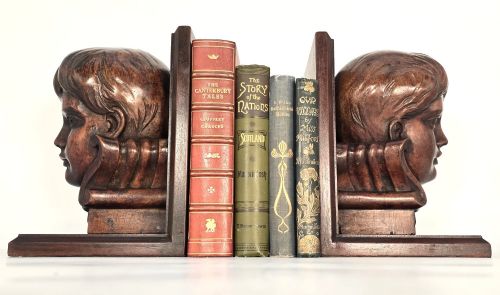
Makers utilised various timber varieties, producing sturdy oak bookcases, mahogany library bookends, and maple extending book slides. Each object reflects the domestic and ecclesiastical reading habits of its respective era.
Materials and construction
Artisans constructed these pieces primarily from solid hardwoods such as oak and mahogany, often employing detailed hand carving to articulate panels and supports. Structural elements frequently incorporate brass hardware for extending mechanisms and hinges.
Surface ornamentation extends beyond plain timber through the application of gesso, gold leaf, and giltwood. Certain examples integrate delicate inlay work, including mother of pearl details embedded into the wooden structure.
Current listings span from the eighteenth century through the Edwardian period, featuring oak, mahogany, and maple timbers.
Distinctions in craftsmanship
Quality rests upon the depth and clarity of the hand carving, where intricate motifs like avian figures or architectural tracery exhibit superior sculptural definition. Lesser examples rely on repetitive, shallow stamping rather than considered chisel work.
Material selection dictates durability, with dense native oaks and figured mahoagny outlasting softer secondary woods. The integration of functional elements, such as smooth extending mechanisms or stable revolving pivots, separates utilitarian carpentry from finer cabinetmaking.
The Carved Wood Bookstand Glossary
- Lectern
- A slanted reading desk designed to support large service books or Bibles in a stationary position. These often feature sculptural elements such as carved eagles.
- Book slide
- An extending desktop accessory fitted with movable ends to hold a varying number of volumes upright. They allow users to adjust the span of stored books.
- Giltwood
- Wood that has been treated with gold leaf or a gold-coloured finish for decorative effect. This treatment enhances carved details under candlelight or natural illumination.
- Revolving bookcase
- A freestanding tiered case mounted on a pivoting base for easy access from multiple seating positions. They maximise storage efficiency in domestic libraries.
Carved Wood Bookstand: Frequently Asked Questions
How do I maintain carved wooden stands?
Dust surfaces regularly with a soft, dry cloth to prevent particulate buildup within the carved recesses. Apply appropriate wood waxes sparingly to nourish the grain without dulling the finish.
Keep pieces away from direct heat sources and strong sunlight to prevent the timber from splitting or warping over time.
Where were revolving bookcases used?
Revolving bookcases typically stood beside armchairs or executive desks to keep frequently referenced volumes within arm's reach. Their pivoting design allowed readers to access a large collection from a single seated position.
They appeared in various woods and regional styles, from plain oak to carved Anglo-Indian designs.
How do I identify Gothic Revival pieces?
Gothic Revival items draw inspiration from medieval architecture, featuring pointed arches, trefoils, and heavy structural oak. These pieces often display robust proportions and ecclesiastical motifs.
Victorian cabinetmakers revived this aesthetic to create imposing library furnishings and devotional stands.