




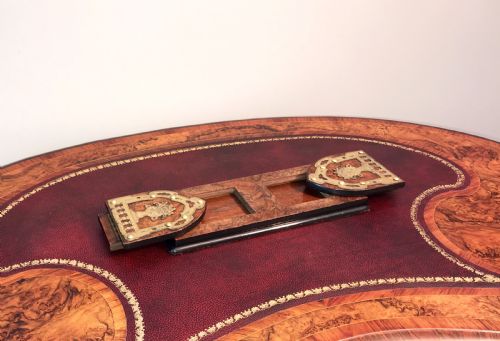
Antique Sliding Bookends
Antique sliding bookends adjust to hold a row of volumes on a desk or shelf, combining practical utility with period craftsmanship.
Antique Sliding Bookends
When buyers search for antique sliding bookends, they encounter extending book slides, book stands, and desk accessories designed to expand as volumes accumulate.
The versions most frequently met on this page span the Victorian and Edwardian periods, including 1860, 1880, 1900, and 1920 examples.
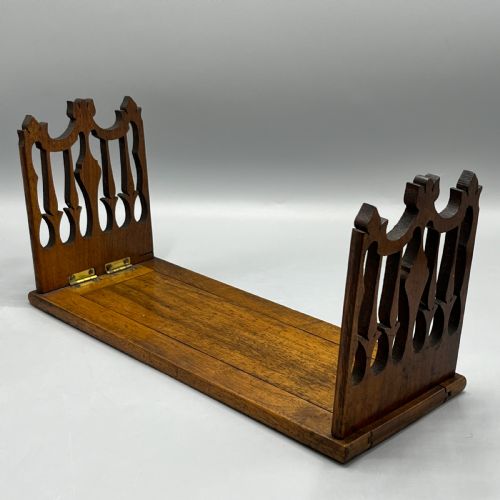
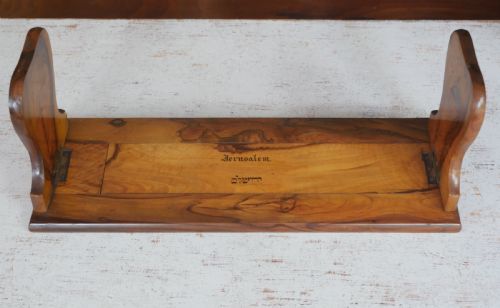
Forms range from English walnut and brass mounted pieces to olive wood from Jerusalem, Kashmiri examples, and Tunbridge Ware.
How they were made
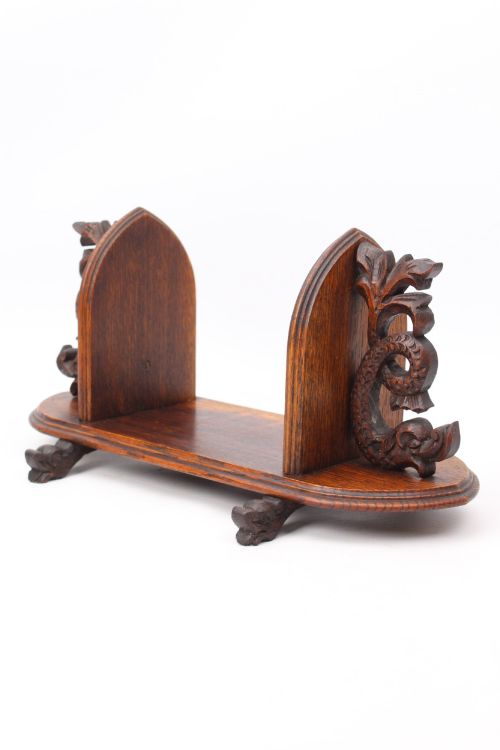
Cabinet makers utilised dense hardwoods such as walnut, oak, rosewood, boxwood, and ebonised wood to build the expanding bases and upright ends.
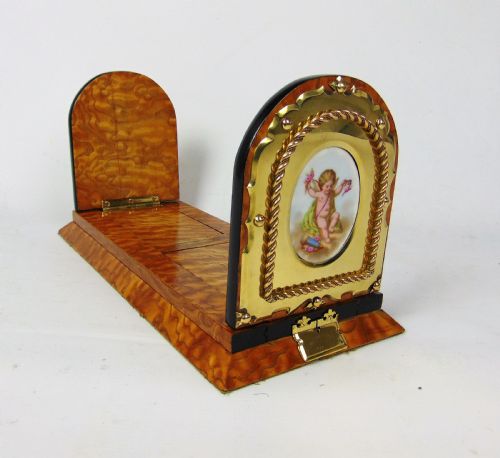
Metal components, predominantly brass, were mounted to hinge, reinforce, and facilitate the sliding mechanism that allows the desk accessories to extend.
Specialist decoration includes intricate Tunbridge Ware marquetry and inlaid wood, alongside carved Victorian Gothic Revival details.
Some book slides travelled far from home, arriving from Jerusalem in olive wood or hailing from Kashmir.
What varies in quality
The refinement of the extending mechanism and the precision of the brass mounts set the better examples apart from standard desk accessories.
The choice and execution of timber, from plain oak to figured walnut and decorative olive wood or Tunbridge Ware, dictate the distinction between everyday items and superior library pieces.
Tiffany and Co
The Antique Sliding Bookends Glossary
- Book slide
- An extending desk accessory designed to hold and support a variable number of upright volumes.
- Tunbridge Ware
- A type of decorative woodwork characterised by intricate micro-mosaic pictorial designs made from many small pieces of naturally coloured wood.
- Gothic Revival
- An architectural and decorative style drawing inspiration from medieval forms, featuring pointed arches and heavy carved ornamentation.
- Brass mounted
- Fitted with cast or sheet brass hardware, hinges, or decorative corners to strengthen and adorn the wooden structure.
Antique Sliding Bookends: Frequently Asked Questions
How do sliding bookends work?
These pieces feature an extending mechanism that allows the wooden base to lengthen or shorten depending on how many volumes sit between the upright ends.
This design keeps books upright on a desk or shelf without slipping as the collection grows or shrinks.
What woods were used for book slides?
Cabinet makers built these accessories from durable timbers such as walnut, oak, and rosewood, often contrasting them with boxwood or ebonised wood.
More decorative items incorporate olive wood or detailed Tunbridge Ware marquetry.
Are these desk accessories Victorian?
Many examples date from the Victorian period, spanning the nineteenth century and into the Edwardian era.
Stylistic cues like Gothic Revival carving or brass mounts help place them in these nineteenth and early twentieth-century periods.
Where were antique book stands placed?
Owners typically placed them on library tables, writing desks, or bookshelves to keep a working selection of reference books close at hand.
The extending action accommodated a changing row of texts throughout the day.