





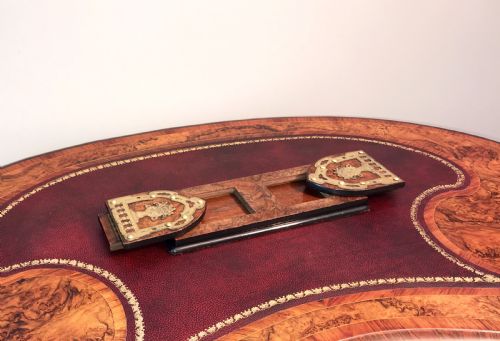
Brass Mounted Book Rack
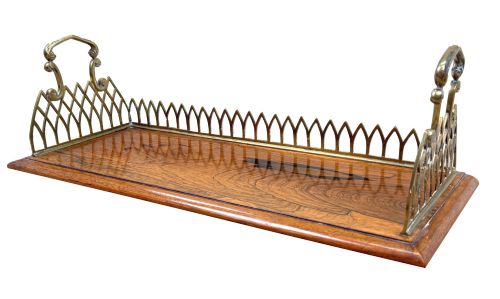
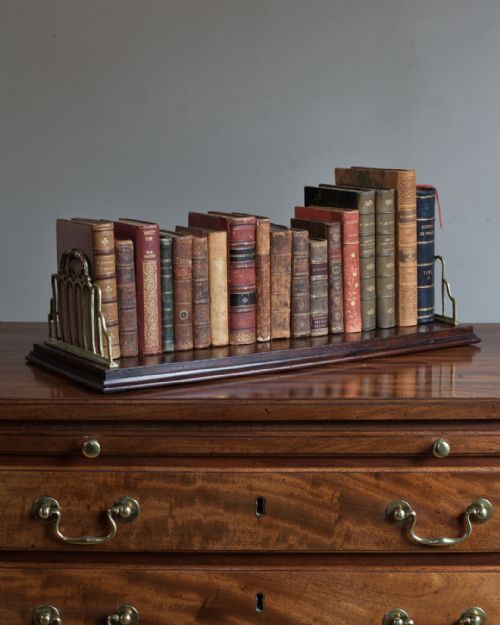
A brass mounted book rack brings functional nineteenth century craftsmanship to the desktop, holding volumes securely with metal mounts.
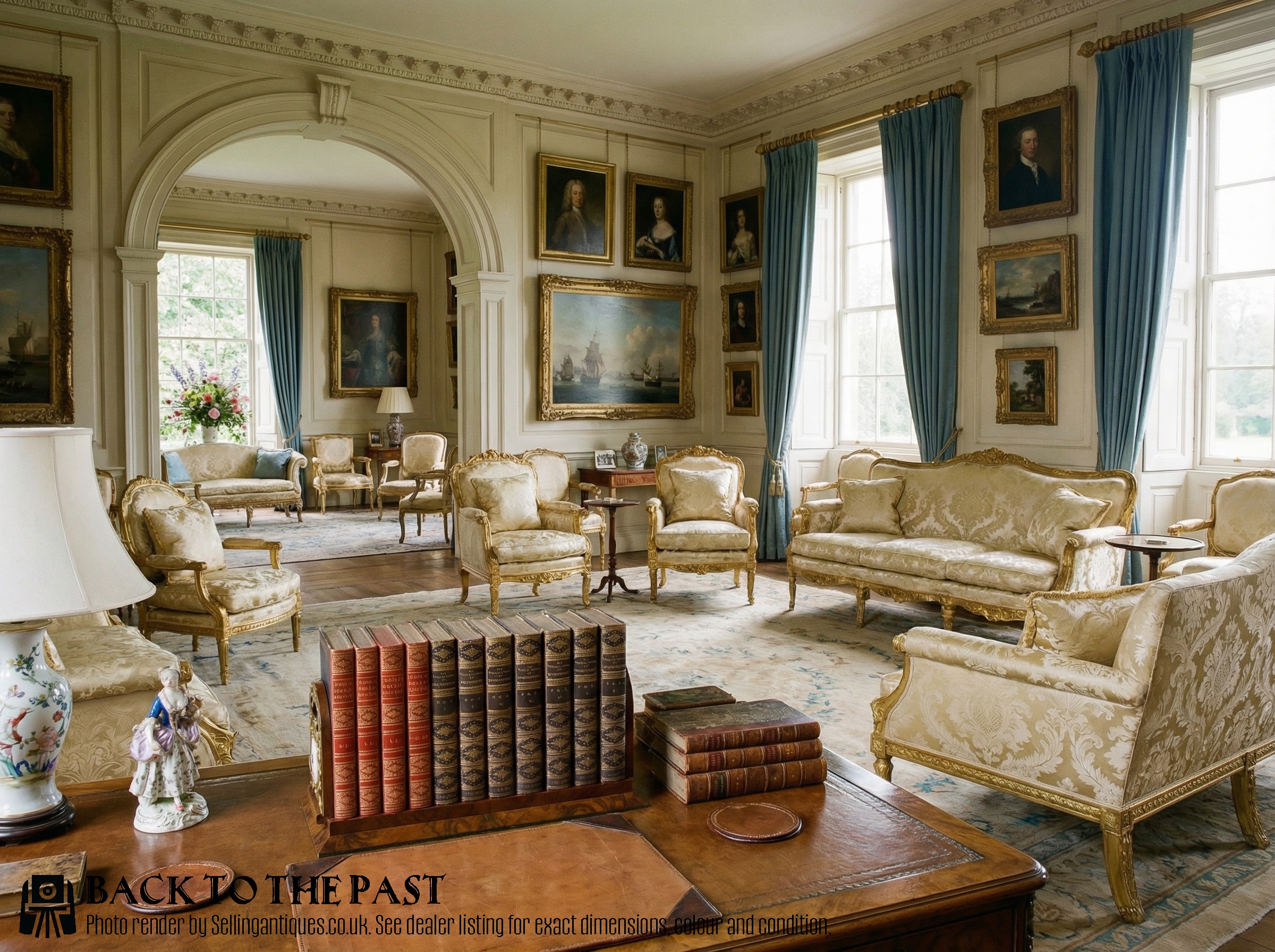
Brass Mounted Book Rack
A brass mounted book rack takes the form of a sliding book slide or extending book rest, designed to sit upon a desk or library table. These pieces keep reference volumes upright and close at hand, adjusting in length to accommodate a growing or shrinking row of books. Examples on this page date predominantly from the Victorian period, spanning the mid to late nineteenth century around eighteen sixty to eighteen ninety.
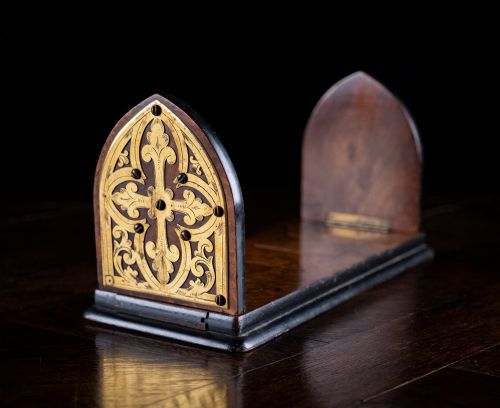
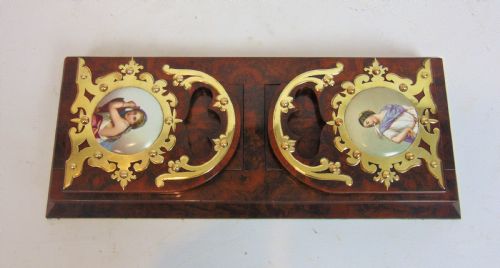
Most items seen here combine timber bodies with polished brass mounts, often featuring hinged or expanding mechanisms. Alongside standard sliding bookends and book slides, the selection includes desk accessories and library book holders fitted with painted plaques or porcelain inserts. The prevailing styles range from plain Victorian walnut to Gothic Revival and Empire influences.
How they were made
Workshops constructed these pieces using dense hardwoods such as walnut, burr walnut, mahogany, coromandel and ebonised wood. These timbers provided a stable foundation for frequent adjustment and daily handling on the library desk.
Brass mounts, hinges and sometimes ormolu were secured to the timber to reinforce the extending actions and corners. Finer pieces incorporated decorative elements such as bone details or porcelain plaques painted with delicate scenes.
Brass Mounted Book Rack Retail Price Guide 2026
Typical asking prices for brass mounted book rack among the pieces listed under this phrase on Sellingantiques today, from the lower quarter to the upper quarter. They describe what is for sale here now, not the wider market.
Listings feature Victorian pieces in walnut, mahogany, coromandel and ebonised wood, complemented by brass, ormolu and porcelain plaques.
What varies in quality
The sophistication of the extending mechanism dictates much of the standing of a piece, particularly patented designs that glide smoothly without binding. Solid timber selection, such as figured burr walnut or coromandel rather than simpler mahogany, elevates the overall presence.
Decorative enhancements like finely painted porcelain plaques or intricate ormolu mounts separate standard desk accessories from superior library pieces. The crispness of the brass work and the tightness of the joinery further distinguish finer examples.
Betjemanns
The Brass Mounted Book Rack Glossary
- Book slide
- An extending desk accessory designed to hold a row of books upright between two terminal ends. The base expands or contracts to fit the exact number of volumes.
- Ormolu
- Gilded bronze or brass applied as mounts and decorative fittings on nineteenth century furniture and desk wares. It provides a bright golden contrast against dark timbers.
- Gothic Revival
- A nineteenth century design style drawing inspiration from medieval architecture, featuring pointed arches, heavy chamfering and robust brass strapwork.
- Coromandel
- A dense, heavily figured exotic timber from Asia with dark brown and black graining. It was highly prized for luxury Victorian desk accessories.
Brass Mounted Book Rack: Frequently Asked Questions
How do extending book slides work?
Extending book slides feature a central wooden base that pulls apart or slides on an internal mechanism to change the overall length. This allows the end brackets to squeeze the volumes tightly between them.
Most nineteenth century versions rely on a simple overlapping wooden track or a brass scissor action hidden beneath the base to maintain smooth movement.
How do I care for walnut and brass?
Timber surfaces benefit from occasional application of traditional beeswax to nourish the grain and maintain a soft sheen. Avoid harsh chemical cleaners that can strip the nineteenth century finish.
Brass mounts can be left with their natural aged patina or very gently polished with a soft cloth if brighter highlights are preferred.
How do I spot a patented design?
Patented pieces often bear stamped maker names or patent stamps, such as those associated with Betjemanns, usually found on the brass mechanism or wooden base. These marks indicate a specific mechanical improvement or locking action.
Such pieces generally feature more complex hardware hidden beneath the sliding platforms to ensure even expansion.