






Gothic Revival Book Rest
These gothic revival book rest pieces bring structural ecclesiastical motifs into the domestic library, offering a sturdy platform for heavy volumes.
Gothic Revival Book Rest
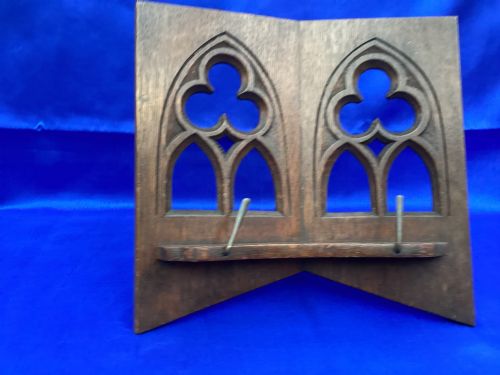
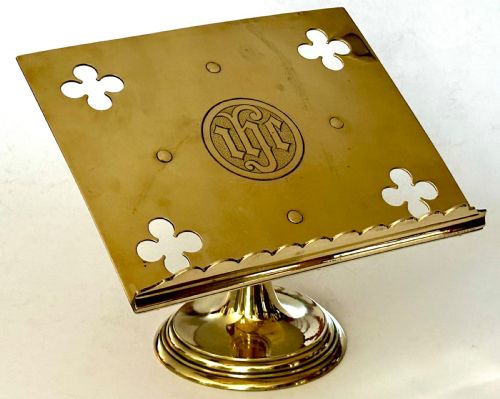
A gothic revival book rest takes various forms, most commonly appearing as extending slides for the table or upright lecterns for reading. These objects draw directly upon architectural elements from the medieval period, translating pointed arches and heavy timber construction into functional library accessories.
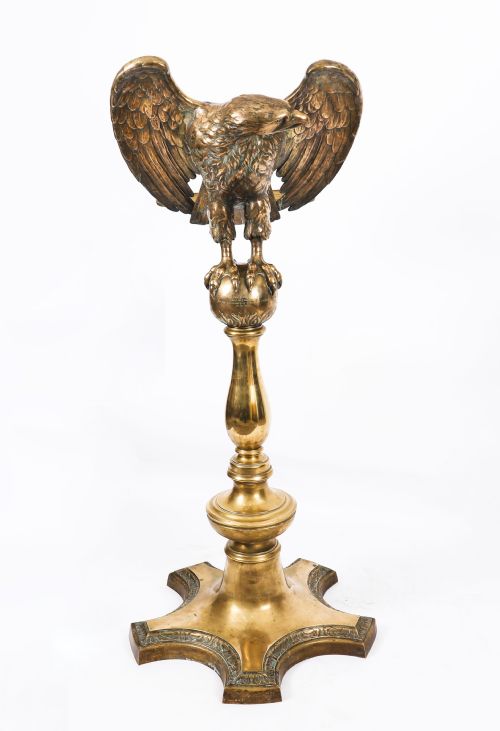
The versions most frequently met on this page date from the Victorian and Edwardian eras, spanning from the mid-nineteenth century onward. They range from domestic mahogany and oak extending book slides to substantial brass church lecterns shaped as eagles.
Makers adapted these architectural styles for different domestic settings, producing extending book slides that adjusted to hold a row of volumes as well as dedicated desk stands. The materials reflect both the church environment of heavy ecclesiastical brass and the domestic warmth of figured hardwoods.
How they were made
Makers utilised dense timbers such as oak, mahogany, walnut, ebony, and ebonised wood to build the structural framework of these pieces. These woods were frequently carved with deep mouldings and geometric tracery typical of the style.
Metalwork played a crucial structural and decorative role, with brass hinges, mounts, and extending mechanisms fitted to timber bodies. Solid brass was also cast entirely into complex forms such as ecclesiastical eagles for larger lecterns.
Gothic Revival Book Rest Retail Price Guide 2026
Typical asking prices for gothic revival book rest among the pieces listed under this phrase on Sellingantiques today, from the lower quarter to the upper quarter. They describe what is for sale here now, not the wider market.
Materials recorded across the selection include brass, oak, ebonised wood, metal, mahogany, walnut, and ebony.
What varies in quality
Quality depends upon the crispness of the carving and the precision of the joinery where timber meets metal framework. Superior examples display deeply articulated detail in the wooden tracery and robust, smoothly operating extending mechanisms.
The choice of materials dictates the standing of the piece, with richly figured mahogany or substantial cast brass representing finer production than plain secondary woods.
The Gothic Revival Book Rest Glossary
- Gothic Revival
- A nineteenth-century architectural and decorative style drawing inspiration from medieval forms. It reinterprets pointed arches, heavy buttresses, and ecclesiastical motifs for modern buildings and furnishings.
- Extending Book Slide
- A desktop book stand featuring a sliding mechanism that adjusts the length of the shelf. This allows the holder to expand or contract according to the number of volumes placed between the ends.
- Lectern
- An elevated reading stand with a slanted top designed to hold large books or folios for a speaker. They often take monumental forms, such as brass eagles with outstretched wings.
- Ebonised Wood
- Timber treated with a chemical stain or finish to imitate true ebony. This dark, dense surface finish was popular in Victorian design for creating high-contrast decorative effects.
- Folio
- A large book size formed by sheets folded once. Specially constructed stands and rests were required to support these heavy volumes safely during consultation.
Gothic Revival Book Rest: Frequently Asked Questions
What is a gothic revival book rest?
These pieces are functional library items designed to hold reading material upright or at a slant. They combine medieval architectural decoration with nineteenth-century domestic utility.
They appear as both extending desktop slides for everyday volumes and large freestanding brass lecterns derived from church furnishings.
Where were these lecterns used?
While many examples served in domestic libraries and studies, larger brass lecterns originated in ecclesiastical settings such as churches. Their sturdy construction supported heavy service books and large folios.
Domestic versions brought this imposing architectural aesthetic into the Victorian home environment.
How do I date a gothic revival piece?
Dating relies upon examining the timber species, the style of the carving, and the nature of any mechanical fittings. Victorian and Edwardian examples often employ ebonised finishes and brass extending hardware characteristic of nineteenth-century manufacturing.
Changes in material combinations and the specific interpretation of gothic motifs help distinguish mid-nineteenth-century items from later productions.