

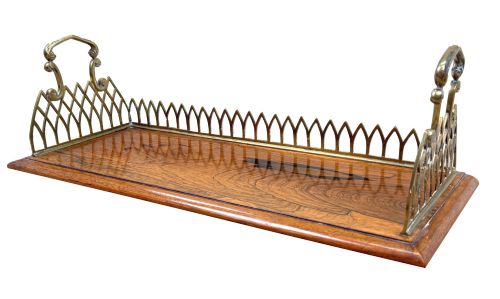
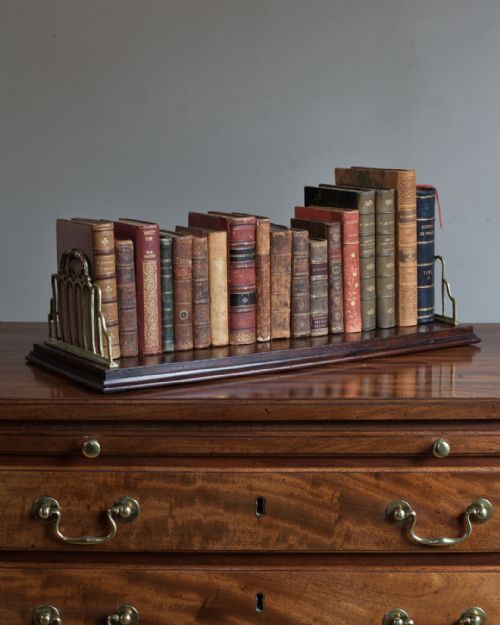
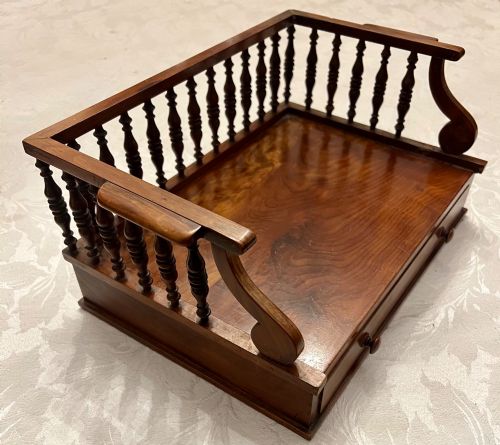
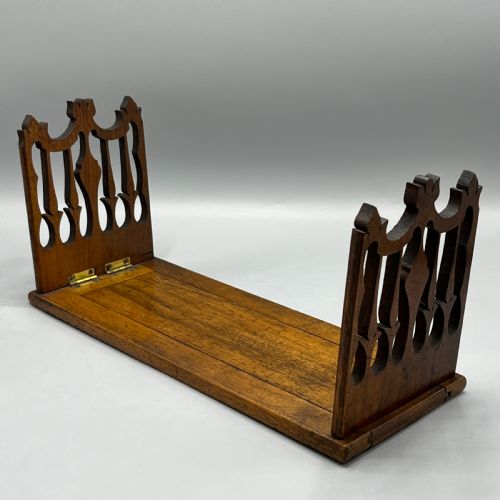



Antique Desk Book Holder
An antique desk book holder brings order and craftsmanship to a workspace, offering sturdy support for volumes, folios and papers.
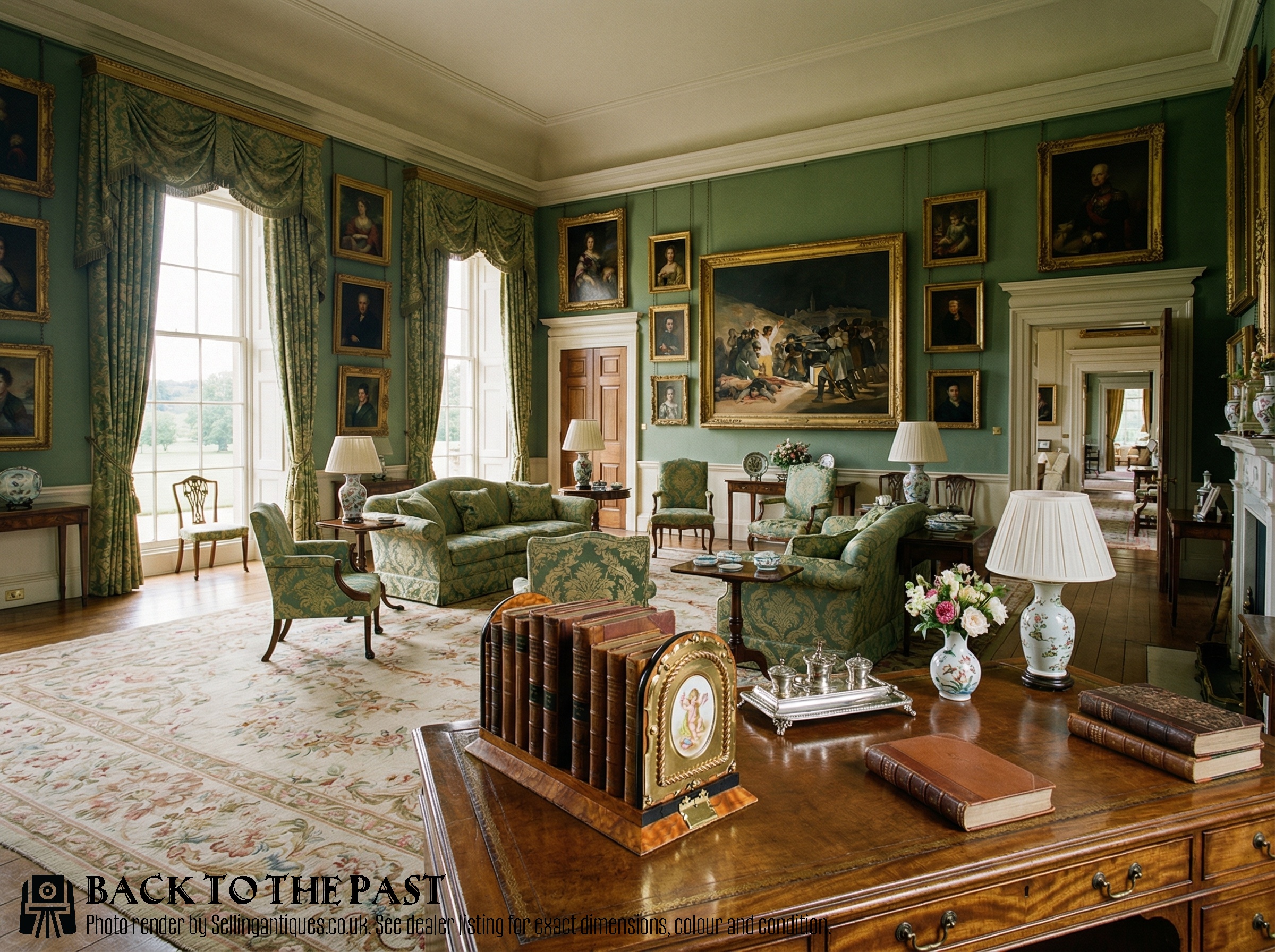
Antique Desk Book Holder
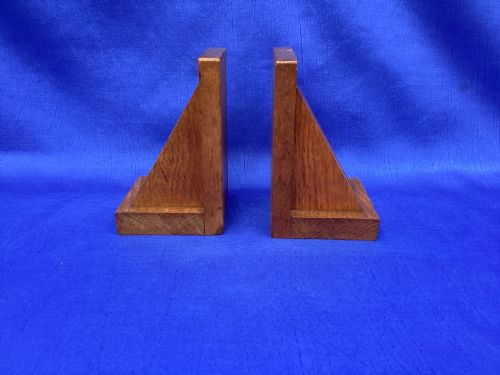
When you search for an antique desk book holder, you encounter a diverse selection of desk accessories, reading stands, book slides and lecterns designed to keep texts upright and accessible. These pieces originate from various periods including the Regency, Victorian, and Edwardian eras, as well as the early twentieth century up to the 1930s.
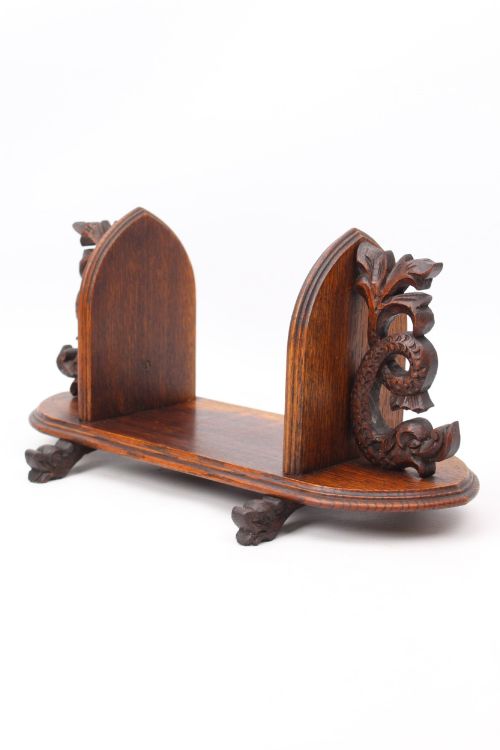
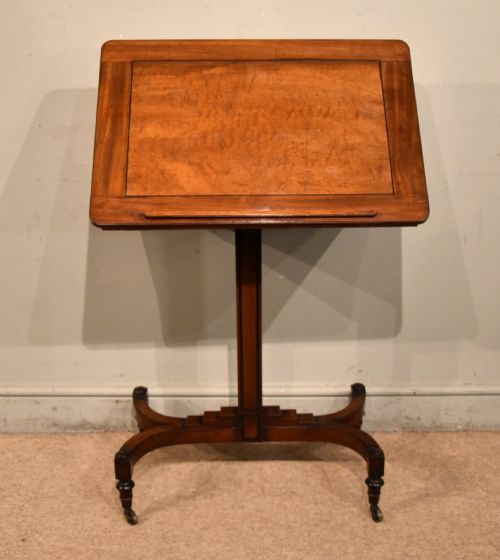
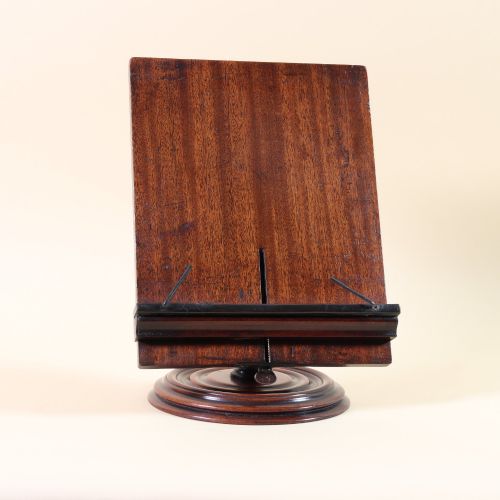
The objects take many forms, ranging from expanding book slides and troughs to heavy oak lecterns, revolving bookstands and portable music stands. Walnut, mahogany, and oak appear frequently alongside more exotic woods like coromandel, rosewood, and olive wood.
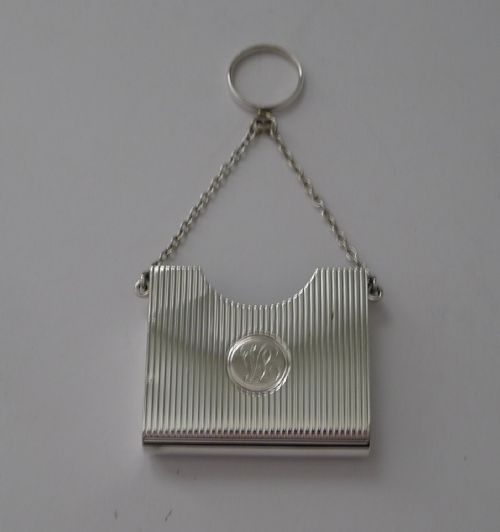
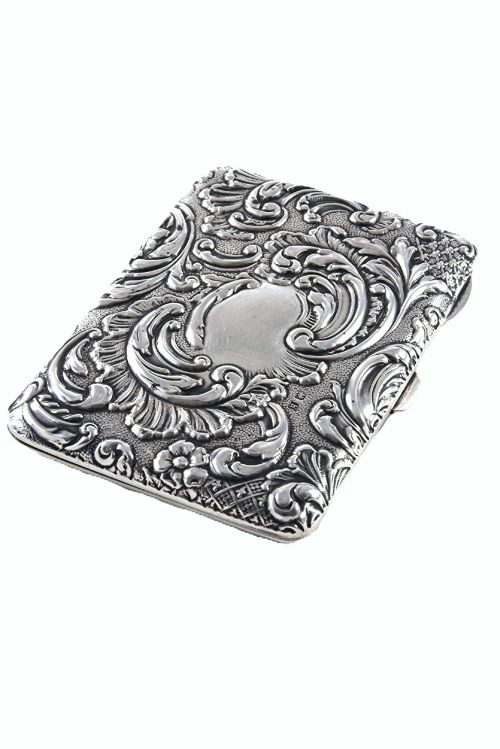
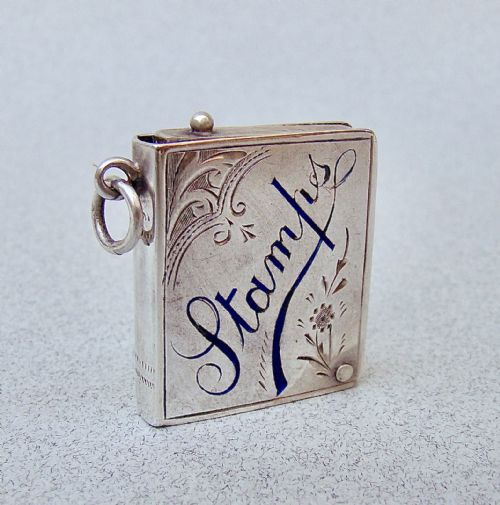
Makers utilised brass mounts, porcelain plaques, and sterling silver details to elevate utilitarian items into decorative desk furnishings. Pieces designed for specific uses, such as church book rests, telegram folders, and stamp cases, also form part of this category.
Materials and Technique
Cabinet makers constructed these book holders primarily using solid and veneered timbers such as oak, walnut, and mahogany, often incorporating expanding mechanisms or folding hinges to allow adjustment. Joinery methods relied on precise tongue and groove joints, dovetails, and sturdy screw fixings to bear the weight of heavy volumes.
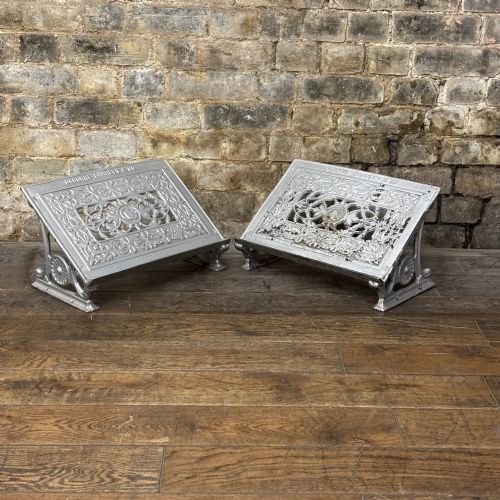
Metalwork played a structural and decorative role, with brass hinges, mounts, and extending arms fitted to wooden bases, alongside cast iron frameworks used for heavy church and desk lecterns. Sterling silver mounts and porcelain plaques were applied as decorative fronts on luxury items, while specialised carving techniques yielded detailed Gothic Revival motifs and wooden figures.
Antique Desk Book Holder Retail Price Guide 2026
Typical asking prices for desk book holder among the pieces listed under this phrase on Sellingantiques today, from the lower quarter to the upper quarter. They describe what is for sale here now, not the wider market.
Some book slides double as musical novelties, holding folios while concealing secret compartments for stamps and stationery.
Evaluating Craftsmanship
Quality in an antique desk book holder rests upon the integration of mechanical parts and the selection of timber. Pieces that feature smooth extending actions, solid brass mountings, and well-fitted joints demonstrate superior workshop standards.
The inclusion of decorative elements such as hand-painted porcelain plaques, inlaid wood, or solid sterling silver mounts elevates the status of a piece. Finer examples maintain structural rigidity and balanced proportions whether holding a single heavy folio or extended across a full row of books.
Arthur Simpson·Sampson Mordan·Osborne Garrett & Co·Gordon Russell·Crisford & Norris·Betjemanns·Tiffany & Co
The Antique Desk Book Holder Glossary
- Book slide
- An adjustable desk accessory designed to hold a varying number of volumes upright between two bookends.
- Lectern
- A slanted reading stand designed to support a book at a comfortable angle for a speaker or reader.
- Aide memoire
- A small pocket notebook or memorandum book often fitted with a silver cover and mechanical leaves for daily notes.
- Tunbridge ware
- Small wooden objects decorated with intricate mosaic patterns made from tiny wood blocks of natural colours.
- Gothic Revival
- A nineteenth-century style drawing inspiration from medieval architecture, featuring pointed arches and heavy carved tracery.
Antique Desk Book Holder: Frequently Asked Questions
What is an antique desk book holder used for?
These items were built to hold open reference books, ledgers, and bound volumes on a desk or table at a readable angle. They kept working spaces tidy while preventing heavy bindings from sagging or damaging pages during extended study.
Desk book holders also served as portable reading stands for music scores, religious texts, and correspondence. Many designs included expanding sections to accommodate growing collections of books as needed.
How do I date an antique book slide?
Dating relies heavily on the prevailing styles of the wood, metal mounts, and manufacturing techniques evident in the piece. Victorian and Edwardian examples often feature brass mounts and dark hardwoods, while earlier Regency pieces display clean classical lines in mahogany or rosewood.
Patination on the timber and wear patterns on extending screw mechanisms or hinges provide further clues to age. Hallmarks on silver or brass maker plaques offer precise manufacturing dates when present.
Where were antique book holders placed?
They sat primarily upon writing desks, library tables, and bureau bookcases in domestic studies and offices. Larger lecterns were also positioned on church altars or in institutional reading rooms.
Portable folding stands allowed readers to move their texts to breakfast tables, drawing rooms, or travel carriages. Desk accessories were positioned within arm's reach to facilitate quick consultation of ledgers and dictionaries.
How do I care for wooden book holders?
Keep wooden book holders away from direct sunlight and extreme humidity changes to prevent the timber from warping or splitting. Regular dusting with a soft, dry cloth preserves the natural finish and patina of the wood.
Avoid using harsh chemical polishes, applying appropriate wax sparingly if the surface appears dry. Moving extending mechanisms gently prevents undue stress on the internal brass or wooden tracks.