





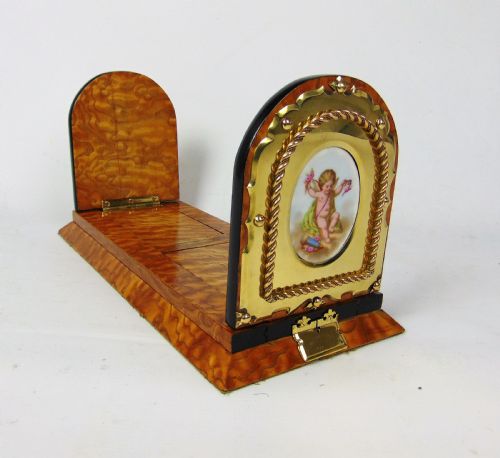

Expanding Book Slide
An expanding book slide keeps your volumes upright on the desk while adjusting to fit any shelf length.
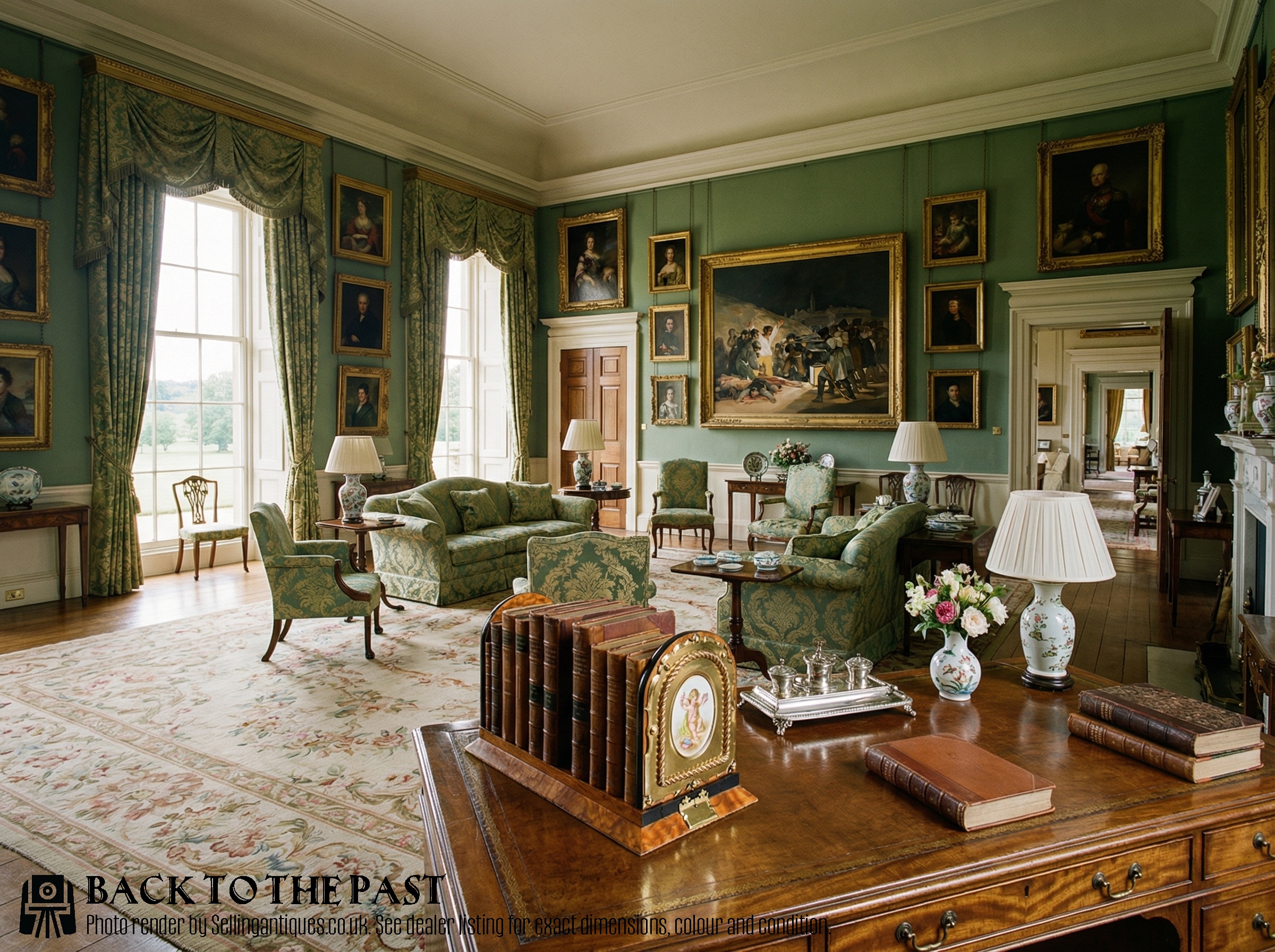
Expanding Book Slide
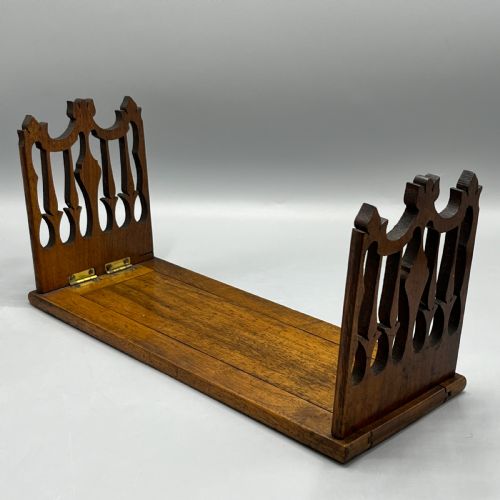
An expanding book slide is a functional desk accessory designed to hold rows of volumes securely in place by means of an extending mechanism. When you search for an expanding book slide, you find practical library furnishings that double as decorative pieces for the study or drawing room.
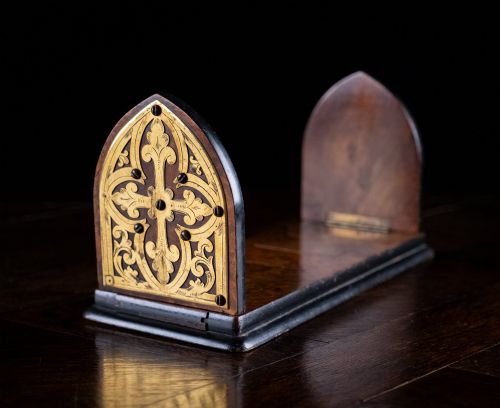
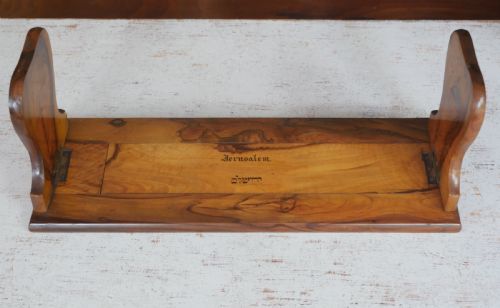
The pieces you meet most often on this page date from the Victorian period, though examples stretch from the Regency era into the early twentieth century. Common forms include folding or sliding wooden platforms flanked by upright ends, often fitted with brass mounts or inset plaques.
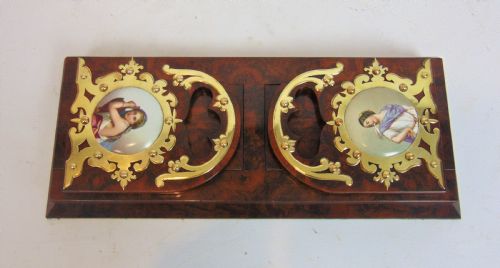
Makers produced these accessories in woods such as walnut, coromandel, oak, and mahogany. Alongside plain timber versions, the evidence shows pieces ornamented with pietra dura, porcelain, bone, and Tunbridge ware.
Materials and construction
Cabinetmakers utilised dense hardwoods like walnut, coromandel, and rosewood for durability and rich grain patterns. They incorporated brass mechanisms, hinges, and mounts to allow the wooden bases to slide smoothly outward without binding.
Surface decoration required specialist trades, incorporating inlaid pietra dura panels, painted porcelain plaques, carved teak, and intricate Tunbridge ware mosaics. Ebonised finishes and applied bone details completed many of the more decorative nineteenth-century library pieces.
Expanding Book Slide Retail Price Guide 2026
Typical asking prices for expanding book slide among the pieces listed under this phrase on Sellingantiques today, from the lower quarter to the upper quarter. They describe what is for sale here now, not the wider market.
Listings feature nineteenth-century walnut, coromandel, and oak alongside decorative materials such as porcelain, bone, and pietra dura.
Judgements of quality
Quality rests upon the precision of the extending action and the stability of the mechanism when fully drawn. Pieces by established makers or those featuring patents demonstrate superior engineering in their brass runners and hinges.
The selection of timber and the execution of decorative elements separate standard items from finer examples. Finely painted porcelain plaques, crisp pietra dura work, and dense burr walnut elevate a utilitarian desk accessory into a piece of fine cabinet work.
Tiffany and Co·Charles Westerton of Knightsbridge
The Expanding Book Slide Glossary
- Expanding book slide
- A desk accessory with a sliding mechanism that lengthens or shortens to hold a variable number of books. These pieces protect volumes from toppling over on a table or desktop.
- Pietra dura
- An inlay technique using cut and fitted polished coloured stones to form pictorial designs. Artisans applied these stone mosaics to the upright ends of nineteenth-century desk pieces.
- Tunbridge ware
- A form of woodworking peculiar to Kent involving tiny coloured wooden tiles assembled into mosaic patterns. Geometric or floral motifs decorate the wooden surfaces of specific book racks.
- Coromandel
- A dense, heavily grained timber imported from Asia and utilised for luxury Victorian boxes and book stands. Its dark brown colour and striking figure made it a favourite for high-end library accessories.
- Brass mounted
- The application of brass plates, hinges, or edge guards to reinforce and ornament wooden objects. These mounts often protect the corners and strengthen the sliding tracks.
Expanding Book Slide: Frequently Asked Questions
How do expanding book slides work?
An expanding book slide uses a telescoping or overlapping wooden base that pulls apart to accommodate more volumes. Brass runners or internal hinges guide the movement smoothly.
As the base extends, the upright ends remain vertical to support the books at either side. This adjustable design allows the accessory to shrink or grow on the desk as your collection changes.
Where were these pieces used?
Libraries, studies, and writing desks served as the primary locations for expanding book slides in nineteenth-century homes. They kept working volumes close to hand without requiring a fixed bookcase.
People also placed them on side tables and drawing room surfaces to display current reading material. Their decorative panels and polished woods suited formal domestic interiors.
How do I care for antique wood?
Keep wooden book slides away from direct sunlight and radiators to prevent the timber from drying out or splitting. Natural wax polish applied sparingly maintains the lustre of walnut and coromandel.
Avoid using liquid cleaners on brass mounts or inlaid plaques, as moisture can damage surrounding wood or cement. A soft, dry cloth is sufficient for routine dusting.
How do I date a book slide?
Dating relies upon the timber choice, decorative style, and mechanical patents evident in the piece. Regency examples often display simpler mahogany or rosewood forms, while Victorian pieces favour burr walnut with brass mounts.
Nineteenth-century items frequently incorporate specific ornamentation like pietra dura or Tunbridge ware. Patent marks or maker inscriptions help narrow down the exact decade of manufacture.