




Victorian Extending Book Rack
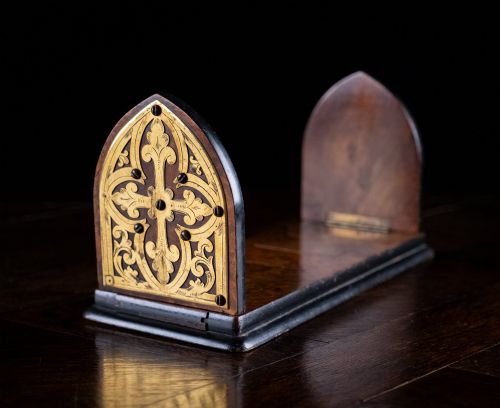
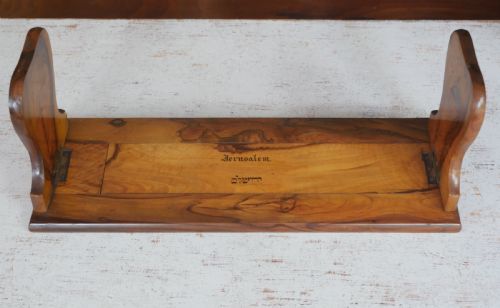
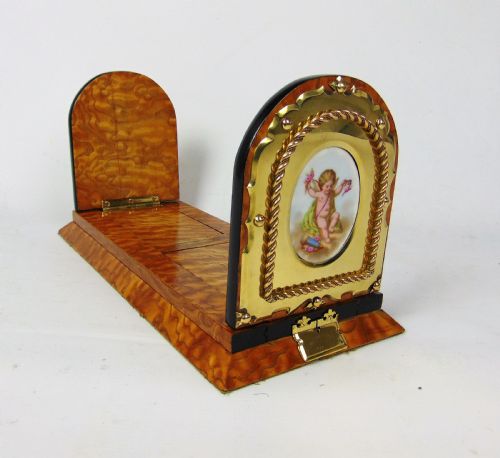
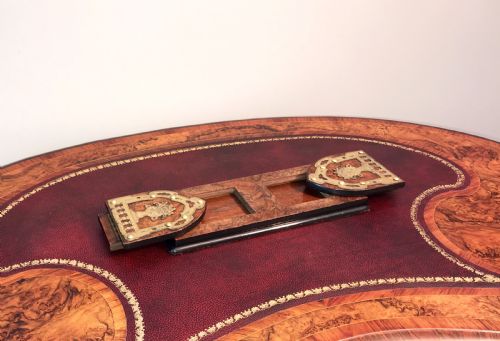
These walnut, brass and exotic timber pieces are a victorian extending book rack, built to hold a growing row of volumes upright on a desk or table.
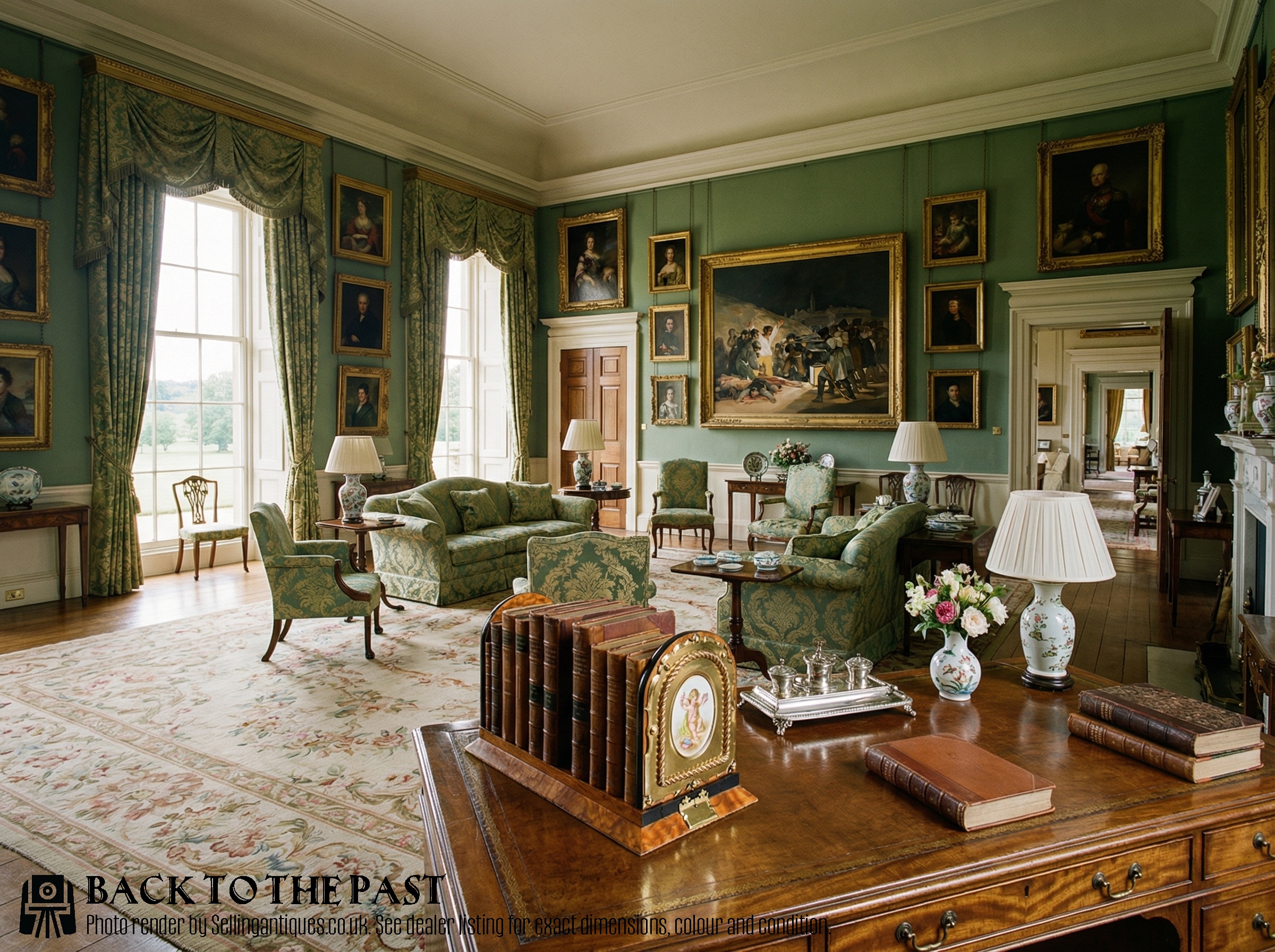
Victorian Extending Book Rack
A victorian extending book rack is a practical desk accessory designed with a sliding mechanism that expands to accommodate varying lengths of books. Most examples found here date from the nineteenth century, ranging from the middle decades through to nineteen hundred, constructed to sit upon a library table or study desk.
The primary forms take the shape of book slides or book rests, which utilise hinged or telescoping actions to hold volumes securely between two ends. Materials span domestic hardwoods like walnut, oak and mahogany alongside more decorative timbers such as coromandel, olive wood, ebonised wood and rosewood.
Stylistic influences vary from plain vernacular pieces to elaborate Gothic Revival and Anglo-Indian designs, occasionally incorporating brass mounts, pietra dura panels or Tunbridge ware mosaics. These items served a functional role in the home library, keeping favourite volumes tidy and within arm's reach.
How they were made
Cabinetmakers constructed the main body and upright ends from dense hardwoods, frequently employing walnut, mahogany or oak as a stable base for decorative veneers. Tunbridge ware examples utilised intricate mosaic techniques, assembling tiny wooden tesserae to form geometric or pictorial surface patterns.
Brass was commonly integrated into the sliding actions and edge mounts, providing both structural reinforcement and a contrasting metallic sheen against the dark timber. Carved details, such as those found on Anglo-Indian teak pieces, demonstrate traditional hand-chiselling methods applied directly to the solid wood.
Inlaid elements like pietra dura introduced hard stone panels set into the wooden framework, requiring precise stonemasonry skills to fit the floral or figurative motifs flush with the surface.
Victorian Extending Book Rack Retail Price Guide 2026
Typical asking prices for victorian extending book rack among the pieces listed under this phrase on Sellingantiques today, from the lower quarter to the upper quarter. They describe what is for sale here now, not the wider market.
Several examples are designated as novel rests, proving that the Victorians loved an inventive mechanism for their novels.
What varies in quality
The sophistication of the extending mechanism dictates much of the utility, with smoother sliding actions and robust brass hinges separating finer library accessories from simpler iterations. The choice of primary material also establishes the grade of the piece, as dense timbers like coromandel and rosewood command greater craftsmanship than standard softwoods.
Surface decoration reveals the artisan's hand, where meticulous Tunbridge mosaic work or finely detailed pietra dura inlays elevate an ordinary desk accessory into a piece of decorative art. Carved elements on teak or mahogany demonstrate varying depths of relief and sharpness of line that distinguish workshop standards.
Tiffany and Co
The Victorian Extending Book Rack Glossary
- Book slide
- A desk accessory featuring an expanding mechanism to hold a variable number of volumes between two upright ends. This is the most common term found in period descriptions.
- Tunbridge ware
- A type of British woodwork decorated with mosaic patterns made from tiny wood blocks of various natural colours. It originated in the spa town of Tunbridge Wells during the nineteenth century.
- Pietra dura
- An artistic technique using cut and fitted polished coloured stones to create images or geometric designs. These panels were frequently set into the wooden surfaces of high-end desk pieces.
- Gothic Revival
- An architectural and decorative style drawing inspiration from medieval forms, characterised by pointed arches, trefoils and heavy structural mouldings. It appears frequently on nineteenth-century library furnishings.
- Coromandel
- A dense, heavy timber imported from Asia, highly prized for its dark brown colour and contrasting black grain streaks. Cabinetmakers utilised it as a veneer on luxury nineteenth-century boxes and book slides.
Victorian Extending Book Rack: Frequently Asked Questions
How do extending book racks work?
These pieces use a sliding base mechanism, often made with brass tracks or interlocking wooden channels, that pulls apart to create more space between the two upright ends.
As the sections move outward, they maintain a stable platform to support a row of volumes without tipping over.
Where were these used in the home?
They were designed primarily for desks, library tables and writing cabinets where working volumes needed to be kept organised and close at hand.
Many Victorians kept a small selection of frequently read books on these stands within their studies or drawing rooms.
What woods are most common?
Walnut, mahogany and oak appear frequently among the surviving examples, chosen for their durability and attractive grain patterns in domestic settings.
More decorative items utilise exotic or treated timbers such as rosewood, coromandel, olive wood and ebonised wood.
How do I care for wooden book slides?
Keep the wood away from direct heat sources and strong sunlight to prevent the natural timbers from drying out or splitting over time.
An occasional application of appropriate furniture wax helps nourish the surface and preserve the polished finish on the brass mounts.