






Expanding Book Trough
An expanding book trough is a practical library accessory designed to hold volumes upright while adjusting to fit your shelf space.
Expanding Book Trough
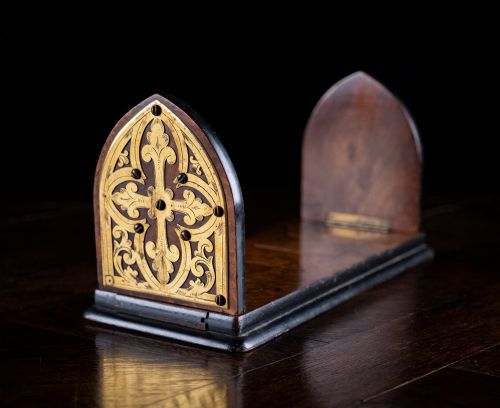
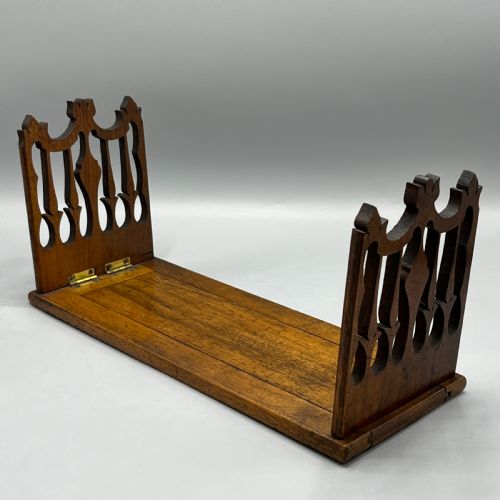
An expanding book trough, also known as a book slide or book rest, is a desk accessory created to keep volumes tidy and accessible. These pieces extend outward on a sliding mechanism to accommodate varying numbers of books.
You will most commonly meet Victorian examples on this page, alongside pieces from the Regency and Edwardian eras. The selection ranges from plain timber rests to richly decorated library pieces.
Origin and form vary from English walnut slides to Kashmiri, Anglo-Indian, and Jerusalem productions. Most specimens serve as both functional desk items and decorative shelf ornaments.
How they were made
Cabinet makers utilised dense hardwoods such as walnut, coromandel, rosewood, and oak for the main body and expanding leaves. Ebonised wood and olive wood also appear across the selection.
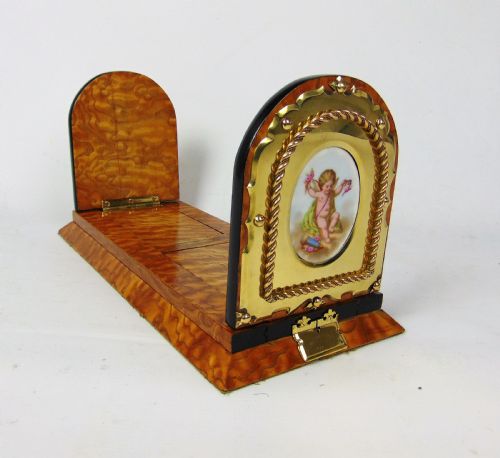
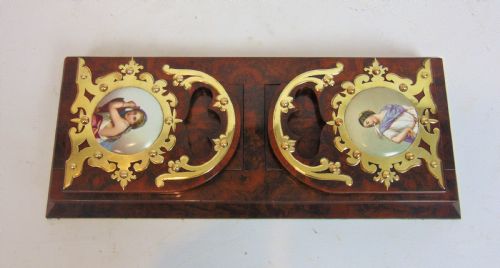
Working mechanisms typically incorporate brass mounts and sliding hinges to allow smooth extension. Decorative details include inlaid Tunbridge ware, hand-painted porcelain plaques, pietra dura panels, and carved bone or teak.
Expanding Book Trough Retail Price Guide 2026
Typical asking prices for expanding book trough among the pieces listed under this phrase on Sellingantiques today, from the lower quarter to the upper quarter. They describe what is for sale here now, not the wider market.
Pieces span from the Regency period through the Victorian era and into the early twentieth century.
What varies in quality
The standard of materials largely defines the tier of a piece, with exotic timbers like coromandel and burr walnut sitting above standard oak or ebonised finishes. Finer specimens feature integrated decorative arts such as pietra dura panels or painted porcelain plaques.
Engineering precision in the sliding action and the quality of the brass mounts also separate standard examples from superior productions. Elaborate regional carving, such as Anglo-Indian teak or Tunbridge ware inlays, indicates higher craftsmanship.
Betjemanns patent·Tiffany & Co
The Expanding Book Trough Glossary
- Book slide
- A device with extending sides designed to hold a row of books upright on a desk or table. These items are often called book troughs or book rests.
- Tunbridge ware
- Woodwork decorated with tiny mosaic tiles formed from naturally coloured woods to create pictorial scenes or geometric bands. This technique was used to adorn Victorian desk accessories.
- Pietra dura
- Inlay work using cut and fitted polished coloured stones to form pictures or floral designs. You find these stone plaques set into the wooden bodies of certain nineteenth-century slides.
- Coromandel
- A dense, heavy southeast Asian timber with dark brown and black grain patterns. Cabinet makers prized this luxury wood for high-end Victorian library items.
- Ebonised wood
- Timber treated with a dark finish to imitate expensive ebony. This process was popular for nineteenth-century desk accessories and novel rests.
Expanding Book Trough: Frequently Asked Questions
How do expanding book troughs work?
These accessories feature a central base with hinged or sliding side arms that pull outward to lengthen the holding space. As you add more volumes, the trough expands to support the ends of the row.
Internal runners or brass mounts guide the movement to keep the wooden leaves stable at your chosen width.
Where were these book slides used?
Owners placed them on library desks, writing tables, and parlor sideboards to keep working volumes close at hand. They served both in home studies and formal institutional libraries.
Because they adjust in length, they could move easily between different shelves and flat surfaces as reading requirements shifted.
How do I date an antique book slide?
Dating relies on identifying the timber choices, decorative styles, and construction methods characteristic of periods like the Regency or Victorian eras. For instance, heavy brass mounts and burr walnut often point toward the mid-nineteenth century.
Makers' marks or patent stamps, when present, provide a more precise point of origin.