


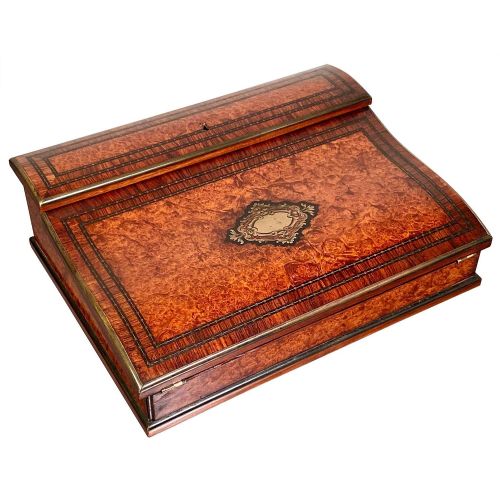


Walnut Desk Accessory
These walnut desk accessories bring tactile warmth and orderly charm to a study, uniting figured timbers with brass mountings and fitted interiors.
Walnut Desk Accessory
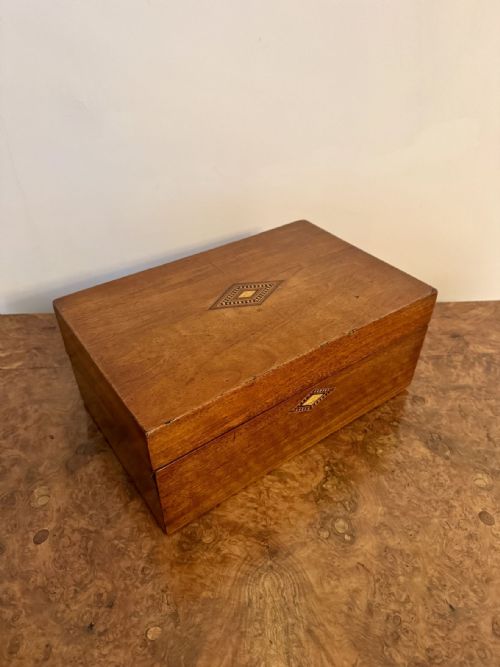
When you search for walnut desk accessory, you encounter a specialised collection of nineteenth-century and early twentieth-century desk equipment built to organise correspondence, books, and writing materials. The pieces span Victorian, French, and Black Forest origins, capturing an era when correspondence required dedicated receptacles and mechanical fittings.
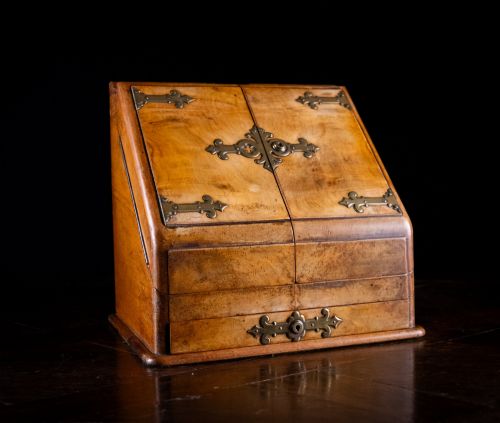
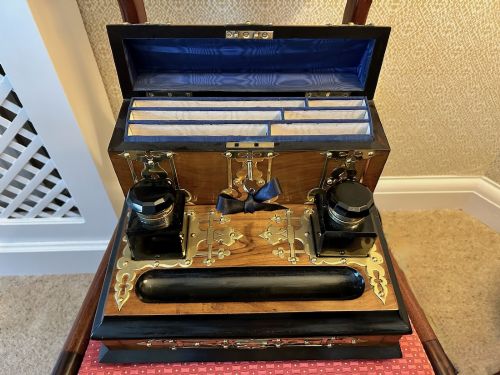
The most common formats on this page are stationery boxes, writing slopes, sliding book slides, and inkstands fashioned from figured timber. Many incorporate brass mounts, locking mechanisms, or hand-painted porcelain plaques to elevate their utility into decorative display.
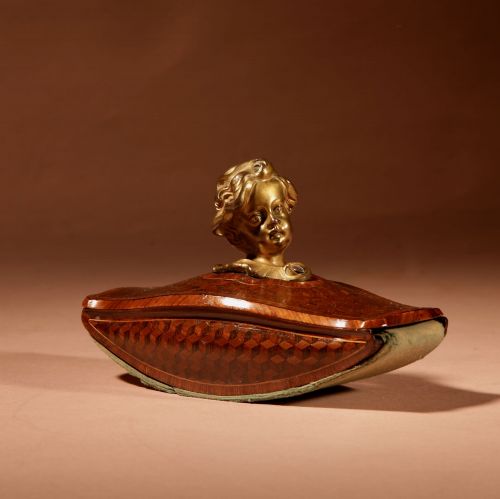
Earlier examples lean towards heavy brass-bound construction and Tunbridge ware ornamentation, whereas later pieces include Art Deco calendars and compact novelty boxes. Each item reflects the domestic routines of Victorian and later libraries, offering practical compartments tailored for specific writing tasks.
Distinctions in quality and finish
Quality rests on the selection of the timber veneer and the crispness of the brass mounts or carving. Finer stationery boxes and writing slopes display symmetrical burr walnut figuring across all visible planes, indicating careful selection by the cabinet maker.
The integration of mechanical elements also separates standard items from superior works. Smoothly operating book slide actions, original working locks with matching keys, and intact interior leather or velvet linings elevate a piece's standing.
The Walnut Desk Accessory Glossary
- Burr walnut
- A prized timber harvested from the irregular growth excrescences of the walnut tree, yielding complex, swirling grain patterns. It is typically sliced into thin veneers for cabinet fronts.
- Stationery box
- A desk cabinet designed with tiered interior compartments to hold writing paper, envelopes, and sealing wax. They often feature sloping lids and locking doors.
- Writing slope
- A portable desk that opens to reveal a slanted writing surface lined with leather or velvet, alongside compartments for pens and inkwells. They frequently include secret drawers secured beneath the stationery fittings.
- Book slide
- An expanding desk rack designed to hold a row of volumes upright between two ends. Many utilise a sliding scissors action or a wooden track mechanism.
- Tunbridge ware
- A meticulous form of woodwork originating from Kent, featuring mosaic patterns assembled from thousands of tiny tinted wood blocks to create pictorial scenes or geometric borders.
Walnut Desk Accessory: Frequently Asked Questions
What is a walnut desk accessory used for?
These pieces served as functional desktop equipment for writing, storing correspondence, and holding reference books in nineteenth-century offices and homes. They provided secure storage for stationery and kept inkwells and pens ready for daily use.
Today, they function well on modern desks or side tables to organise mail, tablets, and small volumes while introducing period character to a room.
How do I identify a Victorian walnut piece?
Victorian walnut items typically display deep brown colouration with varied grain, frequently augmented by heavy brass escutcheons, corner brackets, and flush carrying handles. The construction relies on dovetailed joints and solid secondary woods beneath walnut veneers.
Examining the interior fittings, lock mechanisms, and construction marks helps confirm the mid-to-late nineteenth-century date of manufacture.
Are the locks and keys usually original?
Many pieces retain their original brass-backed locks, and some specify patented mechanisms such as Bramah locks. However, replacement keys are common since working keys were easily lost over generations of use.
If a lock is operational, it generally adds to the desirability of a writing slope or stationery box, though non-working original locks do not diminish the decorative appeal.
How do Black Forest items differ from standard Victorian pieces?
Black Forest pieces are characterised by deep, hand-carved wooden animal motifs, such as bears or dogs, integrated into inkstands or tobacco boxes. They originate from carving workshops in the Swiss and German border regions rather than standard British cabinet shops.
While they share the walnut material palette, their sculptural forms prioritise whimsical carved ornamentation over the brass-mounted symmetry typical of Victorian stationery boxes.