

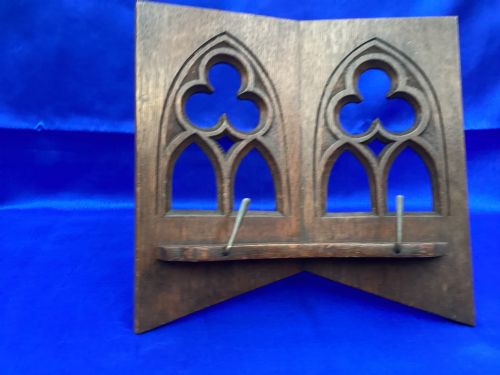


Desktop Book Rack
A desktop book rack keeps working volumes to hand, and the pieces seen here range from simple extending slides to revolving stands.
Desktop Book Rack
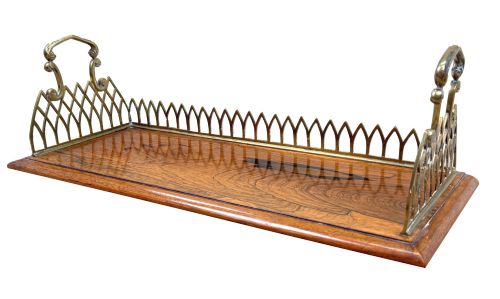
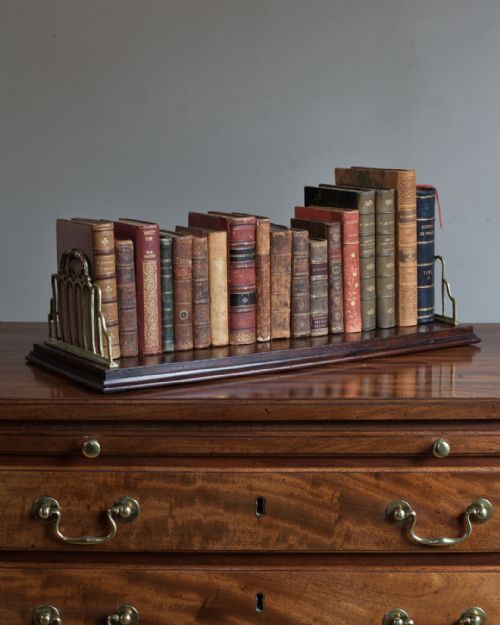
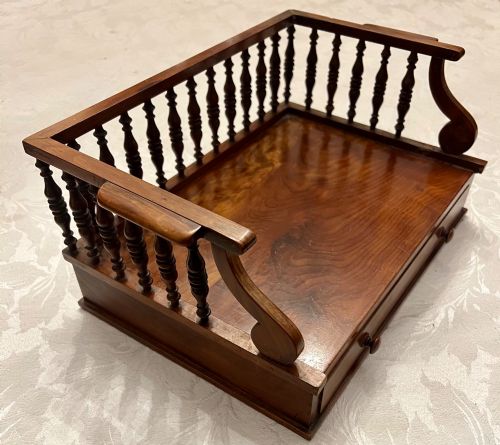
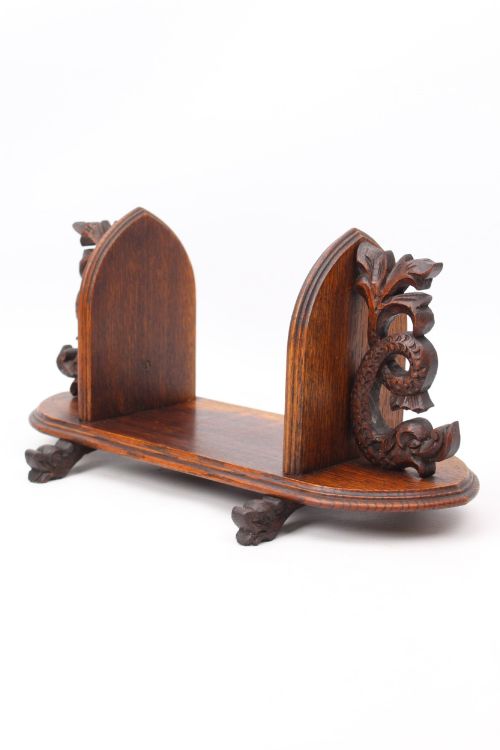
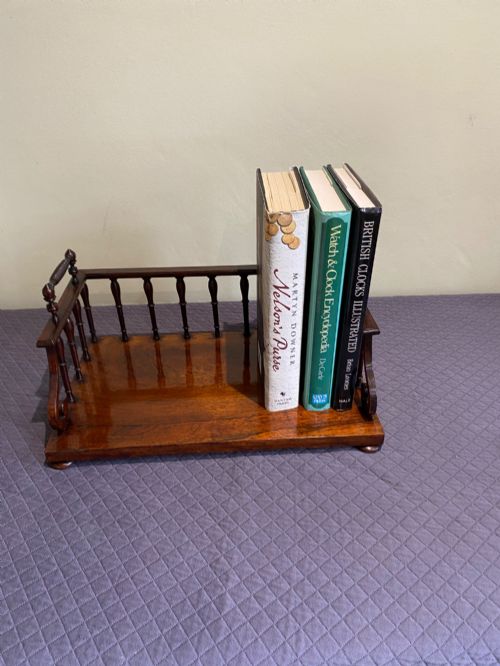
A desktop book rack organises volumes upon a table or bureau, and the examples found here span the Victorian, Edwardian, and Regency periods. Buyers encounter extending book slides, fixed troughs, and revolving stands designed for daily use in the library or office.
Most pieces date from the nineteenth century, executed in dense timbers like walnut, rosewood, and oak, often fitted with brass mounts. These accessories vary from plain utilitarian items to elaborate decorative forms incorporating Tunbridge ware, porcelain plaques, or pietra dura.
Materials and Construction
Cabinetmakers utilised durable hardwoods such as mahogany, walnut, and oak, alongside exotic timbers including coromandel, olive wood, and rosewood. Many extending book slides integrate brass mechanisms and mounts to reinforce joints and allow smooth movement.
Decorative surface techniques define specific pieces, from precision Tunbridge ware and inlaid motifs to carved teak and painted porcelain plaques. Workshops employed structural joinery suited to daily handling, securing bookends and troughs firmly to their bases.
Desktop Book Rack Retail Price Guide 2026
Typical asking prices for desktop book rack among the pieces listed under this phrase on Sellingantiques today, from the lower quarter to the upper quarter. They describe what is for sale here now, not the wider market.
Listings feature items from the Regency, Victorian, and Edwardian periods, constructed in walnut, oak, mahogany, and rosewood.
Assessing Quality
Quality rests upon the selection of timber, the crispness of any carving, and the mechanical precision of extending actions. Superior items exhibit well-figured grain, robust brass mounts that operate without binding, and fine secondary details like hand-painted plaques or intricate inlay.
Lesser examples rely on simple plank construction with minimal decoration and heavier, less refined fixings. The presence of maker labels or patent stamps, such as those by Betjemanns, distinguishes workshops that achieved higher standards of invention and finish.
Arthur Simpson·Betjemanns
The Desktop Book Rack Glossary
- Book slide
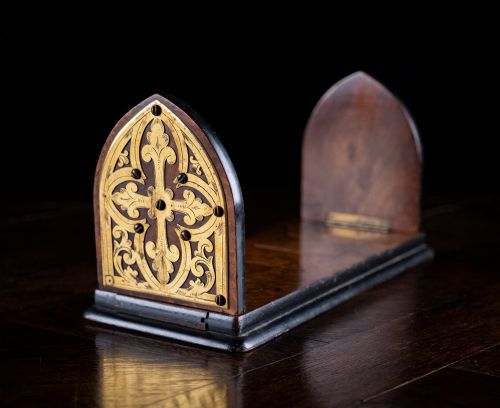
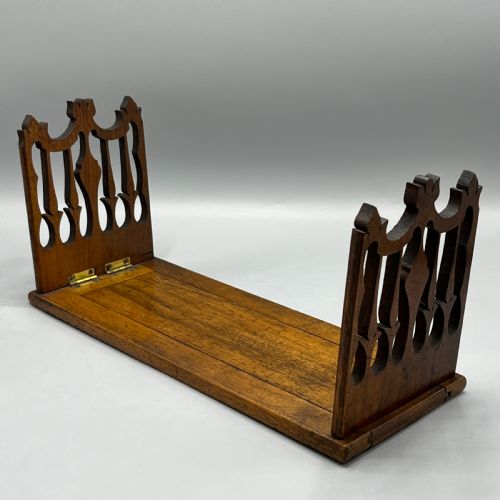
- An extending desk accessory featuring two upright ends that pull apart on a base to hold a variable number of volumes.
- Tunbridge ware
- A form of woodworking originating in Kent, characterised by small mosaic tiles forming pictorial or geometric patterns from natural woods.
- Pietra dura
- An inlay technique utilising cut and fitted polished coloured stones to create decorative pictures on marble or stone panels.
- Revolving bookcase
- A compact table or desk stand mounted on a pivot mechanism, allowing books to be turned and accessed from any seated position.
- Book trough
- A stationary open container designed to hold books upright on a flat surface without extending mechanisms.
Desktop Book Rack: Frequently Asked Questions
How do extending book slides work?
Extending slides utilise a central channel or hinged mechanism that allows the wooden ends to glide apart smoothly. This expansion accommodates varying numbers of volumes while keeping them upright.
Most mechanisms rely on wooden tongues running within grooves, sometimes reinforced with brass tracks to ensure consistent alignment over decades of adjustment.
Where were these stands used?
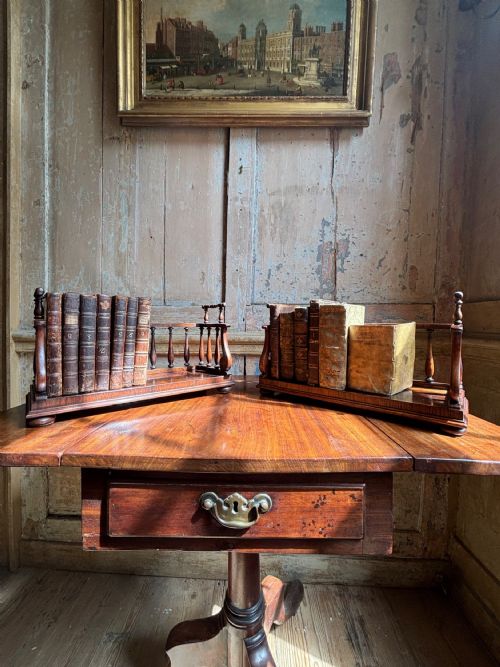
These accessories sat primarily on writing desks, library tables, and pembroke tables in Victorian and Edwardian homes. They held current reading material, ledgers, or reference books close to the user.
In studies and offices, they managed working volumes that needed to be consulted frequently throughout the day without returning to the main shelving.
How should I clean wood and brass?
Dust timber surfaces regularly with a soft cloth and feed the grain periodically with traditional beeswax to maintain the polish. Avoid synthetic sprays that leave residues on older finishes.
Brass mounts respond well to gentle cleaning with a dry cloth, taking care not to abrade the surrounding wood or remove the aged patina.
How do I identify a Victorian piece?
Victorian examples frequently combine dense timbers like walnut or coromandel with heavy brass mounts, Gothic revival motifs, or Tunbridge ware decoration. Maker signatures or patent stamps from this era are often stamped into the wood or brass work.
Construction details, such as hand-cut dovetails and solid timber bases rather than modern laminates, also point firmly towards nineteenth-century origins.