





Antique Tabletop Bookcase
An antique tabletop bookcase brings order to a desk, holding modest volumes within arm's reach through centuries of cabinet-making skill.
Antique Tabletop Bookcase
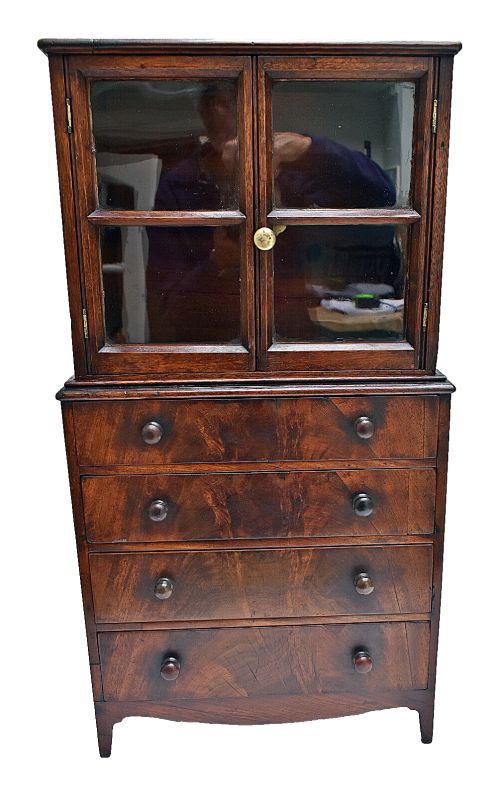
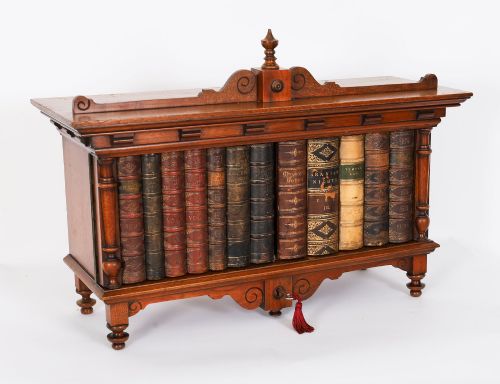
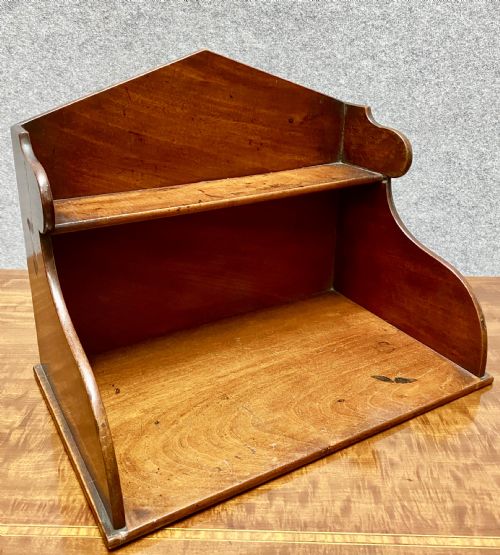
An antique tabletop bookcase serves as a compact repository for volumes, keeping working libraries close at hand on desks, counters, and side tables. These pieces take various forms across the inventory, ranging from revolving bookstands and extending book slides to miniature display cabinets and desk tidies.
Most examples encountered here date from the nineteenth century and the Edwardian period, constructed in woods like mahogany, oak, and rosewood. The selection also includes Georgian book carriers and twentieth-century book troughs, reflecting changing domestic habits and writing desk accessories over generations.
Materials and construction
Makers relied primarily on timbers such as mahogany, oak, and walnut, often selecting figured veneers of satinwood or rosewood for decorative surfaces. Solid construction methods ensure that revolving models turn smoothly on internal mechanisms while stationary shelves maintain rigid joints.
Brass fittings, glass panels, and ormolu mounts appear across the selection to reinforce corners, secure doors, or frame miniature displays. Simple joints and turned supports, including barley twist columns, define the structural integrity of these smaller case pieces.
Antique Tabletop Bookcase Retail Price Guide 2026
Typical asking prices for tabletop bookcase among the pieces listed under this phrase on Sellingantiques today, from the lower quarter to the upper quarter. They describe what is for sale here now, not the wider market.
Revolving bookcases represent a significant portion of the tabletop items listed across various periods.
Distinctions in quality
The standard of an antique tabletop bookcase rests on the selection of timber and the precision of its joinery, where finely figured grain and tight joints distinguish superior examples. Cabinet-makers who invested care in concealed elements, such as smooth-running drawers and well-balanced revolving actions, produced pieces that endure.
Decorative detailing, from inlaid satinwood stringing to cast brass mounts and turned spindle galleries, separates utilitarian book carriers from refined desk accessories. Proportion and restraint in ornament mark the work of skilled workshops.
The Antique Tabletop Bookcase Glossary
- Book carrier
- A portable stand with upright ends designed to hold a small selection of volumes for easy transport between rooms or desks.
- Revolving bookcase
- A freestanding tabletop unit built on a rotating mechanism that allows access to books from multiple angles.
- Cartonnuer
- A desk accessory fitted with compartments or drawers for holding papers, documents, and books, often decorated with metal mounts.
- Extending book slide
- An adjustable rack featuring expanding or sliding sections to accommodate varying numbers of volumes on a flat surface.
- Miniature display cabinet
- A small glazed case designed to sit on a table, protecting fine books or small objects behind glass doors.
Antique Tabletop Bookcase: Frequently Asked Questions
What is an antique tabletop bookcase?
An antique tabletop bookcase is a small piece of furniture designed to hold books upon a desk, counter, or table. These compact items keep frequently used volumes accessible in studies and libraries.
They appear in various formats, including revolving stands, book troughs, and miniature cabinets. Their scale allows them to sit comfortably on writing surfaces without occupying floor space.
How were revolving bookcases used?
Revolving bookcases allowed readers to sit at a desk and access multiple reference books simply by spinning the stand. They kept dictionaries, legal texts, and journals within arm's reach.
These pieces were common in professional offices, studies, and libraries during the nineteenth and early twentieth centuries. The rotating mechanism provided efficiency in spaces filled with research materials.
What woods are typical for these bookcases?
Mahogany, oak, and walnut form the primary structure of most pieces in this category. Makers also utilised exotic timbers like rosewood and decorative veneers such as satinwood.
Durability guided the choice of timber, ensuring the small frames could support the weight of heavy volumes. Grain patterns and colour determined how formal the finished piece appeared.
How do I date an antique book stand?
Dating relies on observing construction techniques, wood choices, and stylistic markers such as Arts and Crafts simplicity or Regency reeding. Labels, brass hardware types, and screw heads also provide clues to the era of manufacture.
Comparing the piece against documented historical periods helps narrow down the decade. Cabinet-making fashions shifted noticeably from heavy Georgian proportions to lighter Edwardian designs.