

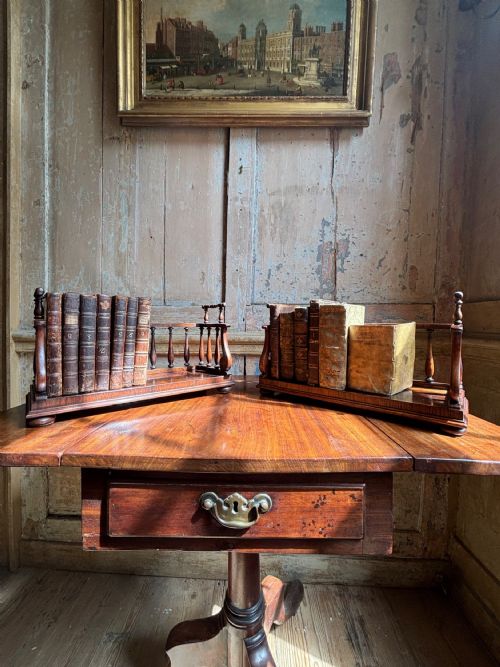

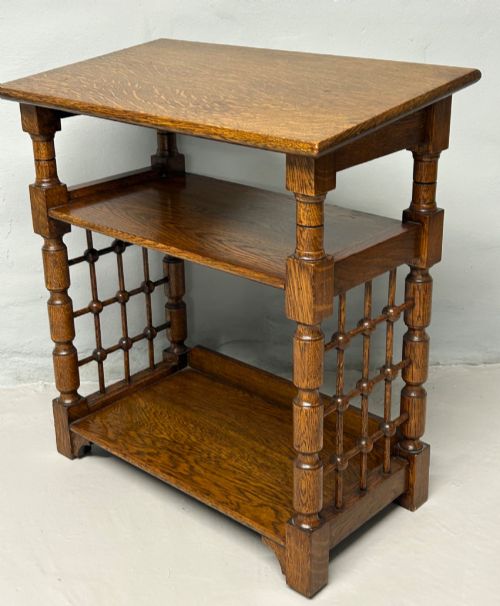
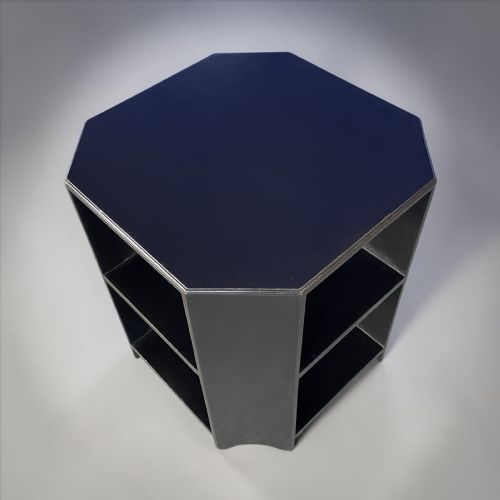


Wooden Book Trough
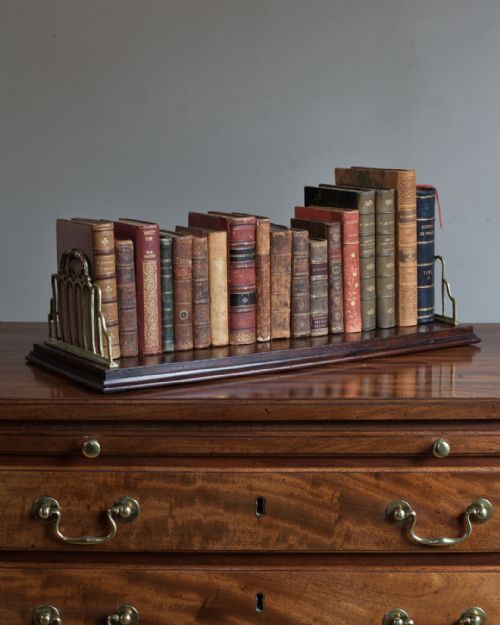
A wooden book trough keeps volumes upright and orderly on a desk or table, combining practical function with rich timber grains.
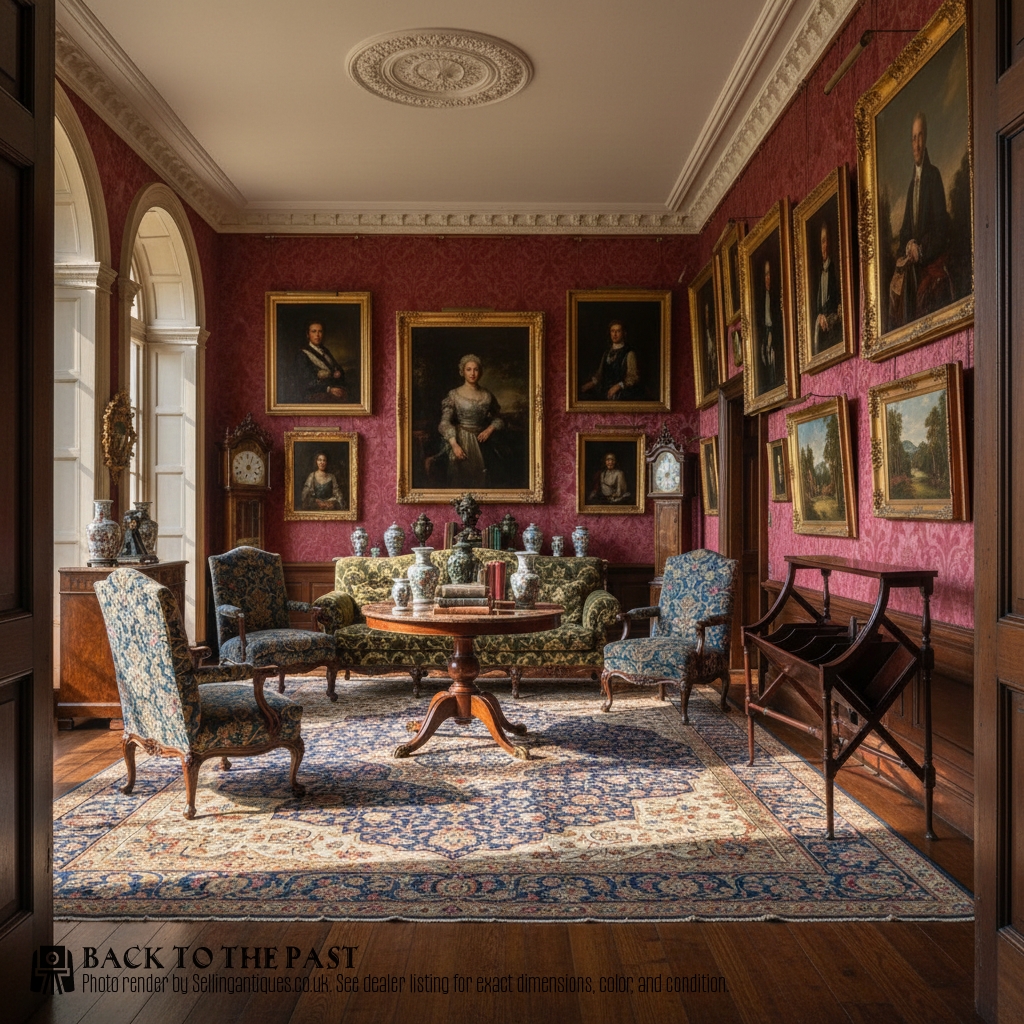
Wooden Book Trough
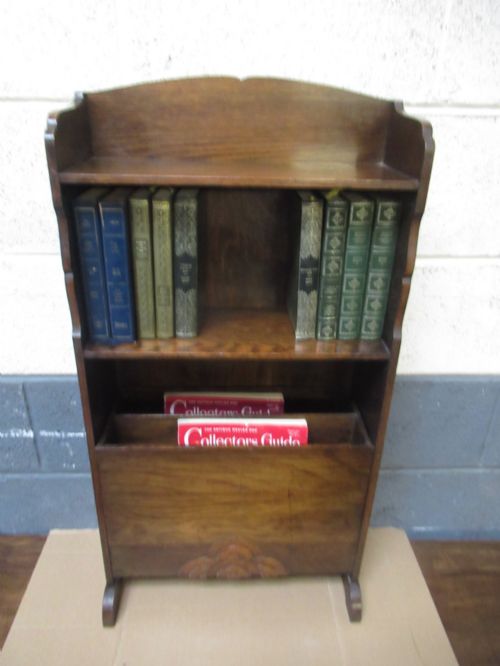
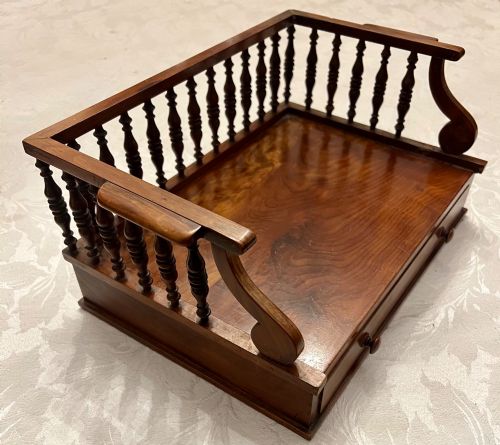
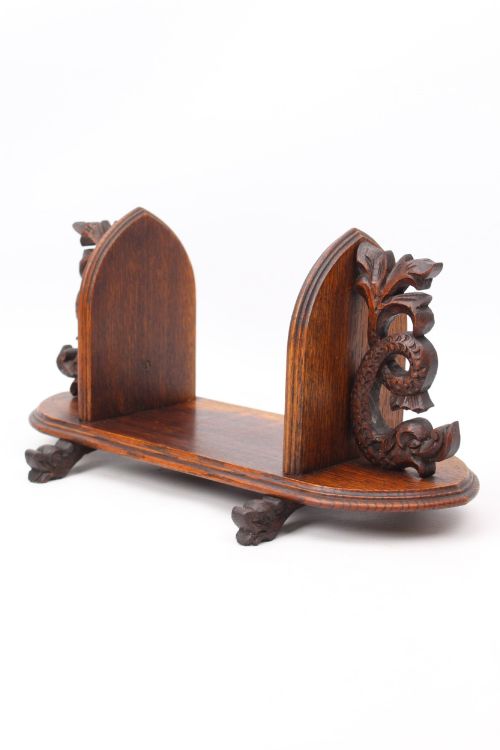
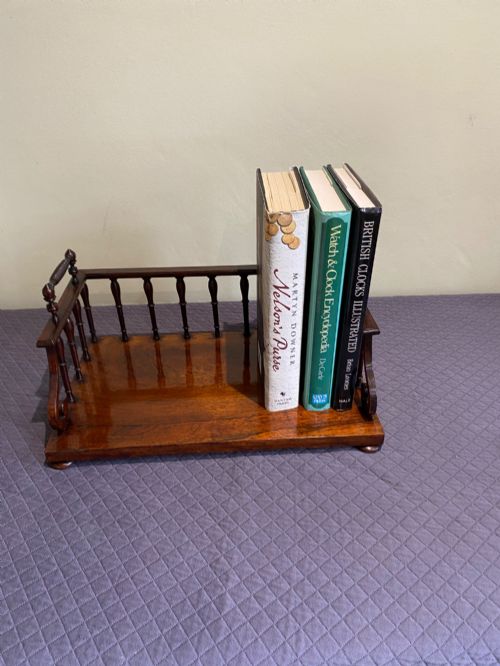
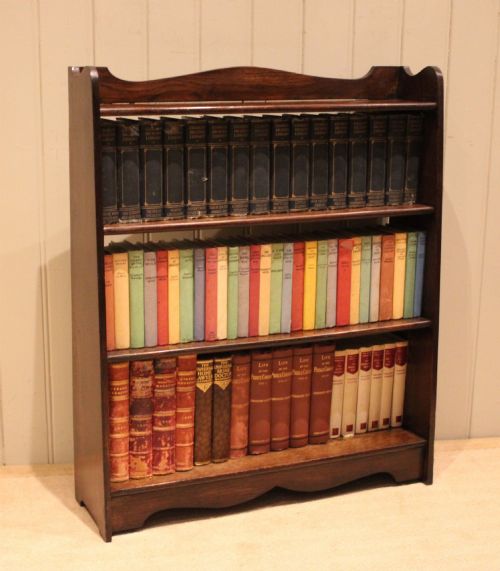
A wooden book trough is designed to hold a selection of volumes close at hand on a desk, table, or shelf. The pieces found here range from fixed open troughs and slope-shelf racks to extending book slides and folding variants.
Most examples date from the Victorian and Edwardian eras through to the Art Deco period. Oak and mahogany appear frequently, alongside denser timbers like rosewood, walnut, and ebonised wood.
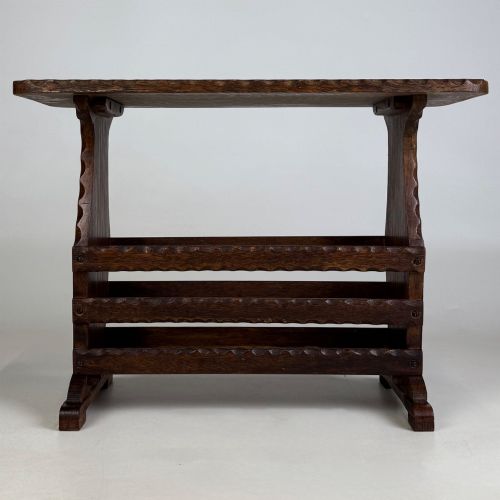
Makers utilised various decorative techniques, incorporating brass mounts, inlaid details, and carved woodwork. Certain formats double as magazine racks or small side tables for a library or study.
Materials and construction
Cabinetmakers worked primarily with solid hardwoods and selected veneers, choosing oak, mahogany, and walnut for their strength and grain pattern. Boxwood and bone often provided contrasting stringing or inlay details on finer desk accessories.
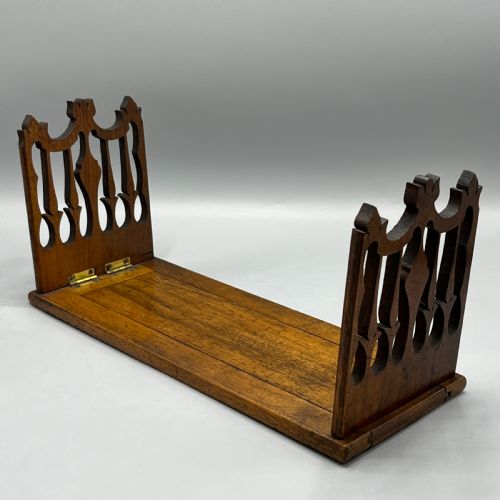
Extending mechanisms relied on wooden tracks and brass hinges or mounts to allow the ends to pull outward smoothly. Brass screws and fittings secured the moving bookends and added structural support to the troughs.
Specialist techniques such as Tunbridge ware surface decoration, intricate carving, and ebonising transformed standard utility items into decorative library furnishings.
Wooden Book Trough Retail Price Guide 2026
Typical asking prices for wooden book trough among the pieces listed under this phrase on Sellingantiques today, from the lower quarter to the upper quarter. They describe what is for sale here now, not the wider market.
Materials span native oak and mahogany alongside exotic timbers including rosewood, walnut, coromandel, and teak.
Evaluating craftsmanship
Quality rests on the selection of timber and the precision of the joinery rather than mere size. Finer pieces display well-matched grain patterns, tightly fitted joints, and robust sliding mechanisms that operate without binding.
Decoration separates standard utility items from superior examples. Finely cast brass mounts, hand-painted ceramic plaques, intricate Tunbridge mosaic work, and detailed carving indicate a higher standard of workshop production.
Arthur Simpson·Gillows·Tiffany and Co
The Wooden Book Trough Glossary
- Book slide
- An adjustable desktop rack featuring sliding ends that expand to accommodate varying numbers of volumes. These often incorporate brass hinges and decorative mounts.
- Tunbridge ware
- A form of woodwork originating in Kent characterised by mosaic pictorial designs assembled from thousands of tiny coloured wood blocks. It commonly decorates Victorian desk items.
- Ebonised wood
- Timber stained or treated to imitate ebony, a dense black wood. This finish gained popularity during the Victorian and Art Deco periods for a sleek appearance.
- Stringing
- A narrow inlay of contrasting wood used to outline panels, edges, or drawers on cabinet furniture. It enhances the visual definition of mahogany and walnut pieces.
Wooden Book Trough: Frequently Asked Questions
What is a wooden book trough used for?
These items keep a small selection of books upright and organised on a desk, table, or sideboard. They provide easy access to frequently read volumes while keeping them tidy.
Historically, they sat in studies, libraries, and drawing rooms as both a functional accessory and a decorative tabletop feature.
How do extending book slides work?
Extending book slides feature a central wooden base with moving end pieces that slide outward along internal tracks. This allows the holder to expand as more volumes are added.
Brass mounts and hinges often support the moving mechanism, ensuring the ends remain upright under the weight of the books.
How do I care for a wooden book trough?
Maintain the wood by applying a light coat of appropriate furniture wax periodically to nourish the grain and protect the surface. Avoid placing the piece in direct sunlight or near heat sources to prevent the timber from drying out.
Dust regularly with a soft, dry cloth to prevent accumulation in carved crevices and joints.
How can I tell the period of a piece?
Dating relies on observing the timber choice, decorative style, and construction methods. Victorian examples often feature heavy brass mounts, burr walnut, or Tunbridge mosaic work, while Art Deco pieces display geometric lines and ebonised finishes.
Edwardian items frequently utilise inlaid mahogany and lighter oak construction typical of the early twentieth century.