




Library Book Trough
A library book trough keeps working volumes close at hand on a desk, table, or floor.
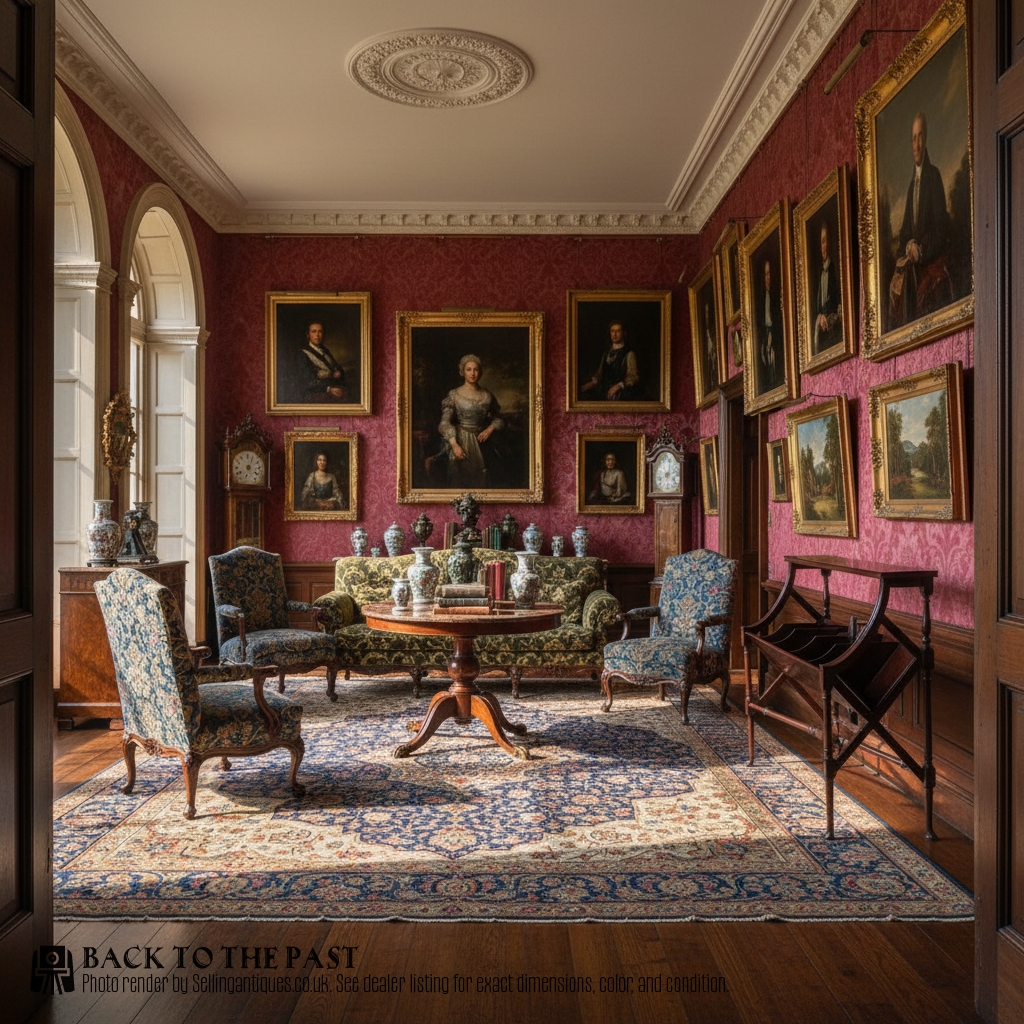
Library Book Trough
A library book trough is a sturdy wooden open container designed to hold a selection of volumes upright or at a slight slant for easy access in a study or library. These pieces appear most frequently in mahogany or oak, spanning periods from the nineteenth century into the Edwardian era.
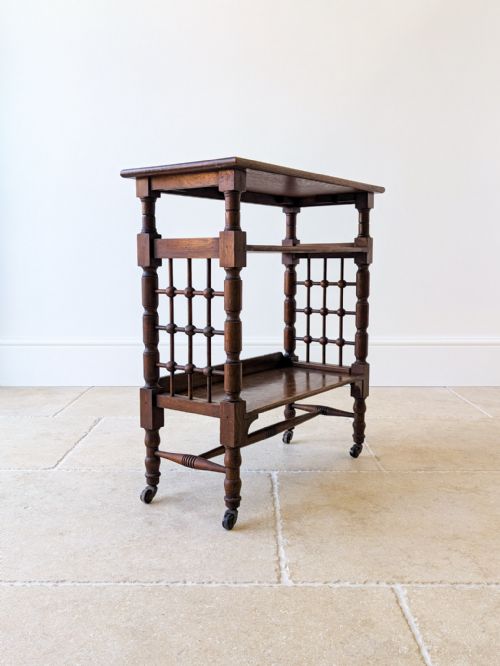
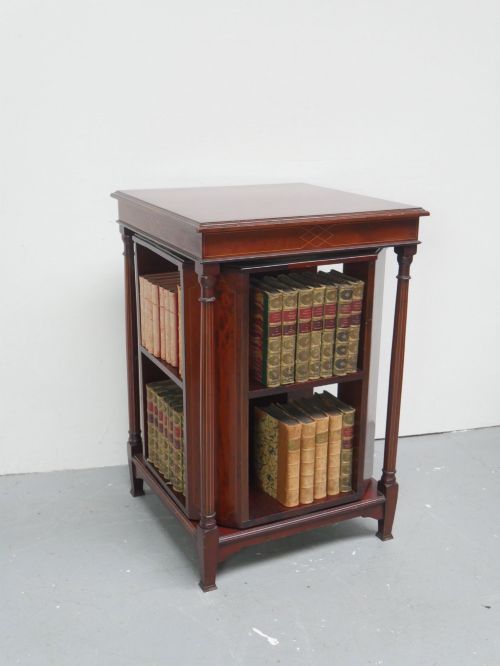
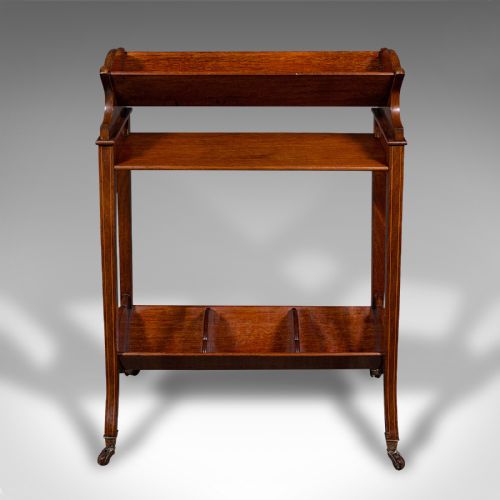
The form ranges from simple desktop troughs to larger freestanding sections and revolving tables that keep reference works within arm's reach. Edwardian and Victorian examples dominate the selection, often taking inspiration from earlier George III and Regency designs.
Makers occasionally incorporated brass mounts, satinwood inlay, or painted wood to suit formal domestic libraries. Buyers encounter both plain utility pieces meant for daily reading and more decorative stands intended for prominent display.
Materials and construction
Cabinetmakers relied heavily on dense hardwoods like mahogany, rosewood, and oak to support the weight of heavy bound volumes without sagging. These timbers were often selected for distinct grain patterns, such as flame mahogany or burr walnut.
Brass fittings, including carrying handles, hinges, and decorative mounts, provide structural reinforcement as well as a metallic contrast to the dark wood. Inlaid satinwood and painted accents appear on finer pieces from the Edwardian period.
Joinery is straightforward and robust, designed to withstand the daily removal and replacement of heavy books. Many examples utilise simple partitions to divide the trough into functional sections for categorising volumes.
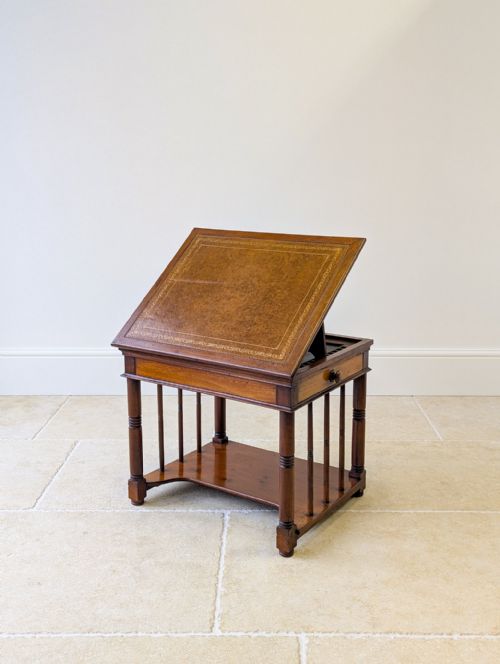
Formats range from simple desktop troughs to revolving tables and extending book rests.
Judging quality and craftsmanship
Quality rests primarily on the choice of timber and the crispness of the secondary details, such as inlaid banding or brass mountings. Heavier gauge brass and deeply figured mahogany distinguish finer workshop output from plain utility items.
Proportion and stability matter greatly in pieces that must hold heavy loads without tipping or warping. The tightness of the joinery at the corners and the finish of the interior surfaces reveal the level of care taken during manufacture.
Waring and Gillows
The Library Book Trough Glossary
- Book trough
- An open-topped wooden container designed to hold a row of books upright on a flat surface. They are typically portable and feature flat or sloped sides.
- Flame mahogany
- A decorative wood veneer showing a distinct flame-like grain pattern. It was favoured by cabinetmakers for prominent exterior surfaces.
- Satinwood inlay
- Contrasting light-coloured wood inserted into recesses in a darker primary timber. This technique creates geometric or floral borders on Edwardian pieces.
- Gothic Revival
- A nineteenth-century architectural and decorative style that reinterprets medieval forms. Pieces in this style often feature pointed arches and heavy brass strapwork.
- Revolving book table
- A rotating wooden stand designed to hold books on multiple sides. It allows a reader to access a large reference collection from a single seated position.
Library Book Trough: Frequently Asked Questions
What is a library book trough used for?
A library book trough holds a small selection of active reading volumes on a desk, table, or floor.
They keep frequently consulted books upright and organised within arm's reach of a chair or workspace.
How do I date a wooden book trough?
Dating relies on timber selection, decorative techniques, and the overarching style of the piece.
Victorian and Edwardian examples often feature mahogany or oak construction, sometimes accented with brass mounts or satinwood inlay that reflect the taste of their respective eras.
Where should I place a book trough at home?
These pieces suit studies, home libraries, and living rooms where books form part of the daily interior.
Place them on sturdy tables, sideboards, or directly on the floor for larger freestanding versions to display current reading material.