


Georgian Desk Accessory
When you search for a georgian desk accessory, you enter a world of practical writing tools crafted in brass, silver, mahogany, and tortoiseshell.
Georgian Desk Accessory
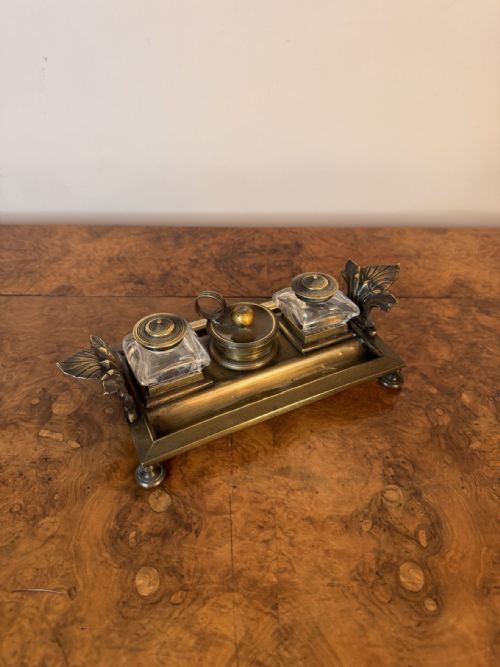
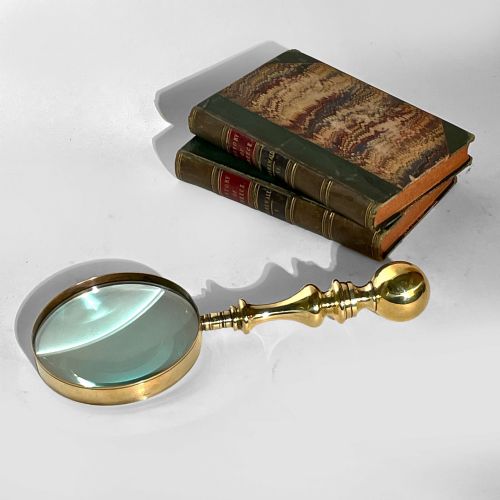
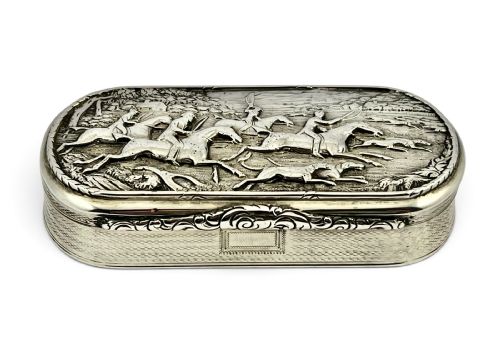
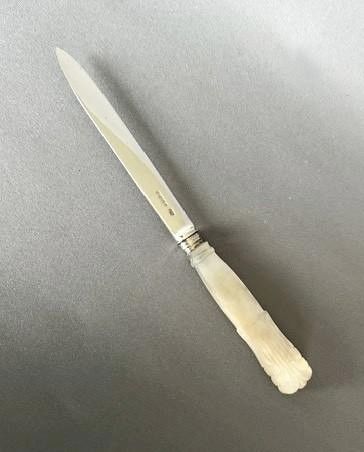
A georgian desk accessory covers the functional and decorative implements used for writing and correspondence during the eighteenth and nineteenth centuries. You will frequently encounter inkstands, inkwells, snuff boxes, pounce pots, and letter openers among the current selection.
The materials span sterling silver, brass, glass, mahogany, rosewood, and tortoiseshell, reflecting the varied tastes of the Georgian, Regency, and Victorian eras. These items served daily writing needs in the study or parlour rather than sitting idle as mere ornaments.
Many objects retain traces of their original function, such as glass liners within inkstands or compartments for sand within pounce pots. Surviving examples demonstrate the intricate craftsmanship applied to everyday stationery implements.
How they were made
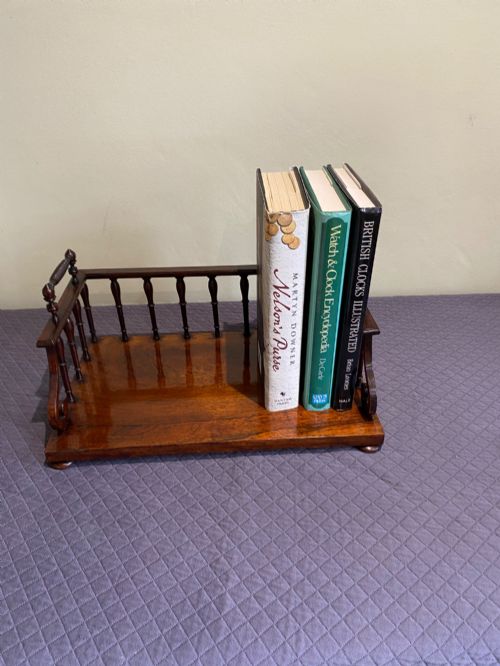
Makers utilised dense timbers like mahogany and rosewood for boxes, book racks, and letter holders, often employing careful joinery and inlay to ornament the surfaces. Cabinet makers shaped these woods to withstand the rigours of daily correspondence.
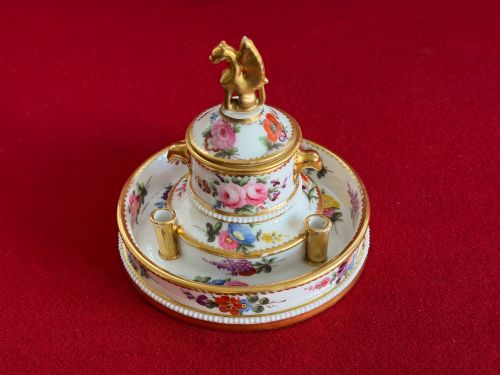
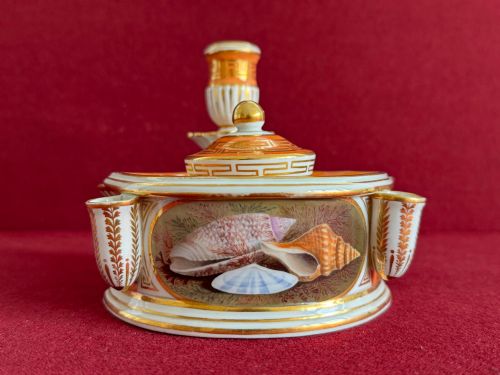
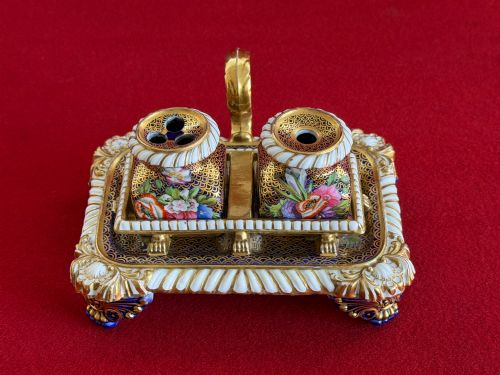
Silversmiths and metalworkers cast, hammered, and engraved sterling silver, brass, and Old Sheffield plate for inkstands, snuff boxes, and sealing wax holders. Porcelain factories like Spode and Flight Barr & Barr moulded ceramic inkwells and painted them by hand.
Georgian Desk Accessory Retail Price Guide 2026
Typical asking prices for georgian desk accessory among the pieces listed under this phrase on Sellingantiques today, from the lower quarter to the upper quarter. They describe what is for sale here now, not the wider market.
One cast iron paperweight depicts the Reverend Joshua Brooks, locally celebrated as The Manchester Man.
What varies in quality
Quality rests in the precision of the metalwork, the clarity of hallmarks, and the crispness of any engraved decoration. Pieces bearing clear maker marks and well-preserved surface detailing command greater attention from collectors.
The choice of materials also dictates distinction, where fine veneers like tortoiseshell, inset agate, or gold mountings elevate simple desk items into luxury possessions. Structural integrity and the survival of original fitted glass liners or components further separate ordinary pieces from superior examples.
James Goodwin·Marson and Jones·Moses Brent·Flight Barr and Barr·Creswick
The Georgian Desk Accessory Glossary
- Pounce pot
- A small shaker used to sprinkle gum sandarac powder over unsized paper to stop ink from feathering. These containers feature perforated tops.
- Standish
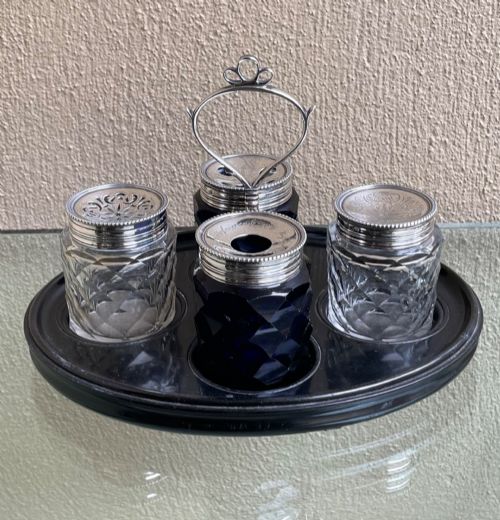
- An inkstand or tray holding inkwells, penholders, and sometimes pounce pots or sanders. They form the centrepiece of a writing table.
- Navette
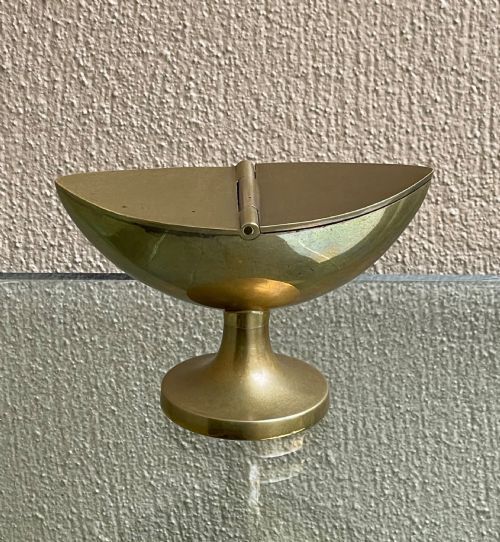
- A boat-shaped decorative form featuring pointed ends, commonly seen on snuff boxes and small trays from the period. This profile influenced Regency design.
- Old Sheffield plate
- A composite material made by fusing a thin sheet of silver to a thicker copper base. It was widely used for desk trays and inkstands before electroplating.
- Vinaigrette
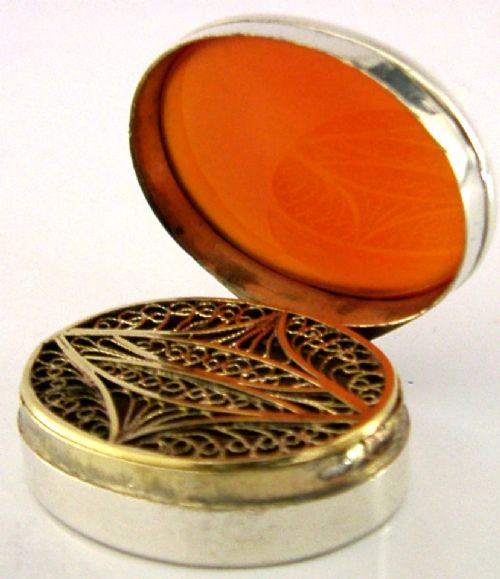
- A small ornamental box containing a perforated grille and a sponge soaked in aromatic vinegar. Ladies carried these to mask unpleasant odours.
Georgian Desk Accessory: Frequently Asked Questions
What is a pounce pot used for?
A pounce pot held fine powder made from resin or cuttlefish bone, which writers sprinkled onto wet ink to dry the page and prepare the paper surface.
These small shakers match inkstands on writing desks and feature perforated lids for dusting the powder evenly.
How do I date a silver inkstand?
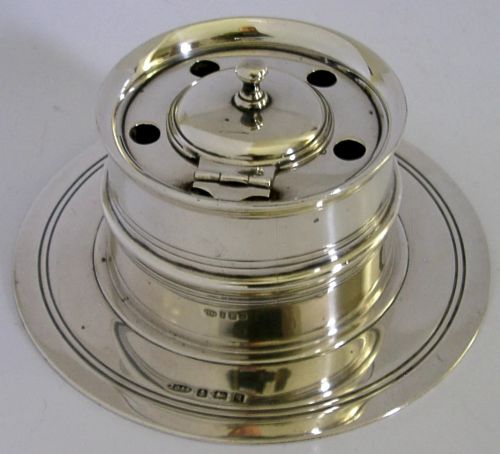
You date a silver inkstand by examining the hallmarks stamped into the metal, which record the assay office, the maker, and the exact year of production.
Additional clues come from the overall style, such as heavy Regency cast feet or delicate Georgian engraving.
What is Old Sheffield plate?
Old Sheffield plate is an early material created by thermally fusing a thin layer of sterling silver onto a thick copper core.
Craftsmen used this technique to produce large desk items and trays that offered the appearance of solid silver at a lower cost.
How were tortoiseshell boxes made?
Makers softened natural tortoiseshell in boiling water before pressing and moulding the material over wooden or metal cores.
Gold or silver piques and inlays were often embedded into the surface while the shell remained pliable.