





Silver Letter Knife
A silver letter knife brings functional elegance to the desk, offering a tactile way to open correspondence.
Silver Letter Knife
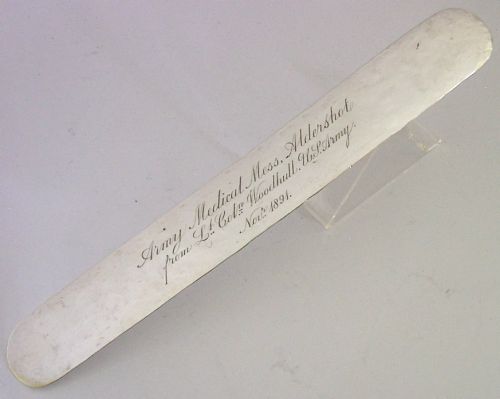
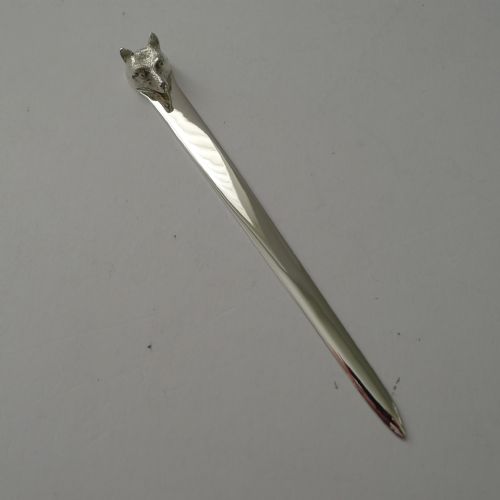
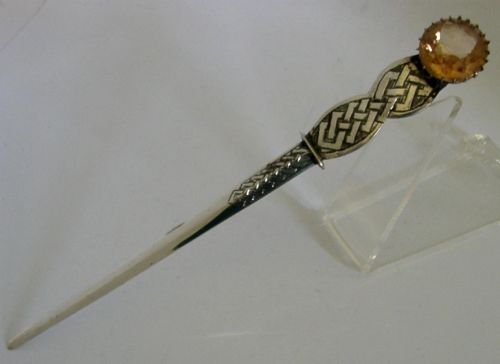
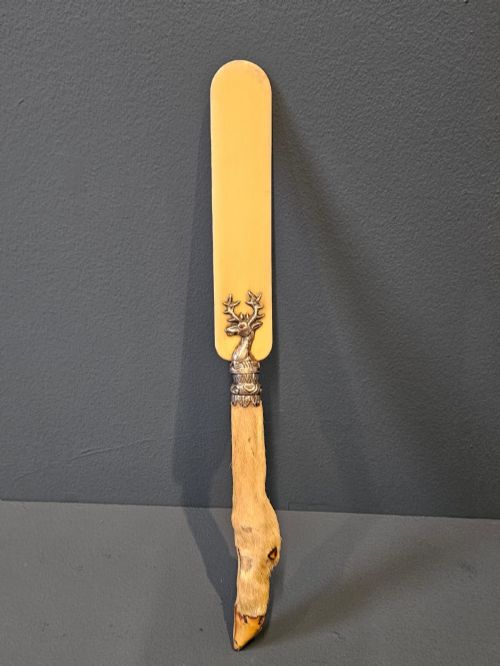
A silver letter knife sits among desk accessories designed for opening mail and turning pages, spanning forms from simple blades to novelty animals and combined utensils. You are most likely to meet Edwardian and Victorian examples in sterling silver, often paired with organic materials or enamel.
Makers produced these tools across Georgian, Victorian, and mid-twentieth-century periods, incorporating functions like pencils, seals, and calendars into the handles. Scottish provincial pieces and continental imports also appear alongside standard English assay office marks.
The objects serve as both stationery tools and decorative desktop items, reflecting changing domestic habits from the nineteenth century onward. Collectors encounter everything from plain silver blades to elaborate figural designs representing birds, dogs, and deities.
Materials and Construction
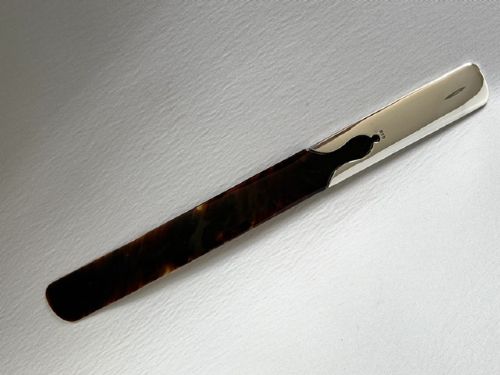
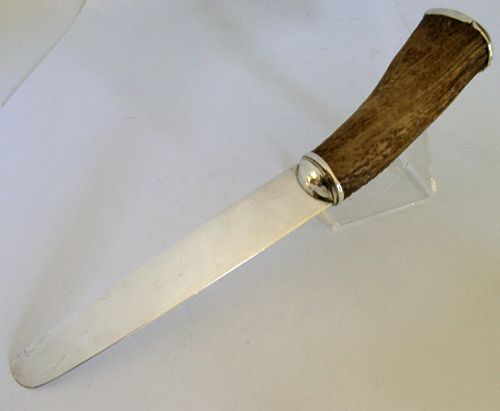
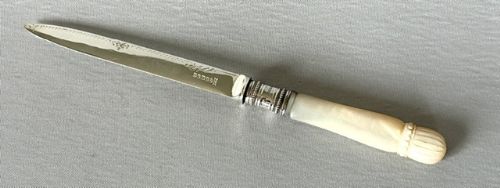
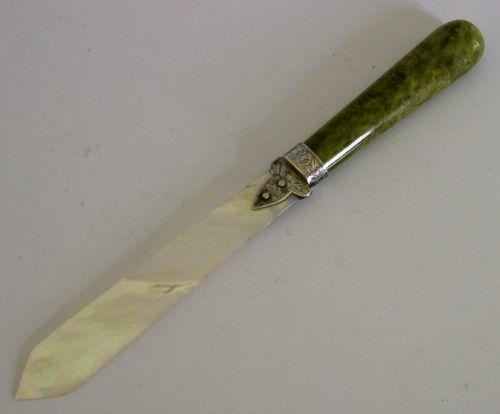
Silversmiths combined sterling silver handles and blades with natural materials including tortoiseshell, mother-of-pearl, agate, horn, and ivory. These organic elements were shaped and pinned to metal mounts, creating a contrast in texture and weight.
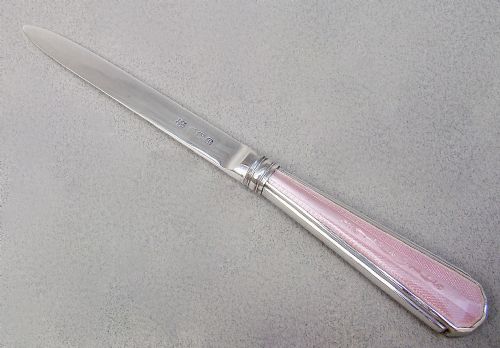
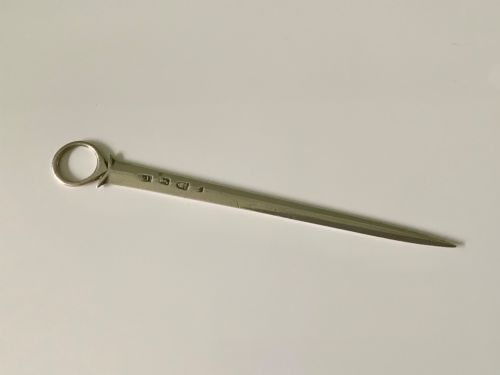
Techniques such as guilloché enamel, ebonising, and engraving added colour and pattern to the metal and secondary materials. Makers utilised casting for figural novelty handles depicting animals, while blades were shaped from sheet silver or repurposed from earlier items like meat skewers.
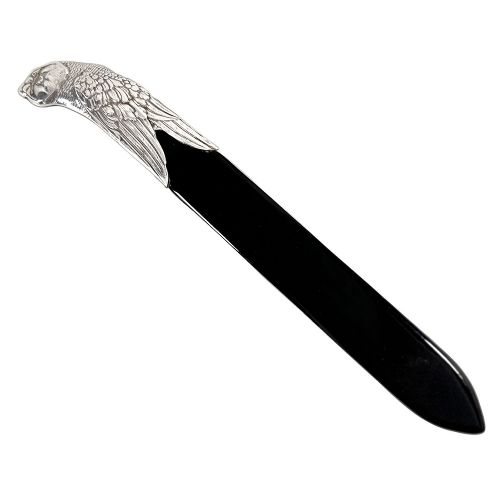
A metal owl stares back from the desk with glass eyes.
Assessing Quality and Execution
Quality rests on the crispness of the chasing and engraving, particularly on novelty handles shaped as animals or figures. The integration of contrasting materials, such as closely fitted tortoiseshell or carved agate, demonstrates superior workshop skill.
Fully marked pieces with clear assay office stamps and maker's marks hold greater clarity of origin than unmarked examples. The balance of the object in the hand and the preservation of delicate enamel or fragile organic inserts also define the upper tier of surviving pieces.
The Barker Brothers·Asprey·Sampson Mordan and Co·Moses Brent·A Barrett·Mappin and Webb·Deakin and Francis·William Graeme·Tiffany and Co·E H Stockwell
The Silver Letter Knife Glossary
- Assay mark
- A stamp indicating the purity of the precious metal and the office that tested it. These marks help date the piece accurately.
- Guilloché
- A decorative technique where a precise, intricate pattern is mechanically engraved into metal beneath translucent enamel. It is frequently seen on Art Deco pieces.
- Page turner
- A larger desk accessory designed for separating uncut pages in books rather than opening envelopes. They often share materials with letter knives.
- Novelty
- An object shaped to resemble an animal, figure, or unexpected item for amusing desktop use. Sampson Mordan and Asprey frequently produced these.
Silver Letter Knife: Frequently Asked Questions
How are letter knives dated?
Silver pieces usually carry hallmark letters corresponding to specific assay office date cycles.
Additional clues come from the accompanying materials, such as tortoiseshell or enamel styles typical of the Edwardian or Art Deco eras.
What is the difference between a letter knife and a page turner?
Letter knives feature shorter, often sharper blades intended for slicing open paper envelopes.
Page turners are longer and broader with blunt edges, built to slide smoothly through the folded pages of bound books.
Were these items used only for mail?
Many designs incorporated secondary functions like pencils, seals, and perpetual calendars into the handle.
Others took novelty forms like foxes or owls, serving as decorative ornaments as well as practical stationery tools.
How do I care for silver and tortoiseshell?
Keep tortoiseshell away from direct heat and moisture to prevent warping or cracking of the organic material.
Clean the silver components gently with a soft cloth, avoiding abrasive polishes that might damage inlaid stones or enamel.