




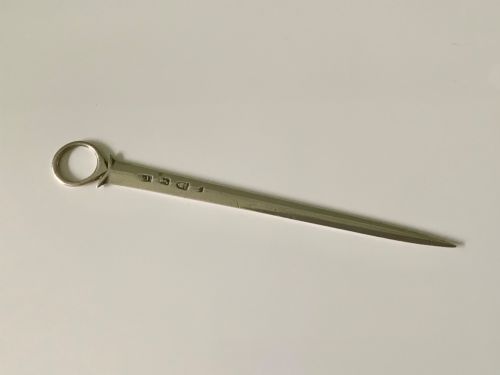
Silver Paper Knife
A silver paper knife combines practical desk utility with the refined craftsmanship of Georgian, Victorian, and Edwardian periods.
Silver Paper Knife
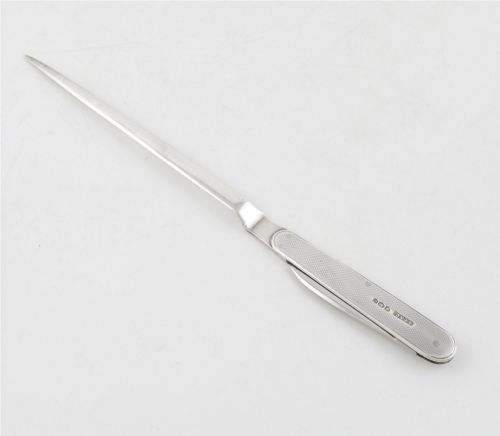
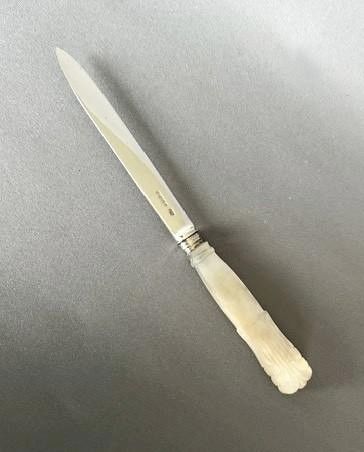
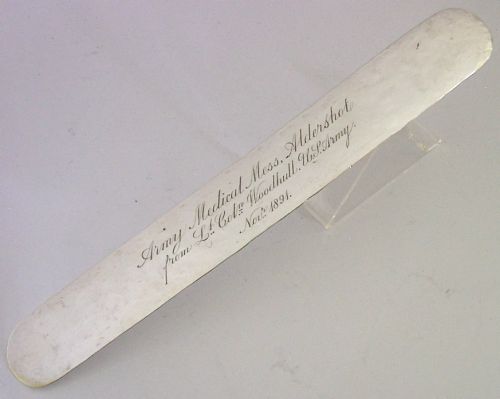
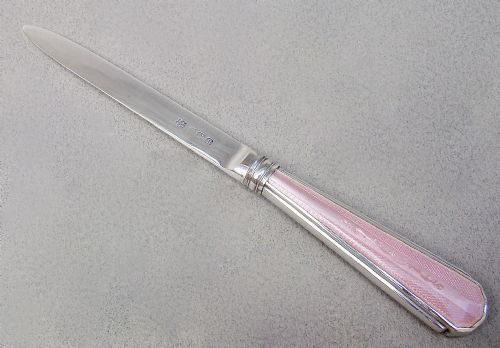
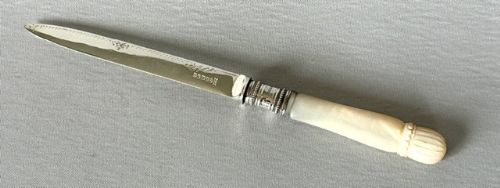
When you search for a silver paper knife, you encounter various forms designed for correspondence and reading, including smaller letter openers and larger page turners. The pieces on this page span from the Georgian era through to the mid-twentieth century, featuring styles such as Edwardian, Victorian, and Art Deco. Desk accessories in this category often double as page turners for uncut books, combining metal handles and blades with organic materials.
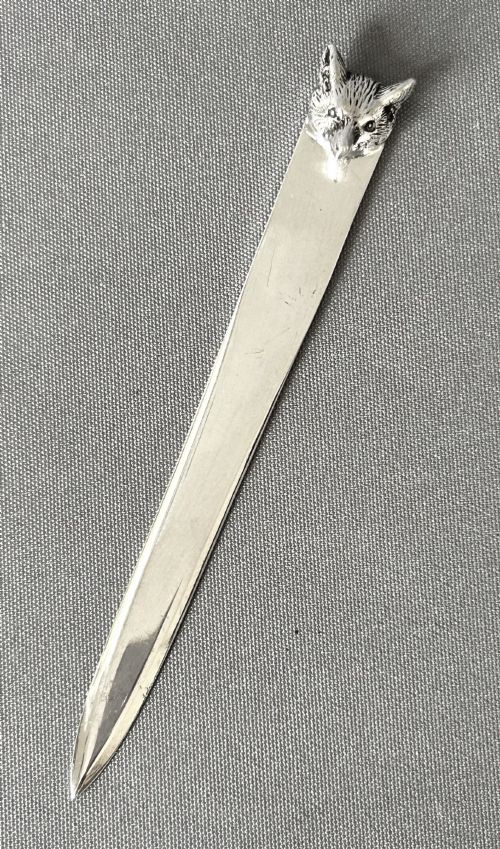
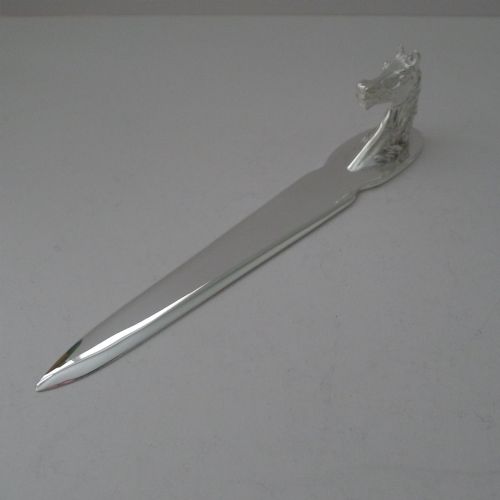
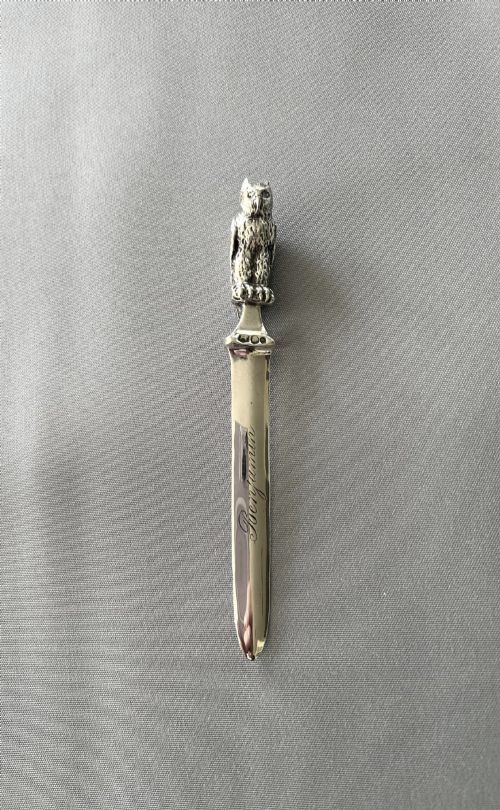
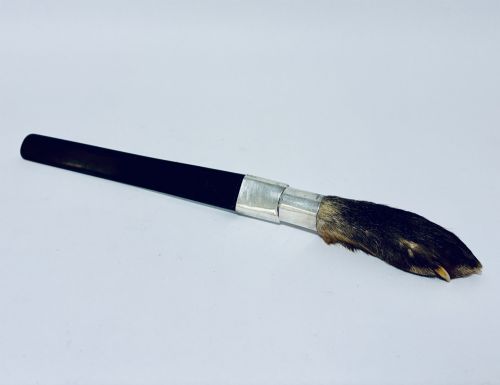
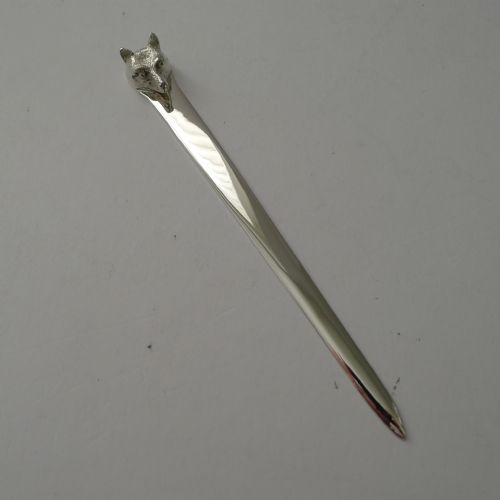
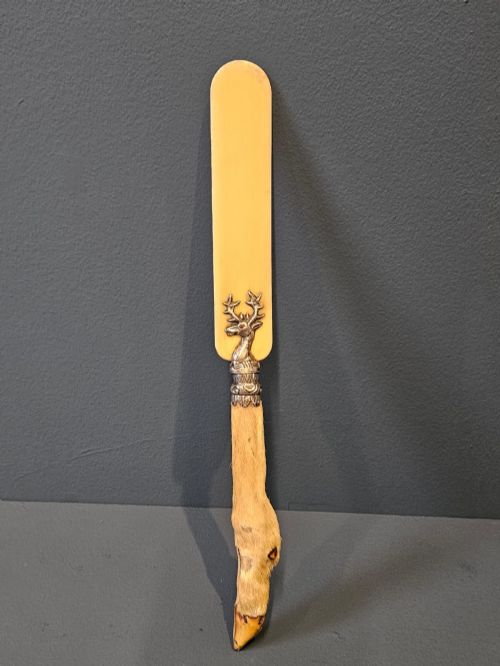
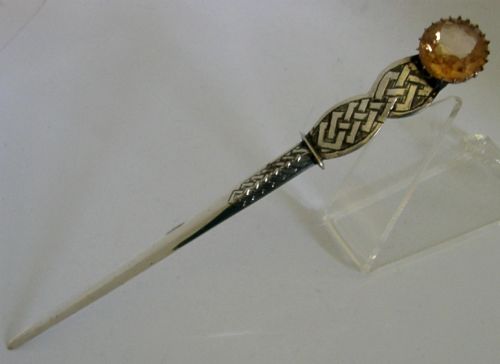
Makers and regional silversmiths utilised sterling silver alongside materials like tortoiseshell, mother-of-pearl, and agate to create functional desktop implements. Novelty pieces shaped as animals such as foxes, owls, and ducks appear alongside commemorative items, Scottish provincial designs, and guilloche enamel examples. These items reflect the shifting stationery habits and desk accessory trends across distinct historical periods.
Materials and construction
Silversmiths combined sterling silver handles and mounts with organic blades made from tortoiseshell, mother-of-pearl, horn, and ivory. Handles frequently incorporated cast or chased animal figures, civic insignia, or inlaid gemstones such as citrine and smoky quartz. Blades were shaped to be thin and flat, allowing them to slip between book leaves or tear envelopes without causing damage.
Enamelling techniques, notably guilloche patterns, added colour to handles during the Art Deco period, while earlier Georgian and Victorian examples relied on polished stone and engraved metal. Makers utilised rivets and silver collars to secure delicate organic blades to metal or ebonised grips, ensuring structural stability for daily desk use.
Silver Paper Knife Retail Price Guide 2026
Typical asking prices for silver paper knife among the pieces listed under this phrase on Sellingantiques today, from the lower quarter to the upper quarter. They describe what is for sale here now, not the wider market.
Periods represented span from Georgian meat skewers adapted as paper knives to mid-twentieth-century commemorative items.
Assessing quality
Quality in a silver paper knife rests on the integration of materials and the crispness of any cast or engraved detail. Superior examples feature well-balanced proportions between the handle and the blade, maintaining structural integrity across vulnerable joints where silver meets tortoiseshell or pearl. Finely modelled novelty animal heads or intricate enamel work distinguish higher-grade workshop production from standard utility pieces.
The choice and preparation of organic materials also determine standard; unblemished tortoiseshell, high-grade mother-of-pearl, and carefully selected agate elevate a piece significantly. Maker marks and clear hallmarks from established assay offices provide secondary confirmation of origin and material authenticity.
The Barker Brothers·Sampson Mordan and Co·Moses Brent·William Comyns·William Eaton·Grey and Co
The Silver Paper Knife Glossary
- Page turner
- A large implement designed to slice open the folded edges of uncut book pages. These items usually feature long blades made of tortoiseshell or mother-of-pearl paired with silver handles.
- Guilloche enamel
- A decorative technique involving precise, intricate geometric patterns engraved beneath translucent enamel layers. This method was widely utilised on Art Deco desk accessories.
- Sterling silver
- An alloy consisting of silver and other metals, typically copper, standardising at a purity proportion of ninety-two point five percent. British pieces carry assay office hallmarks confirming this standard.
- Provincial silver
- Items manufactured and hallmarked outside major urban assay centres such as London or Birmingham. Scottish provincial silver holds particular regional distinction among collectors.
Silver Paper Knife: Frequently Asked Questions
What is the difference between a paper knife and a letter opener?
Paper knives generally feature longer, broader blades intended for slicing open the folded pages of uncut books. Letter openers are typically smaller and specifically proportioned for tearing open paper envelopes.
Both items frequently share similar silver handles and materials, leading to overlapping terminology in historical and modern descriptions.
How do I care for a tortoiseshell and silver piece?
Tortoiseshell requires gentle handling and protection from extreme temperature fluctuations and direct sunlight to prevent warping or drying out. Clean the silver components using a soft cloth without exposing organic inlays to harsh chemical polishes.
Store the item in a stable environment away from excess moisture to preserve both the metal lustre and the natural shell.
When were novelty silver paper knives popular?
Novelty desk accessories gained immense popularity during the Victorian and Edwardian eras, extending into the Art Deco period. Silversmiths produced whimsical animal forms, including dogs, birds, and hunting subjects, to appeal to affluent desk owners.
These pieces reflect a Victorian taste for combining functional household objects with playful sculptural design.
How do I identify the date of a silver paper knife?
British pieces typically feature a series of hallmarks stamped directly onto the silver mount or blade. These marks indicate the assay office, the standard of silver, and a specific date letter corresponding to the year of manufacture.
Stylistic indicators, such as Art Deco enamel or Georgian lines, provide additional context when hallmarks are rubbed or absent.