




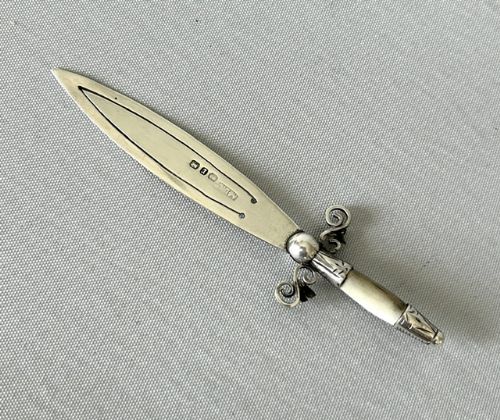


Victorian Silver Letter Opener
A victorian silver letter opener is a desk accessory that brings refined tactile metalwork and organic handles to correspondence.
Victorian Silver Letter Opener
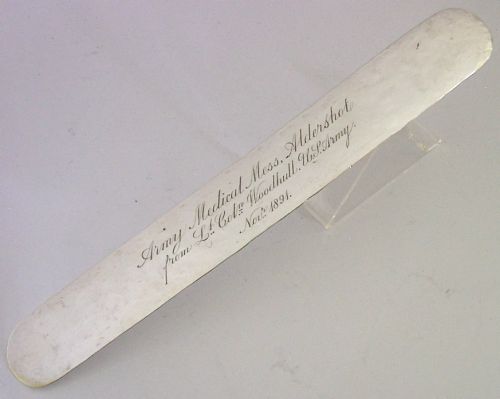
When you search for a victorian silver letter opener, you encounter desk accessories spanning the nineteenth century into the Edwardian era, alongside occasional Georgian and later twentieth-century examples. The selection on this page ranges from simple hallmarked silver blades to substantial page turners combined with diverse materials.
Makers produced both dedicated letter openers and hybrid forms that functioned as bookmarks, pen knives, or page turners. These objects typically incorporate sterling silver mounts or blades paired with handles made from natural substances.
Materials and construction
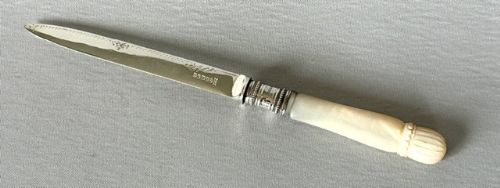
Silversmiths forged blades and cast handles from sterling silver, frequently applying hallmarks indicating cities such as Birmingham, London, Chester, and Sheffield. These metal components were combined with organic materials including mother-of-pearl, tortoiseshell, bone, and agate.
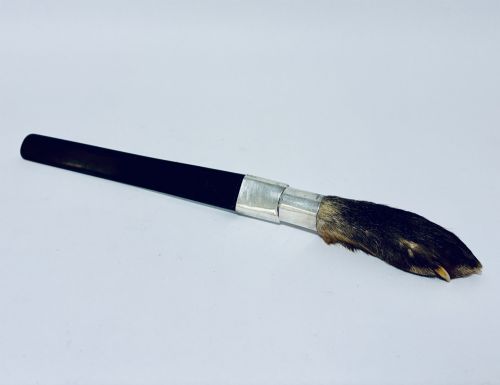
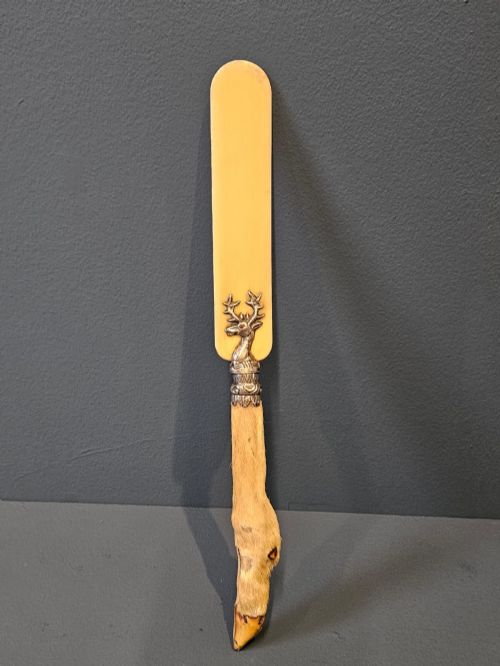
Craftsmen also utilised specialised items like deer hoof or incorporated guilloche enamel and ebonised details. Handles were riveted or secured to silver mounts using traditional methods appropriate for fine desk wares.
Victorian Silver Letter Opener Retail Price Guide 2026
Typical asking prices for victorian silver letter opener among the pieces listed under this phrase on Sellingantiques today, from the lower quarter to the upper quarter. They describe what is for sale here now, not the wider market.
Desk accessories occasionally feature surprising zoological elements, transforming ordinary correspondence into encounters with silver ducks and eager terriers.
Standards of craftsmanship
Quality in these items rests upon the weight and gauge of the sterling silver, the clarity of the assay office hallmarks, and the precision of the joinery between metal and handle. Superior pieces display crisp casting, particularly on novelty terminals shaped as greyhounds, ducks, or miniature swords.
The choice of handle material also dictates standing, with translucent agate, finely patterned tortoiseshell, or dual-colour guilloche enamel elevating an object above standard bone or plain silver examples.
Sampson Mordan and Co·William Hutton and Sons·Crisford and Norris·Edward Hutton·John Gilbert·Brook and Son·George Unite
The Victorian Silver Letter Opener Glossary
- Hallmark
- Official marks stamped on precious metals indicating the standard of silver, the assay office, and the date letter.
- Page turner
- A larger companion piece to the letter opener, designed to part uncut pages in books rather than slice envelopes.
- Guilloche
- A decorative engineering technique producing precise, intricate repetitive patterns beneath a translucent layer of enamel.
- Sterling silver
- An alloy of silver containing ninety-two point five percent silver by mass, standard for British hallmarked items.
Victorian Silver Letter Opener: Frequently Asked Questions
What is the difference between a letter opener and a page turner?
Letter openers feature shorter, tapered blades intended specifically for slicing open paper envelopes cleanly.
Page turners are significantly longer and broader, shaped to gently separate folded or uncut pages in books without damaging the paper.
How are these pieces dated?
Dating relies heavily upon the stamped hallmarks, which include specific letter codes corresponding to the year of assay in offices like London or Birmingham.
Stylistic cues such as Edwardian proportions or Victorian ornamentation also help place undated items within their correct period.
Were these objects used for writing letters?
They were essential desk accessories used to open incoming mail delivered throughout the day before the advent of self-sealing envelopes.
Wealthy Victorians kept them on writing tables alongside inkwells, blotters, and seals as part of a formal correspondence routine.
How should tortoiseshell handles be cared for?
Tortoiseshell requires gentle handling and protection from direct sunlight and extreme temperature fluctuations to prevent warping or drying out.
Cleaning should involve only a soft, dry cloth without harsh chemical polishes that could damage the organic shell.