



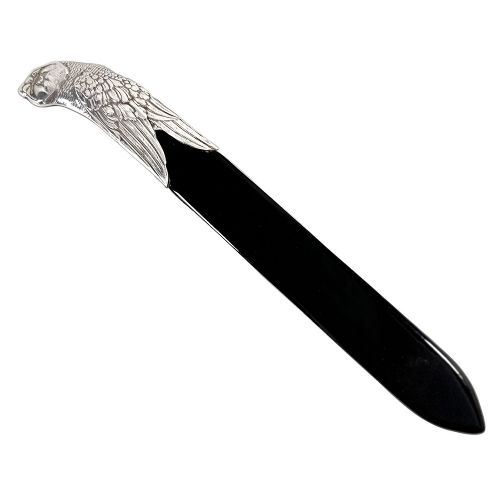


Silver Page Turner
A silver page turner is an elegant desk accessory designed to glide through bound volumes without tearing the paper.
Silver Page Turner
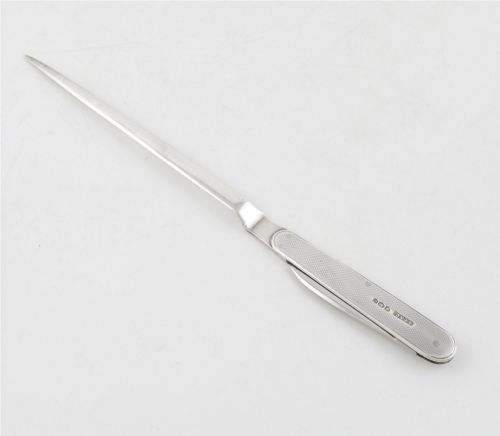
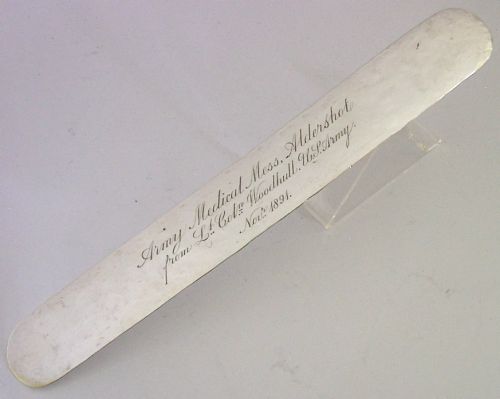
A silver page turner bridges the gap between functional library tool and decorative desk ornament. When browsing for a silver page turner, collectors encounter forms ranging from compact Victorian letter openers to substantial Edwardian paper knives.
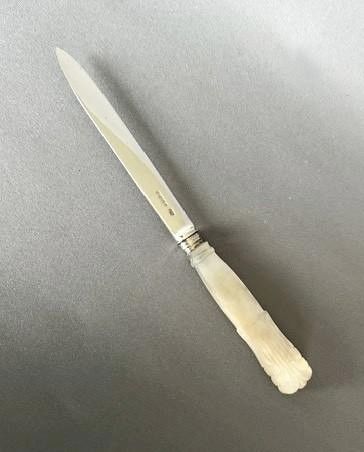
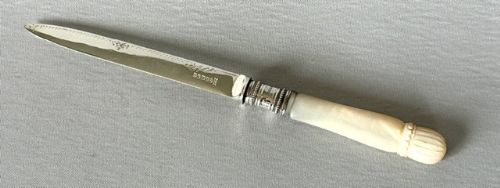
The materials paired with the silver define the character of each piece. Common combinations include rich tortoiseshell, carved mother-of-pearl, gleaming ivory, and exotic woods fitted with solid silver handles or mounts.
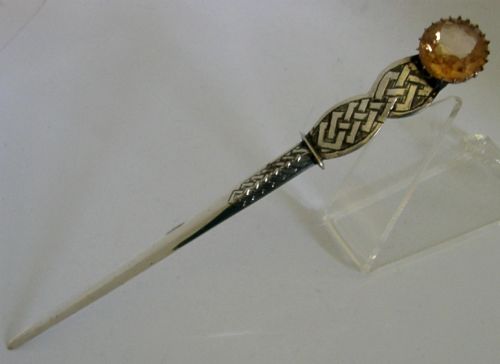
Origins stretch across the nineteenth and twentieth centuries, featuring British hallmarks from London, Birmingham, and Dublin. Makers incorporated regional stones such as citrine, agate, and Connemara marble into specific Scottish and Irish designs.
Materials and Construction
Silversmiths formed the handles and mounts from sterling silver or silver plate, often utilising repoussé work, chasing, or bright-cut engraving to depict animals, ferns, or heraldic motifs. Blades were shaped from organic materials like tortoiseshell, bone, ivory, and mother-of-pearl, carefully pinned or cemented into the silver collars.
Larger examples required skilled riveting to secure long tapering blades of tortoiseshell or ivory to solid silver terminals. Artisans frequently integrated functional additions such as concealed pencils into the handle structure.
Silver Page Turner Retail Price Guide 2026
Typical asking prices for silver page turner among the pieces listed under this phrase on Sellingantiques today, from the lower quarter to the upper quarter. They describe what is for sale here now, not the wider market.
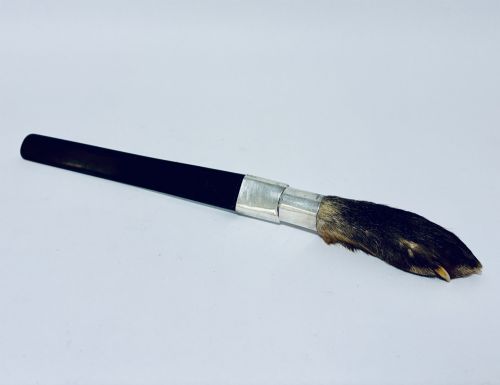
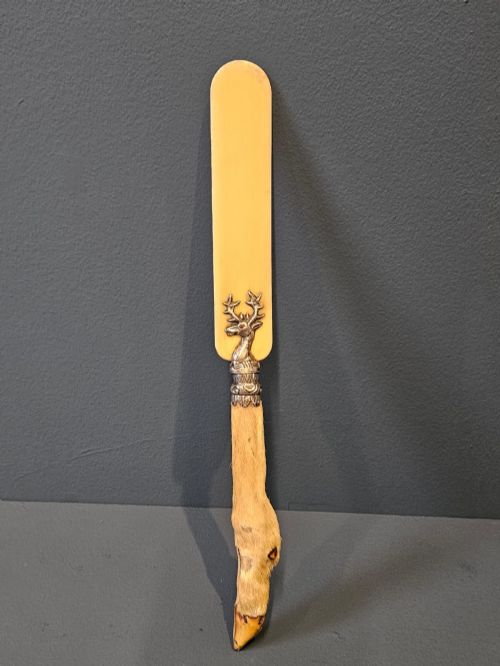
The archive includes specialised desk forms incorporating figural animal terminals, engraved ferns, and even integrated pencils.
Evaluating Craftsmanship
Quality rests upon the proportion between the handle and the blade, alongside the rarity of the pairing materials. Superior items display crisp hallmarks, substantial silver weight, and flawless organic blades free from warping or structural cracks.
The artistry of the handle determines distinction. Pieces featuring cast figural terminals, such as hound or pheasant heads, or intricate hand-engraved fern patterns, demonstrate higher workshop investment than plain counterparts.
Levi & Salaman·Grey & Co·H F Daltrey & Co·Sampson Mordan & Co Ltd·William Graeme
The Silver Page Turner Glossary
- Hallmark
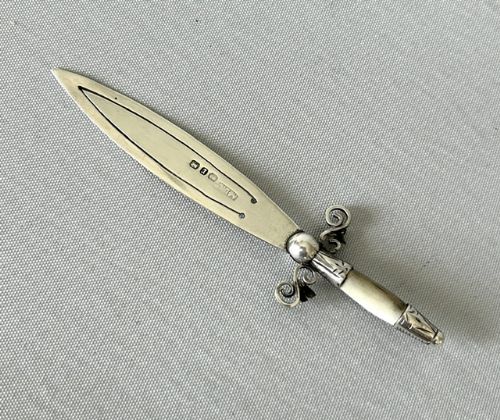
- Official marks stamped on precious metals indicating the standard of purity, the assay office, and the year of manufacture. These stamps provide the primary method for dating British silver items accurately.
- Tortoiseshell
- The mottled carapace of certain turtle species utilised historically for decorative inlays and page turner blades. Its translucent amber and brown tones created a striking contrast against polished silver mounts.
- Repoussé
- A metalworking technique where the silversmith hammers the design from the reverse side to form a raised relief on the front. This method frequently ornamented Victorian desk accessories with floral or figurative scenes.
- Paper Knife
- An alternative term for a page turner or letter opener, denoting a flat blade used for slicing envelopes or separating uncut book pages. Many period examples served both cutting and turning functions interchangeably.
- Mother-of-pearl
- The iridescent internal layer of pearl oyster shells carved into thin, shimmering blades for delicate stationery tools. Its natural lustre made it a favoured companion to Edwardian silver handles.
Silver Page Turner: Frequently Asked Questions
How were silver page turners used?
Victorian and Edwardian readers used these implements in studies and libraries to gently separate the folded edges of newly purchased books that arrived with uncut pages.
They also functioned as desk ornaments and letter openers during daily correspondence routines.
How do I care for antique tortoiseshell and ivory?
Organic materials require stable humidity and protection from direct sunlight to prevent drying, warping, or cracking over time.
Cleaning should involve only a soft, dry cloth without chemical polishes that might damage the surface of the silver or the blade.
How can I date my silver page turner?
Dating relies primarily on the stamped hallmarks on the silver mount, which reveal the assay office and the exact year letter.
Stylistic clues such as the choice of paired material, including tortoiseshell or mother-of-pearl, also point toward Victorian or Edwardian periods.