
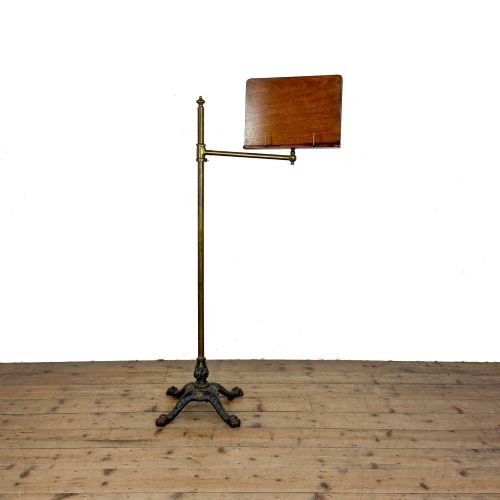
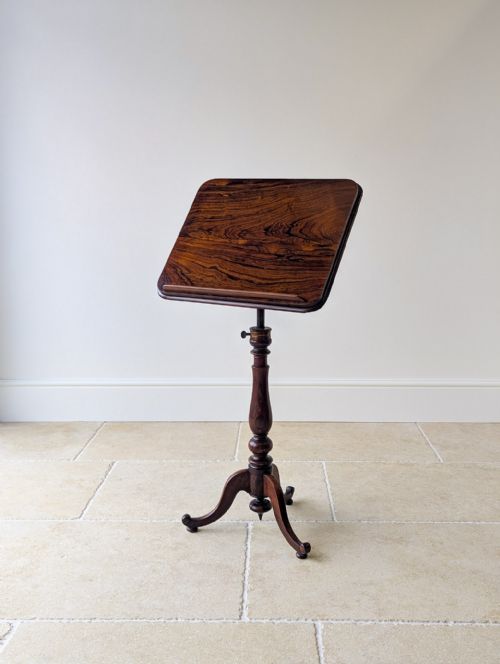

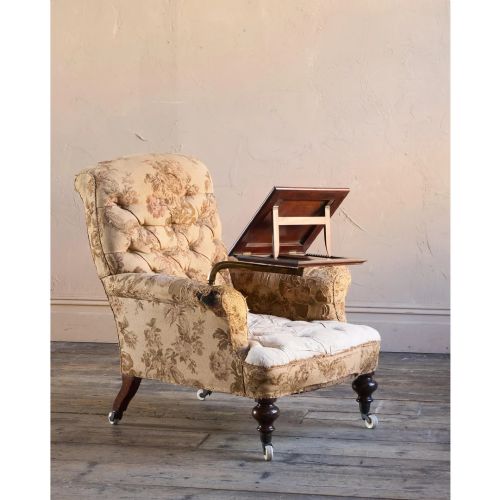
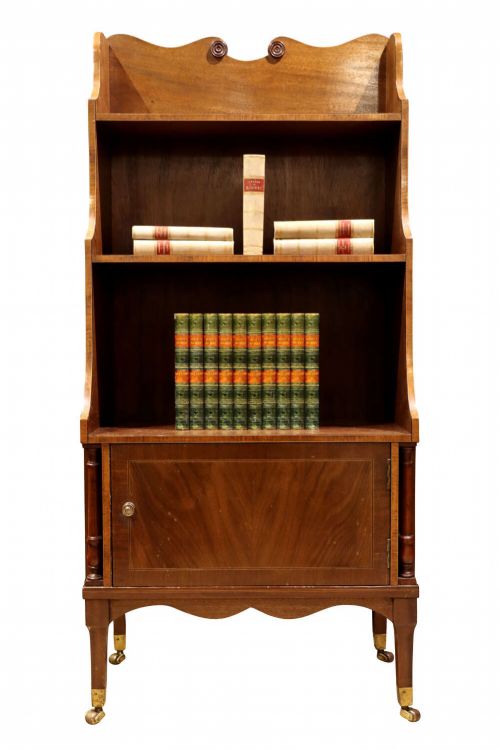





Victorian Brass Book Stand
These Victorian brass book stand pieces offer solid metal frames and extending actions designed to keep heavy library volumes upright on a desk.
Victorian Brass Book Stand
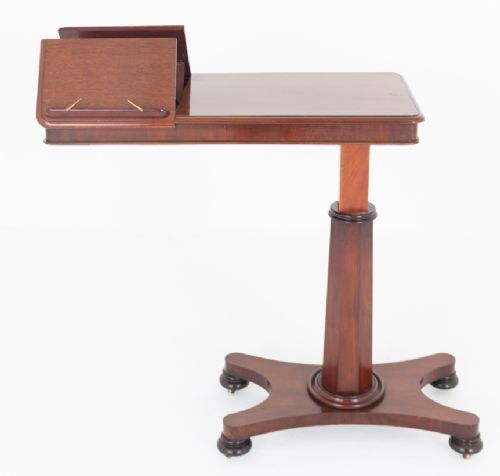
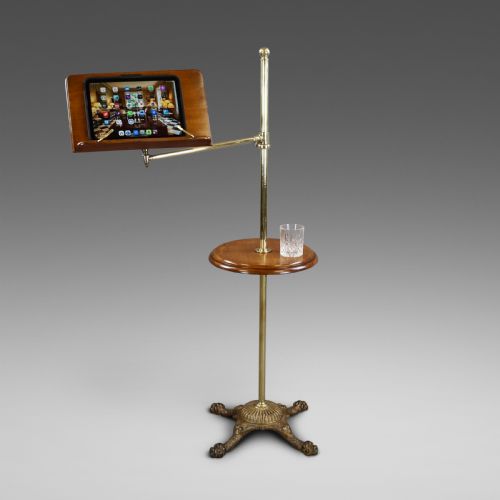
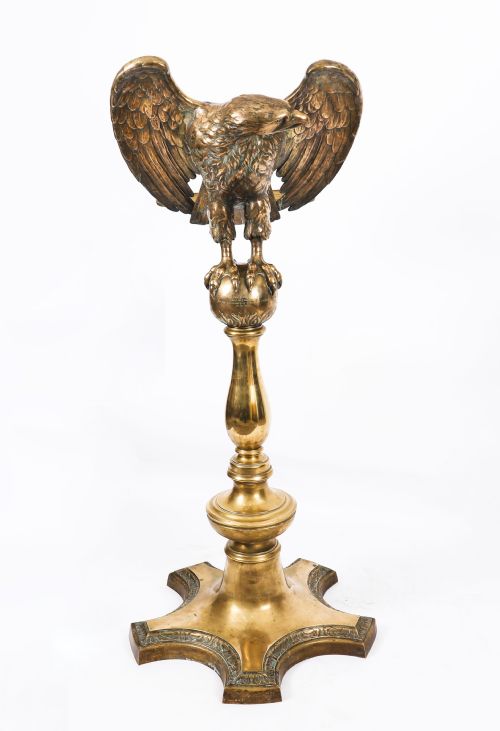
A victorian brass book stand is primarily a desk accessory or folding book slide built to support heavy volumes in a library or study. You will most frequently meet extending wooden book slides fitted with brass mounts, alongside folding brass stands and heavy table reading rests from the nineteenth century.
The selection ranges from simple extending desktop troughs to complex revolving stands and music desks. While many originate in the Victorian era, related pieces stretch from the William IV period into the Edwardian years.
Makers utilised various timber bases alongside the metal framework, pairing brass mechanisms with walnut, mahogany, and rosewood. These functional items served domestic libraries, churches, and studies, holding folios and smaller reference texts at a readable angle.
How they were made
The construction combines cast and sheet brass with dense hardwoods such as mahogany, walnut, and rosewood. Metal hinges, expanding lazy-tongs actions, and decorative mounts were screwed or pinned directly into the wooden framework.
Joinery techniques on the wooden slides and bookends include dovetails and precise tongue-and-groove joints to withstand the outward pressure of heavy text blocks. Brass components often feature engraved detailing or pierced fretwork, particularly on folding frames and lecterns.
The listings on this site combine walnut, mahogany, and rosewood with heavy cast brass framing across the Victorian period.
What varies in quality
Quality rests in the weight and thickness of the brass used for the mounts and extending mechanisms, as well as the precision of the sliding action. Heavier gauge metalwork and smooth, binding-free expansion mark out the superior examples.
The choice of timber and secondary decorative elements also set pieces apart. Dense burr walnut, coromandel, or inlaid pietra dura panels elevate a standard book slide into a more ambitious library ornament.
Betjemanns patent
The Victorian Brass Book Stand Glossary
- Book slide
- An extending desk rack designed to hold a variable number of volumes upright between two bookends. The expanding action is frequently controlled by a pair of folding brass lazy-tongs underneath.
- Lectern
- A raised reading stand with a slanted top designed to support large service books or music scores. These often incorporate heavy brass framing or rotating bases.
- Campaign
- A style of portable furniture characterised by folding frames and brass corners designed for easy transport. Campaign reading stands utilise hinged joints to pack flat.
- Pietra dura
- An inlay technique using cut and fitted polished coloured stones to create pictorial designs on stone plaques. These are occasionally set into the wooden panels of nineteenth-century book slides.
- Folio
- A large book format created by folding sheets once, requiring substantial desktop stands to support its weight safely.
Victorian Brass Book Stand: Frequently Asked Questions
How do extending book slides work?
Most extending book slides rely on a folding lattice mechanism beneath the wooden base that allows the two ends to move outward together. This keeps the bookends parallel as you adjust the length to fit more volumes.
Heavier brass hinges and pinned joints ensure the sides stay upright under the weight of large reference books.
What is the difference between a book slide and a book rest?
A book slide sits flat on a desk with vertical ends to corral a row of standing books between them. A book rest props up a single volume at an inclined angle for reading.
Many nineteenth-century examples combine both functions by adding a folding easel back to an extending trough.
Were these stands only used for books?
While primarily built for heavy library volumes, many of these stands served double duty for music scores and folios. Adjustable ledges and folding brass arms accommodated sheet music on pianos and writing desks.
Ecclesiastical versions were also produced specifically for churches to hold large lectern bibles.
How do I date a Victorian brass piece?
Dating relies on combining the timber choice, the style of the brass mountings, and any patent marks stamped into the metalwork. Earlier nineteenth-century pieces often feature simpler rosewood and mahogany frames, while later Victorian items incorporate cast brass fretwork and varied hardwoods.
Patent stamps from known makers provide a narrower window of manufacture.