
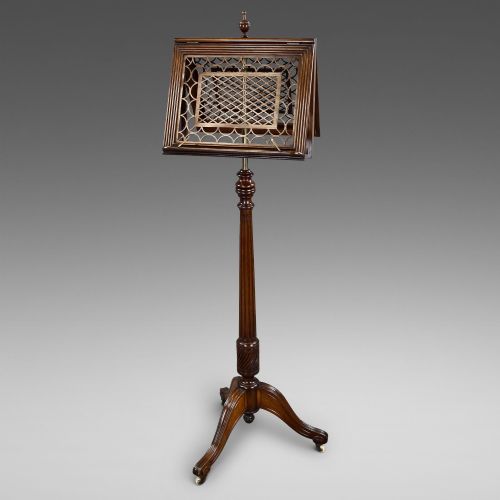
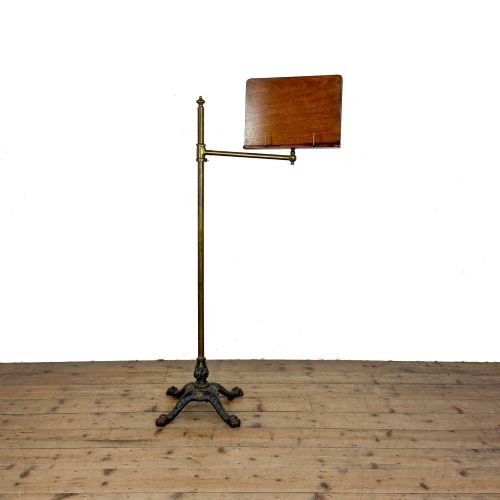
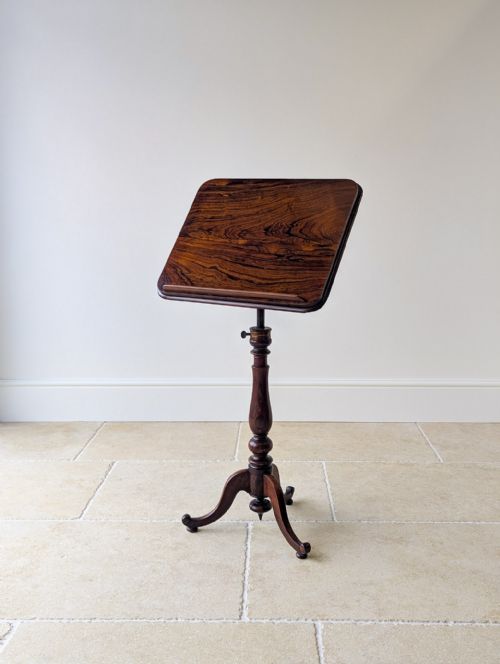
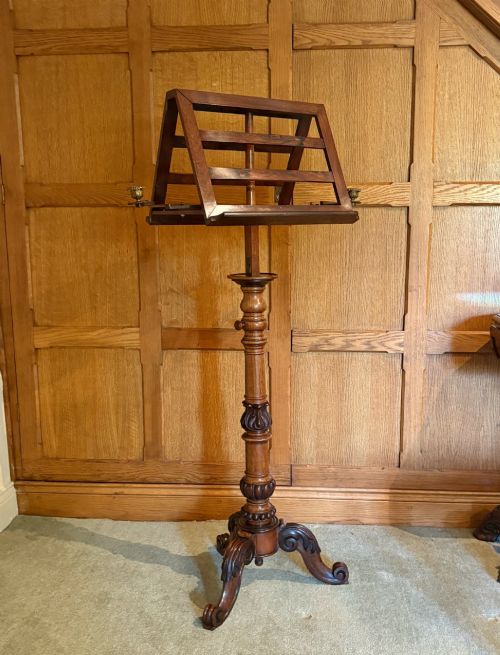




Brass Lectern Stand
These brass lectern stand pieces offer adjustable reading surfaces and upright support, bringing functional utility and heavy metal or timber presence to a room.
Brass Lectern Stand
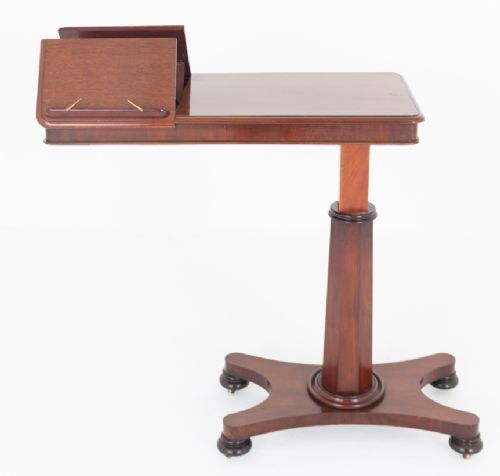
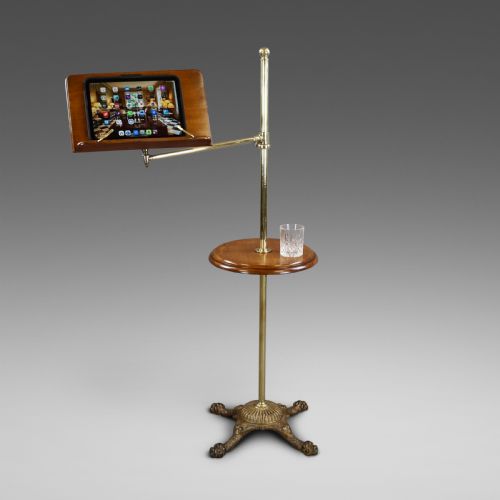
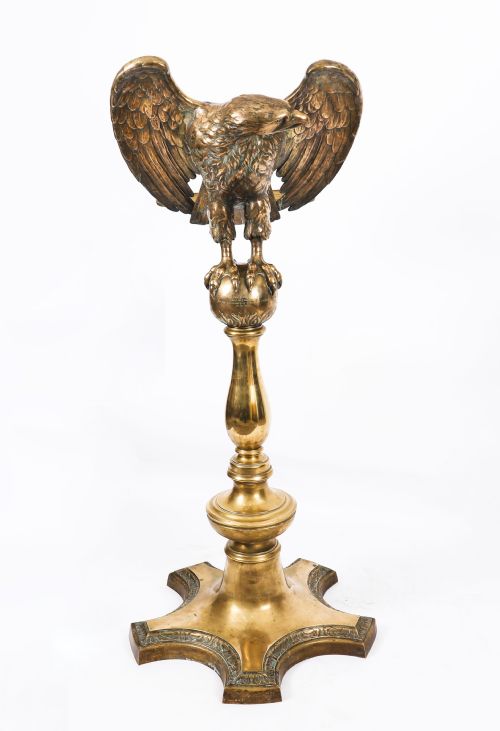
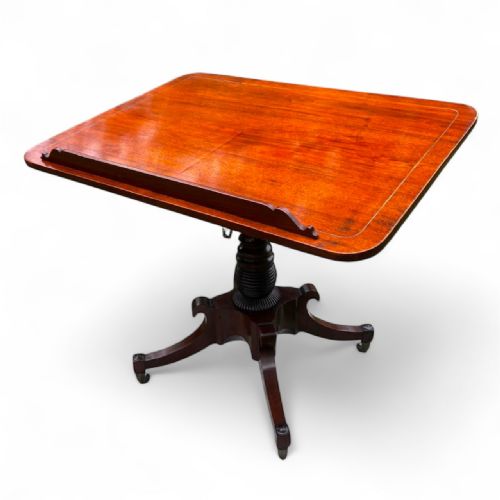
A brass lectern stand combines a sturdy metal framing or adjustment mechanism with a book rest or platform for reading. When searching for this phrase, buyers encounter items ranging from ecclesiastical brass eagles to domestic tabletop music stands and reading tables.
The selections span the nineteenth century, including Victorian Gothic revival pieces and Regency designs alongside later twentieth-century examples. Many combine brass work with timbers such as mahogany, rosewood, walnut, and oak.
Domestic versions often feature adjustable stems or folding book rests, whilst ecclesiastical forms display substantial cast brass construction intended for church settings.
Materials and construction
Makers utilised cast brass for structural longevity, decorative pierced work, and adjustable joints. Timber elements in related reading tables and music stands incorporate mahogany, rosewood, and oak, frequently paired with brass inlay or hardware.
Adjustable mechanisms rely on metal screws, ratchets, and sliding stems to alter the height and angle of the reading rest. Brass work is often chased or pierced, while timber surfaces receive polished finishes.
Materials span solid brass, mahogany, rosewood, oak, walnut, and cast iron across nineteenth-century pieces.
Quality differences across examples
Quality rests in the precision of the adjustable mechanism and the crispness of the brass casting or piercing. Superior pieces maintain steady positioning at various heights without slipping.
The refinement of the supporting timber or the detail within cast ecclesiastical brass work distinguishes standard workshop production from finer signed or attributed examples.
GILLOWS·Townsend and Co.·William Tonk and Sons·Harrods
The Brass Lectern Stand Glossary
- Lectern
- A tall stand with a sloping book rest for holding a book, speech, or score. These range from heavy brass church eagles to adjustable domestic reading furniture.
- Duet stand
- A music stand wide enough to accommodate two musicians reading from the same sheet. They frequently incorporate adjustable brass stems and dual reading desks.
- Gothic Revival
- An architectural and decorative style popular during the nineteenth century characterised by pointed arches and medieval motifs. It heavily influences Victorian church lecterns and brass work.
- Campaign stand
- Portable furniture designed for travel, typically featuring folding supports or compact proportions. Such pieces often utilise brass fittings and durable timbers like mahogany.
Brass Lectern Stand: Frequently Asked Questions
How do I adjust the height on these stands?
Most stands utilise a central brass screw or sliding clutch mechanism to lock the stem at the desired level.
Carefully loosen the fastener, adjust the reading desk to your preferred height, and retighten firmly before placing books on the rest.
Were these used in churches or homes?
Both environments utilised these stands, with heavy brass eagle lecterns serving ecclesiastical spaces and smaller wooden tables with brass work functioning in libraries.
Domestic variants generally focus on music scores, folios, and reading material rather than church services.
How do I clean brass components safely?
Dust the metal regularly with a soft, dry cloth to prevent the accumulation of grit within the adjustable joints.
Avoid harsh chemical polishes that strip historical patination from nineteenth-century brass surfaces.