






Victorian Brass Bookstand
These Victorian brass bookstand options bring functional elegance to any desk, offering sturdy support and striking period detail for those who appreciate fine desk accessories.
Victorian Brass Bookstand
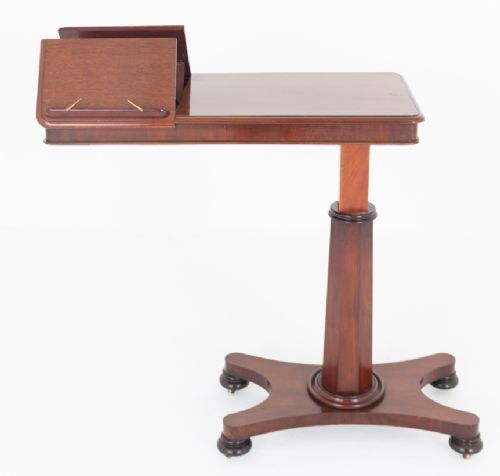
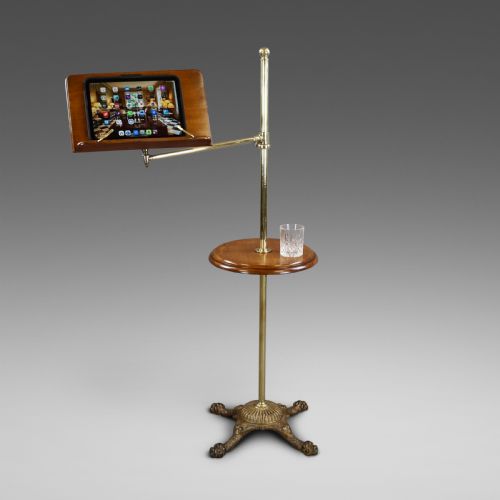
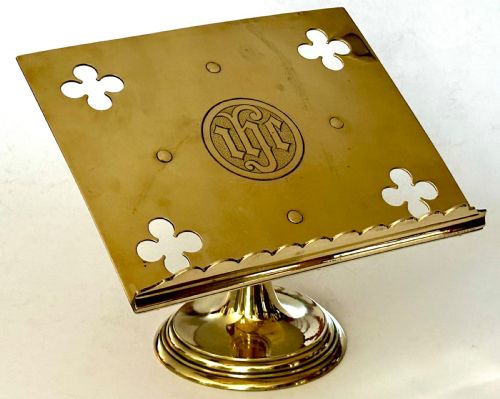
A victorian brass bookstand encompasses various desk accessories and reading stands designed to hold volumes upright or at an adjustable angle. These pieces appear frequently as extending book slides, table top reading stands, and brass mounted library book holders.
The selection here draws primarily from nineteenth century and Victorian periods, alongside related Regency and Edwardian examples. Buyers encounter forms ranging from simple extending book rests to revolving bookcases and lecterns.
Makers utilised practical forms suited to libraries and studies, incorporating folding mechanisms or sliding sides to accommodate varying numbers of volumes. The presence of brass hardware unifies these functional library pieces across different timber carcases.
Materials and construction
Workshops built the structural frames using timbers such as mahogany, walnut, burr walnut, oak, coromandel, and rosewood. These woods provided a stable foundation for the brass mounts, hinges, and extending actions.
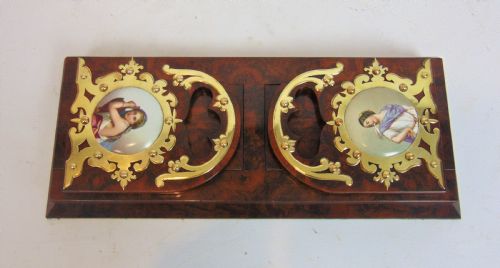
Craftsmen integrated cast brass mounts, hinges, and galleries to reinforce corners and articulate moving parts. Certain examples feature inset porcelain plaques or painted ceramic details embedded directly into the wooden or brass framework.
Some book slides include novel rests designed to hold sheet music or heavy folios steady while the tea was poured.
Assessing quality
Superior examples demonstrate precision in the sliding mechanisms and the thickness of the brass mounts employed. Heavier gauge brass and solid timber construction distinguish the finest library pieces from lighter commercial variants.
The integration of decorative elements, such as finely painted porcelain plaques or well-figured burr walnut and coromandel veneers, elevates the visual merit of an individual piece.
The Victorian Brass Bookstand Glossary
- Book slide
- An extending stand placed on a desk or table to hold a row of books upright between two end supports.
- Lectern
- A freestanding or tabletop reading stand designed to support a book at an angle for a speaker or reader.
- Campaign
- Describing portable or folding furniture designed for travel, featuring recessed brass handles and reinforced corners.
- Gothic Revival
- A nineteenth-century architectural and decorative style drawing inspiration from medieval pointed arches and architectural motifs.
- Revolving bookcase
- A freestanding bookcase mounted on a rotating pivot base to allow access to volumes from all sides.
Victorian Brass Bookstand: Frequently Asked Questions
How do I use a book slide?
Place the slide on a desk or table and pull the two ends outward to fit the desired number of volumes between them. The extending mechanism adjusts smoothly to hold the books securely in an upright position.
Ensure the base sits flat on the writing surface so the sliding action remains balanced and steady during daily use.
Where were these stands placed?
These pieces traditionally sat upon library tables, partners desks, or dedicated reading tables in nineteenth-century studies and drawing rooms. They kept frequently referenced volumes close at hand.
In modern spaces, they function equally well on sideboards, bookshelves, or mantelpieces to display select volumes.
What woods are common?
Makers predominantly selected dense hardwoods such as mahogany, walnut, and oak for their structural stability and rich grain patterns. More decorative examples incorporated exotic veneers like coromandel and burr walnut.
These timbers provided a strong contrast against the polished brass mounts and painted porcelain plaques.
How do I date a piece?
Dating relies on observing the combination of timber, brass hardware style, and mechanical construction methods. Pieces from the Regency period often display simpler classical lines, while Victorian examples frequently incorporate Gothic Revival motifs or elaborate brass mounts.
Comparing the form to dated exhibition pieces and registered designs helps narrow the period of manufacture.