


Brass Desk Lectern
A brass desk lectern offers a sturdy platform for books and music, bringing period materials and adjustable design directly to your study.
Brass Desk Lectern
When you search for a brass desk lectern, you are looking at practical reading stands, music stands, and writing boxes that utilise brass fittings and mounts alongside rich timbers.
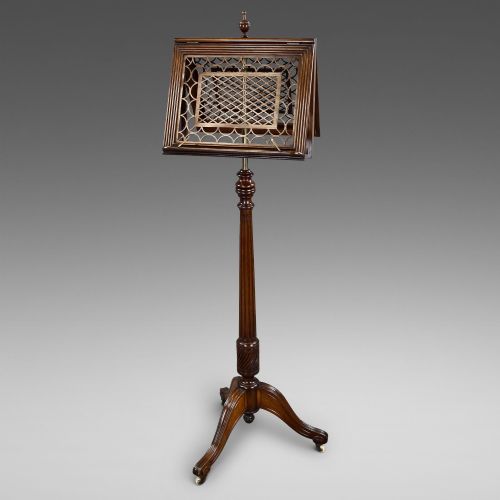
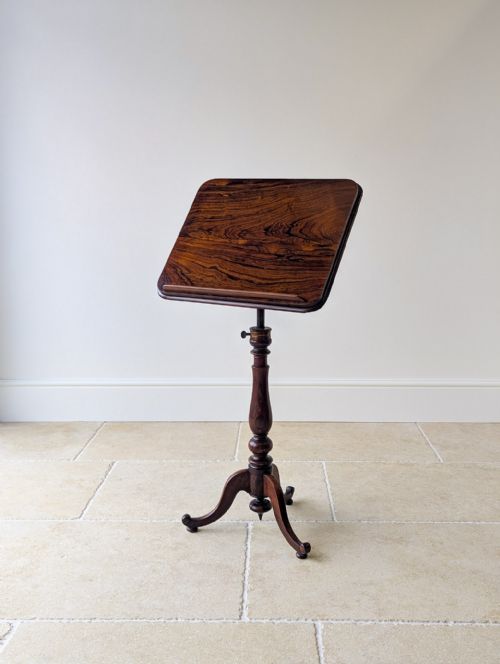
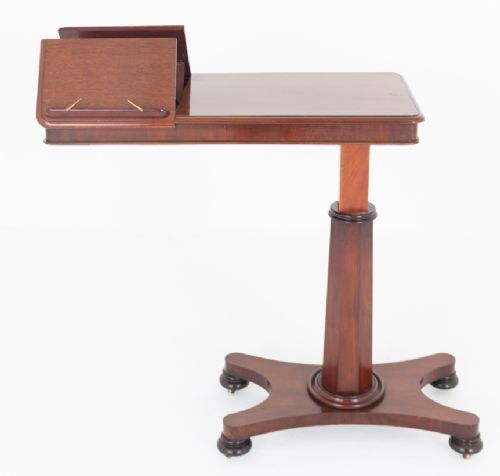
The versions you are most likely to meet on this page span the Georgian, William IV, and Victorian eras, taking forms such as table top reading stands, duet stands, and fully adjustable music lecterns.
Many examples combine brass work with timbers like mahogany, rosewood, walnut, and oak, often incorporating campaign styles or lyre shapes.
How they were made
Cabinet makers constructed these pieces from dense hardwoods such as mahogany and rosewood, sometimes adding satinwood inlay or leather surfaces.
Makers integrated brass work for hinges, brackets, and adjustable mechanisms, ensuring the stands could support heavy volumes and tilt to various angles.
What varies in quality
The standard of timber selection and the precision of the brass adjustment mechanisms set the finer pieces apart from simpler utilitarian items.
Detailing such as fretted woodwork, lyre-shaped supports, and complex folding campaign configurations indicate a higher level of craftsmanship.
The Brass Desk Lectern Glossary
- Lectern
- A reading desk with a slanted top designed to hold a book or musical score at a comfortable height for a standing or seated reader. These pieces often feature adjustable brass elements.
- Campaign
- A style of portable furniture designed for travel, typically featuring brass corners, flush handles, and folding or dismantling components for easy transport.
- Duet stand
- A music stand or reading stand wide enough to accommodate two people reading from the same shared book or sheet of music.
- Lyre-shaped
- A decorative form modelled on the ancient musical instrument, frequently utilised in the central column or support of 19th-century music stands.
Brass Desk Lectern: Frequently Asked Questions
What is a brass desk lectern used for?
These pieces provide an angled surface to hold books, Bibles, or music scores securely while reading or playing an instrument.
They allow the user to read comfortably at a desk or table without needing to hold heavy volumes by hand.
How do I adjust the reading angle?
Many period examples utilise brass ratchets, hinges, or tightening screws attached to the reading ledge or support column.
Loosening the brass mechanism allows you to tilt the desk to the desired position before securing it tightly in place.
Are these stands portable?
Certain Victorian and 19th-century campaign versions are specifically designed to fold down or dismantle for travel.
Other table top reading stands are compact enough to be moved easily between different rooms and surfaces.
What timbers were used?
Cabinet makers predominantly utilised dense, richly grained hardwoods such as mahogany, rosewood, walnut, and oak for the main body of the stand.
Some pieces also incorporate decorative elements like satinwood inlay or leather insert panels.