





Antique Walnut Bookstand
An antique walnut bookstand brings practical desk storage and rich timber grain together in one piece.
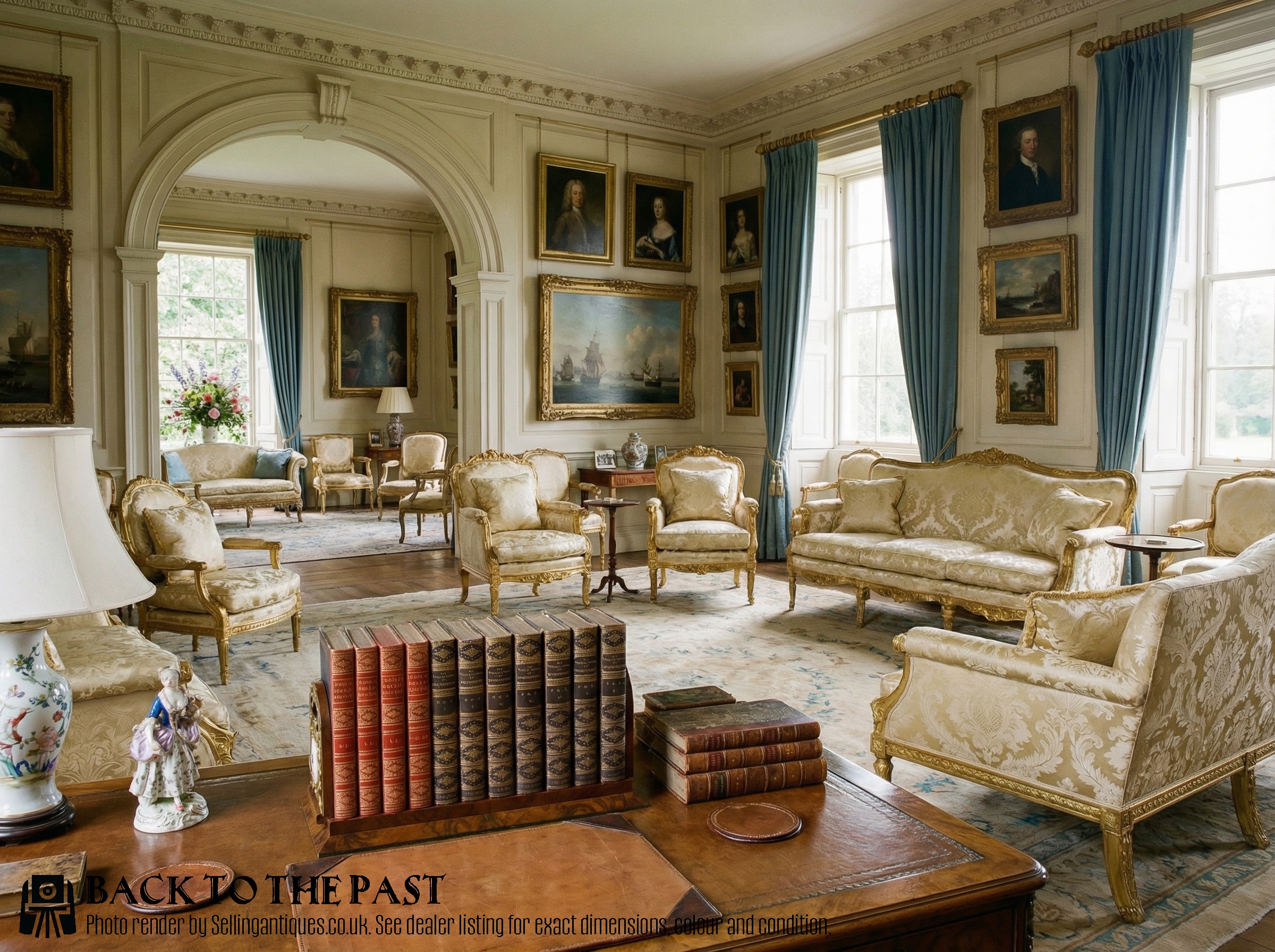
Antique Walnut Bookstand
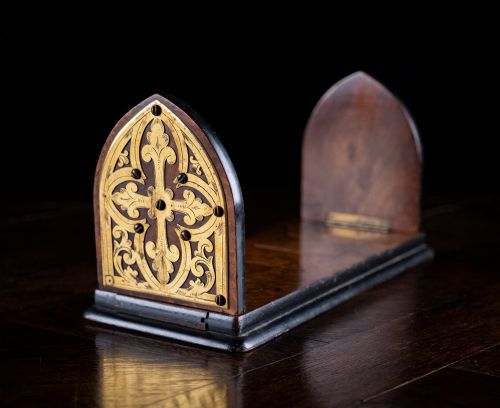
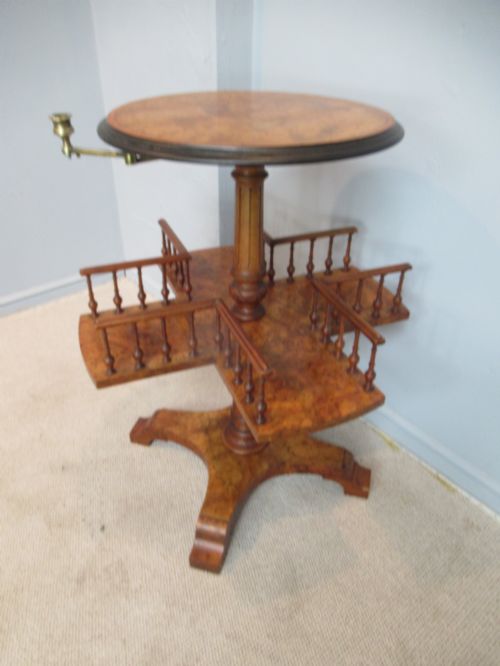
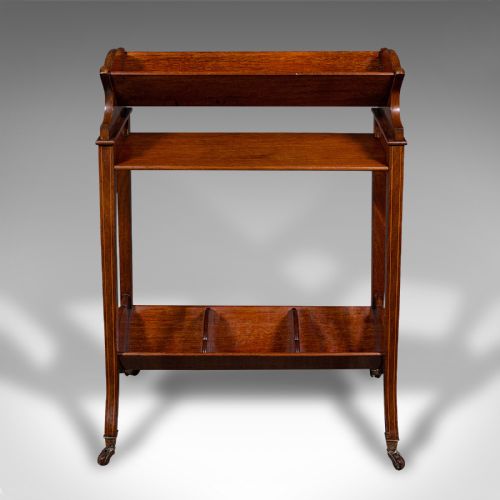
An antique walnut bookstand covers a range of desk accessories, rotating table units, and floor-standing bookcases produced across the nineteenth and twentieth centuries. Buyers seeking an antique walnut bookstand encounter forms such as revolving bookstands, sliding bookends, cascading open bookcases, and folding racks.
The materials and styles span Victorian, Edwardian, and Queen Anne influences, often combining walnut or burr walnut with brass mounts, porcelain plaques, or wood mosaic. Pieces originate from English workshops as well as Scottish and Kashmiri makers, demonstrating diverse regional interpretations of library storage.
Revolving desk companions and sliding book stands dominate the smaller formats, while larger open bookcases provide substantial shelving for private studies. Each format serves the fundamental purpose of keeping volumes organised and accessible on a desk, table, or floor.
How they were made
Makers utilised solid walnut and figured burr walnut veneers, applying timber selections that highlighted rich grain patterns across the bookstands and cases. Workshops often incorporated secondary materials such as brass mounts, iron supports, bone details, and rosewood banding to reinforce structural points and frame decorative elements.
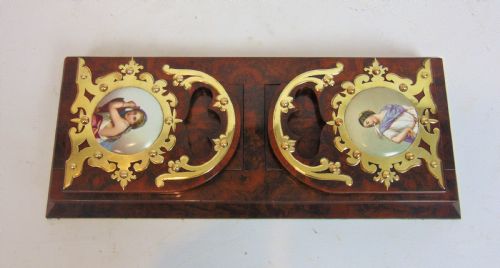
Decorative enhancements included painted porcelain plaques inset into the woodwork and intricate wood mosaic work, as seen in Tunbridge pieces. Construction methods encompassed sliding mechanisms for adjustable book slides and rotating axes for revolving table stands.
Antique Walnut Bookstand Retail Price Guide 2026
Typical asking prices for walnut bookstand among the pieces listed under this phrase on Sellingantiques today, from the lower quarter to the upper quarter. They describe what is for sale here now, not the wider market.
Some nineteenth-century readers relied on small revolving bookstands to keep railway novels spinning smoothly through long Victorian afternoons.
What varies in quality
The quality of an antique walnut bookstand depends on the selection of figured burr walnut timber and the precision of the joinery. Superior examples integrate decorative elements such as finely painted porcelain plaques and solid brass mounts rather than relying on plain secondary woods.
Mechanism fluidity separates standard desk accessories from finer pieces, particularly in the smooth rotation of revolving bookstands and the exact movement of sliding bookends. The crispness of wood mosaic and inlay work further distinguishes the workshop output across different periods.
The Antique Walnut Bookstand Glossary
- Burr walnut
- A specialised timber cut from walnut tree growths, prized for its swirling, highly figured grain patterns. It frequently appears on the main surfaces of Victorian and Edwardian library pieces.
- Book slide
- An adjustable desk accessory with extending sides designed to hold a varying number of volumes upright between end supports. These often feature brass mounts or decorative plaques.
- Revolving bookcase
- A rotating storage unit that allows books to be accessed easily from multiple angles around a central axis. Examples range from tabletop bookstands to larger floor-standing models.
- Tunbridge ware
- A type of woodwork featuring intricate mosaics created from tiny pieces of naturally coloured woods to form geometric or pictorial designs. This technique decorates specific desk racks.
- Brass mounting
- The application of cast or sheet brass fixtures to corners, hinges, and edges to strengthen the structure and provide visual contrast against the dark walnut timber.
Antique Walnut Bookstand: Frequently Asked Questions
How do I use a revolving bookstand?
Place dictionaries, current reading or frequently consulted volumes on the tiers for easy rotation at a desk or beside a chair.
The spinning mechanism allows access to all sides without needing to reposition the entire unit.
How do I care for walnut wood?
Keep walnut furniture away from direct heat sources and strong sunlight to prevent the timber and veneers from drying out.
Apply a traditional wax polish periodically to maintain the lustre of the grain.
How do I date an Edwardian bookstand?
Edwardian pieces generally date from the period between nineteen hundred and nineteen ten, often reflecting lighter proportions than Victorian designs.
Examine the secondary timbers and construction methods underneath or inside the sliding components for period indicators.