

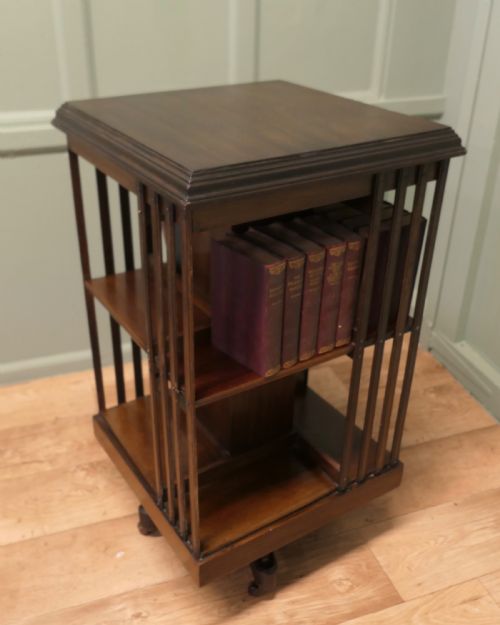
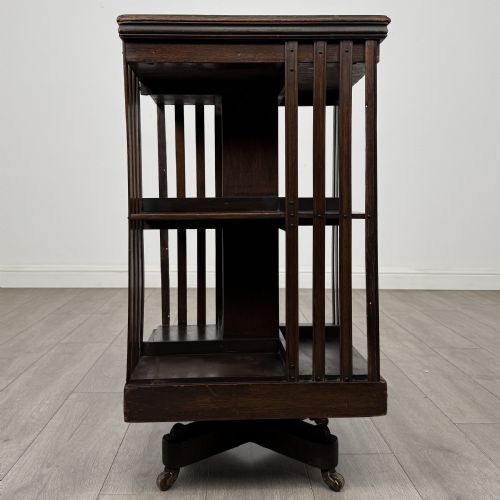
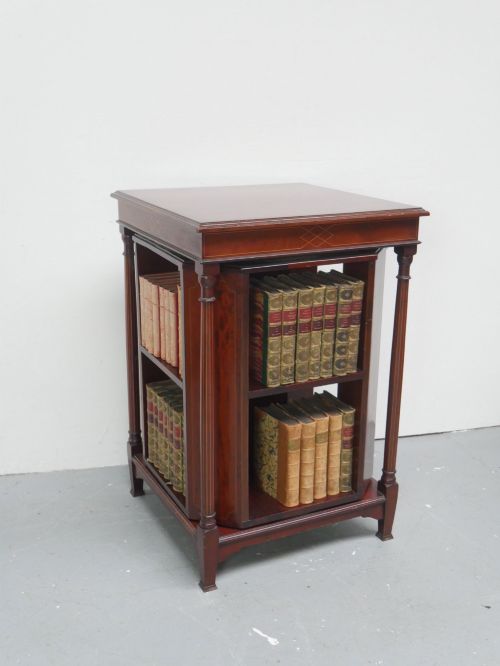
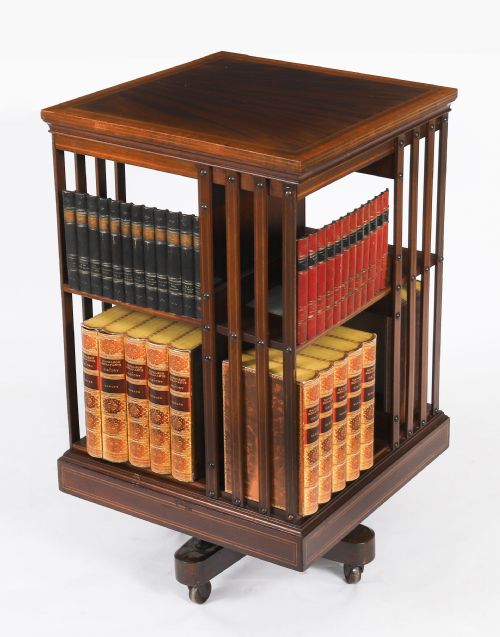
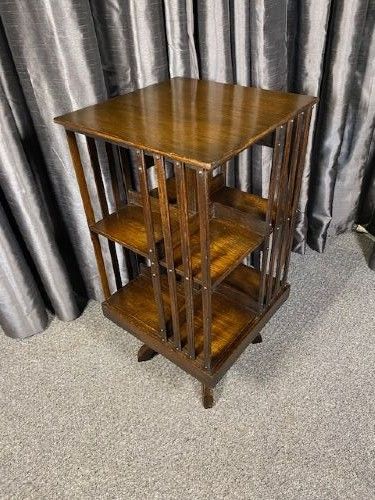
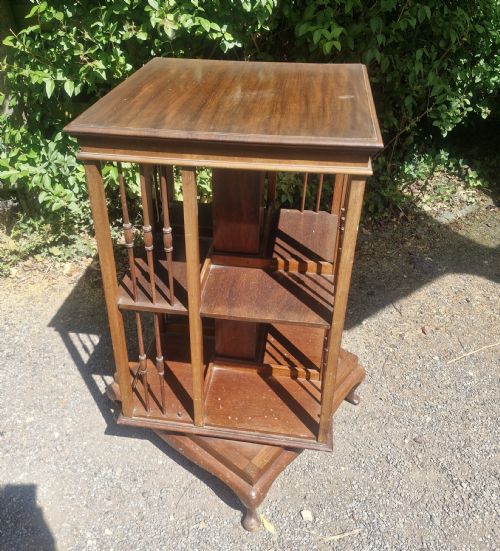
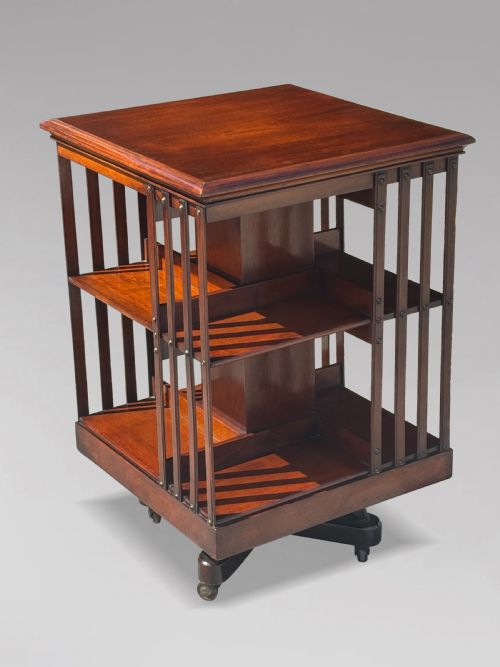

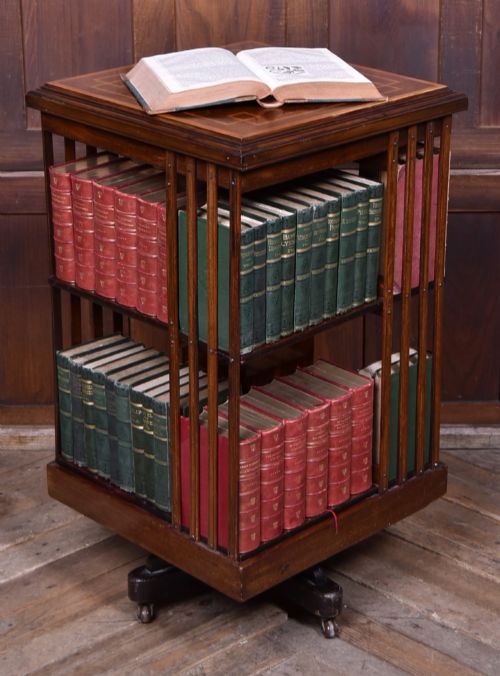

Edwardian Rotating Bookshelf
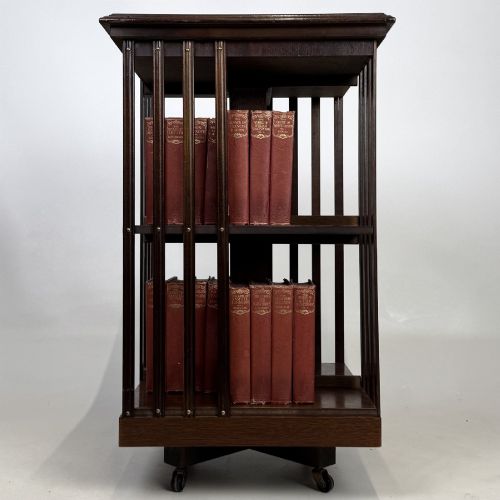
An edwardian rotating bookshelf brings effortless access and polished timber warmth to a study or corner.
Edwardian Rotating Bookshelf
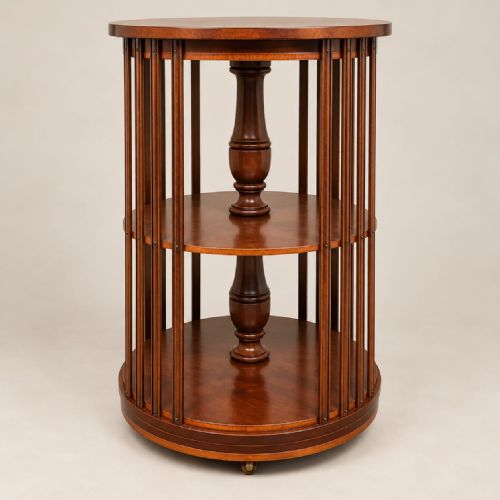
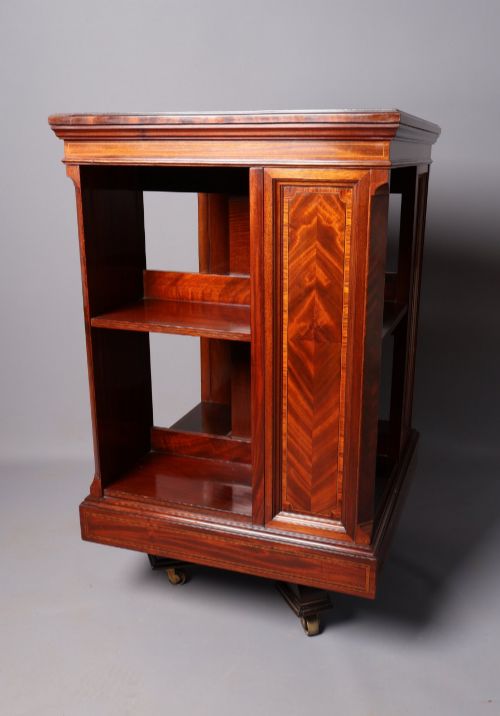
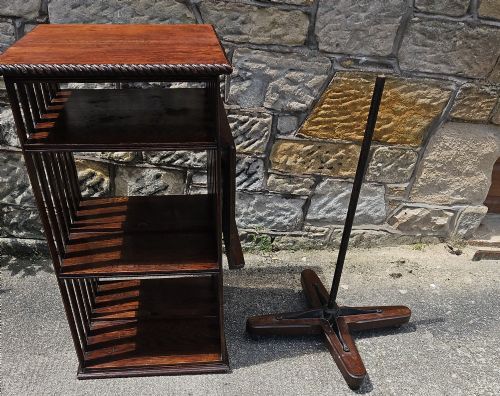
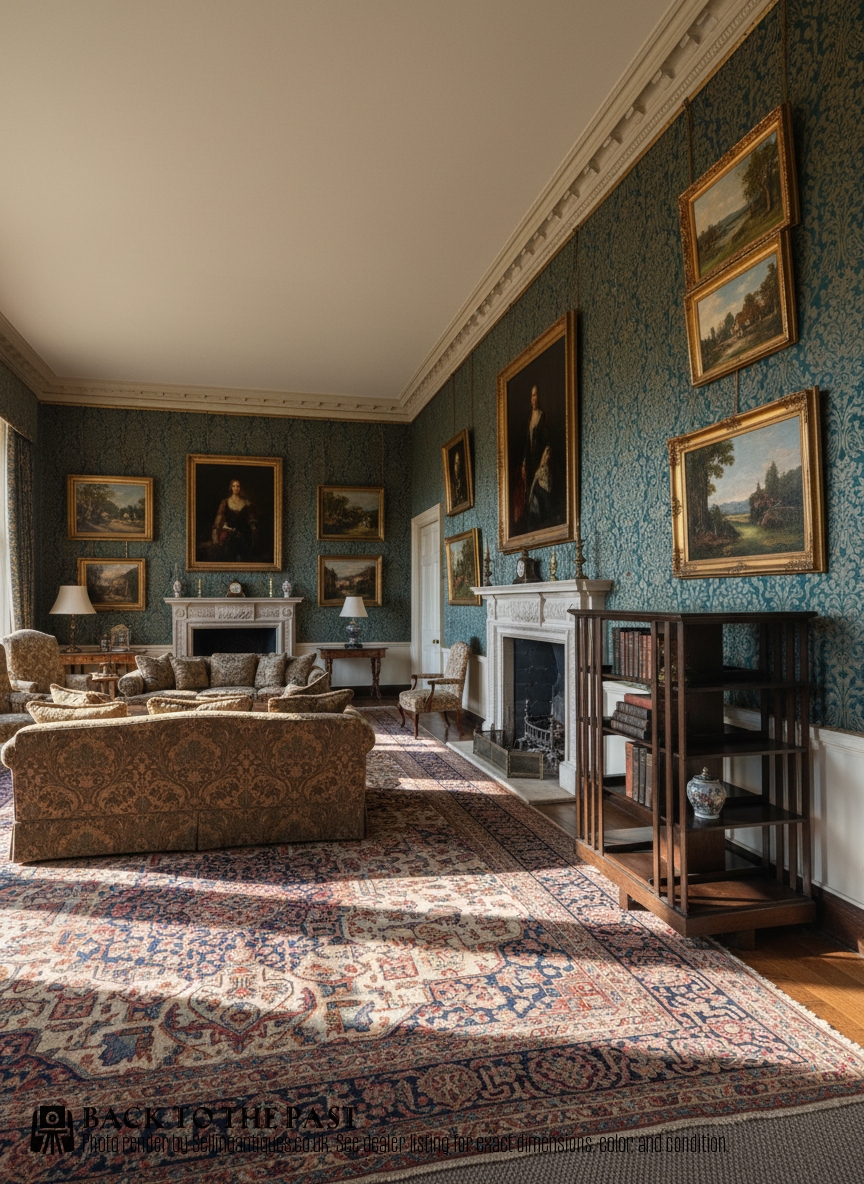
An edwardian rotating bookshelf provides a clever solution for keeping a collection of volumes close at hand while occupying a compact footprint in the room. These pieces sit on a concealed pivot mechanism that allows the entire shelved body to turn smoothly with a gentle push.
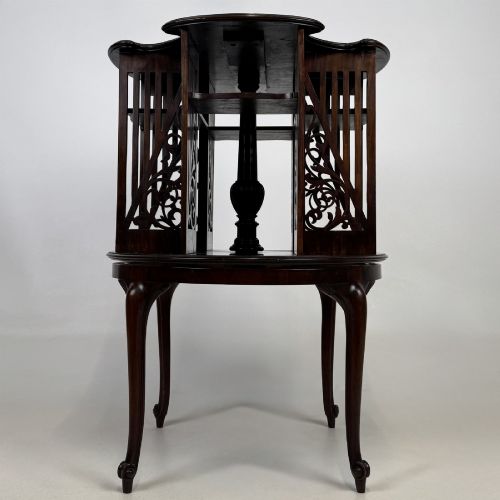
The version you are most likely to meet on this page is constructed from mahogany, often enhanced with satinwood inlay or flame grain figuring. Examples appear across floor-standing and table-top scales, spanning the late nineteenth century through to the Edwardian period and into the early twentieth century.
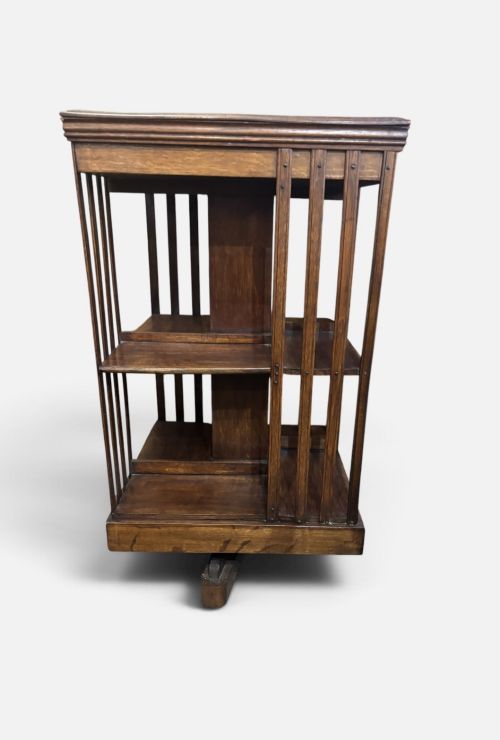
Makers such as Heal's and Maple and Co contributed to this form, alongside simpler workshops producing robust pieces in oak and walnut. Styles range from plain utilitarian designs to those influenced by the Arts and Crafts movement, Art Nouveau, and Chippendale revival.
Judging Quality and Craftsmanship
The distinction between a standard workshop piece and a finer production lies in the selection of timber and the subtlety of the inlay work. Finer examples display carefully matched flame mahogany veneers and crisp satinwood stringing rather than plain, unfigured boards.
Mechanical performance separates the exceptional pieces from the ordinary ones, as a well-engineered pivot turns silently and keeps the weight centred over the cruciform base. The crispness of the slatted partitions and the neatness of the corner joints further indicate the original maker's skill.
Edwardian Rotating Bookshelf Retail Price Guide 2026
Typical asking prices for edwardian rotating bookshelf among the pieces listed under this phrase on Sellingantiques today, from the lower quarter to the upper quarter. They describe what is for sale here now, not the wider market.
Listings demonstrate that mahogany remains the most common timber, complemented by oak, walnut, satinwood inlay, and cast iron mechanism parts.
Heal s·Maple and Co
The Edwardian Rotating Bookshelf Glossary
- Flame mahogany
- A veneer figure characterised by a distinctive flame-like pattern caused by the way the wood is sliced from the log. This figuring was favoured for the top surfaces and main panels of better furniture.
- Satinwood inlay
- A contrasting light-coloured exotic wood inserted into recesses in a darker timber to create decorative borders and geometric lines. It brightens the face of mahogany cases.
- Revolving bookcase
- A freestanding or desk-top shelving unit designed to spin on a concealed base. It grants access to books from multiple sides without moving the piece.
- Arts and Crafts
- A design movement valuing honest construction, visible hand craftsmanship, and simple forms derived from the nature of the materials used. Oak is frequently the timber of choice for these pieces.
Edwardian Rotating Bookshelf: Frequently Asked Questions
How do these bookcases actually rotate?
A concealed iron or brass pivot mechanism sits beneath the central column, allowing the upper tiers to spin freely on bearings.
This hidden hardware supports the weight of the volumes while keeping the movement smooth and balanced.
Are all these pieces from the Edwardian era?
While the majority date from the Edwardian period and the surrounding decade, the selection includes pieces originating in the late nineteenth century.
Stylistic crossover from late Victorian designs remains common among the earlier examples.
What is the difference between floor and table models?
Floor-standing versions provide multiple stacked tiers of shelving to hold larger collections of books in a study or library.
Table-top and desk-top variants offer a smaller, lower profile designed to sit on top of a surface for ready reference volumes.
Did specific makers sign these pieces?
Some workshops and retailers, such as Heal's and Maple and Co, stamped their names directly into the wood or attached paper labels to the interior slats.
Many other surviving pieces remain unmarked, produced by regional cabinetmakers working within the prevailing styles of the time.